Connecting Rod Audi Supplier: Sourcing Guide for Buyers
Choosing a connecting rod Audi supplier is less about the lowest line-item price and more about repeatable engineering control. For aftermarket distributors, repair networks, and OE-adjacent programmes, the practical questions are clear: does the factory control centre-to-centre length, bore geometry, fastener specification, material traceability, and batch consistency?
Driventus manufactures engine and powertrain components in Taizhou, Zhejiang, under IATF 16949:2016 and ISO 9001:2015 quality systems. We support B2B buyers across Europe, the UK, North America, Australia, and Brazil with export-ready documentation and RFQ support. For Audi applications, buyers typically need verified centre distance, big-end and small-end bore control, correct bolt details, and consistent rod mass across the set. Driventus is an independent aftermarket manufacturer; Audi and other brand names are referenced for fitment identification only.
If you are building an approved vendor list, comparing supplier capability, or checking OE 06A107065-style cross references, use the guidance below to separate a capable production partner from a simple parts reseller.
What buyers should check in an Audi connecting rod supplier
A connecting rod Audi supplier should be evaluated on verifiable production capability, inspection discipline, and documentation—not on unit price alone. A low quote can become expensive if bore geometry, rod weight, or bolt clamp load is inconsistent across batches.
Minimum sourcing checks
- Material specification and heat-treatment route
- Centre-to-centre length and bore tolerance control
- Surface finish on bearing seats, cap faces, and parting lines
- Fastener type, bolt grade, preload method, and traceability
- Batch test records, dimensional inspection reports, and release criteria
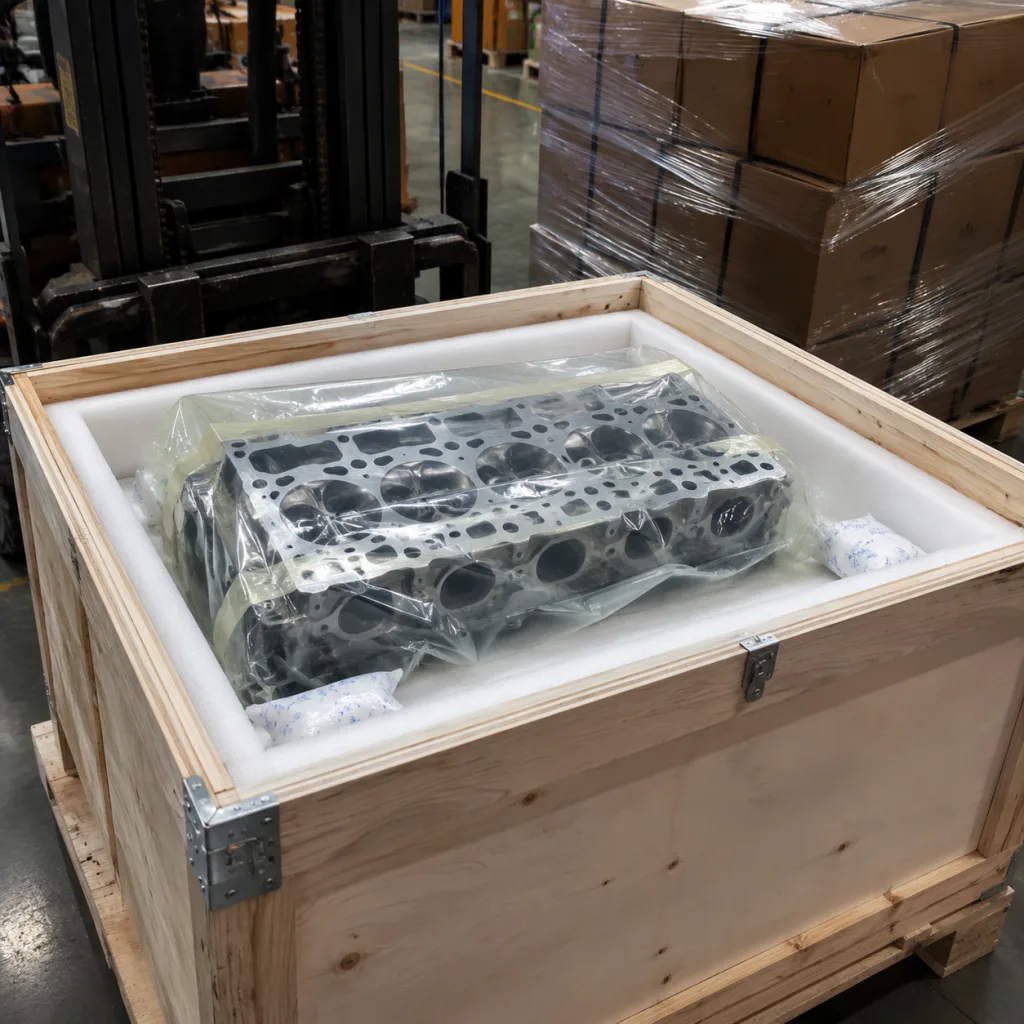
- Export packaging, corrosion protection, and carton/pallet labelling
For procurement teams, the most useful pre-order documents are a dimensional drawing, PPAP-style support data where available, chemical and mechanical test records, and a certificate of conformity tied to the shipment lot. If the application is linked to a specific engine family, request OE cross-reference confirmation such as OE 06A107065 where applicable. Then verify the actual dimensions against the drawing or sample, because an OE-style reference number alone does not prove that the part matches your target engine revision.
Materials, process control, and dimensional stability
Connecting rods are commonly made from forged steel or powder-forged steel, depending on engine application, production volume, and target cost. The important point is not the material label by itself. Buyers should confirm that the finished rod holds geometry after forging, heat treatment, machining, and final sizing.
Typical controls we apply
- Forging and machining processes designed around controlled grain flow direction
- Heat treatment with documented hardness targets and process records
- Shot blasting or controlled surface finishing to reduce stress risers
- Big-end and small-end bore gauging at defined inspection points
- Weight sorting where matched cylinder-set balance is required
| Control item | Why it matters | Buyer check |
|---|---|---|
| Centre distance | Influences piston deck position, compression relationship, and assembly fit | Compare measured data against the drawing, not only an OE number |
| Big-end bore | Affects bearing clearance, oil film stability, and crank journal protection | Require measured bore data and tolerance limits |
| Small-end bore | Controls wrist pin fit and wear behaviour | Confirm nominal size, tolerance band, and bushing requirement if applicable |
| Rod weight | Supports balance across a multi-cylinder set | Ask for individual weights or matched-set weight range |
| Fastener spec | Maintains cap clamp load under engine stress | Confirm bolt grade, tightening method, and whether bolts are single-use |