For procurement teams sourcing Toyota cylinder heads, the main risks are inconsistent casting quality, poor flatness control, and weak documentation across lots. A usable supplier should provide machining data, pressure-test records, traceable heat treatment, and stable packaging for export. Driventus is an independent aftermarket manufacturer; brand names are referenced for fitment only. We supply B2B buyers who need predictable lead times, drawing-based fitment checks, and export paperwork that supports customs clearance and incoming inspection. If you are consolidating engine programmes or adding a second source, the buying decision should be based on geometry control, combustion chamber consistency, and the supplier's quality system, not on catalogue claims. This guide explains what to verify before trial order approval and how to compare factories on facts rather than price alone.
What buyers should verify first
Before you shortlist a factory, ask for evidence in four areas: cast integrity, machining control, test data, and export readiness. A supplier that can only quote part prices is not yet a supply partner.
Buyer question
Evidence to request
Why it matters
Is the casting route stable?
Material specification, heat number, and process flow
Reduces porosity and crack risk
Are machined faces controlled lot to lot?
Flatness report, surface finish target, and CMM data
Protects gasket sealing
Is every head pressure tested?
Leak-test record with pressure, medium, and duration
Lowers field returns
Can the supplier support export?
Packing list, commercial invoice, and REACH declaration where applicable
Speeds customs clearance
</tr></thead><tbody> </tbody></table>Compare like for like. A bare head, a semi-assembled head, and a complete head are different commercial offers, even when the part number family looks similar.
Machining scope and dimensional control
For Toyota cylinder heads, the critical features are deck flatness, valve seat geometry, guide alignment, and coolant passage cleanliness. Buyers should define which dimensions are controlled after final machining, not only after casting.
Typical controls to request:
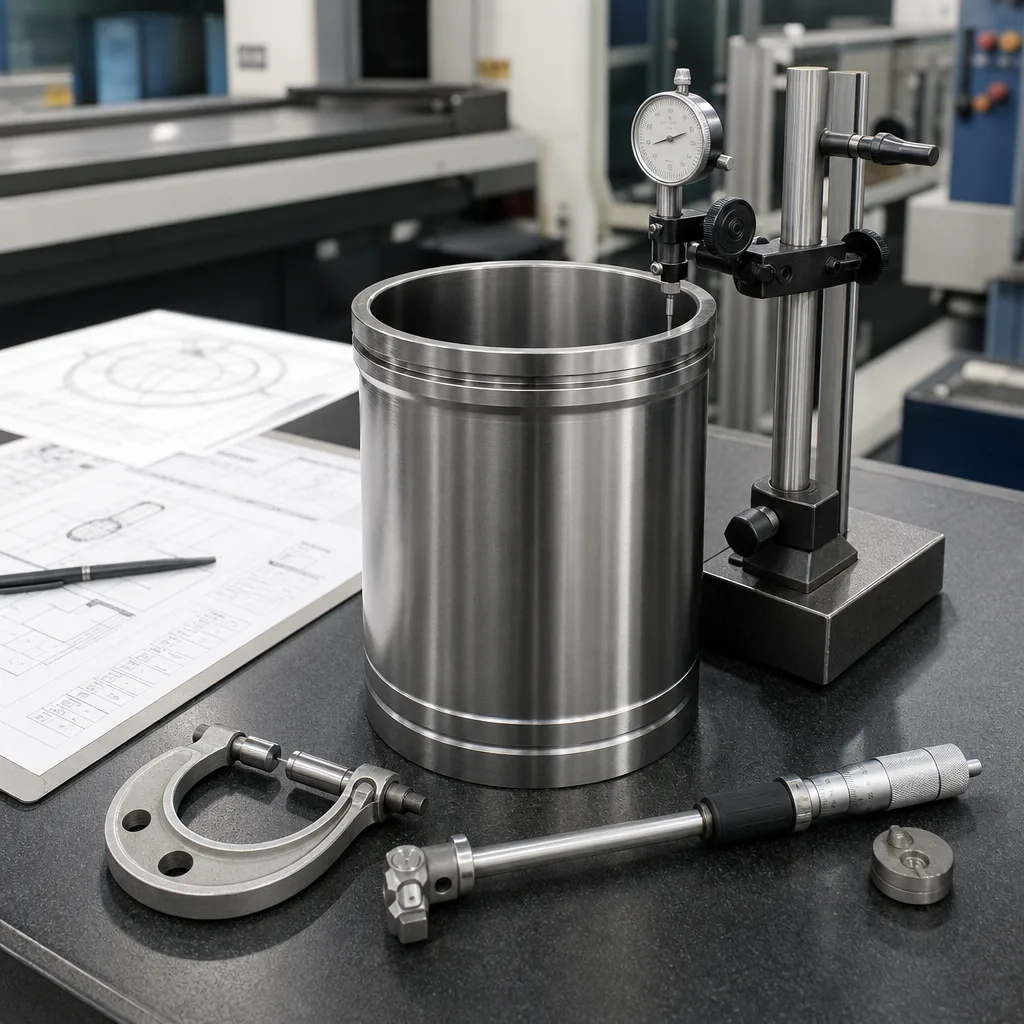
Deck flatness after final machining, with the measurement method stated
Valve seat concentricity and seat width
Valve guide bore diameter and guide-to-stem clearance
Combustion chamber volume consistency
Cam journal alignment where the design includes an overhead cam carrier
Cleanliness of coolant and oil passages before packing
Bare, semi-assembled, or complete
Ask whether the supply format is bare casting, machined head, semi-assembled head, or complete head with valves, springs, seals, and related hardware. The configuration changes cost, lead time, inspection load, and packaging requirements. If your programme needs modified ports, revised coolant jackets, or a changed sensor boss, use custom manufacturing before tooling is frozen.
Quality system and compliance
A credible supplier should work to documented process control, not informal shop-floor practice. For B2B sourcing, baseline systems such as quality system coverage under IATF 16949:2016 and ISO 9001:2015 matter because they support repeatability, traceability, and corrective action.
Request a document pack that includes:
Material certificate and heat traceability
First article or dimensional inspection report
Pressure-test record for each batch or agreed sampling plan
Control plan and inspection flow for critical dimensions
Packaging specification for machined faces and valvetrain components
REACH (EC) No 1907/2006 declaration where the market requires chemical compliance evidence
If your own approval flow uses APQP or PPAP, align the submission package before trial order release. That reduces back-and-forth and avoids an approval gap after the samples arrive.
MOQ, lead time, and export packing
MOQ and lead time should be stated by configuration, not by generic part family. A bare casting, a machined head, and a fully assembled head will usually have different batch sizes and different setup costs.
What to confirm in the quotation:
MOQ by version and by market
Sample lead time versus repeat-order lead time
Whether tooling or fixtures are included in the price
Whether the head is supplied bare, assembled, or with ancillary hardware
Export pack format, carton count, pallet height, and corrosion protection
Incoterms and destination port or warehouse assumption
If you are rationalising a broader bill of materials, review our catalog and engine components to see how cylinder heads sit alongside related parts such as gaskets, water pumps, and turbochargers. This is often the most efficient way to consolidate purchasing and freight.
How to qualify a second source
A second source should be qualified on fitment, documentation, and repeatability. Price is only useful after those three points are clear.
1. Send the engine code, target OE reference, annual volume, and destination market. 2. Confirm the exact supply state: bare head, assembled head, or full valvetrain build. 3. Request sample parts with dimensional data, pressure test results, and packaging photos. 4. Check installation fit, gasket seal performance, and torque retention in your own validation process. 5. Lock the approved revision, label format, and reorder trigger before production release.
For non-standard requirements, custom manufacturing can cover drawing-based changes, while request a quote is the fastest way to start a sourcing review. Buyers who want to consolidate multiple engine lines should also map the broader opportunity set in our catalog before splitting volumes across suppliers.
Frequently asked questions
Send the engine code, target OE reference, required supply state, annual volume, destination country, and any packaging or documentation needs. Photos, drawings, or sample measurements help reduce revision cycles.
Yes, depending on the programme. Confirm whether you need a bare casting, a machined head, or a complete assembly with valves, springs, seals, and other related hardware before the quote is released.
At minimum, ask for material traceability, dimensional inspection data, pressure-test records, and a declaration aligned with IATF 16949:2016, ISO 9001:2015, and REACH (EC) No 1907/2006 where applicable.
If you need a quote for a Toyota cylinder head programme, share the OE target, volume, and delivery market through [request a quote](/contact.html).