Cylinder Head Opel OEM Supplier: B2B Sourcing Guide
Sourcing an Opel cylinder head for volume distribution or programme supply takes more than a price check. Buyers need consistent casting quality, repeatable CNC machining, documented traceability, and export-ready quality records. For aftermarket importers, reman and repair-group buyers, and OE service-part contractors, the practical questions are straightforward: how capable is the supplier, what batch controls are in place, what MOQ is realistic, and how quickly can a new reference move from sample approval to serial production.
When assessing a cylinder head Opel OEM supplier, procurement teams should review foundry source control, aluminium alloy verification, valve seat and guide machining tolerances, leak-test coverage, and packaging design for long-distance shipping. Commercial terms matter too, especially tooling ownership, PPAP availability where required, and responsiveness when engineering changes arise. This guide sets out the checkpoints buyers typically use when qualifying a supply partner for aluminium cylinder heads in export programmes.
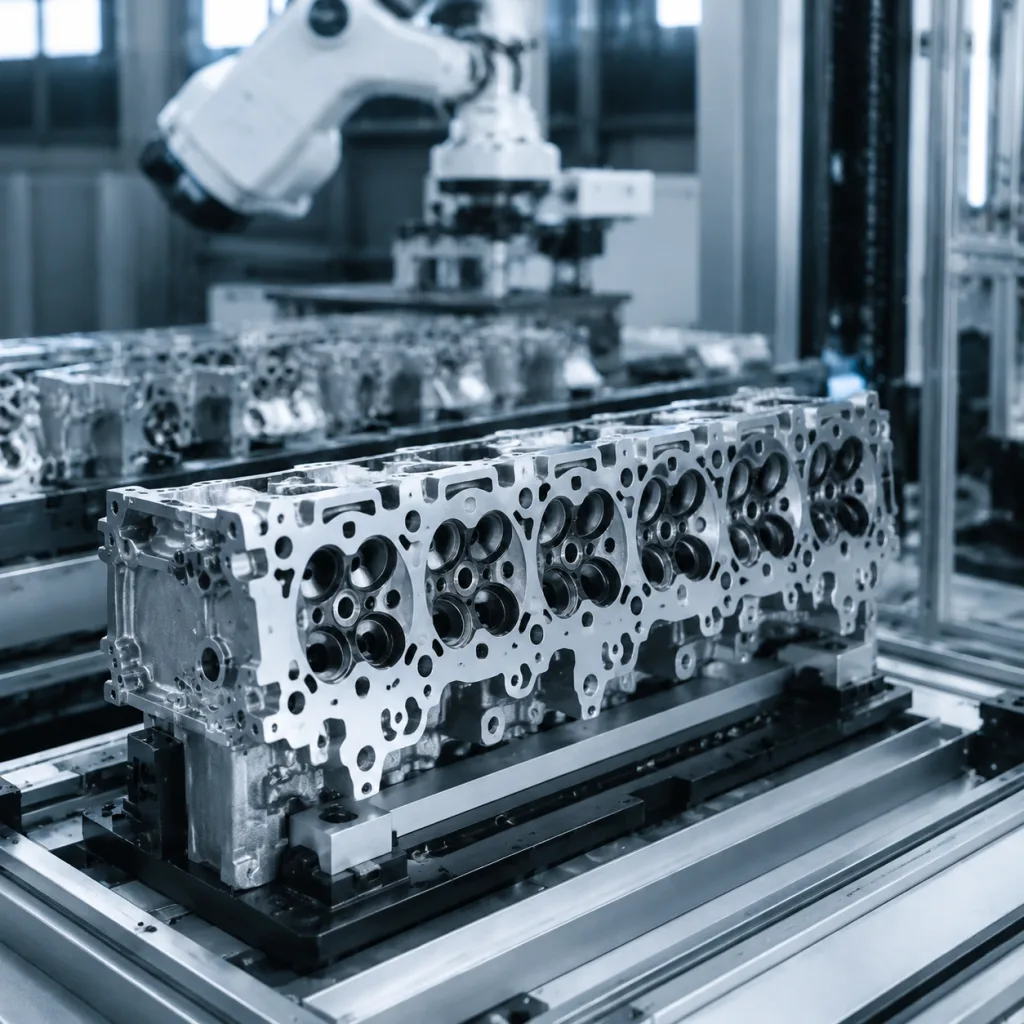
Cylinder heads sit at the intersection of casting quality, precision machining, thermal durability, and workshop installation reliability. Weak supplier control can create expensive downstream problems. A head that passes a quick visual inspection may still fail on deck flatness, internal porosity, guide geometry, valve seat runout, or cam bore alignment. For that reason, experienced buyers evaluating a cylinder head Opel OEM supplier combine commercial review with a process-level technical audit. The aim is not just to find a factory that can make samples, but a supplier that can support repeat orders, mixed SKU schedules, and stable field performance across markets.
What procurement teams should check first
Cylinder head sourcing usually starts with four areas: manufacturing control, documentation, commercial fit, and logistics reliability. A credible supplier should be able to explain the full route from casting receipt or in-house casting management through CNC machining, seat and guide installation where applicable, washing, leak testing, final inspection, and packing.
The first conversation with a cylinder head Opel OEM supplier should quickly show whether the supplier is structured around controlled production or simply trading through external workshops. Buyers should ask who controls casting procurement, who owns machining fixtures and gauging, where pressure testing is performed, and how final inspection records are stored. If those answers are vague, escalation risk is usually high later in the programme.
Key questions for first-stage supplier review:
Certification status: current IATF 16949:2016 and ISO 9001:2015 certificates, including manufacturing scope and certified site
Material control: alloy grade confirmation such as Al-Si cast aluminium, incoming inspection records, and heat/lot traceability
Machining capability: documented tolerances for deck flatness, cam bore alignment, valve guide bore size, seat concentricity, and threaded-hole position
Testing:100% air-under-water or dry pressure leak testing where specified, with defined pressure, hold time, and acceptance criteria; hardness checks where applicable; dimensional inspection plans with sampling frequency
Product change control: revision management, sample approval, deviation handling, and engineering change notification process
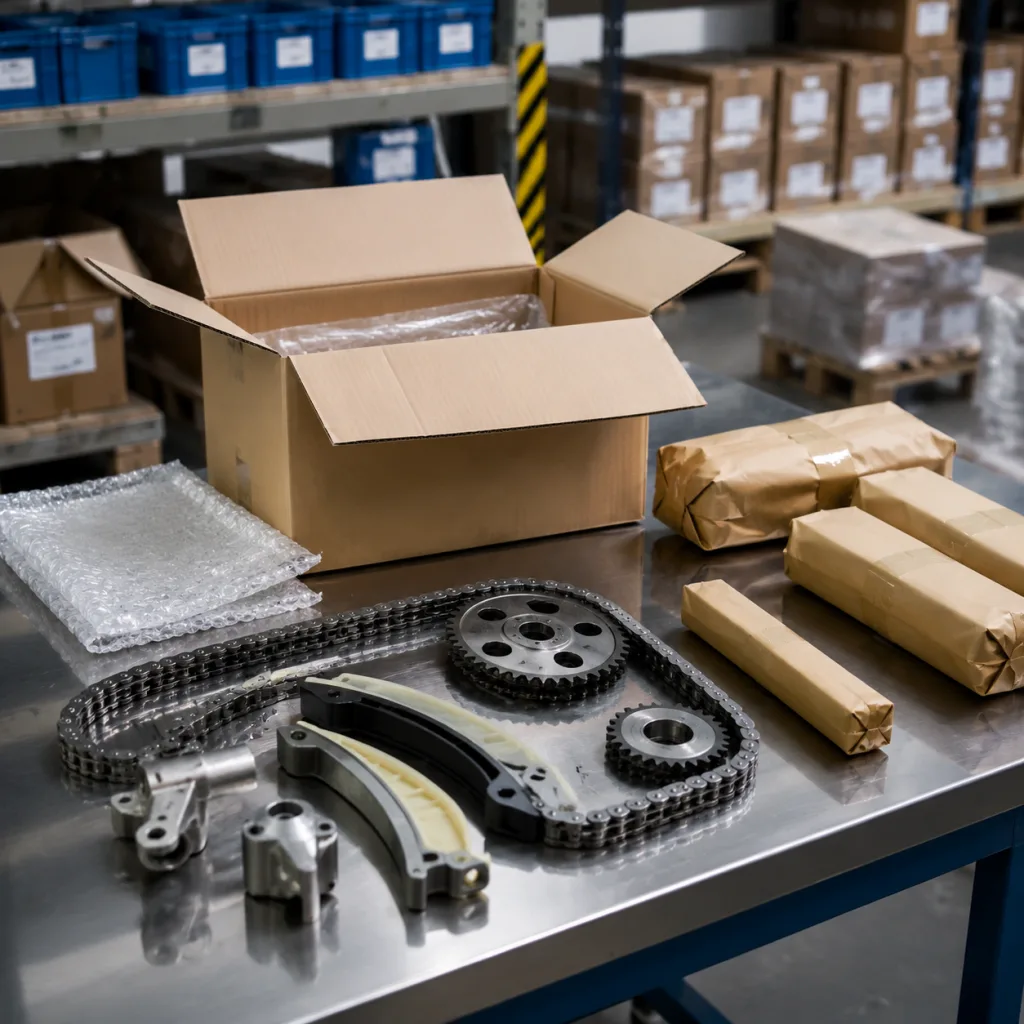
Export packaging: VCI or anti-corrosion protection where needed, partitioned cartons or molded trays, pallet stability, and drop-damage prevention
Regulatory support: declarations for REACH (EC) No 1907/2006 where requested for relevant materials and substances in supplied components
In early qualification, buyers should also confirm whether the supplier understands the exact supply format required. Some programmes need bare heads, while others require assembled heads with guides, seats, valves, springs, seals, and related hardware already installed. That distinction matters because an assembled head adds more process steps, more supplier liability, and a broader inspection scope. A supplier that is strong in machining bare castings may not be the right partner for complete head assembly.
Commercial alignment should be checked just as early as technical capability. Procurement teams should clarify whether the supplier supports small market-entry orders, whether reference mixing is allowed in one shipment, and whether private-label packaging can be added without disrupting lead time. A factory that only works efficiently on long runs may not suit multi-market distributors launching a new Opel engine-component range.
For buyers comparing multiple factories, the useful distinction is not only whether a supplier can machine a head, but whether it can maintain consistent output across repeat orders and mixed reference schedules. That is especially important where importers hold regional inventory and cannot absorb high variation in warranty return rates.
You can review our catalog for current engine-component coverage and related product families.
Technical criteria for Opel cylinder head supply
Cylinder heads are tolerance-sensitive components. Even where the casting looks acceptable, small variation in sealing faces, guide geometry, or seat finish can create installation issues, coolant leakage, or reduced service life. For B2B sourcing, buyers usually request a control plan covering the following technical points.
When evaluating a cylinder head Opel OEM supplier, the buyer should look beyond general statements such as “machined to OE standard.” The supplier should be able to define measurable controls, inspection frequency, datum strategy, and acceptance criteria. On aluminium cylinder heads, thermal load, coolant passage integrity, and machining accuracy all affect field performance, especially in export markets where the part may face varying fuel quality, workshop practices, and operating conditions.
Typical inspection items
Inspection item
Typical buyer focus
Why it matters
Deck flatness
Common target typically within 0.05-0.10 mm after final machining, subject to drawing
Head gasket sealing and clamp-load distribution
Deck surface finish
Often controlled in the Ra ~1.6-3.2 µm range depending on gasket type
Seal performance and rework compatibility
Combustion chamber volume consistency
Matched within defined production limits across cylinders
Compression balance across cylinders
Valve seat concentricity/runout
Commonly checked relative to guide centreline, often in the ≤0.03-0.05 mm range by application
Sealing performance and valve wear
Valve guide bore size
Bore tolerance, stem-to-guide clearance, and wear monitoring
Oil control and stem movement
Camshaft bore alignment
Line-bore consistency and positional control
Cam rotation stability, friction, and noise control
Pressure test result
100% or defined lot test with recorded pressure/hold time
Detects porosity and crack-related leakage
Thread quality
Gauge control with GO/NO-GO gauges on critical holes
Assembly reliability in workshops
</tr></thead><tbody> </tbody></table>Beyond the table above, several technical checks deserve specific attention during supplier review:
Casting integrity: porosity risk in water jackets, combustion zones, and threaded areas should be controlled through foundry process discipline, X-ray where applicable, and leak-test verification.
Seat and guide installation quality: if inserts and guides are fitted, interference fit, insertion depth, and positional accuracy should be documented. On production heads, buyers often ask for press-fit standards and retention validation after thermal cycling or process qualification.
Surface finish: deck finish, valve seat finish, and relevant sealing faces must match gasket and component interface requirements rather than being described only as “smooth” or “machined.”
Critical-hole position: manifold, cam carrier, injector, glow plug, and sensor-related holes need stable positional accuracy to avoid cross-threading, fitment stress, or assembly difficulty.
Thermal-stress performance: suppliers should explain how alloy selection, heat treatment where applicable, and casting source control support durability under repeated hot-cold cycles.
Where the application requires assembled heads, buyers may also ask for valve spring installed height records, valve seat contact-width checks, seal installation control, and pre-shipment corrosion prevention procedures. If bare heads are supplied, machining datum integrity and packing protection become more important because the downstream assembler carries the final build risk.
For aftermarket applications, OE cross-reference handling should be accurate and conservative. If a buyer provides a number such as OE 06A107065 for fitment mapping, the supplier should verify dimensions, combustion-side configuration, and application scope before listing. Cross-references should support identification only, not imply vehicle-maker approval.
Buyers should also request clarity on how the supplier handles engineering deviations. If a machining offset, insert variation, or casting condition falls outside standard control limits, the supplier should have a documented containment process. Without that discipline, technically marginal heads may be mixed into export shipments, creating installation issues that only appear once the product reaches the market.
A capable cylinder head Opel OEM supplier will therefore present not only the nominal drawing dimensions, but the actual method used to hold them over time: fixture location strategy, tool-life monitoring, CMM or dedicated-gauge checks, SPC on critical characteristics where appropriate, final audit frequency, and reaction plans when trends move out of target.
MOQ, lead time and production planning
Commercial feasibility depends on order structure. Many buyers want a low initial MOQ for market testing, then stable replenishment once demand is confirmed. In cylinder head supply, MOQ is shaped by casting source economics, machining fixture utilisation, setup time, and packaging format.
A practical sourcing discussion should cover:
Sample quantity: prototype or first-article pieces for dimensional and fitment review
Trial order MOQ: often lower than serial MOQ, but priced separately due to setup, programming, and inspection cost
Serial MOQ: agreed by reference, or consolidated across multiple SKUs in one shipment
Lead time: separate timing for tooling, samples, pilot run, and repeat production
Forecast method: rolling 8- to 12-week visibility for casting planning and machining slot allocation
Safety stock policy: whether the supplier can hold buffer inventory for regular buyers
Container mix: ability to combine cylinder heads with related items from our catalog
For most procurement teams, the most useful lead-time question is not the nominal number of days, but what assumptions sit behind it. A quoted 30-45 day production lead time may only apply when raw castings are already available, tooling is validated, and packaging artwork is approved. Buyers should ask for a clear breakdown: casting procurement, rough and finish machining, washing, assembly if required, leak testing, final inspection, packing, and booking.
MOQ should also be assessed in relation to reference complexity. Some Opel cylinder head references may rely on common castings and standard fixtures, allowing more flexible order sizing. Others may involve lower-volume applications, dedicated fixtures, special valve-train content, or unique machining operations, which makes a higher MOQ commercially necessary. An informed supplier should be able to explain exactly which cost drivers affect the threshold.
When planning an initial order, buyers should distinguish between three stages:
1. Qualification stage: samples, dimensional reports, fitment checks, and approval decisions. 2. Pilot stage: limited-volume supply used to verify packaging, transport condition, and first market feedback. 3. Serial stage: repeat replenishment based on forecast, agreed inspection scope, and standard commercial terms.
This structure prevents confusion when a supplier quotes one headline MOQ and one headline lead time that do not actually apply across all phases. It also helps purchasing teams align internal sales forecasts with factory capacity and shipping windows.
Where branding, carton design, or special machining is required, the supplier should separate standard lead time from private-label or engineered-to-print timing. If your programme needs drawing-based adaptation, private packaging, or fixture changes, review custom manufacturing capability before nomination.
Production planning should also cover peak-season risk. If the buyer’s sales pattern is seasonal, the supplier should confirm whether castings and machining slots can be reserved in advance. This matters for importers serving repair markets where sudden demand spikes can occur after fleet maintenance cycles or regional overheating-related failures. A capable cylinder head Opel OEM supplier will usually recommend a rolling forecast and agreed reorder point rather than relying only on spot purchasing.
Finally, logistics planning should be treated as part of lead time, not as a separate issue. Export programmes need realistic booking assumptions, documentation cut-off times, pallet quantity planning, gross-weight limits, and contingency for port congestion or route changes. A supplier that quotes fast production but weak outbound coordination may still create unstable supply performance.
Quality records, audits and traceability expectations
For importers and OE-service buyers, a supplier audit should confirm that documented systems are used on the shop floor, not only presented in a file. Cylinder head programmes typically require lot traceability from incoming castings through machining and final packing.
Evidence buyers commonly request includes:
Process flow chart
PFMEA or equivalent risk review where applicable
Control plan for critical dimensions and leak testing
Calibration records for gauges, CMMs, torque tools, and pressure-test equipment
First article or sample inspection reports
Non-conformance and corrective action workflow
Batch coding and shipment traceability records
Packaging validation for sea freight routes
A robust quality system should align with IATF 16949:2016 and ISO 9001:2015 requirements for document control, corrective action, supplier management, and traceability. For some customers, PPAP-style submission may also be requested even for aftermarket programmes, particularly when a distributor is standardising supply across multiple countries.
During qualification of a cylinder head Opel OEM supplier, buyers should ask to see how traceability works in practice. For example, can the supplier connect a finished part number and batch code back to the casting lot, melt or heat record where available, machining date, machine line, operator or shift record where applicable, leak-test result, and final inspection status? If a field complaint occurs months later, the speed and precision of that traceability determine how quickly the issue can be contained.
Factory audits should include actual observation of machining centres, fixture condition, in-process gauging, wash cleanliness, inspection stations, and quarantine control. If the supplier subcontracts any process, that should be disclosed early. Subcontracting is not automatically a problem, but unmanaged subcontracting increases variation risk unless incoming verification and traceability are strong.
The audit should also verify reaction discipline. Buyers should examine how non-conforming cylinder heads are identified, segregated, reviewed, and released or scrapped. A strong system will show clear red-tag or digital hold status, quarantine zones, approval authority, and records of corrective action. A weak system often relies on verbal decisions, which creates risk of mixed stock and repeat failures.
For high-value engine components, corrective action quality matters as much as the initial inspection capability. If the supplier receives a claim for leakage, thread damage, seat geometry, or dimensional drift, the buyer should expect a structured response with root-cause analysis such as 5 Why or 8D, containment action, stock review, and preventive measures. This is especially important for international buyers, because replacing defective cylinder heads after export creates disproportionate freight, labour, and reputation costs.
Packaging validation should not be treated as an afterthought. Cylinder heads are heavy, precision-machined parts with vulnerable sealing surfaces and threaded features. Export-ready packaging should be tested for stacking stability, internal movement control, moisture exposure, and pallet integrity. In sea freight, poor packaging can turn an acceptable product into a field claim before it even reaches the customer warehouse.
Driventus is an independent aftermarket manufacturer; brand names are referenced for fitment only.
How to compare suppliers objectively
A structured scorecard helps buyers avoid over-weighting unit price. For cylinder head sourcing, total acquisition cost is influenced by yield stability, documentation quality, packaging loss, and response speed when issues arise.
Use a comparison framework such as this:
Criteria
Supplier A
Supplier B
Supplier C
Certified to IATF 16949:2016
Sample lead time stated clearly
Serial MOQ fits target market launch
100% pressure testing available
Critical dimension reports supplied
CMM or dedicated gauge capability shown
OE cross-reference validation method
Private-label packaging support
Corrective action turnaround time
Export packing proven for sea freight
Multi-reference shipment capability
</tr></thead><tbody> </tbody></table>This approach helps purchasing teams discuss trade-offs with engineering and quality departments using the same data set. In many cases, the lowest ex-works price is not the lowest landed cost once claim handling, repacking, sorting, and delayed replenishment are considered.
When supplier communication is slow during the quotation stage, buyers should treat that as a useful signal. Cylinder head programmes often involve drawing review, fitment clarification, and batch issue follow-up. Response discipline during RFQ is usually a reliable indicator of post-order support.
To make the scorecard more useful, buyers can assign weighted values instead of treating every line equally. For example:
Quality system and traceability: high weighting for OE-service and warranty-sensitive markets
Technical validation capability: high weighting where multiple Opel references are being launched quickly
MOQ and replenishment flexibility: high weighting for importers testing new markets or stocking mixed SKUs
Packaging and logistics reliability: high weighting for long sea-freight routes or distributor networks with multiple warehouses
Commercial responsiveness: high weighting where engineering changes and urgent replenishment are common
This turns supplier selection into a measurable decision rather than a subjective preference. It also helps internal stakeholders explain why one cylinder head Opel OEM supplier may be preferable even if another offers a slightly lower unit price.
Buyers should also compare the cost of failure, not just the purchase price. Questions worth asking include:
What is the expected response time for a quality complaint?
Will the supplier support stock sorting, replacement, or urgent remake if needed?
How clearly are warranty responsibilities and claim evidence requirements defined?
Can the supplier sustain supply if demand rises or one casting batch is rejected?
An objective comparison should include sample performance as well. Dimensional compliance, leak-test evidence, surface condition, thread quality, packaging presentation, and completeness of documentation from the sample stage often reveal more than a polished sales presentation. A disciplined cylinder head Opel OEM supplier usually demonstrates control early by sending clearly identified samples with inspection data and prompt technical feedback.
Finally, buyers should review long-term fit. A supplier that can support only one current Opel reference may not be the best strategic partner if the distributor plans to expand into broader engine-component coverage. Multi-reference support, engineering communication, and consistent documentation are often the features that create supply stability over time.
Working with Driventus on cylinder head programmes
Driventus supplies engine and powertrain components to B2B customers in more than 60 countries, with manufacturing and quality management aligned to export supply requirements. For cylinder head projects, buyers typically engage us for application review, quotation by specification or sample, and discussion of MOQ, packaging, and inspection documentation.
We support importer and distributor requirements with:
B2B quotation by part reference, drawing, or sample
Standard or private-label export packaging
Dimensional and inspection documentation by project scope
Consolidated shipments with related engine components
Technical review for fitment mapping and cross-reference control
Factory-audit support for qualified customers
For buyers searching for a cylinder head Opel OEM supplier, the most effective starting point is a clear RFQ package. This should ideally include target part numbers, OE references used for identification, annual demand estimate, first-order quantity, destination market, and any special documentation requirement such as dimensional reports, leak-test confirmation, material declaration, or packaging specifications. The more complete the RFQ, the faster a meaningful quotation and feasibility review can be provided.
If the project involves a new or sensitive reference, sample evaluation normally comes before any serial commitment. At that stage, we can review drawing points, critical dimensions, inspection scope, and fitment expectations with the buyer so that approval criteria are clear before volume production begins. This reduces the risk of misunderstanding between catalog matching, workshop installation needs, and production reality.
We also recognise that different buyers need different supply models. Some want a straightforward standard-product route with efficient MOQ and repeat replenishment. Others need private-label cartons, mixed container loading, or coordinated sourcing across several engine-component categories. Our role is to align the manufacturing and export process with the commercial structure of the programme rather than offering a one-format approach.
If you are qualifying a new source, the practical next step is to share target references, annual volume, market destination, and documentation expectations. That allows a supplier to confirm whether the programme fits standard production or needs a customised route.
For project discussion, sample review, or RFQ support, use request a quote.
Frequently asked questions
MOQ depends on the reference, casting availability, machining setup time, and packaging format. Trial orders are often lower than serial MOQ, while dedicated or low-volume references may need higher thresholds to cover fixture and inspection cost. Buyers should ask for separate figures for samples, pilot runs, and repeat orders rather than one blended number.
For many programmes, yes. 100% pressure testing helps detect porosity and crack-related leakage before shipment. Buyers should also ask for the test method, test pressure, hold time, acceptance criteria, and whether results are recorded by batch or by individual piece.
Typical documents include certification copies, process flow, control plan, key-dimension reports, calibration records, traceability method, and corrective action procedure. Depending on the programme, buyers may also request material confirmation, leak-test records, first-article inspection, or PPAP-style submissions for first orders.
If you are comparing suppliers for aluminium cylinder heads, Driventus can review your reference list, volume plan, and documentation needs. Contact our team to discuss the project at /contact.html