cylinder head · 2026-07-05

Cylinder Head Mitsubishi Supplier Sourcing Criteria

A cylinder head Mitsubishi supplier is not selected by price sheet alone. One casting error, wrong port configuration, rough gasket face, or weak export carton can turn a profitable B2B programme into rework, returns, and warranty noise. Buyers need proof that the supplier can hold metallurgy, casting integrity, CNC machining accuracy, valve-train geometry, leak testing, cleaning, packing, and documentation across repeat orders—not just on one sample.

Driventus manufactures engine and powertrain components in Taizhou, Zhejiang, and exports to more than 60 countries. Our cylinder head programme supports importers, distributors, OEM service teams, and repair-chain buyers that need Mitsubishi-fitment aftermarket applications with controlled samples, practical cross-reference support, 30–60 day production planning, and flexible mixed-family procurement. Driventus is an independent aftermarket manufacturer; brand names and OE references are used for fitment identification only.

Nomination decision: what must be proven before price matters

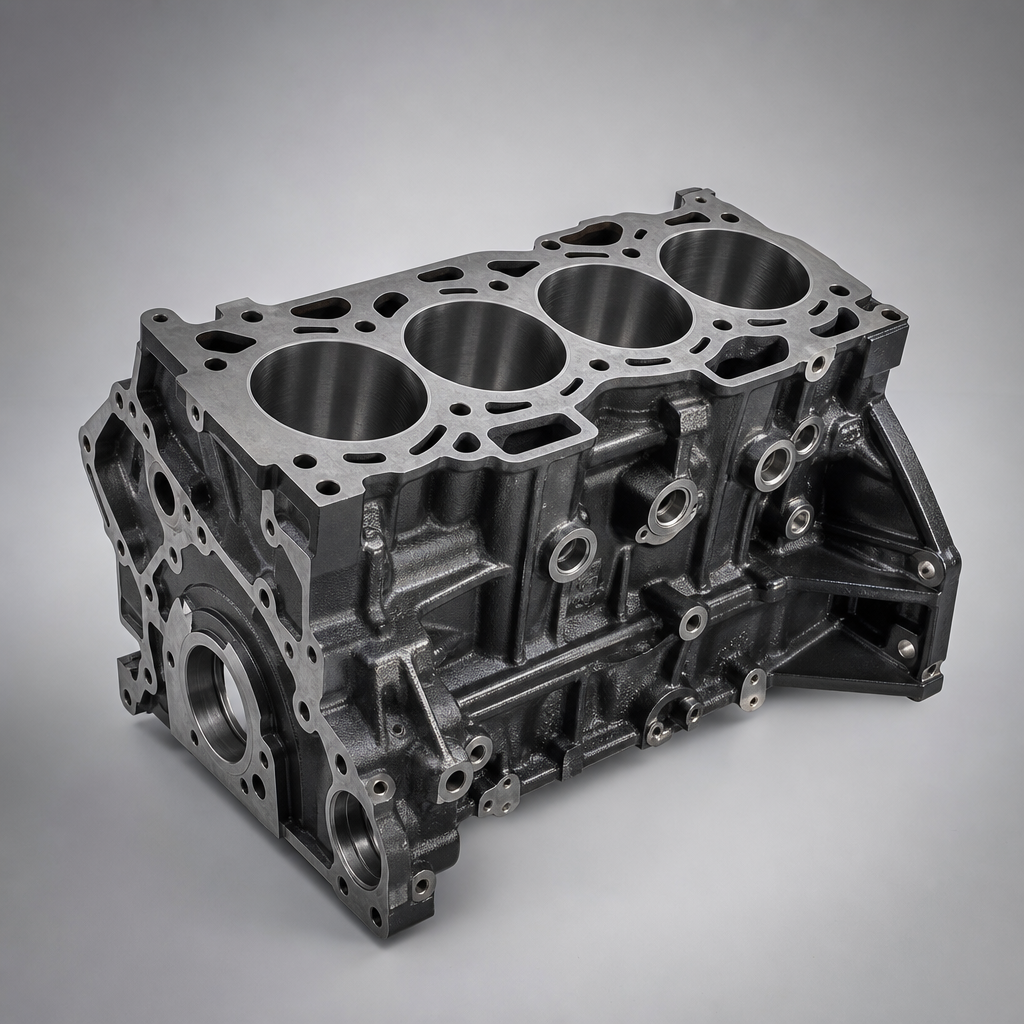
A cylinder head is a compact bundle of risks: combustion sealing, coolant flow, oil passages, threaded interfaces, valve seats, guide alignment, camshaft support, and gasket-face finish. If any one of those is wrong, the buyer pays again through inspection, rework, delayed sales, or claims.

Before nominating a cylinder head Mitsubishi supplier, make the decision around five proofs:

  • Manufacturing scope: casting control, T6 or stress-relief heat treatment where specified, CNC machining, washing, pressure testing, assembly, and semi-finished supply.
  • Quality certification: IATF 16949:2016 and ISO 9001:2015 certificates with valid issuing bodies and a scope relevant to engine-component manufacturing.
  • Fitment control: OE cross-reference policy, drawing revision control, sample approval, engine-code review, interchange verification, and a process for disputed catalogue references.
  • Batch traceability: casting lot, furnace or melt record where applicable, machining lot, pressure-test result, operator, inspection status, final inspection ID, carton label, and pallet number.
  • Export readiness: neutral or private-label packing, palletisation, HS code support, commercial invoice, packing list, certificate documents where applicable, and document dispatch before vessel cut-off.

For Mitsubishi-fitment heads, do not stop at the part number. Confirm combustion chamber layout, injector or glow-plug position where applicable, camshaft housing interface, valve seat and guide material, water-jacket integrity, oil-gallery cleanliness, gasket-surface finish, and threaded-hole quality. Good RFQs ask for deck flatness control, surface roughness target, valve-seat runout limit, guide-bore tolerance, pressure-test pressure and hold time, and thread gauge method.

The strongest nomination route is simple: approve samples with dimensional evidence, freeze the bill of material, define assembly content, approve packaging, and lock the inspection points before the pilot order. Price becomes meaningful only after those variables are controlled.

Supply format comparison: bare, semi-assembled, assembled, or custom

The word “cylinder head” can mean very different cost, inspection, and responsibility levels. Driventus supplies aftermarket and B2B replacement programmes as bare heads, semi-assembled heads, fully assembled heads, or buyer-defined configurations depending on the engine family and commercial requirement. Buyers can review related engine parts in our catalog and the engine component range at /products/engine-components.html.

</tr></thead><tbody> </tbody></table>A quotation can only be compared when the assembly definition is identical. In one market, “complete” may mean valves and springs. In another, it may include seals, plugs, studs, cam-related components, temperature sensor plugs, or additional hardware. Put the included components in writing.

Packaging is part of the specification, not an afterthought. Confirm whether the order needs one-piece neutral cartons, export pallets, barcode labels, desiccant, foam blocking around machined faces, or bulk industrial packing. Driventus can discuss custom manufacturing for distributors and service networks that need controlled specifications beyond standard aftermarket supply.

OE part-number cross-references may be used to identify fitment only where supplied by the buyer or confirmed during application review. Driventus does not claim approval, affiliation, or endorsement by any vehicle manufacturer.

Failure modes to engineer out during casting and machining

Most cylinder head failures are not mysterious. They trace back to process gaps: casting porosity, inconsistent heat treatment, poor valve-seat concentricity, inaccurate deck flatness, blocked passages, damaged threads, or misaligned camshaft bores. Downstream buyers usually cannot correct these problems economically.

Driventus controls cylinder head production through defined steps, including:

  • Incoming inspection of aluminium alloy or cast-iron material according to the specified grade, with chemical composition records where required.
  • Casting process control, including melt temperature, mould condition, core positioning, gating and riser design, shot-blast condition, and visual inspection for shrinkage, cold shut, cracks, and sand inclusion.
  • Heat treatment where required by material and engine family, with time-temperature records and hardness checks when specified.
  • CNC machining for deck surface, camshaft bores, bolt holes, manifold faces, sensor ports, plug holes, oil galleries, and threaded interfaces.
  • Valve-guide and valve-seat machining with concentricity and runout checks.
  • Deburring and cleaning of oil galleries, coolant passages, blind holes, and threaded holes before assembly or packing.
  • Pressure leak testing for water jackets and other critical passages, normally on every finished head for production release.
  • Final inspection before anti-corrosion protection, labelling, carton packing, and export palletising.

Typical control points include deck flatness, surface roughness, guide bore size, valve-seat runout, bolt-hole position, camshaft alignment, chamber appearance, and thread quality. Target values must follow the approved drawing. As reference points, buyers often ask for deck flatness in the 0.03–0.08 mm range over the gasket face, Ra surface finish around 1.6–3.2 µm for many MLS-gasket applications, valve-seat runout commonly within 0.03–0.05 mm, and leak testing such as 0.4–0.6 MPa for 30–60 seconds with no visible pressure decay or bubbles. These values are not universal; confirm them by engine design and sample approval.

Final inspection alone is too late. The supplier should show stable tooling, repeatable fixture location, calibrated gauges, trained operators, first-off inspection after changeover, in-process machining checks, and reaction plans when a measurement drifts. For long-term supply, also check how fixture wear, cutting-tool life, thread taps, leak-test seals, gauge replacement, and engineering changes are recorded.

Document pack deep-dive: certificates are only the starting point

For importers and Tier-1-related buyers, documentation can decide whether a sample is approved. Driventus operates under a documented quality system aligned with IATF 16949:2016 and ISO 9001:2015. These standards do not replace part validation, but they show that the factory maintains process control, corrective-action procedures, internal audits, training records, calibration, and traceability.

A useful sourcing document pack may include:

  • Valid IATF 16949:2016 and ISO 9001:2015 certificates.
  • Process flow diagram and control plan covering casting, machining, washing, leak testing, inspection, and packing.
  • Sample dimensional report covering critical-to-function dimensions and drawing revision.
  • Material certificate or chemical composition report for aluminium alloy, cast iron, seat insert, guide, and valve material where applicable.
  • Heat-treatment record, hardness result, or microstructure evidence where applicable.
  • Leak-test record or sample validation evidence, including pressure, hold time, equipment ID, date, and operator.
  • Packaging specification, carton dimensions, gross weight, pallet pattern, and stacking limit.
  • Batch traceability format linking part number, lot number, production date, and inspection release.
  • Corrective action report format, such as 8D, when required.
  • REACH (EC) No 1907/2006 compliance statement where relevant for EU import review.

Avoid false comfort from irrelevant claims. Cylinder heads are not normally certified under brake-specific standards such as SAE J2527. Emissions standards such as ECE R-83 apply to vehicle-level emissions approval rather than independent aftermarket cylinder head endorsement. Product fitment verification and regulatory approval claims are different matters.

For higher-risk or high-volume programmes, buyers may request PPAP-style documentation, retained sample control, first-article inspection, periodic requalification, annual layout inspection, or dock-audit reports. Match the document burden to the programme. A low-volume distributor SKU may need certificates and a sample report. A service-network programme may need a formal control plan and written change approval.

Ordering scenario: launch small, then consolidate intelligently

A practical cylinder head sourcing plan balances MOQ, model mix, warehouse demand, and freight economics. For aftermarket distributors, the best programme is often not one large SKU. It is a mixed structure: fast movers, regional engine families, and slower part numbers that protect customer retention.

Supply type Typical contents Buyer use case Procurement notes
Bare cylinder headMachined casting only, without valves or springsDistributors with local assembly capabilityLower unit value and more local flexibility; buyer controls final valves, springs, plugs, and gasket kit
Semi-assembled headCasting with valve seats, guides, plugs, and selected hardwareRepair chains and engine rebuildersReduces local machining and inspection work; confirm whether plugs, studs, and seals are included
Fully assembled headValves, springs, seals, retainers, and selected cam-related parts where applicableFast-moving aftermarket SKUsRequires stronger assembly control, spring-height checks, valve leakage control, and packing protection
Custom configurationBuyer-defined machining, material, marking, or packagingPrivate-label distributors and Tier-1 service programmesRequires drawing review, sample approval, and PPAP-style documentation where requested

</tr></thead><tbody> </tbody></table>For a new cylinder head Mitsubishi supplier programme, start narrow. Select 1–3 sample SKUs, validate them fully, then place a pilot order such as 20–100 pieces depending on part size and demand. After incoming inspection and installation feedback, move to regular consolidated shipments.

MOQ can vary widely. A stocked bare head may support small trial quantities. A custom assembled head, private-label carton, or low-volume casting may need higher MOQ to absorb setup, inspection, and packaging cost.

Do not compare only unit price. Add the hidden costs: local cleaning, thread repair, repacking, extra inspection, catalogue correction, customer claim handling, and urgent replacement freight. The better sourcing decision usually comes from landed cost, quality stability, document response, claims procedure, and lead-time reliability.

Audit trail: follow one head from casting lot to pallet

A factory audit should answer one question: can the supplier repeat the approved sample at production volume? For cylinder heads, that means checking casting, heat treatment where used, machining, assembly, testing, cleaning, packing, storage, and nonconforming product control.

Recommended audit checks:

  • Certificate scope: confirm that IATF 16949:2016 and ISO 9001:2015 certificates cover relevant manufacturing activities, not only trading or unrelated products.
  • Gauge calibration: review calibration labels, master gauges, plug gauges, bore gauges, CMM records where used, gauge repeatability where applicable, and overdue equipment records.
  • Machining fixtures: inspect fixture maintenance, part-location control, clamping condition, changeover records, first-piece approval, and tool-life records.
  • Leak testing: confirm pressure level, hold time, rejection criteria, seal condition, equipment maintenance, daily verification, and record retention.
  • Surface control: check deck-surface measurement method, roughness tester use, flatness method, and protection after machining.
  • Cleanliness: review washing, drying, compressed-air quality, oil-gallery cleaning, coolant-passage flushing, blind-hole cleaning, and contamination prevention.
  • Traceability: follow one finished part back to casting lot, machining records, inspection status, leak-test record, assembly operator, carton label, and pallet record.
  • Packaging validation: check drop resistance, internal supports, corrosion prevention for inserts and steel parts, carton labelling, pallet wrapping, and pallet stability.
  • Corrective action: request examples of closed 8D reports or internal corrective-action records with root cause, containment, permanent action, and verification.

Remote audits work for pre-screening, especially before samples or first cooperation. High-volume programmes deserve on-site verification or a qualified third-party audit.

Also ask how change control works. A machining programme change, valve-seat supplier change, material substitution, leak-test standard change, or packaging revision should not enter production without written approval when the buyer has a controlled specification.

Close the audit with actions, owners, target dates, and evidence requirements: photos, revised work instructions, calibration records, or trial-run data. That turns a factory visit into a measurable supplier approval process.

Fitment and private label: where catalogue mistakes become claims

Fitment accuracy is a commercial risk, not a clerical task. A cylinder head may look similar across engine variants while differing in sensor ports, manifold patterns, camshaft layout, injector location, valve size, thermostat housing, or coolant passages. Incorrect listings create returns, labour disputes, installation delays, and damaged distributor confidence.

Driventus supports fitment review using buyer-provided references, engine codes, drawings, samples, photos, and market application data. Brand names, model names, and OE references may be used only to identify compatibility. Driventus is an independent aftermarket manufacturer; brand names are referenced for fitment only.

For private-label buyers, support can include:

  • Neutral cartons or buyer-specified outer packaging.
  • Barcode labels, QR codes, SKU labels, and country or language labels according to buyer format.
  • Batch number, production date coding, and inspection release number.
  • Packing list by SKU, carton, pallet, gross weight, and net weight.
  • Technical photos for catalogue building, without protected logos.
  • Consolidation with related parts such as gaskets, water pumps, pistons, valve-train components, timing parts, and other engine parts.

A reliable supplier keeps a version-controlled cross-reference file. If the buyer changes a reference list, engine-code range, market application, or supersession note, the update should be documented before quotation and production. Otherwise, the supplier may deliver a part that matches the purchase description but fails the buyer’s catalogue logic.

Private-label support should also protect the buyer’s channel. Packaging artwork, label language, barcode format, carton strength, and pallet configuration should be approved before mass production, especially for e-commerce, warehouse scanning, or retail distribution. For heavy heads, confirm single-carton drop protection, machined-face separators, corner protection, pallet overhang limits, and maximum pallet height before ocean or truck freight is booked.

RFQ workflow: eight steps from enquiry to pilot order

A clear RFQ prevents most quotation delays. When contacting Driventus, provide the application list, expected annual volume, preferred supply type, target market, packaging requirement, and any inspection standard used by your company. If available, send drawings, samples, photos of critical faces, existing cross-reference data, and the current problem to solve: porosity, oil leakage, wrong port configuration, packaging damage, unstable lead time, or another issue.

Use this sequence:

1. Share RFQ data, including engine family, engine code, target market, and annual forecast. 2. Confirm supply type: bare, semi-assembled, or fully assembled, with a written list of included components. 3. Review fitment and cross-reference information, including supersessions and market-specific variants. 4. Confirm MOQ, sample cost, tooling or fixture charge if any, lead time, payment terms, and Incoterms. 5. Produce samples or provide existing inspection data where available. 6. Complete buyer dimensional, visual, pressure, assembly, and installation checks. 7. Approve packaging, label format, pallet pattern, and document requirements. 8. Start pilot production, review incoming inspection and installation feedback, then move to regular replenishment.

When comparing suppliers, force equivalent quotations: same assembly content, same alloy and heat-treatment requirement, same packing, same Incoterms, same inspection documents, and the same assumptions on private-label work. Without that discipline, the lowest unit price may simply be the least complete offer.

Define the exception process before the first production order. Who handles nonconforming samples? What happens if documents are late? How are tooling changes approved? What evidence is required for packaging damage or fitment conflicts?

To begin, buyers can request a quote with the target part family, annual forecast, destination market, preferred MOQ, expected price level if there is a target, and required documentation package. Driventus will review fitment, manufacturing scope, MOQ, lead time, sample route, export documents, and packaging requirements before confirming next steps.

Frequently asked questions

Please provide engine family, engine code if known, application market, supply type, expected annual volume, target MOQ, packaging requirement, and any OE or aftermarket references used in your catalogue. Drawings, samples, and photos of gasket faces, manifold faces, sensor ports, cam areas, and threaded interfaces help confirm fitment and machining scope.

Yes. Depending on the part family, Driventus can discuss bare, semi-assembled, or fully assembled cylinder heads. Assembly content should be agreed before quotation because valves, springs, seals, plugs, studs, cam-related parts, inspection scope, packaging, MOQ, and lead time all affect the final price.

Buyers should review valid IATF 16949:2016 and ISO 9001:2015 certificates, plus sample inspection reports, material records, heat-treatment evidence where applicable, leak-test records, traceability format, and packaging specifications. EU buyers may also request statements related to REACH (EC) No 1907/2006 where relevant.

No. Driventus is an independent aftermarket manufacturer; brand names are referenced for fitment only. OE references and application names are used to help buyers identify compatibility, not to imply approval, sponsorship, or endorsement by any vehicle manufacturer.

If you are evaluating a cylinder head Mitsubishi supplier for distribution, repair-chain, or OEM service programmes, send your RFQ data, engine codes, target volumes, supply type, packaging needs, and documentation requirements to Driventus. We will review fitment, MOQ, lead time, sample approval, and export requirements at /contact.html

Request a Quote
Commercial item Common sourcing consideration What to confirm with the supplier
MOQDepends on casting availability, machining fixture, assembly content, and carton artworkMOQ by part number, mixed-order value, and whether trial orders can combine SKUs
Sample lead timeLonger when tooling, casting stock, or machining programme needs reviewCommonly 15–30 days for available castings and 45–75 days if new tooling or fixture work is required
Production lead timeInfluenced by casting queue, machining load, assembly level, testing, and packagingCommonly 30–45 days after deposit for repeat items and 45–60+ days for new or mixed programmes
Price structureAffected by bare vs assembled supply, alloy, valves, seats, plugs, packaging, and order volumeCompare unit price, sample cost, tooling or fixture charge, private-label surcharge, and inspection documents
PackagingNeutral, private-label, or bulk industrial packingCarton strength, foam support, machined-face protection, pallet height, moisture control, and barcode labels
IncotermsEXW, FOB, CIF, or DAP depending on buyer logisticsPort, freight responsibility, insurance, export documents, and document schedule
ForecastingReduces stockouts, urgent air shipments, and fixture changeover pressureRolling 3–6 month forecast by SKU or semi-annual purchase plan