Cylinder Head Mini OEM Supplier: Sourcing Guide
For buyers evaluating a cylinder head mini OEM supplier, the real question is not who is cheapest. It is who can hold dimensions, repeat the same result on the next lot, and document it cleanly for export. In small-engine and light-vehicle programs, a cylinder head has to match combustion chamber volume, valve geometry, coolant passages, and machining references exactly. That is why sourcing should start with process control, inspection evidence, and fitment discipline. Driventus supplies cylinder heads as an independent aftermarket manufacturer; brand names are referenced for fitment only. We manufacture in Taizhou, Zhejiang, and export to 60+ countries under IATF 16949:2016 and ISO 9001:2015 systems. This guide focuses on how to separate a capable supplier from a risky one, what failure modes matter most, and how to structure an RFQ that gets usable answers fast.
Where sourcing usually goes wrong
Cylinder head projects tend to fail in the same few places. The part may look correct, but the first assembly run exposes leaks, poor sealing, or valve-train mismatch. Price rarely reveals those risks.
Watch for these failure modes:
- Casting variation that shifts chamber volume or deck height
- Machining drift that changes flatness, seat concentricity, or port alignment
- Weak pressure testing that misses coolant or oil-path leaks
- Poor traceability that makes lot-level investigation impossible
- Packaging that damages gasket faces, guides, or threaded holes
A supplier that cannot explain how it controls those points is not ready for repeat business. For B2B buyers, the safer approach is to demand measurement records, leak-test evidence, and photos from the actual production line before the first purchase order.
What a capable supplier must prove
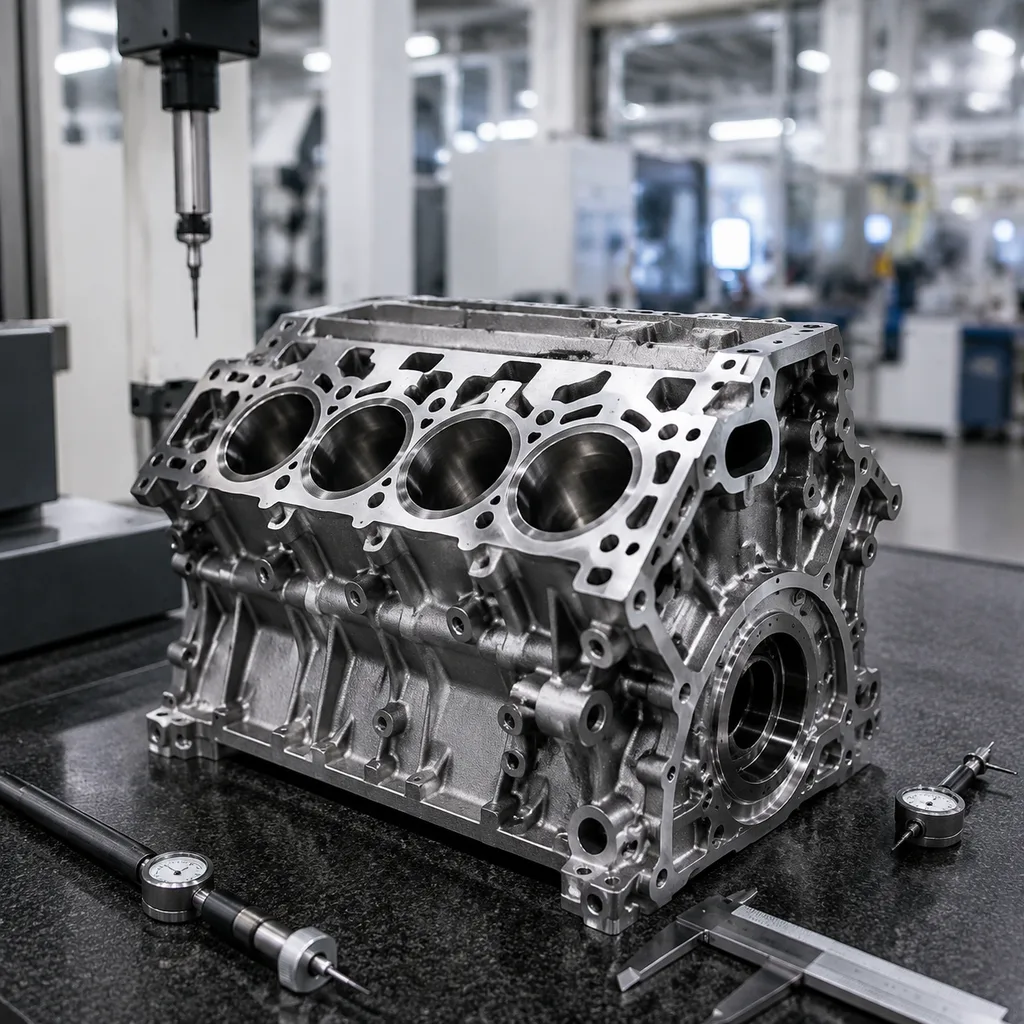
Before comparing unit prices, compare evidence. A cylinder head mini OEM supplier should be able to show that the part is controlled from raw material through final inspection.
Key proof points:
- Material specification and alloy grade for the casting or head body
- Machining datums and valve-seat geometry controls
- Flatness limits on the gasket face
- Pressure or leak test method for coolant and oil galleries
- Traceability by heat number, batch, and inspection lot
- Export packaging that prevents flange distortion and seat damage
Driventus aligns production with IATF 16949:2016 and ISO 9001:2015, which helps keep repeat orders stable. That matters more than a one-time sample that happens to fit. If you are sourcing for aftermarket distribution, repair-chain replenishment, or OEM supply, insist on a control plan, sample approval records, and dimensional reports tied to the exact production route.
How Driventus structures mini-cylinder-head orders
Mini-platform cylinder heads sit in a narrow tolerance window. A small change in chamber volume, valve stem height, or plug and injector positioning can affect assembly and combustion behavior. Our process is built around that reality.
| Buyer need | What matters | What we provide |
|---|---|---|
| Fitment confidence | OE cross-reference and application mapping | OE part-number cross-reference where available |
| Dimensional stability | Flatness, seat concentricity, port alignment | Measurement reports and first-article samples |
| Process consistency | Repeatable machining and leak testing | Production records and QC checks |
| Export readiness | Clear import documentation | Commercial invoice, packing list, test records |