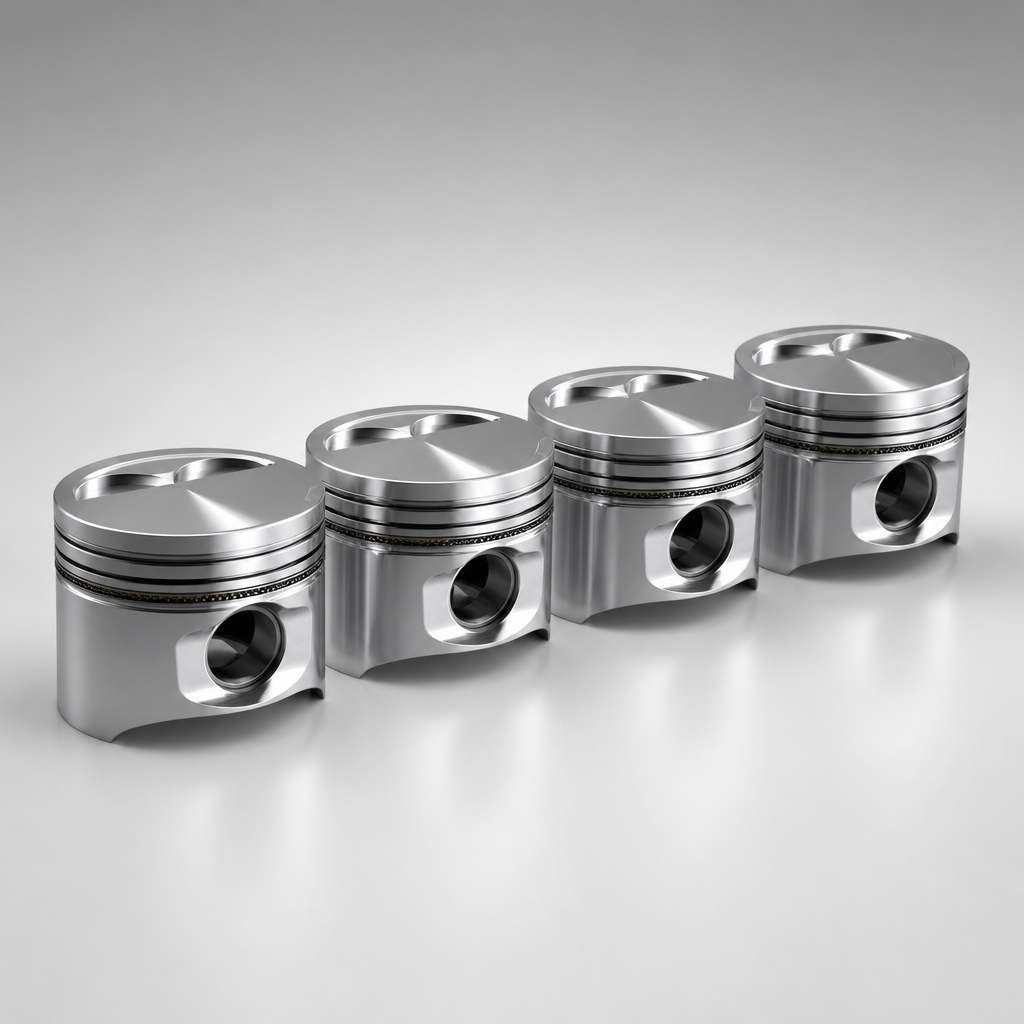
How to Choose a Cylinder Head Infiniti Supplier Without Costly Fitment Mistakes
Choosing a cylinder head Infiniti supplier is less about finding the lowest quoted price and more about reducing install risk. For B2B buyers, the real test is whether the supplier can deliver the same approved specification repeatedly: correct OE geometry, stable machining, sealed coolant and oil passages, consistent valve-train interfaces, and documentation that ties every batch back to inspection records. That matters in wholesale, aftermarket, and service-network channels, where one fitment error can turn a purchase order into returns, labour claims, and damaged customer confidence. Driventus manufactures cylinder heads and related engine components for customers in the EU, UK, US, Canada, Australia, and Brazil under IATF 16949:2016 and ISO 9001:2015 controls. We supply against drawing control, dimensional inspection, and production traceability as an independent aftermarket manufacturer; brand names are referenced for fitment only. When buyers compare sources, the useful questions are straightforward: can the supplier support OE cross-reference review such as OE 06A107065 where relevant, hold deck flatness in the roughly 0.03-0.05 mm range over the gasket face, control valve guide bores and seat concentricity to drawing, provide leak-test records by lot, and package the part well enough to survive export handling without damaging machined surfaces.
Start with a decision framework, not a price list
A strong sourcing process for a cylinder head Infiniti supplier starts with elimination criteria. Before you compare unit prices, confirm whether each supplier can actually control the application you need. That means matching the OE reference, engine code, model year range, fuel type, aspiration, regional variant, and cylinder-head revision. It also means confirming the supply condition: bare, semi-loaded, or complete.
If that fitment layer is unclear, everything after it is noise. A cheap part that needs rework or triggers returns is not cheaper.
Use a first-pass review like this:
- Fitment confidence: OE reference, engine code, revision, port layout, sensor locations, and accessory mounting points all checked
- Technical control: machining tolerance capability, pressure-test standard, surface-finish control, and valve-seat and guide process defined
- Repeatability: same casting route, same fixture logic, same approved revision across repeat orders
- Traceability: batch or lot identification linked to inspection and test records
- Commercial fit: MOQ, lead time, packaging scope, and Incoterm aligned with your actual programme
For initial RFQs, ask for more than a catalogue match. Request photos of the casting, combustion chambers, machined faces, coolant passages, oil galleries, cam-train interface, and manifold faces so your engineering or purchasing team can compare the part against the target unit. Also define whether valves, guides, seats, springs, retainers, seals, and cam caps must be installed, because these details shift both lead time and cost.
For first orders, buyers typically request:
- Drawing- or sample-based fitment confirmation
- Critical-dimension report for gasket face, cam bore area, and manifold interfaces
- Deck flatness report, commonly controlled in the 0.03-0.05 mm range depending on design and span
- Pressure-test result after machining
- Surface-finish value for sealing faces in Ra or Rz per drawing
- Material or alloy declaration for the casting and inserted components
- Export packaging specification with corrosion protection, separators, and carton strength
Commercial logic should be clarified early too. Trial orders may begin at 20-50 pcs for standard items, while repeat wholesale releases often become more efficient at 100-300 pcs. If new tooling, fixtures, or custom packaging are required, MOQ usually rises with setup cost.
Where cylinder head programmes usually fail
Most buying problems do not start on the production floor. They start in the RFQ file.
A common failure mode is assuming interchangeability across an Infiniti model range when the engine code or revision is different. Another is approving a sample visually, without freezing the written specification behind it. Buyers also run into trouble when they compare quotes that look similar on paper but hide different inspection scope, packaging standards, or supply condition.
The recurring mistakes are predictable:
- Using model name only instead of engine code, OE number, and revision detail
- Skipping confirmation of deck flatness, surface finish, and pressure-test criteria
- Not defining whether the head is bare, semi-loaded, or complete
- Leaving valve-seat, guide, and thread inspection requirements vague
- Ignoring packaging risk on export routes, especially for machined aluminium faces and installed valvetrain components
- Accepting generic quality claims without lot traceability or inspection records
- Forgetting related revision items such as gasket, cam cover, bolt set, or valvetrain updates
- Comparing piece price without normalising MOQ, packaging scope, inspection scope, and Incoterm
Another frequent issue is misaligned commercial assumptions. A supplier may quote an attractive number based on 300 pcs, standard export packing, and no private label. But the buyer may actually need 40 pcs, mixed-SKU pallets, inner barcode labels, and distributor-ready cartons. In that case, the real cost per piece is different because setup and handling are spread over fewer units.
Ask for a quote matrix with at least three breaks, such as 50 pcs, 100 pcs, and 300 pcs. Separate tooling, sample fee if any, packaging upgrades, and freight basis. That makes supplier comparison much cleaner.
If the part is for a repair network, add one more check: require a replacement note, technical photo set, workshop installation guidance, and a revision review against engine code before release. For ongoing programmes, ask the supplier to lock the approved process version and notify you before any change to casting source, fixture, valve-train component source, inspection method, or packaging format.
Spec deep-dive: the checks that actually protect fit and service life
Not every specification line has the same value. The useful ones are the checks that prevent sealing failure, noise, premature wear, or installation mismatch.
For procurement files, reference IATF 16949:2016, ISO 9001:2015, and, where relevant, REACH (EC) No 1907/2006 for chemical compliance. Then go deeper than the headline part number. Review deck height, combustion chamber volume, valve-seat condition, guide alignment, cam bore geometry where applicable, thread quality, manifold-face position, surface finish, and pressure-test results.
The most important technical controls usually include:
- Casting route and alloy: aluminium casting grade per supplier standard or customer drawing, with heat-treatment route where specified
- Deck flatness: commonly checked by CMM, precision fixture, or straightedge method; many programmes target around 0.03-0.05 mm depending on design
- Surface finish: gasket-face finish verified in Ra, matched to gasket type and engine design
- Valve guide installation: interference fit, installed height, bore size, and alignment to valve-seat centerline
- Valve seat machining: seat width, contact position, runout or concentricity, plus sealing or vacuum check after cutting
- Pressure or leak testing: often requested as 100% post-machining testing to screen porosity or crack-related leakage
- Combustion chamber volume consistency: especially relevant in multi-cylinder rebuild programmes
- Thread and insert quality: spark plug, manifold, and accessory mounting threads gauged to specification
Process detail matters because two heads can look alike and still behave very differently in service. A capable cylinder head Infiniti supplier should be able to explain how datums are established, whether CNC machining uses dedicated fixtures, which dimensions are checked 100%, and which follow a sampling plan. In many B2B programmes, first article inspection is required for the initial batch, followed by in-process checks at defined intervals such as every 10, 20, or 50 pcs depending on the characteristic.
Specification depth also changes cost. A bare machined head will generally cost less than a loaded head with seats, guides, valves, springs, retainers, and seals installed. Added operations such as helium-style leak testing, laser marking, branded packaging, anti-rust bagging, or pallet optimisation can increase price while reducing downstream claims. Lead time follows the same pattern: regularly produced references may ship in about 2-6 weeks, while custom-machined or newly developed programmes may need roughly 6-10 weeks including sample approval.
How a practical RFQ should be built
If you want useful quotations back, build the RFQ so the supplier does not need to guess.
A workable RFQ package for a cylinder head Infiniti supplier should include the OE number, engine code, model year range, target market, required supply condition, annual volume estimate, and destination country. If available, include photos of the old part, visible casting marks, and any known revision notes. If your team has a sample, mention whether supplier confirmation should be drawing-based, sample-based, or both.
Then define the technical and commercial scope in plain terms:
1. State the application clearly: OE reference, engine code, and vehicle range 2. Define the build level: bare, semi-loaded, or complete head 3. List critical checks: deck flatness, sealing-face finish, pressure test, valve-seat and guide inspection, thread gauging 4. Set documentation expectations: dimensional report, test records, material declaration, batch traceability 5. Specify packaging: corrosion protection, separators, carton style, labels, pallet marks, and barcode needs 6. Request commercial structure: MOQ, lead time, price breaks, tooling, sample charges, and Incoterm
This step matters because incomplete RFQs produce vague quotes, and vague quotes create disputes later.
For standard production items, early trials may start at 20-50 pcs. For more mature programmes, cost efficiency often improves at 100-300 pcs per release. If the supplier must open new tooling, create special fixtures, or set up custom packaging, expect a different MOQ and a longer launch path.
The goal is simple: make the supplier price the programme you actually intend to buy, not an easier version of it.
FAQ
If you are shortlisting a cylinder head Infiniti supplier, use the questions below as a fast screening tool. The fastest reviews happen when buyers send the OE number, engine code, target market, required condition of supply, estimated annual volume, and destination Incoterm together with any photos or known casting marks. That gives the supplier enough detail to judge whether the project fits an existing production line, needs sample confirmation, or requires a custom process plan.
Frequently asked questions
Yes, where the application matches our production scope and fitment data. Share the OE number, engine code, model year range, and destination market, and we will confirm availability, specification status, and whether the part is offered as a bare, semi-loaded, or complete cylinder head.
Yes. Through custom manufacturing, we can support packing changes, labelling, barcode labels, carton artwork, pallet marks, and programme-specific requirements for distributors and repair networks. Custom packaging can affect MOQ, unit cost, and lead time, so it should be defined at RFQ stage.
We can provide quality and inspection documents, batch traceability details, dimensional or pressure-test records where applicable, and commercial information for RFQ review. Typical buyer requests include critical-dimension reports, material declaration, packing specification, and lead-time or MOQ confirmation. Please use the contact form for a quote request.
If you are evaluating a cylinder head Infiniti supplier for wholesale or service-network demand, send your OE number, engine code, required condition of supply, annual volume target, and destination market to /contact.html. We will review fitment, MOQ, lead time, and supply options based on your actual programme requirements.
Request a Quote