Cylinder Head Honda Wholesale: Sourcing and Quality Guide
Buying cylinder head Honda wholesale is a sourcing exercise, not a catalogue exercise. Procurement teams need stable castings, verified machining, repeatable leak testing, and documents that support audit, import clearance, and warranty control. For Honda engine programmes, the key question is not whether a head fits one engine family on paper, but whether the supplier can hold flatness, seat geometry, and coolant passage integrity across production lots. Buyers should also confirm packaging, labelling, batch traceability, and the commercial terms that protect lead time when demand changes. Driventus supplies independent aftermarket cylinder heads for wholesale channels, with production control aligned to IATF 16949:2016 and ISO 9001:2015. Brand names are referenced for fitment only. To review related parts and assemblies, see [our catalog](/products.html) and [our engine components range](/products/engine-components.html).
What procurement teams should verify first
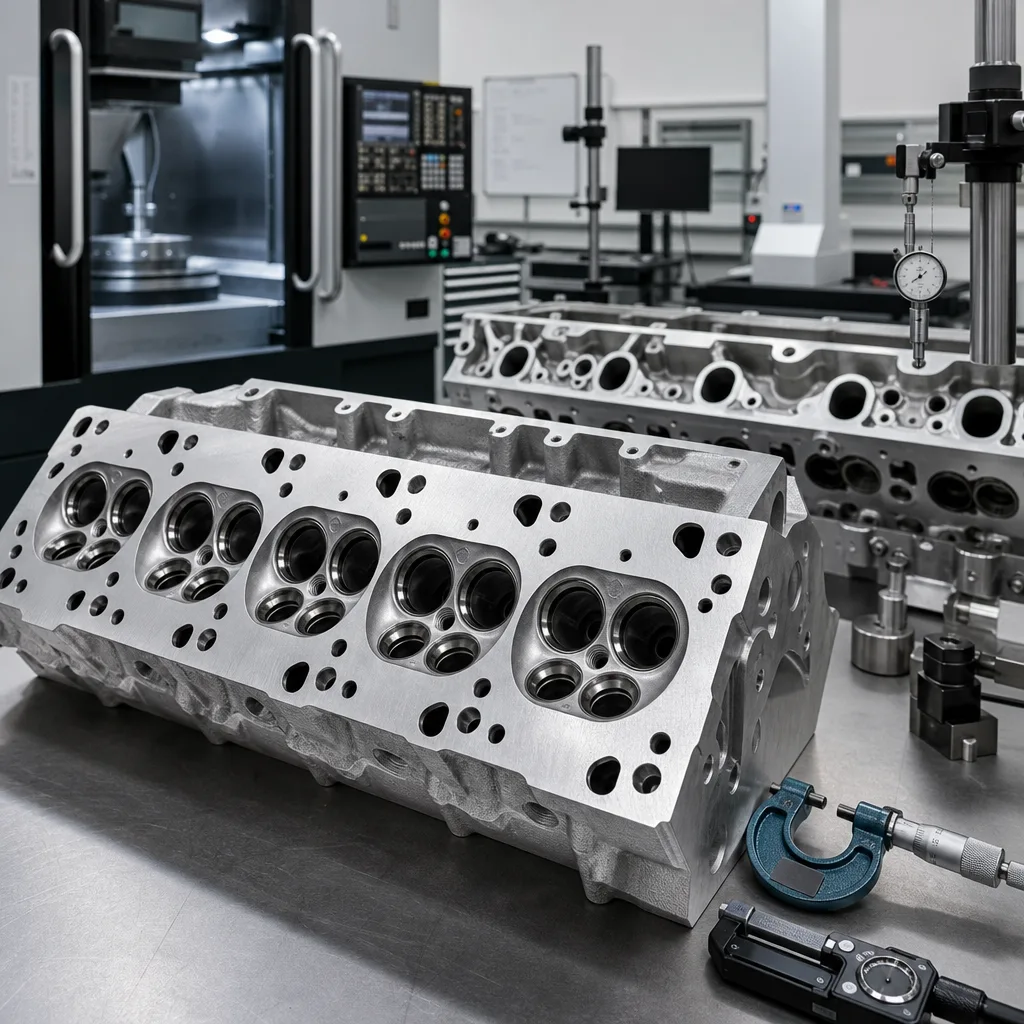
For a Honda cylinder head programme, start with fitment data and controlled dimensions. The supplier should confirm engine code, valve count, combustion chamber type, cam layout, and sensor or port locations before tooling is released. A vague part description is not enough for wholesale purchasing.
Check these points early:
- Alloy grade or casting specification for the head body
- Machined face flatness limit and inspection method
- Valve seat concentricity and guide bore tolerances
- Pressure test method for water jackets and oil galleries
- Supplied condition: bare casting, fully machined, or assembled head
- Traceability: lot number, date code, and inspection record
If you are comparing suppliers, ask for dimensional reports and photos of the actual measuring fixtures. A supplier that can support custom manufacturing is usually easier to qualify for programme-specific variations, such as port changes, machining revisions, or packaging requirements. For buyers managing multi-SKU orders, this reduces the risk of mixed specifications arriving in the same shipment.
Production controls that protect fitment and yield
Wholesale cylinder heads fail in the field for predictable reasons: porous castings, poor cleaning, inconsistent valve seat work, or incorrect machining depth. The factory process should be built to prevent those faults before packing.
A practical control plan includes:
1. Incoming inspection of cast blanks for porosity, flash, and runner integrity. 2. CNC machining of gasket faces, cam journals, valve seats, and guide bores. 3. 100% leak testing or defined sampling by batch, depending on the programme. 4. Dimensional inspection against the approved drawing and gauge set. 5. Final cleaning to remove swarf from oil and coolant passages.
For emissions-related engine families, the supplier should keep combustion chamber geometry, port finish, and valve train locations consistent with the original specification. That supports downstream validation against customer requirements and helps maintain compatibility with tests referenced in ECE R-83 programmes. For durability screening, thermal cycling and corrosion exposure can be aligned to published methods such as SAE J2527 where applicable. Ask for the full quality system summary before you commit volume.
Specification comparison for wholesale buyers
The table below shows the main options buyers usually compare when sourcing a Honda cylinder head in bulk.
| Supply format | What you receive | Buyer benefit | Buyer risk |
|---|---|---|---|
| Bare casting | Unmachined aluminium head body | Lowest unit cost, flexible for local finishing | Highest machining responsibility |
| Semi-finished head | Core machining completed | Faster launch, less local labour | Must confirm final tolerances |
| Fully machined head | Face, seats, guides, and ports completed | Shorter lead time into distribution | Requires stronger quality control |
| Assembled head | Valves, springs, seals, and retainers installed | Fastest warehouse turnover | Higher part count and packaging sensitivity |