Cylinder Head GMC OEM Supplier: Sourcing Guide
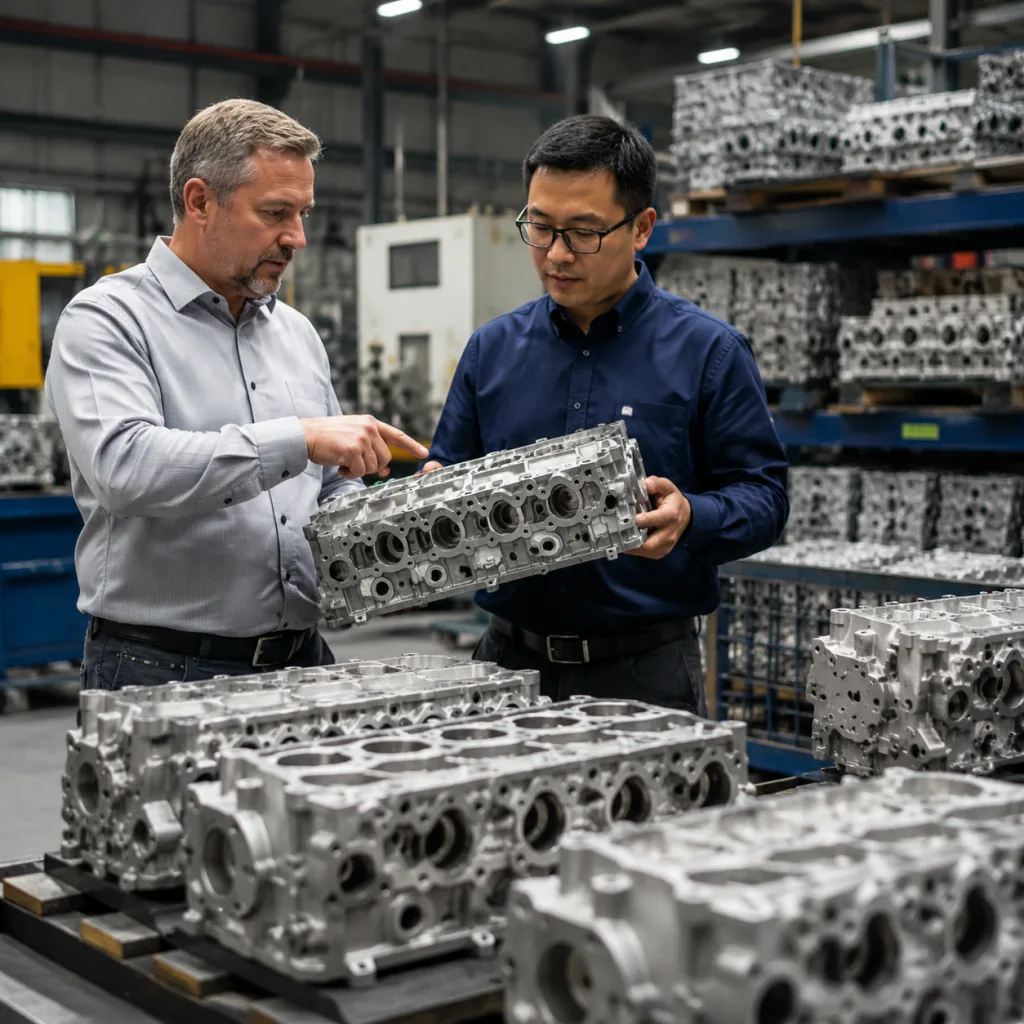
For buyers sourcing a cylinder head GMC OEM supplier, the key concerns are consistency, traceability, and delivery control. A cylinder head is not a simple cast part: combustion chamber volume, valve seat geometry, coolant passage integrity, and surface flatness all affect fit and durability. For fleet, aftermarket, and Tier-1 procurement teams, supplier review should begin with the drawing, then move to process control, inspection records, and packaging. Driventus is an independent aftermarket manufacturer; brand names are referenced for fitment only. We produce engine and powertrain components in Taizhou, Zhejiang, and ship to customers in 60+ countries under IATF 16949:2016 and ISO 9001:2015 systems. If you are building an approved source list, this article explains what to verify before placing an order and how to compare suppliers on objective criteria.
What buyers should verify first
For cylinder head sourcing, start with fitment and manufacturing scope. Confirm alloy type, valve count, chamber layout, port configuration, camshaft arrangement, and OE part-number cross-reference where available. If the requirement is tied to a specific application, ask for dimensional confirmation against the target engine code before discussing price.
Use this checklist during first contact:
- Casting material and heat-treatment route
- CNC machined datum points and machining tolerance stack
- Valve seat and guide material specification
- Flatness limit after final machining
- Pressure test method for coolant and oil passages
- Packaging method for export transit
If the supplier cannot explain how the head is checked after machining, the risk usually appears later as gasket failure, valve leakage, or repeat warranty claims. For broader coverage, review our catalog and the related engine components range.
Manufacturing controls that matter
A cylinder head supplier should be able to describe process control from raw casting to packed shipment. Key controls include chemical composition verification, porosity screening, seat and guide installation control, CNC location repeatability, and final leak testing. For procurement, the useful question is not whether a supplier has equipment, but whether it can show records for each control point.
Typical technical checkpoints
| Control point | What to confirm | Why it matters |
|---|---|---|
| Casting inspection | Visual, dimensional, and internal defect screening | Reduces rework and scrap |
| Machining | Datum consistency and tool wear control | Protects gasket sealing and valve alignment |
| Pressure test | Coolant and oil circuit integrity | Identifies hidden porosity or cracks |
| Surface finish | Deck and seat finish values | Supports sealing and valve durability |
| Traceability | Batch code and lot records | Helps isolate claims and audits |