Selecting a crankshaft supplier for Volkswagen-platform engines is a risk-control decision, not a simple price check. Buyers need consistent metallurgy, stable dimensional capability, lot-level traceability, and reliable export execution across repeat orders. For aftermarket distribution, OEM support, and repair-chain procurement, the supplier also needs to manage mixed references, packaging compliance, and dependable lead times.
When assessing a crankshaft Volkswagen supplier, procurement teams usually review journal tolerances, runout, fillet geometry, hardness profile, dynamic balance limits, oil-hole deburring, non-destructive testing, and documentation aligned with IATF 16949:2016 and ISO 9001:2015. They also look at whether the manufacturer can handle OE cross-reference management, private-label requirements, and sample validation before volume release. This article outlines practical criteria for qualifying a supply partner, including MOQ, PPAP-related readiness where required, audit priorities, and the records that help reduce claim exposure after import. Driventus is an independent aftermarket manufacturer; brand names are referenced for fitment only.
What procurement teams should verify first
In crankshaft sourcing, the first review should focus on process capability and traceability, not the headline unit price. A low quote means very little if total indicated runout, journal hardness, or oil-hole cleanliness shifts from batch to batch. Early qualification should answer one question clearly: can this supplier reproduce the same crankshaft quality over repeated orders, not just deliver one acceptable sample?
For a crankshaft Volkswagen supplier, the first screen should concentrate on the controls that have the greatest effect on field performance, assembly fit, and claim exposure. If a supplier cannot clearly explain its raw material route, machining checkpoints, washing standard, and batch-record retention, stability usually becomes a problem as volumes grow or mixed references are ordered together.
Key supplier checks include:
Material grade control: forged steel or cast iron route defined by application, with heat/lot traceability from incoming bar, billet, forging, or casting to finished batch
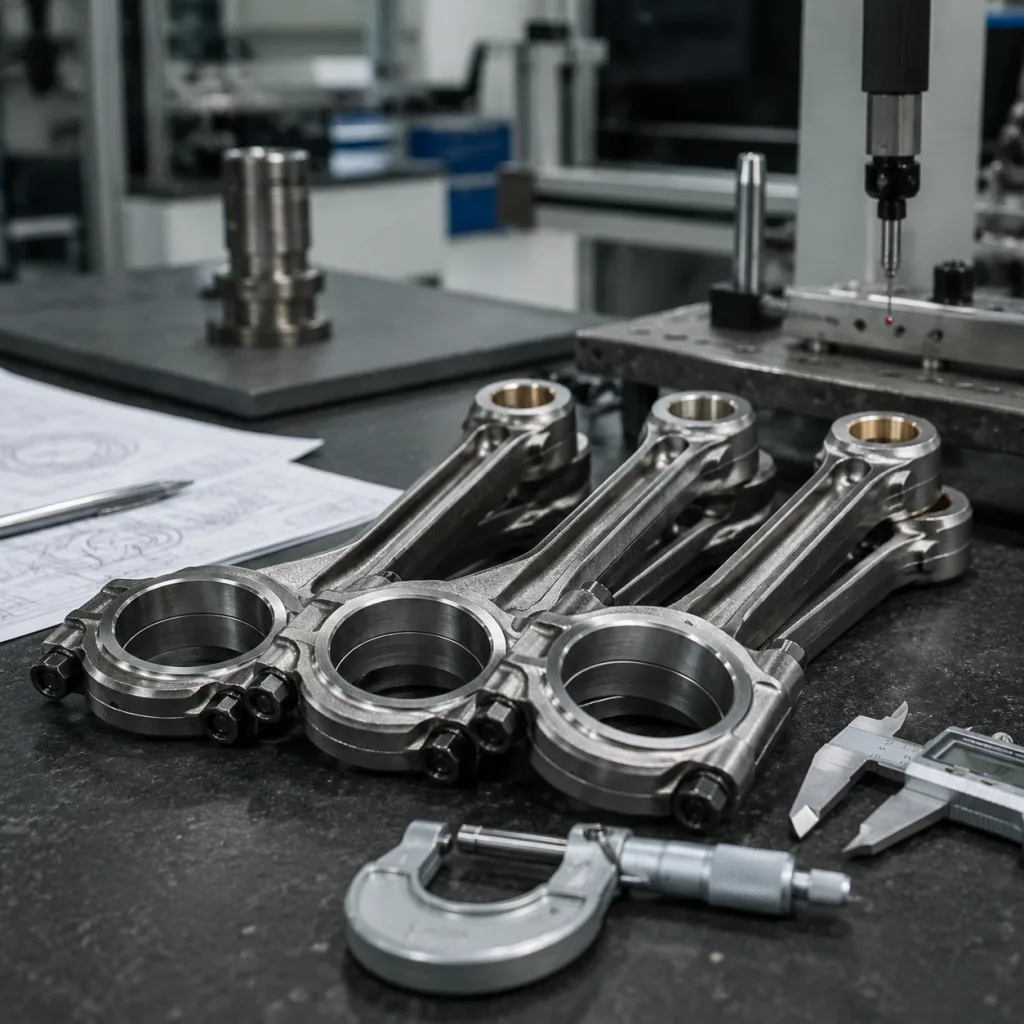
Dimensional capability: main journal, rod journal, stroke, fillet radius, flange dimensions, and key mounting features controlled to drawing, preferably with Cp/Cpk evidence on critical features where available
Surface and hardness control: journal surface finish typically in the Ra 0.2–0.4 μm range after finish grinding/polishing, with induction hardening depth and hardness window verified where specified
Balancing process: residual unbalance limits documented by reference family and measured on calibrated dynamic balancing equipment
Inspection records: runout, concentricity, crack detection, hardness, and final audit retained by batch
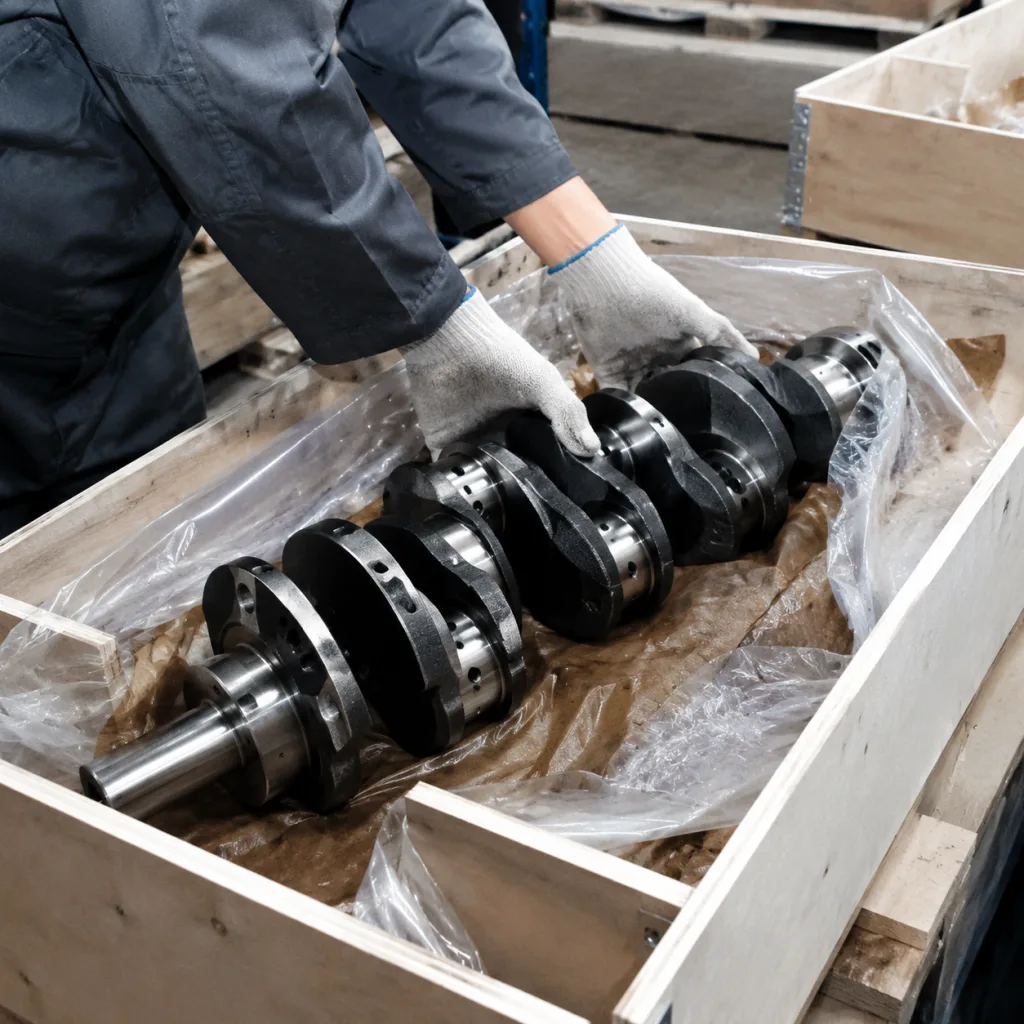
Packaging protection: rust-preventive oil, VCI bag or equivalent corrosion barrier, separator design, and carton/pallet validation for sea freight export
Compliance support: material declarations aligned with REACH (EC) No 1907/2006 where requested by the customer
It often helps to break the first review into three layers:
1. Product fit and engineering accuracy
The supplier should confirm the exact reference being quoted, including drawing basis, OE-style cross-reference where applicable, and any differences in flange geometry, oil drilling, reluctor or trigger features, pilot diameter, or balancing method. Volkswagen-platform applications often share family architecture, but small dimensional differences can still create major assembly problems, including bearing fit issues, flywheel mismatch, or timing-signal errors.
2. Process stability
Ask how the crankshaft moves through production: raw material receipt, forging or casting source control, rough turning, milling, drilling, heat treatment, finish grinding, polishing, balancing, washing, rust prevention, and packing. If the process flow sounds vague, the risk of uncontrolled variation is high. A credible supplier should be able to define in-process inspection frequency, such as first-piece approval, patrol checks, and final dimensional verification.
3. Traceability and claim support
If a claim appears after import, the buyer should be able to trace the batch back to heat number, production date, machine route, inspection status, and packing record. This matters even more for importers and distributors managing multiple warehouses, private labels, or regional returns.
For buyers handling multiple engine references, the supplier should also be able to map internal numbers to customer SKUs and OE-style cross-references where applicable. That reduces order-entry mistakes and helps receiving teams verify incoming stock. If your programme includes related rotating or engine parts, it can be useful to review our catalog and the engine range on /products/engine-components.html to confirm line breadth.
A practical first-step checklist for RFQ review is:
drawing or reference confirmation by part number and revision
declared material route and heat-treatment process
target tolerances for journals, runout, and key critical features
sample availability and sample lead time
standard inspection report format
packaging method for export shipment
MOQ by reference and mixed-order options
document package available with each batch
Completing this first verification stage before price negotiation usually saves time later. It quickly filters out suppliers that can quote fast but cannot support dependable long-term supply.
Technical criteria for Volkswagen-platform crankshafts
Volkswagen-platform applications vary by displacement, fuel type, duty cycle, and generation, so suppliers should not treat all references as interchangeable. Even when the overall architecture looks similar, buyers still need proof of dimensional match and process stability by part-number family. In other words, the technical review should go beyond catalogue fitment and look closely at how each crankshaft reference is made and controlled.
A capable crankshaft Volkswagen supplier should be able to show not only final measurements, but also the production logic behind them. That includes the raw material route, machining sequence, critical-to-quality dimensions, hardness profile, and inspection frequency at each operation.
Typical qualification points
Check item
What to confirm
Why it matters to buyers
Raw material route
Forged or cast route, chemical composition records, source approval
Directly affects fatigue strength, impact toughness, and claim rate
Journal tolerance
Main and rod journal size capability to drawing, often within microns rather than tenths of a millimetre
Determines bearing crush, oil clearance, and oil-film stability
Runout
Measured after finish grinding on controlled datums
Reduces vibration, seal wear, and premature bearing distress
Fillet profile
Controlled radius, blend, and surface finish
Critical to fatigue resistance at stress concentration zones
Oil-hole finish
Chamfering, deburring, and cleanliness standard
Supports lubrication reliability and reduces debris-related failures
Hardness
Surface/core hardness window and effective case depth where specified
Confirms wear resistance and heat-treatment consistency
Dynamic balance
Residual unbalance report by reference
Reduces NVH and field returns
NDT
Magnetic particle inspection or equivalent on defined references
Screens for cracks before shipment
</tr></thead><tbody> </tbody></table>Beyond these baseline checks, procurement and quality teams should discuss several technical topics in more detail.
Material route and metallurgical consistency
Different Volkswagen-platform crankshafts may require different material routes depending on engine loading, service conditions, and market positioning. Forged steel is commonly chosen for higher fatigue strength and impact resistance, while some applications may use nodular cast iron routes where fitment and commercial positioning differ. Buyers should request:
material specification by reference
chemical composition records or EN 10204 material certification where agreed
heat number traceability from incoming material to finished batch
heat-treatment parameters or summary records where specified
hardness verification and, where relevant, microstructure review
evidence of controlled fillet rolling, induction hardening, or nitriding if the route requires it
If the supplier cannot trace the finished product back to the raw material lot, root-cause analysis becomes much more difficult when a claim arises.
Dimensional capability on critical features
Crankshafts are extremely tolerance-sensitive components. A dimensional report is useful, but it does not by itself prove stable production. Ask whether the supplier tracks capability or at least trend data on features such as:
main journal diameter
rod journal diameter
stroke
overall length
thrust surfaces
flange dimensions and bolt-circle features
keyway, gear seat, or sprocket mounting features where applicable
fillet radius and journal geometry transition
sealing diameters and pilot dimensions where relevant
For higher-risk references, it can be sensible to request sample results across multiple pieces rather than approving a single golden sample. A 5-piece or 10-piece dimensional set usually tells you far more than a one-piece approval sample.
Surface integrity and oil system reliability
Journal surface finish and oil-hole condition are central to bearing life. Even when nominal dimensions are correct, poor polishing, grinding burn, burrs, or contamination can still cause early failure in service. Confirm:
roughness standard for finished journals, typically specified in Ra
deburring method for oil passages and cross-drill intersections
cleaning process after machining and grinding, including washing medium and drying method
inspection for embedded debris or residue before packing
whether the supplier checks for grinding burn or temper damage on hardened journals where applicable
Runout, balance, and NVH control
A crankshaft can be dimensionally acceptable and still create vibration issues if balance control is weak. That can lead to noise complaints, seal wear, and premature component fatigue in the field. Buyers should ask how balance is controlled by reference family, what equipment is used, whether correction is by drilling or milling, and whether residual unbalance records are retained by batch. It is also good practice to confirm how total indicated runout is measured and which datum strategy is used during inspection.
Inspection and non-destructive testing
A credible supplier should be able to explain the control plan for each stage: rough machining, heat treatment, finish grinding, balancing, cleaning, preservation, and final inspection. If your organisation requests production part documentation, ask whether the plant can support PPAP-related submissions such as dimensional results, material certifications, process flow, PFMEA, and control plans when contractually required.
For some references or customer programmes, the supplier may also need to provide:
magnetic particle inspection records
hardness test reports
runout records
balance reports
final appearance and preservation checks
sample dimensional reports with ballooned drawing correlation
For fitment communication, use neutral cross-reference language such as OE 06A107065 only when relevant to the enquiry. Brand catalogue assumptions are not enough. The technical review should always end with part-number-level confirmation, because that is what prevents sourcing mistakes when similar Volkswagen-platform references sit within the same purchasing programme.
MOQ, lead time, and supply planning for import programmes
MOQ and lead time should be reviewed by reference complexity, not just by supplier policy. Crankshafts involve heavy machining time, balancing, washing, preservation, and reinforced packaging costs, so order structure has a direct effect on price and availability. For importers, wholesalers, and regional distributors, the real issue is not simply how many pieces the factory wants to sell. It is how the production and shipping model will influence inventory turns, cash flow, and service levels.
A strong crankshaft Volkswagen supplier should be able to explain how MOQ is set, how machine capacity is allocated, and what changes if the buyer orders a mixed programme rather than one high-volume SKU. This becomes especially important when aftermarket demand is spread across many references with uneven sales velocity.
Typical commercial points to clarify
Sample lead time: often 30–45 days for established tooling and gauging; longer if new fixtures, balancing programs, or dedicated gauges are needed
Production lead time: commonly 45–75 days after deposit, technical confirmation, and packaging approval; longer if forged blanks or outsourced heat treatment are capacity-constrained
MOQ: may range from pilot quantities for validation to several hundred pieces per reference where the route depends on dedicated setups, grinding wheels, or batch heat-treatment economics
Mixed-container planning: useful for importers combining crankshafts with pistons, gaskets, or pumps in one shipment
Forecast window: 8–12 weeks rolling forecast improves raw material planning and machining slot allocation
Safety stock agreement: can reduce supply risk on high-volume aftermarket references
These figures only become meaningful when the buyer understands what drives them. Common lead-time drivers include:
raw material or forging availability by grade and reference
machine loading for rough turning, grinding, and balancing
heat-treatment queue time if outsourced or shared internally
gauge or fixture readiness for the specific reference
sample approval cycle length
packaging artwork or private-label approval
container consolidation schedule
destination-market documentation requirements
How to assess MOQ correctly
MOQ should be assessed against total landed and operating cost, not just the supplier's piece-price break. A lower MOQ may help with validation or niche references, but it can also raise unit cost if the supplier has to run inefficiently or hold non-standard packaging inventory. A higher MOQ can still be the better commercial choice when it improves machine utilisation, export packing efficiency, and container fill rate.
Procurement teams should compare MOQ alongside:
annual demand per reference
warehouse capacity
cash tied up in inventory
fill-rate expectations from downstream customers
potential to combine related part numbers in one production run
possibility of mixed-SKU shipment with other engine parts
exposure to obsolescence on slow-moving references
Questions to ask about supply execution
Procurement teams should also ask how the supplier handles:
1. Batch segregation by heat/lot number 2. Replacement of transit-damaged units 3. Carton marking, barcode labels, and outer-pack identification 4. Private-label packaging 5. Short-shipment prevention and final quantity reconciliation
It is also worth confirming:
whether partial shipments are allowed
what happens if inspection approval is delayed
whether expedited production is available for urgent replenishment
how the supplier manages low-volume repeat orders
whether safety stock can be held for selected references
whether export packaging differs for LCL and FCL shipments
Planning for mixed-reference import programmes
Where annual demand is spread across many low-volume references, a supplier with broader powertrain integration can simplify container utilisation and purchasing administration. In many cases, that is more valuable than chasing the lowest unit price on a single SKU.
For example, if a distributor imports crankshafts together with pistons, gasket sets, oil pumps, or bearings, a supplier that can coordinate packaging dimensions, shipping marks, and shipment timing across those lines may reduce total logistics friction. The benefit shows up in fewer purchase orders, better cube utilisation, easier customs documentation, and improved receiving accuracy at destination.
In practical terms, buyers should try to build a supply plan that links:
quarterly demand forecast
target safety stock by A/B/C reference class
production release timing
documentation release timing
container loading plan
claim and replacement procedure
That level of planning is what turns a quoted lead time into a real service level.
Factory audit points and documentation readiness
A supplier audit should test whether the plant can repeat output, not just whether it can present a tidy production line. For crankshaft procurement, buyers should walk the full route from incoming material to packed pallet. The purpose is to verify that the quality system works at workstation level, not only in slide decks or certificate files.
When auditing a crankshaft Volkswagen supplier, it helps to sort what you see into four categories: material control, process control, inspection discipline, and documentation readiness. A factory may look well organised, but if records are incomplete or critical measurements are not tied to batch identity, the underlying risk is still there.
Audit points worth documenting:
Incoming material verification and heat-number traceability
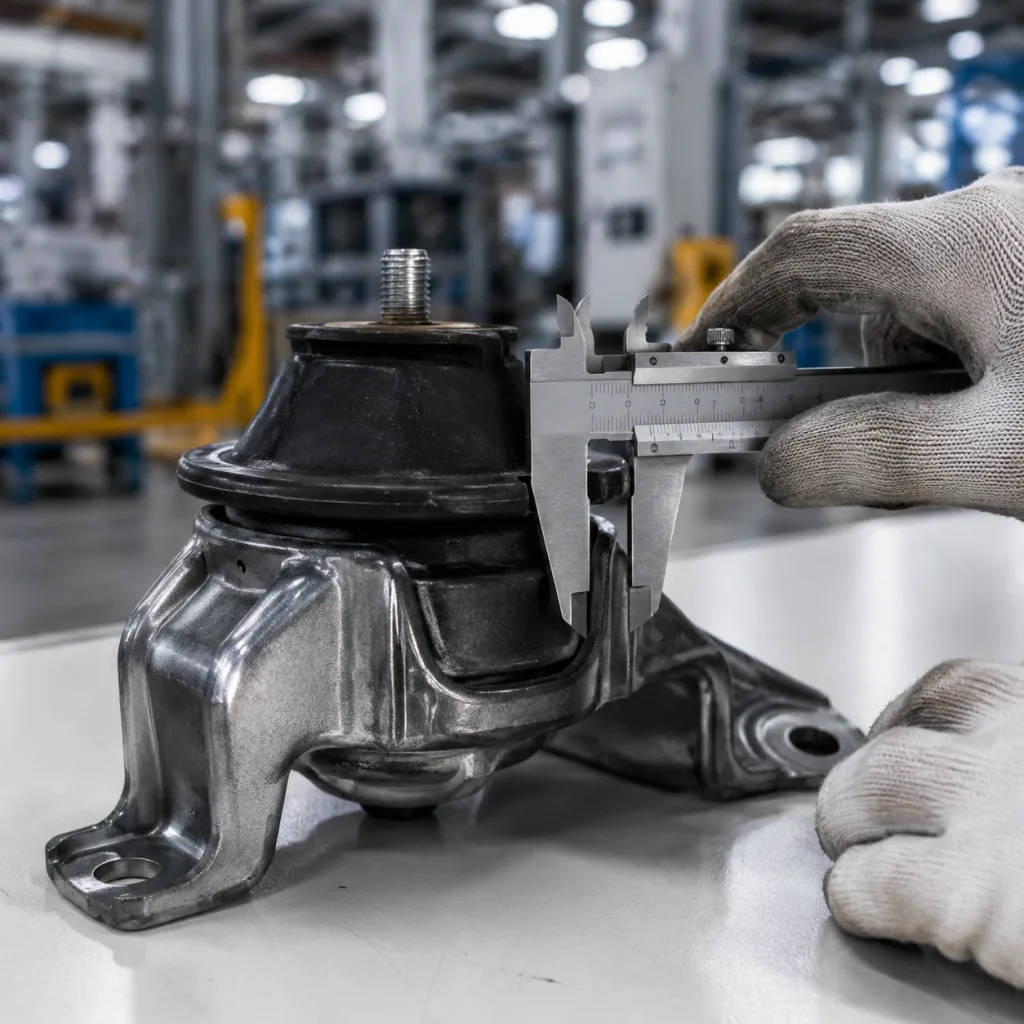
Calibration status for micrometers, bore gauges, roughness testers, hardness testers, magnetic particle equipment, and balancing machines
In-process inspection frequency at turning, grinding, and polishing operations
Non-conforming product segregation and corrective action workflow
Cleaning and preservation method before packing
Retention period for dimensional, material, and batch records
Operator training records and work instructions at critical stations
What to check on the shop floor
During a factory walk-through, buyers should verify whether actual production practice matches the stated process flow. Useful observations include:
are work orders and batch IDs visible at each process stage?
are incoming materials clearly identified and segregated?
are machined and unmachined parts protected from mix-up?
are journals and finished surfaces protected from nicks and handling damage?
is there a controlled route for rejected or suspect parts?
are final packed units linked back to production batch information?
are oil-hole cleaning, washing, and drying steps controlled rather than informal?
These checks reveal very quickly whether traceability is genuine or mainly administrative.
Calibration and measurement control
Because crankshafts depend on tight dimensional consistency, gauge control deserves close attention. Buyers should confirm that the plant maintains calibration status for key equipment and that operators understand which tools are used for which features. It is also useful to ask:
how often balancing equipment is verified
how roughness testers are controlled
how master standards and setting rings are managed
who approves gauge release after calibration
what happens when a measuring tool is found out of tolerance
Review of non-conformance handling
A strong supplier should have a clear method for isolating suspect batches, investigating root cause, and preventing recurrence. Ask for a recent example of a non-conformance and the corrective actions taken. That often gives a more accurate picture of factory maturity than certificate review alone. Better suppliers can usually show containment, root-cause analysis, corrective action, and effectiveness verification rather than only a rejection note.
Documentation readiness for customer and import requirements
Certification matters, but only when it is supported by daily execution. Ask to review the site quality system against IATF 16949:2016 and ISO 9001:2015, including internal audit records, supplier management controls, layered process checks where used, and traceability practice. If your programme requires customer-specific specifications, confirm they are built into the control plan rather than handled informally by email.
Typical records buyers may request include:
dimensional inspection reports
material certificates where agreed
hardness and balance reports
NDT records on specified references
batch traceability logs
packing specifications and pallet standards
corrective action reports for prior issues
first-article or sample validation records
For regulated destination markets, packaging materials and chemical declarations may also require supporting records. While crankshafts are not emissions devices, importers still often request declarations aligned with REACH (EC) No 1907/2006 for material compliance management.
Signs of a more audit-ready supplier
In practice, the most audit-ready suppliers usually show several common traits:
controlled document revisions on the shop floor
standardised inspection forms by part family
quick retrieval of batch records
clear ownership for quality decisions
disciplined segregation of approved, hold, and rejected stock
consistent packaging standards ready for export
evidence that operators follow, not just display, the control plan
These are the conditions that reduce surprises after the first shipment and make long-term sourcing more dependable.
When custom manufacturing is the better route
Standard aftermarket references fit many distribution programmes, but some buyers need non-standard machining stages, blank supply, or customer-owned branding. In those cases, custom manufacturing can reduce total supply-chain cost. Instead of forcing an unusual requirement into a standard catalogue route, it is often better to define the product, process, and documentation properly from the start.
For a crankshaft Volkswagen supplier, custom manufacturing does not only mean developing a completely new part. It can also involve customer-specific inspection formats, preservation methods, packaging systems, semi-finished supply, or region-specific fitment adjustments. These needs are common in rebuild programmes, private-label distribution, and niche engine-family support.
Examples where a custom route is useful:
Private-label programmes with customer carton, label, and pallet standards
Machined-to-print crankshafts for niche engine families
Semi-finished crankshafts for local grinding, polishing, or balancing operations
Bundled supply with bearings, gaskets, or seals for engine rebuild kits
Controlled engineering changes for regional fitment differences
Situations where standard sourcing may not be enough
A catalogue-based crankshaft may still need a custom route if the buyer requires one or more of the following:
customer-specific carton dimensions or barcode format
anti-corrosion protection for long sea freight or humid storage conditions
dedicated inspection reports with defined sampling frequency
special palletisation for automated warehouse receiving
mixed kit assembly with companion engine components
restricted batch sizes for phased market validation
semi-finished surfaces or stock allowance for downstream machining
In these cases, the supplier's engineering and operations teams need to work together more closely than they would for a standard repeat order.
Controls that should be defined before launch
Before launching a custom project, confirm drawing revision control, sample approval sequence, inspection datums, and ownership of gauges or fixtures. The supplier should define which changes require new sample validation and which can be managed under normal process control.
Key points to settle early include:
who owns the latest approved drawing
who approves engineering changes
which dimensions are critical and require full reporting
whether dedicated tooling, fixtures, or gauges are needed
who pays for and owns those tools
what packaging artwork approval steps apply
what constitutes final sample approval before production release
Sample and validation discipline
Custom programmes most often fail when the sample stage is rushed or poorly documented. Buyers should establish a clear sequence such as:
1. reference and drawing confirmation 2. feasibility review 3. quotation with technical assumptions 4. sample manufacture 5. dimensional and material review 6. packaging approval 7. controlled pilot run 8. volume release
This matters even more if the part is a semi-finished crankshaft or a machined-to-print project with local finishing operations at destination. For higher-risk projects, a pilot lot with dimensional and appearance checks across multiple pieces is usually safer than approving a single sample.
Why custom routes can lower total cost
Although custom manufacturing may look more expensive at quotation stage, it can lower total cost by avoiding repacking, secondary inspection, local rework, or compatibility issues later. For importers and branded distributors, having the factory build to the final commercial requirement often creates better consistency and fewer administrative corrections.
If your sourcing model includes proprietary packaging, special inspection reports, or bundled engine-component supply, review custom manufacturing options early in the RFQ stage. That shortens approval cycles and helps avoid rework once production planning has started.
A practical shortlist for supplier comparison
When comparing candidates, a weighted scorecard is usually more useful than reviewing quotations in isolation. It helps combine technical, commercial, and operational factors into one decision. The best crankshaft Volkswagen supplier is rarely the one with the lowest opening price; it is the one that can hold dimensional consistency, ship correctly, support documentation, and remain reliable over repeated order cycles.
A structured shortlist also helps cross-functional teams stay aligned. Procurement may focus on price and MOQ, quality may prioritise traceability and inspection, and logistics may care most about packaging and lead time. A scorecard brings those priorities into one framework.
Recommended shortlist criteria:
Category
Questions to ask
Procurement impact
Quality management
Is the site certified to IATF 16949:2016 and ISO 9001:2015, and can it show batch-level execution?
Reduces process and documentation risk
Process control
Are runout, hardness, journal size, and balance checks recorded by batch?
Supports claim analysis and repeatability
Product scope
Can the supplier cover multiple engine-component lines?
Improves consolidation efficiency
Lead time reliability
What is the on-time delivery record by quarter and by confirmed ship date?
Helps inventory planning
MOQ flexibility
Can low-volume references be combined in one production plan?
Lowers stock pressure for importers
Engineering support
Can the plant handle drawing review, sample reports, and controlled deviations?
Speeds validation
Export execution
Are preservation, labels, and pallet standards documented?
Reduces transit damage and receiving errors
</tr></thead><tbody> </tbody></table>### How to use the shortlist in practice A practical method is to assign weighted scores to the categories most relevant to your programme. For example:
30% Technical and quality control
20% Documentation and traceability
15% Lead time and delivery reliability
15% MOQ and commercial flexibility
10% Export packaging and logistics execution
10% Engineering and project support
The weightings can change depending on whether the project is a standard aftermarket order, a private-label programme, or a drawing-based development route.
Questions that reveal supplier maturity
Alongside standard RFQ questions, buyers should ask a few practical ones that are harder to answer with polished marketing language alone:
Can you show a recent batch record for a comparable crankshaft reference?
How do you prevent mixed parts during packing of similar references?
What is your standard response time for a quality claim?
Which reports are available automatically with shipment, and which are only on request?
How do you manage urgent repeat orders for low-volume part numbers?
Can your team support mixed loads with other engine components?
What critical characteristics are checked 100% versus by sampling?
The quality of these answers often separates an operationally strong supplier from a trader or a factory with limited process transparency.
Comparison points beyond piece price
For procurement teams looking for a long-term source rather than a spot buy, the right partner is the one that can show repeatable process evidence, not just an attractive first quotation. Buyers should compare total sourcing performance across:
first-sample approval speed
repeat-order consistency
documentation completeness
claim handling discipline
export packing quality
flexibility across multiple references
communication speed during order execution
ability to hold tolerance and finish over volume production
A supplier with a slightly higher piece price may still be the better commercial option if it reduces stock-outs, receiving errors, claims, or rework.
Final decision discipline
Before nomination, it is good practice to complete a final side-by-side review covering:
approved reference list
technical deviation list, if any
MOQ and annual volume assumptions
standard and expedited lead time
documentation pack included
packaging specification approved
warranty or claim procedure
payment and shipment terms
This final review prevents misunderstandings and gives both parties a cleaner starting point for the first production order. If you want to discuss a current RFQ, packaging requirement, or annual demand forecast, you can request a quote.
Frequently asked questions
Typically buyers ask for commercial invoice, packing list, batch traceability, dimensional inspection records, material certificates where agreed, and export carton or pallet specifications. For some programmes, PPAP-related documents, hardness reports, balance reports, magnetic particle inspection records, and REACH declarations may also be required.
Assess MOQ by reference family, annual demand, setup intensity, and container planning. A higher MOQ may still lower total cost if it improves machining utilisation, balance-machine scheduling, and freight efficiency. Buyers should compare MOQ together with lead time, safety stock options, and mixed-SKU consolidation.
Yes, if the manufacturer has revision control, sample-approval discipline, packaging capability, and documented process planning. Buyers should confirm who owns tooling, what validation is required for engineering changes, what dimensional features are critical, and which inspection records will be supplied with each batch.
If you are qualifying a new source for Volkswagen-platform crankshafts, Driventus can review your RFQ, target volumes, and documentation requirements. Contact our team to discuss fitment scope and supply options at /contact.html