Crankshaft Toyota Manufacturer China: Sourcing Guide
Choosing a crankshaft Toyota manufacturer China partner is not just a price exercise. The crankshaft has to match the target Toyota engine family in OE geometry, material route, heat treatment, balance grade, journal finish, corrosion protection, and export packaging. For distributors, repair-chain programmes, engine rebuilders, and OEM or Tier-1 purchasing teams, the real commercial risk is repeatability: journal diameter and taper, fillet radius, runout, oil-hole drilling, thrust-face location, rear seal surface finish, and batch-to-batch dimensional drift. A good sample is useful, but it means little if the first container order cannot hold the same control plan.
Driventus produces crankshafts as an independent aftermarket manufacturer; brand names are referenced for fitment only. Our work centres on controlled OE cross-reference, stable machining, documented inspection, and export-ready supply for multi-market distribution. Buyers usually need batch traceability, material and heat-treatment evidence, dynamic balance records where specified, anti-rust protection, and lead times that support forecast-based replenishment. The sections below explain what to check before placing a production order, how to compare suppliers, and how to align validation with your own incoming quality gate.
What to verify before sourcing
Begin with the engine code, application, and OE cross-reference method. A capable supplier should not quote a Toyota crankshaft programme from a model name alone. The same vehicle platform may use different engines depending on sales market, model year, emission standard, transmission, or hybrid configuration. Before comparing prices, confirm the engine family, target OE number, supersession history, sample condition, drawing availability, and whether the part is intended for standard replacement, engine rebuilding, or a modified performance application.
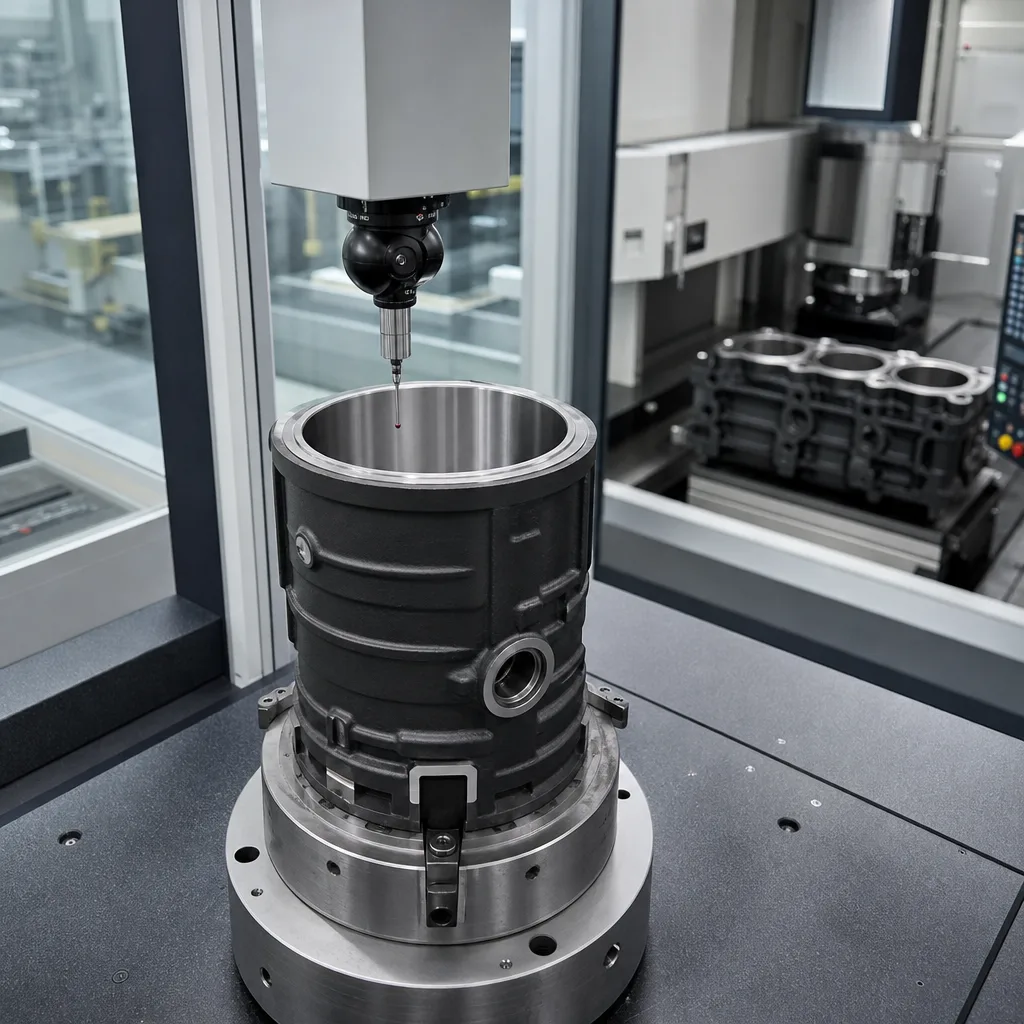
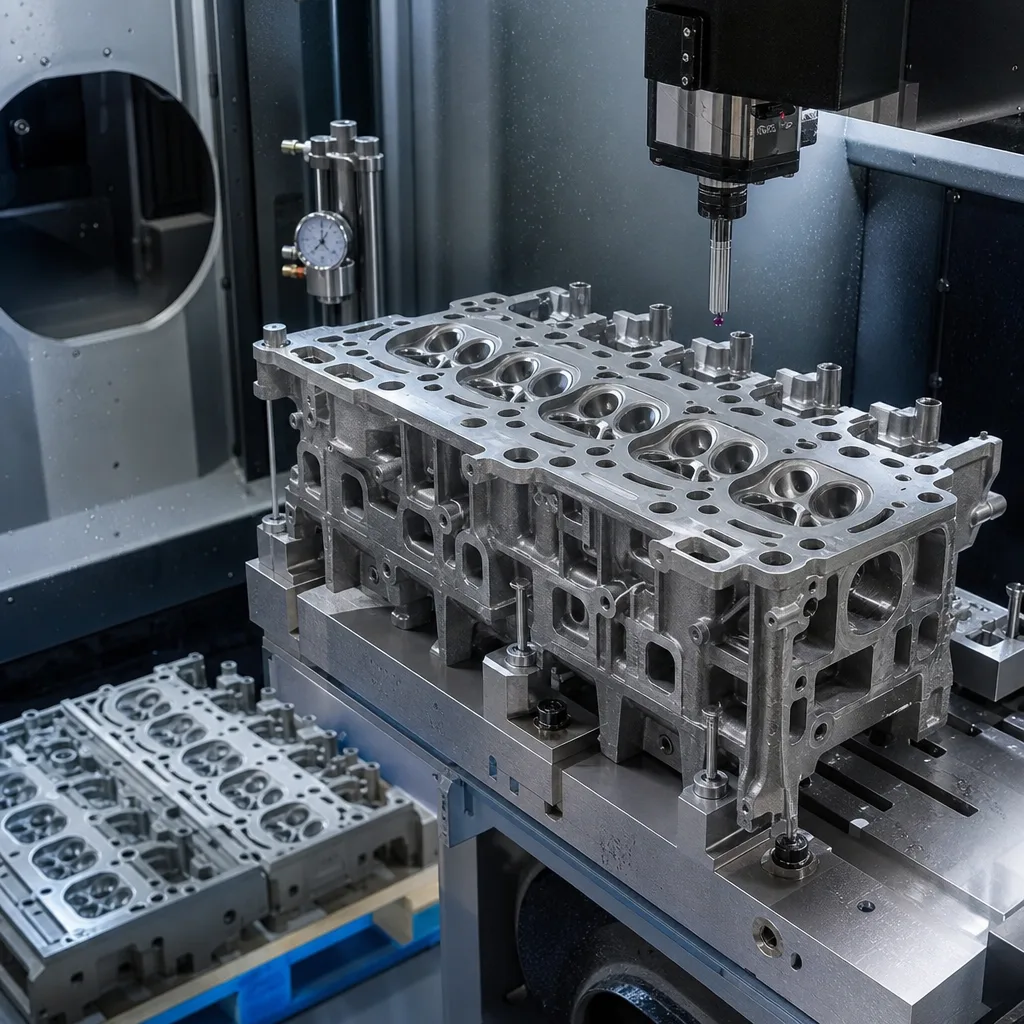
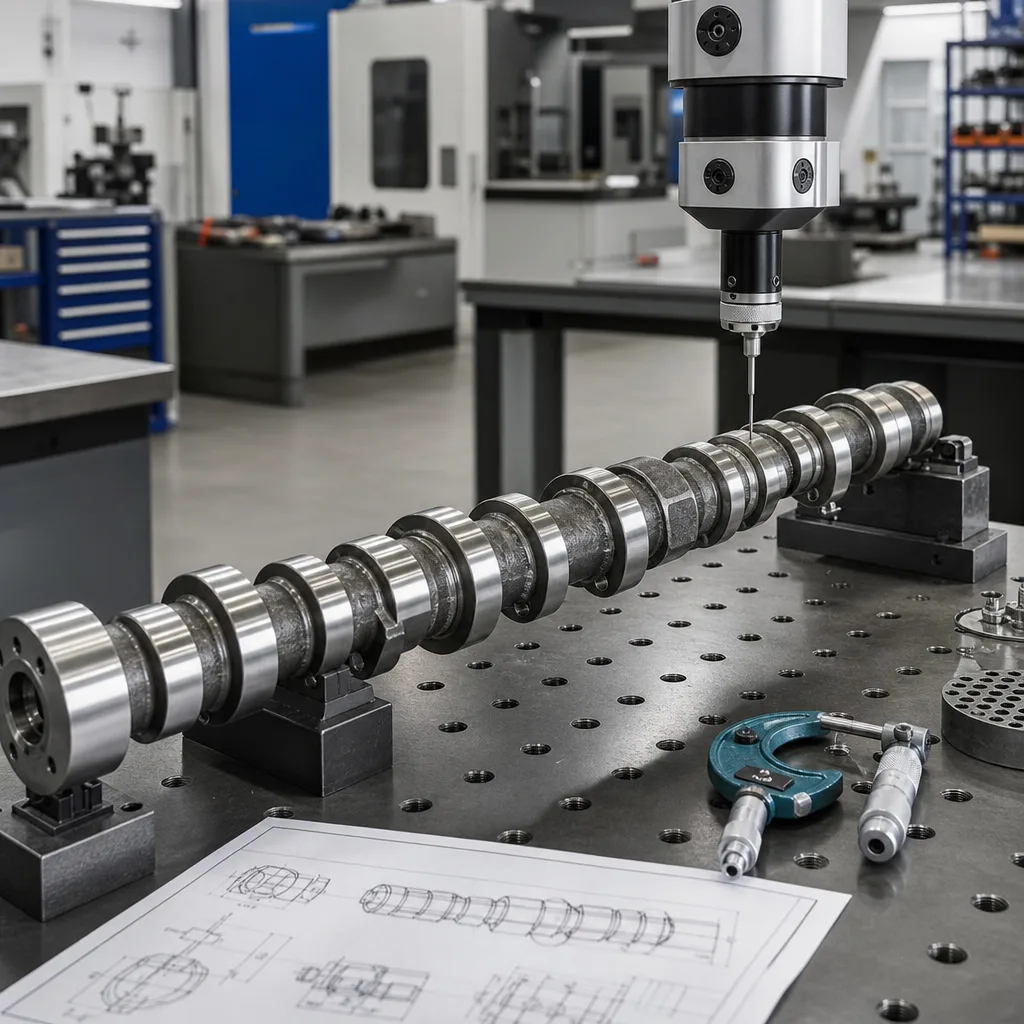
Technical confirmation should cover main journal diameter, connecting-rod journal diameter, stroke, journal width, thrust face position, oil-hole orientation, keyway or nose details, timing gear interface, counterweight profile, rear seal running diameter, flange bolt pattern, and pilot or flywheel connection points. Typical crankshaft drawing tolerances may require journal diameter control in the 0.005-0.020 mm range, with roundness and taper limits measured in microns and runout controlled at the centre mains or end journals according to the datum scheme. The exact tolerance must follow the OE drawing, validated sample, or agreed control plan.
A practical sourcing checklist:
Engine code, vehicle application, production year range, fuel type, and target sales market
OE reference number, supersession history, and alternative aftermarket references
Material specification, such as forged steel, cast iron, nodular iron, or alloy steel where applicable
Forging or casting route, including blank supplier control if outsourced
Heat treatment method, surface hardness range, and effective case depth where required
Dynamic balancing target, residual unbalance limit, and correction method
NDT method, such as magnetic particle inspection, ultrasonic testing, or dye penetrant where specified
Machining capability for main journals, rod journals, oil holes, fillets, seal surfaces, and thrust faces
Surface finish target for bearing journals and seal-contact areas, commonly recorded as Ra
Oil-hole chamfering, deburring, washing, and passage cleanliness requirements
Rust-prevention oil, VCI wrapping, desiccant, or other corrosion-protection options
Individual, bulk, or private-label packaging standard for export and warehouse handling
For catalogue browsing, start with our catalog and the broader engine components range when mapping a multi-SKU programme. If several engine families are being compared at once, build the cross-reference sheet first. Then ask every supplier to confirm each line against the same engine code, OE number, and dimensional data set so pricing, MOQ, and lead time are being judged on the same basis.
Technical controls that matter
A crankshaft is not judged by how it looks on a bench. It is judged by geometry, metallurgy, cleanliness, and the ability to repeat those results after machining. The part works under alternating bending and torsional loads, so small deviations in journal geometry, fillet transition, oil-hole finish, or surface roughness can lead to bearing wear, oil-pressure instability, vibration, seal leakage, or early fatigue. Experienced buyers therefore ask for process evidence, not only finished-part photos.
Key control points include journal diameter, roundness, taper, total indicated runout, concentricity, fillet consistency, oil-hole deburring, hardness depth, and dynamic balance. The inspection plan should state which characteristics are checked 100%, which are checked by sampling under AQL or control-plan frequency, and which are required for batch release. For high-volume distribution programmes, buyers should also clarify gauge calibration, master sample retention, inspection frequency, the reaction plan for out-of-control dimensions, and whether critical measurements are recorded in a format suitable for incoming quality review.
Control point
Why it matters
Typical buyer request
Journal diameter
Bearing clearance and oil film stability
Micrometer or air-gauge record, often to 0.001 mm resolution
Journal roundness and taper
Consistent bearing contact and oil pressure
Roundness tester, air gauge, or CMM report by sampling plan
Runout
Vibration, seal wear, and NVH risk
TIR record against defined V-block or center datum method
Fillet radius
Fatigue life at the crank cheek
Radius gauge, profile check, and no sharp transition at oil-hole or cheek area
Surface finish
Bearing life, oil retention, and reduced friction
Ra report for main and rod journals; seal surface finish recorded separately
Oil-hole position and deburring
Lubrication reliability under load
Positional check, chamfer confirmation, borescope or cleanliness check where needed
Hardness and case depth
Wear resistance and fatigue performance
Heat-treatment certificate, hardness test record, and case-depth report if specified
Balance
Engine smoothness and reduced vibration
Residual unbalance report by part number, batch, or programme requirement
</tr></thead><tbody> </tbody></table>Driventus aligns production and inspection with IATF 16949:2016 and ISO 9001:2015 processes. Where market access requires it, buyers may also specify REACH (EC) No 1907/2006 compliance for material declarations and downstream reporting. For regulated or brand-sensitive channels, confirm documentation needs before production begins, so inspection records, packaging labels, carton marks, batch identification, and certificates are prepared in the correct format from the start.
Lead time, MOQ, and supply planning
For procurement teams, the business case depends on total landed cost and supply reliability, not only the ex-works unit price. MOQ is usually shaped by raw material batch size, machining setup, balancing setup, inspection load, packaging configuration, and whether the crankshaft is already in regular production. Lead time depends on whether the item is an existing catalogue part, a made-to-order part for a known engine family, or a new development programme that needs sample production and validation.
A realistic purchasing model should separate three cases:
1. Stock item for fast replenishment 2. Made-to-order item for a known engine family 3. New custom programme with sample approval and validation
For stock items, focus on available quantity, batch age, preservation condition, carton or pallet condition, and replenishment schedule. For made-to-order items, confirm the production slot, tooling readiness, raw material timing, heat-treatment capacity, machining capacity, inspection capacity, and export booking. For a new custom programme, the timeline should include drawing review, OE sample measurement if needed, manufacturability feedback, sample machining, dimensional reporting, buyer validation, packaging approval, and only then mass production.
MOQ discussions should also include packaging and logistics. A low MOQ may look attractive at first, but unit cost can rise if the order requires special cartons, private labels, pallet specifications, anti-rust treatment, mixed-container handling, or destination-specific documentation. Heavy precision parts need packaging that prevents journal impact, flange damage, and corrosion during sea freight. For distributors, the better question is often whether the supplier can support repeatable monthly or quarterly replenishment with stable batch traceability. Forecast sharing helps the factory reserve machining capacity and reduces the risk of urgent orders being pushed through inspection too quickly.
If your programme needs a non-standard material, altered counterweight geometry, private-label packaging, special balance requirement, or region-specific documentation, use custom manufacturing to define the technical brief before release. That reduces iteration, clarifies responsibility for sample validation, and protects the first production run from avoidable deviation.
How to compare suppliers
When comparing suppliers in China, ask for documents that can be audited rather than assurances that cannot be checked. A credible crankshaft supplier should provide controlled drawings or specification sheets, dimensional inspection records, material certificates where applicable, heat-treatment evidence, balance records, packaging specifications, and a defined nonconformance process. The aim is to find the supplier that can repeat the same result across batches, not simply the one that can make an attractive sample quickly.
Compare suppliers on these points:
Ability to quote against OE references, engine codes, and supersessions without unsupported assumptions
Transparency on tolerances, datum structure, critical characteristics, and inspection method
Traceability by batch, work order, casting or forging batch, and heat number where available
Experience exporting to the EU, UK, US, Canada, Australia, Brazil, Middle East, and other target markets
Stability of sampling, PPAP-style documentation, ISIR, or equivalent submission package
Responsiveness on engineering change requests, catalogue disputes, and drawing clarification
Control of machining, heat treatment, balancing, washing, rust prevention, and final inspection
Packaging discipline for heavy precision components during sea freight, air freight, and warehouse storage
Claim-handling process that separates manufacturing defects, installation issues, and catalogue-match disputes
You should also verify the supplier's quality system and ask how they manage gauge calibration, incoming material checks, first-piece approval, in-process inspection, final inspection release, and retained samples. If the supplier outsources forging, heat treatment, balancing, or surface protection, ask how subcontractors are qualified, how process parameters are controlled, and how results are recorded back into the batch file.
For repeat programmes, process control usually matters more than one-off sample appearance. A useful supplier comparison should therefore score technical capability, communication quality, documentation discipline, export experience, corrective-action response, and change-control discipline alongside price. The cheapest quote can become expensive if it leads to high incoming rejection, uncertain fitment, bearing claims, delayed replenishment, or emergency air-freight replacement stock.
Fitment, validation, and aftermarket use
A crankshaft for aftermarket distribution must fit the intended engine family without improvised installation. Buyers should validate dimensional match, bearing compatibility, end play, and assembly clearance before release. Fitment confirmation is especially important when a part is sold across several markets, because catalogue references may group applications with small but commercially important differences in thrust location, reluctor or timing interface, seal diameter, or flange design.
Validation should cover:
Trial installation against the target block, main caps, and bearing set
Measurement of main and rod bearing oil clearance using calibrated tools or approved assembly method
Measurement of crankshaft end play and thrust-face contact pattern
Confirmation of pulley, timing gear, reluctor, flywheel, flexplate, or flange interface
Check of rear seal contact surface, front seal running area, and keyway or nose geometry
Confirmation of oil-hole alignment, passage cleanliness, and absence of burrs or loose particles
Visual inspection after machining, washing, rust prevention, and packaging trial
Functional checks after initial running where the programme and buyer validation plan allow it
For distributors, validation records should support both catalogue maintenance and claim handling. Keep the engine code, OE number, sample report, bearing set used during trial assembly, clearance values, end-play values, and installation notes. If a crankshaft is intended for standard repair use, avoid mixing it with modified performance applications unless the design, material, nitriding or induction-hardening requirement, and balance specification have been reviewed for that purpose.
Driventus does not claim vehicle manufacturer approval or endorsement. Driventus is an independent aftermarket manufacturer; brand names are referenced for fitment only. That disclosure matters when preparing catalogue copy, import paperwork, website listings, marketplace content, or line-card descriptions for distributors and repair chains. Clear fitment language reduces trademark risk and helps customers understand that the part is supplied for replacement compatibility, not as an original vehicle manufacturer product.
Why procurement teams choose a China manufacturing base
China remains attractive for crankshaft sourcing because the supplier base can bring together material sourcing, forging or casting supply, CNC machining, heat treatment, dynamic balancing, inspection resources, packaging options, and export logistics under one programme. Geography is not the advantage on its own. The value is in consolidating engineering review, production planning, inspection records, rust prevention, labelling, and shipment coordination through a single accountable source.
For a sourcing programme to work, the factory should support:
Stable batch production for long-running Toyota engine families and aftermarket demand curves
Engineering review for OE cross-reference, drawing confirmation, and supersession control
Controlled machining for journals, fillets, oil holes, seal surfaces, flange faces, and thrust faces
Heat treatment and hardness verification matched to the specification and material route
Dynamic balancing with correction limits recorded where required by the programme
Export packing suitable for sea freight, air freight, inland transport, and warehouse storage
Documented change control before material, process, subcontractor, or packaging changes
Sample retention and traceability for claim investigation and catalogue review
Commercial communication in English for technical clarification, documentation, and logistics
Flexible packing, labelling, carton marking, and palletisation for distributor networks
A China sourcing base can also help buyers consolidate adjacent powertrain components, which is useful when procurement teams want to reduce supplier count and simplify inbound quality review. Instead of managing unrelated vendors for every engine component, a buyer can align drawings, packaging standards, claim reporting, documentation format, and shipment planning across a broader range.
If you are building a larger powertrain range, the same sourcing discipline can be extended across pistons, gaskets, water pumps, turbochargers, and other products through our catalog. The key is to apply the same controls to every SKU: verified fitment, controlled specifications, batch traceability, inspection evidence, change control, and export packaging that protects precision surfaces. That is how a crankshaft Toyota manufacturer China programme becomes a dependable supply channel rather than a one-time purchase.
Frequently asked questions
Use the engine code, OE cross-reference, journal dimensions, stroke, thrust location, oil-hole layout, seal diameters, timing interface, and flange details. A dimensional report and trial fit against the target block, bearing set, pulley or gear interface, and flywheel or flexplate connection should follow before production release.
At minimum, request material data, dimensional inspection records, heat-treatment evidence where relevant, balancing records where specified, packaging specification, and a traceability method tied to batch, work order, casting or forging batch, or heat number. For repeat programmes, also ask for gauge calibration status, control-plan frequency, retained-sample policy, and nonconformance handling records.
Yes. Provide the technical drawing, OE reference if available, target volume, material requirement, heat-treatment requirement, balance target, validation expectations, and packaging needs through our enquiry process so we can assess manufacturability, sampling steps, MOQ, and lead time.
If you are sourcing a Toyota crankshaft programme, share the engine code, OE reference, annual volume, target market mix, material or heat-treatment requirement, validation plan, documentation needs, and packaging preference. Use this page to request a quote at /contact.html.