Cylinder Head OEM Supplier: Procurement Criteria for Buyers
Buying a cylinder head is not just a fitment decision. In an OEM programme, the supplier has to prove casting integrity, machining repeatability, traceability, validation discipline, and stable supply throughout the demand cycle. The part itself carries a lot of responsibility: combustion sealing, coolant flow, oil galleries, valve-train geometry, cam or rocker alignment, injector or spark-plug positioning, and mounting accuracy all depend on it. A weak approval process can turn into a warranty issue, inventory problem, or line stop very quickly.
Procurement teams need to review process control, inspection data, application coverage, packaging, and commercial terms together. Unit price matters, but it cannot be the only decision point. Driventus is an independent aftermarket manufacturer; brand names are referenced for fitment only. For buyers in the EU, UK, US, Canada, Australia, and Brazil, the practical benchmark is straightforward: can the factory maintain drawing revision control, provide material declarations for REACH (EC) No 1907/2006 where needed, support quality documentation aligned with IATF 16949:2016 and ISO 9001:2015, and keep repeat orders consistent after first-article approval?
This article sets out the checks that matter before you award a cylinder head OEM supplier, including alloy and heat-treatment control, casting and CNC machining capability, pressure and leak testing, cleaning standards, lead time, MOQ, audit readiness, and validation evidence.
What procurement teams should verify first
A cylinder head OEM supplier is not a commodity casting partner. The first review should show whether the factory can hold the drawing, not simply identify the part number. Fitment references help locate the application, but the purchasing decision should rest on alloy control, core-box accuracy, machining repeatability, sealing-surface quality, internal cleanliness, and documented inspection. Ask for the alloy specification, casting method, heat-treatment route, machining process flow, control plan, traceability method, and monthly capacity before price becomes the centre of the discussion. If the supplier cannot explain variation control across casting, heat treatment, pressure testing, final machining, cleaning, and packing, the commercial offer is not yet ready for award.
Start with the characteristics that would create the highest downstream cost if they failed. Deck flatness affects head-gasket sealing. Valve seat runout and guide alignment affect compression, oil consumption, valve wear, and emissions performance. Coolant jackets and oil galleries affect heat management and lubrication. Thread quality affects assembly torque retention and field service. A capable supplier should be able to show how each characteristic is controlled in production, how nonconforming parts are quarantined, and how batch records connect finished parts back to melt, casting, heat-treatment, machining, inspection, and packing lots.
Procurement check
What to request
Why it matters
Casting integrity
Alloy grade and chemistry report, melt record, degassing log, core-setting control, porosity and crack inspection evidence
CNC routing, fixture plan, tool-life rules, critical-dimension inspection report, Cpk/Ppk data where available
Protects deck sealing, combustion chamber volume, valve alignment, cam/rocker geometry, and assembly fit
Critical dimensions
Drawing-linked report for deck flatness, surface roughness, valve seat concentricity, guide bore, cam bore, bolt holes, injector or spark-plug threads
Confirms that approval is tied to functional features, not only overall appearance
Traceability
Lot codes, heat numbers, batch cards, CNC route records, operator or shift record where applicable
Supports containment, 8D corrective action, and recall response
Validation
Leak, pressure, hardness, thermal-cycle, crack-detection, and visual inspection data
Confirms service durability before volume release
Supply capacity
Monthly output, casting and machining bottleneck review, backup tooling, approved subcontract process list, safety stock plan
Lowers line-stop risk and protects replenishment continuity
Packaging control
Carton specification, pallet pattern, VCI or rust-prevention method where applicable, machined-face protection, label format
Prevents transit damage, corrosion, and warehouse intake errors
</tr></thead><tbody> </tbody></table>Buyers should also confirm whether the supplier understands the difference between sample approval and repeatable programme supply. A polished sample can be produced slowly with extra manual sorting; production parts need a controlled process that can repeat across shifts, lots, tooling changes, and replenishment cycles. For a broader view of adjacent engine parts, see our catalog and the linked engine components range.
Technical controls that separate sample parts from production parts
A production-ready cylinder head needs more than clean casting surfaces. Buyers should expect control of the features that drive sealing, airflow, coolant circulation, oil routing, assembly fit, and durability. The core checks usually include deck flatness, surface roughness, combustion chamber consistency, valve seat concentricity, guide bore alignment, cam bore or rocker-shaft alignment where applicable, spark-plug or injector thread quality, coolant jacket integrity, oil-gallery cleanliness, and final clean-out of chips, shot, sand, and abrasive residue. For aluminium heads, solution treatment, ageing, and post-machining distortion checks are especially important because thermal history can change hardness, flatness, and dimensional stability.
Review the casting process before accepting the machining capability at face value. Ask how the supplier controls melt chemistry, hydrogen degassing, filtration, core placement, riser and gating design, shrinkage porosity, and internal passage formation. Common aluminium cylinder head alloys include AlSi-based casting alloys such as A356/AlSi7Mg or ADC12-type alloys, depending on application, duty cycle, and customer drawing. The supplier should not substitute alloy, temper, or heat treatment without written change approval. A head that machines well on external faces may still fail if an internal coolant jacket is thin, blocked, cracked, or porous.
Machining control should be specific. Ask the factory how it measures each critical characteristic and how often those measurements are audited. The answer should reference drawing limits, fixture datums, tool-life rules, gauge method, inspection frequency, and reaction plan, not a generic aftermarket target. Typical control items may include deck flatness in the 0.03-0.08 mm range depending on head length and application, deck surface roughness commonly specified around Ra 0.8-1.6 µm for many modern gasket systems, valve seat runout often controlled within approximately 0.03-0.05 mm, and thread verification with calibrated go/no-go gauges. Final limits must always follow the approved drawing or customer specification.
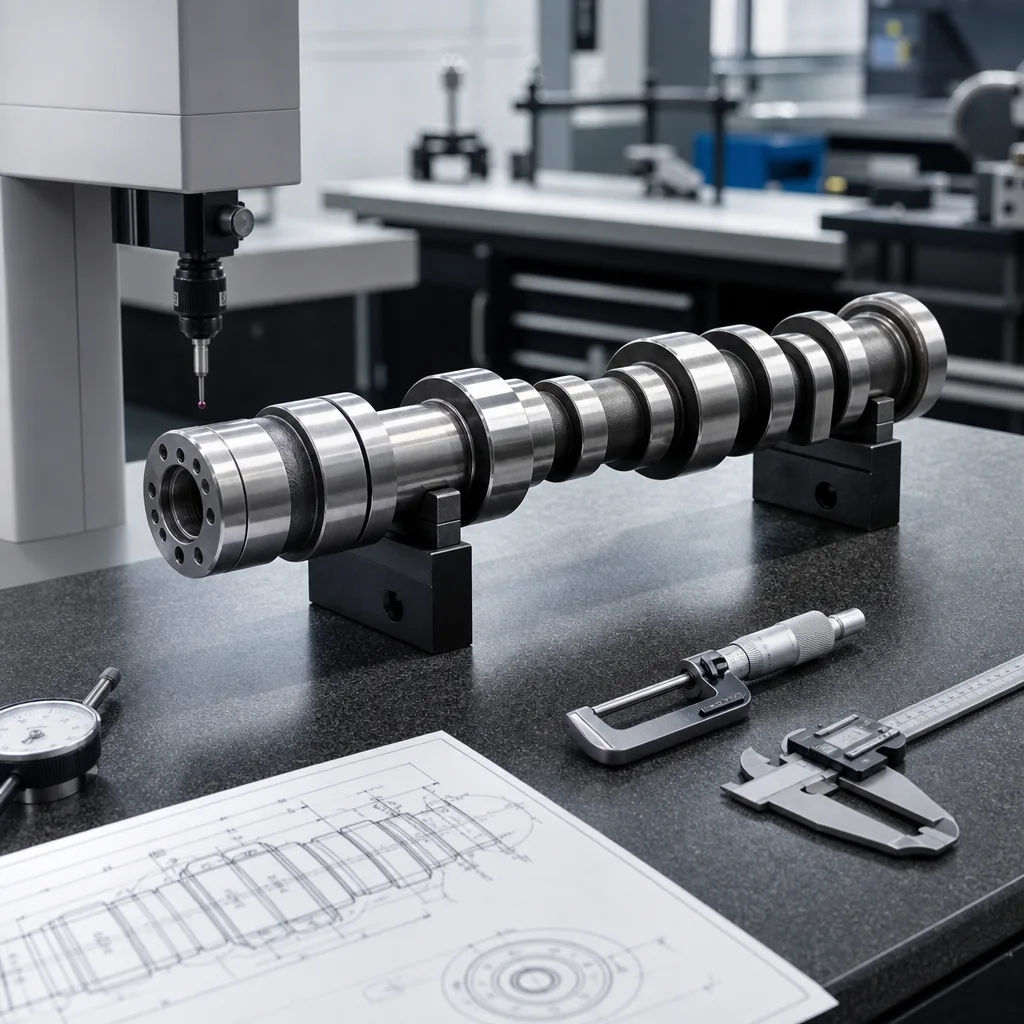
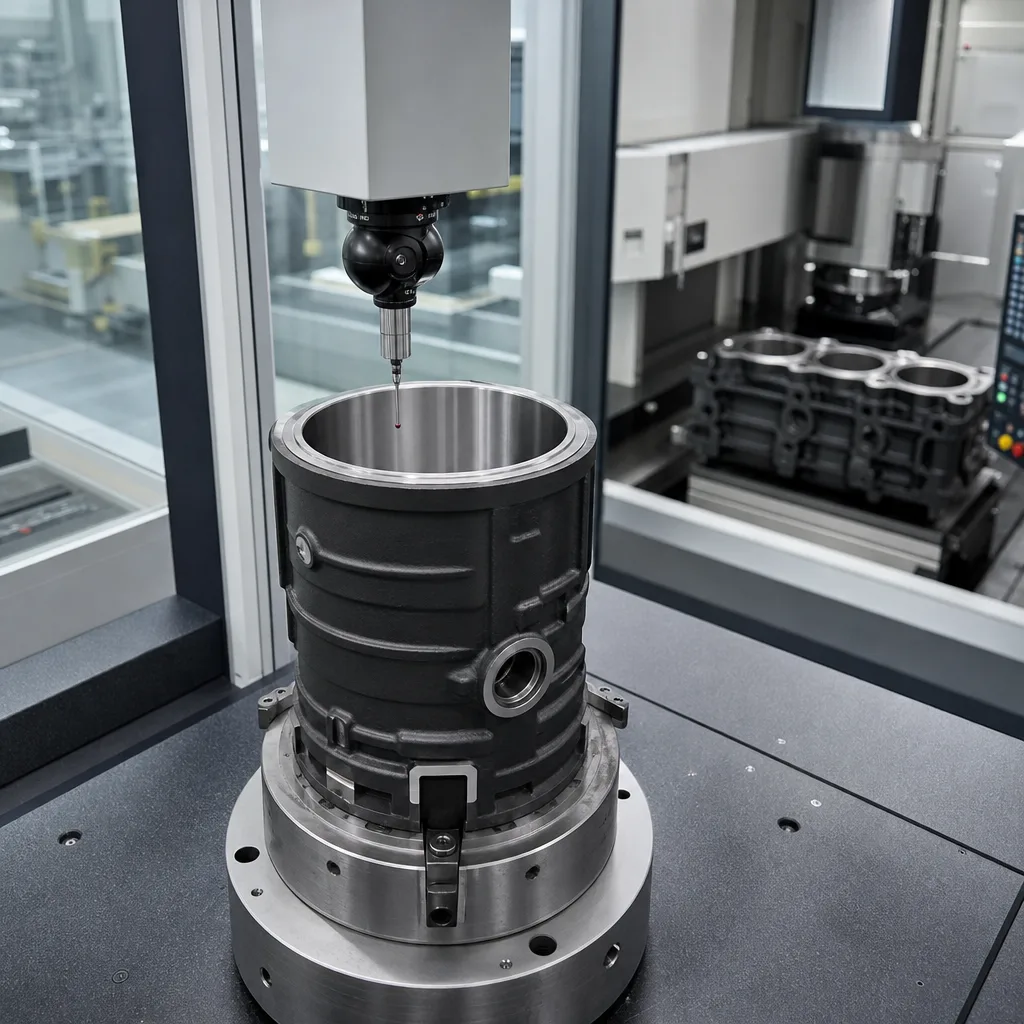
Critical-to-function features should be checked with suitable equipment such as CMM inspection, air gauges, bore gauges, thread gauges, surface-roughness testers, hardness testers, and calibrated leak-test fixtures. Where process capability is claimed, request the sample size, date range, machine number, cavity or fixture identification, and production conditions behind the data. A Cpk value without the related control plan and measurement-system evidence is not enough.
For validation, request pressure testing, leak-rate criteria, crack inspection, hardness records, cleanliness checks, and thermal-cycle evidence that matches the intended duty cycle. Many buyers require 100% leak testing for coolant and oil circuits, with test pressure and hold time defined by drawing or purchase specification. If the head is intended for high-load, turbocharged, commercial, or severe-duty use, the approval plan should reflect that risk with tighter inspection frequency and durability evidence. Where comparative durability data is useful, reports may reference industry or customer-specific test methods, but generic references do not replace application-specific validation. A supplier that can show stable machine data, controlled rework rates, clear containment rules, and repeatable final cleaning is usually easier to manage than one that quotes only by weight and casting cost.
Documentation buyers should insist on
The documentation package should work for procurement, QA, engineering, customs, and warehouse teams, not just sit in a sales folder. At minimum, request a dimensional report, material certificate, heat-treatment record where applicable, batch traceability record, final inspection report, packaging specification, and product-label template. For EU supply, ask how the part file supports REACH (EC) No 1907/2006 declarations when material content needs to be documented. For programme control, the supplier should also be able to provide records aligned with IATF 16949:2016 and ISO 9001:2015, including corrective-action history, calibration control, internal audit status, and management of change where relevant.
Useful documents include:
First-article or PPAP-style submission pack, usually including warrant, dimensional results, material records, process flow, control plan, and inspection evidence
Approved drawing, revision level, datum scheme, and deviation or concession record if any
Material certificate with alloy grade, chemistry range, and melt or heat traceability
Heat-treatment chart and hardness record, such as HB or HRB values as specified by the drawing
Leak-test or pressure-test result by batch, including medium, pressure, hold time, leak limit, and fixture ID where required
Critical-dimension inspection report with drawing references and measured values, not only pass/fail marks
Gauge calibration status for key fixtures and measuring equipment, including CMM, roughness tester, thread gauges, hardness tester, and leak-test equipment
Process flow chart and control plan for casting, heat treatment, machining, deburring, washing, drying, inspection, and packing
Cleanliness or residual-contamination record where oil galleries, coolant passages, or machined bores require controlled debris limits
Label format with customer part number, supplier part number, batch, date, quantity, revision, country of origin, and trace code
Packing method for machined-face protection, corrosion prevention, impact resistance, export handling, and transit damage control
Documentation should be batch-linked rather than presented as a one-time marketing file. If a shipment later shows porosity, thread damage, blocked passages, leakage, hardness deviation, or flatness variation, the buyer needs to know which melt, casting lot, machining lot, fixture, inspection record, and packing date are involved. That traceability allows containment without freezing unrelated inventory.
If your approval process includes a factory audit, look for incoming material control, furnace and heat-treatment records, preventive maintenance, operator training, gauge R&R discipline, nonconforming-material handling, rework approval, and change-control records. Ask how the supplier manages tool wear, fixture replacement, engineering changes, subcontracted processes, and customer complaints. These records are stronger indicators of repeatability than a polished sample part because they show how the factory behaves under normal production pressure.
Commercial terms that keep supply stable
For cylinder head sourcing, the real cost driver is process stability, not unit price alone. A low quote is of limited value if it comes with poor traceability, long changeover times, unclear responsibility for testing, or inconsistent packing. Buyers should define MOQ, lead time, release cadence, forecast rules, approval gates, tooling ownership, and cost drivers before the first order. The aim is to make the first shipment, repeat orders, and aftersales replenishment run under the same rules.
A practical commercial review usually covers:
MOQ by casting family, machining route, and finished part number
Tooling, core box, fixture, gauge, and sample charges where custom casting or machining is required
Lead time from drawing approval to first article, pilot order, first mass-production order, and repeat order
Sample quantity, inspection scope, destructive-test requirement if any, and approval gate before mass production
Packaging standard for export, sea freight, air freight, warehouse storage, and distributor handling
Safety stock, call-off arrangement, Kanban or rolling forecast requirement
Payment terms, Incoterms 2020, port of loading, customs documents, and certificate-of-origin responsibilities
Labeling for barcode scanning, warehouse intake, batch traceability, and mixed-SKU consolidation
Change-control rules for material, alloy supplier, casting source, heat treatment, machining route, surface treatment, packaging, or subcontracted processes
MOQ should be reviewed at the casting-family level as well as at the finished-part-number level. Several cylinder heads may share a casting base but require different CNC operations, plugs, seats, guides, threads, sensors, machining depths, or packaging. Understanding that structure helps buyers consolidate demand without creating slow-moving inventory. Lead time should also be separated into sample approval, tooling or fixture preparation, first production, and repeat production because each stage carries different risks. For many sourcing programmes, first-article development takes longer than replenishment; repeat orders should be quoted against a clear production slot and forecast window.
If you manage multiple warehouses or regional distributors, ask for carton and pallet standards that support mixed-SKU consolidation. Confirm gross weight, net weight, pallet height, carton burst strength, moisture protection, machined-face protection, barcode placement, and maximum stack height before shipment. Heavy cylinder heads can damage valve seats, gasket faces, or threaded bosses if packaging relies only on generic cartons. Clear packaging standards reduce receiving errors and make inventory control easier. They also help when the same head must move through several country-specific channels without relabeling at each stage.
For buyers comparing more than one cylinder head OEM supplier, these commercial controls often reveal the difference between a low-price quote and a supplier that can support stable replenishment. The stronger supplier will quote the part, but also define the inspection cost, packaging method, change-control route, and replenishment assumptions behind the price.
Why Driventus fits OEM-style cylinder head sourcing
Driventus manufactures engine and powertrain components in Taizhou, Zhejiang, and exports to more than 60 countries. That matters because cylinder head buyers need a supplier that can support drawings, volumes, validation requests, packaging rules, and repeat orders without rebuilding the commercial case every time. Our production model is built for aftermarket distributors, OEM and Tier-1 suppliers, and multi-location repair chains that need controlled supply rather than spot buying.
For cylinder head programmes, the practical work starts with the application reference, drawing, material target, casting route, machining scope, annual volume, and required test evidence. From there, the approval plan can define which dimensions are critical, which tests are required by batch, how nonconforming parts are contained, how labels should be formatted, and how packaging should protect machined surfaces in export transit. This structure helps procurement, QA, engineering, and warehouse teams work from the same file instead of dealing with quality, logistics, and documentation questions separately after production begins.
Use our quality system to review the documents behind our process controls, and custom manufacturing when your programme needs drawing-based machining, packaging, or validation support. We can also align programmes with broader engine components sourcing where the head is part of a larger bill of materials, such as valve train, timing, gasket, cooling, or related repair components.
The commercial objective is straightforward: approve the drawing, lock the inspection method, confirm alloy and heat-treatment requirements, define the packaging, agree lead time and MOQ, and then run a supply schedule that holds across replenishment cycles. That is the framework most procurement teams need from an aftermarket cylinder head partner, and it is the standard a serious cylinder head OEM supplier should be ready to discuss before purchase order placement.
Frequently asked questions
A drawing or fitment reference, annual volume, target material or alloy, casting route if specified, machining scope, packaging needs, and any required test reports. If you have a forecast, include it so lead time, MOQ, tooling, fixture needs, and sample approval timing can be assessed correctly.
Yes. The work should be defined against the customer drawing, datum scheme, critical dimensions, inspection method, and approval plan. Packaging can also be set for export, warehouse handling, barcode intake, corrosion protection, machined-face protection, or mixed-SKU distribution.
Yes, we can provide batch-linked inspection and material records, plus quality-system documents aligned with IATF 16949:2016 and ISO 9001:2015. REACH documentation depends on the material set and destination-market requirement.
Share your drawing, annual volume, target alloy, machining scope, packaging needs, and test requirements, and we will review supply options for your programme. Start with [request a quote](/contact.html).