Crankshaft Symptoms of Failure: Diagnosis and Replacement
Crankshaft problems usually show up as a mix of noise, vibration, oil pressure loss, metal in the lubricant, or misfire-related symptoms that do not clear after ignition or fuel checks. For procurement and maintenance teams, the key is to separate symptoms from root cause. A damaged bearing, blocked oil gallery, incorrect end play, bent accessory drive, or poor rebuild practice can all create similar field reports. The crankshaft itself may be cracked, out of runout, worn at the journals, or suffering from fatigue after repeated overload.
This guide explains the most common crankshaft symptoms of failure, what they usually indicate, and which inspection steps help confirm whether the crankshaft should be repaired, remanufactured, or replaced. Driventus is an independent aftermarket manufacturer; brand names are referenced for fitment only. Our crankshaft range is produced under IATF 16949:2016 and ISO 9001:2015 controls, with export supply for aftermarket and OEM-aligned applications.
What the main failure symptoms look like
The most common complaint is a deep knocking noise that rises with engine speed and load. That sound often points to main bearing or rod bearing distress, but a cracked or distorted crankshaft can produce the same report once journal clearance changes.
Other symptoms include:
Low oil pressure at hot idle or under acceleration
Excessive vibration at idle or throughout the rev range
Metal glitter in the oil filter or sump
Repeated seal failure at the front or rear main
Hard starting, rough running, or intermittent misfire after mechanical damage
Belt, pulley, or flywheel alignment issues after impact or rebuild
If the engine has recently suffered oil starvation, overspeed, hydrolock, or bearing seizure, the crankshaft should be treated as a suspect component until measured. In field work, the symptom is often reported as a crankshaft symptoms of failure case, but the true issue may be the bearing set, lubrication system, or block alignment.
Symptom, likely cause, and first inspection
Symptom
Likely cause
First inspection
Deep knocking
Rod or main bearing wear, journal damage
Check oil pressure, cut open filter, inspect bearing shells
Verify timing marks, pulley keyway, and crank sensor targets
</tr></thead><tbody> </tbody></table>A symptom-based approach avoids unnecessary part replacement. If the oil pressure is acceptable and the noise is not load-sensitive, look at accessory drives, transmission input, or flywheel issues before condemning the crankshaft. If the engine has seized or thrown a bearing, inspect the crankshaft journals first because heat tint, scoring, and taper often make reuse uneconomical.
Inspection checks that confirm crankshaft damage
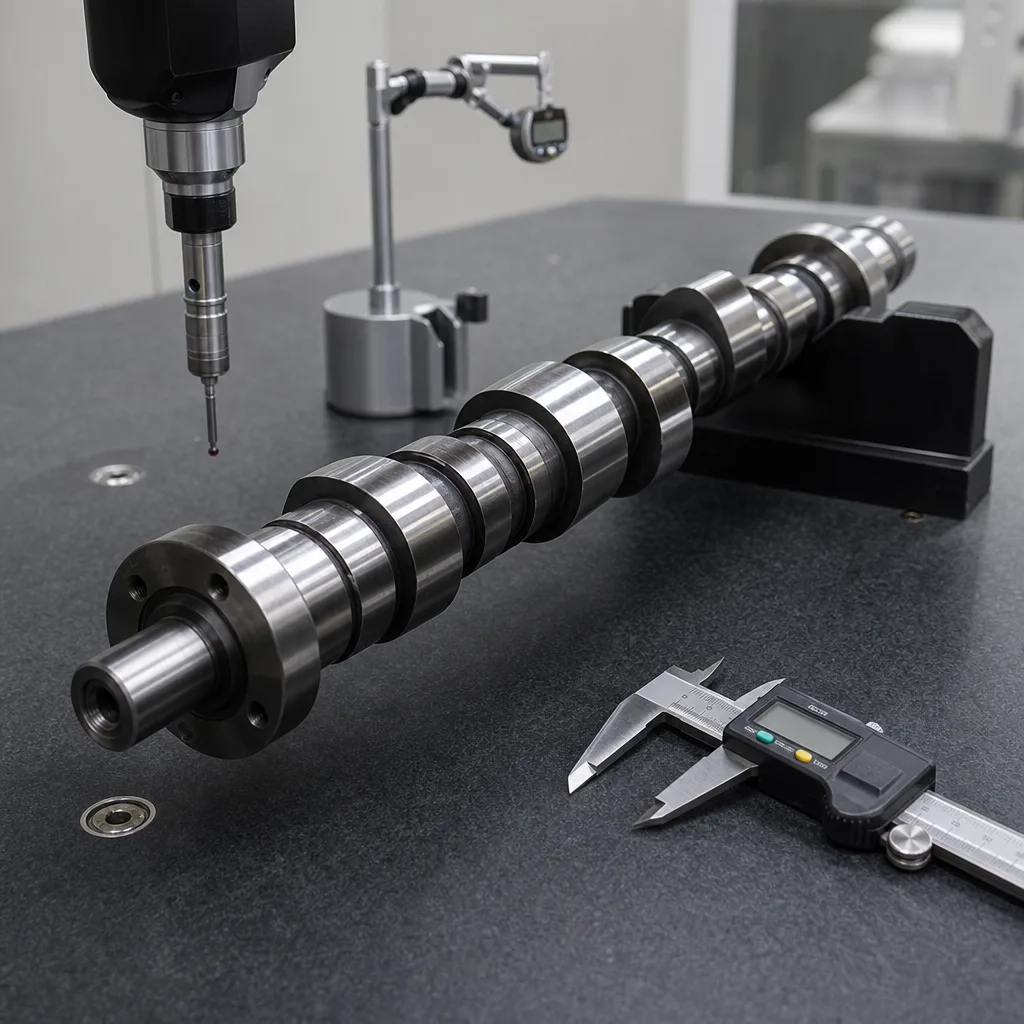
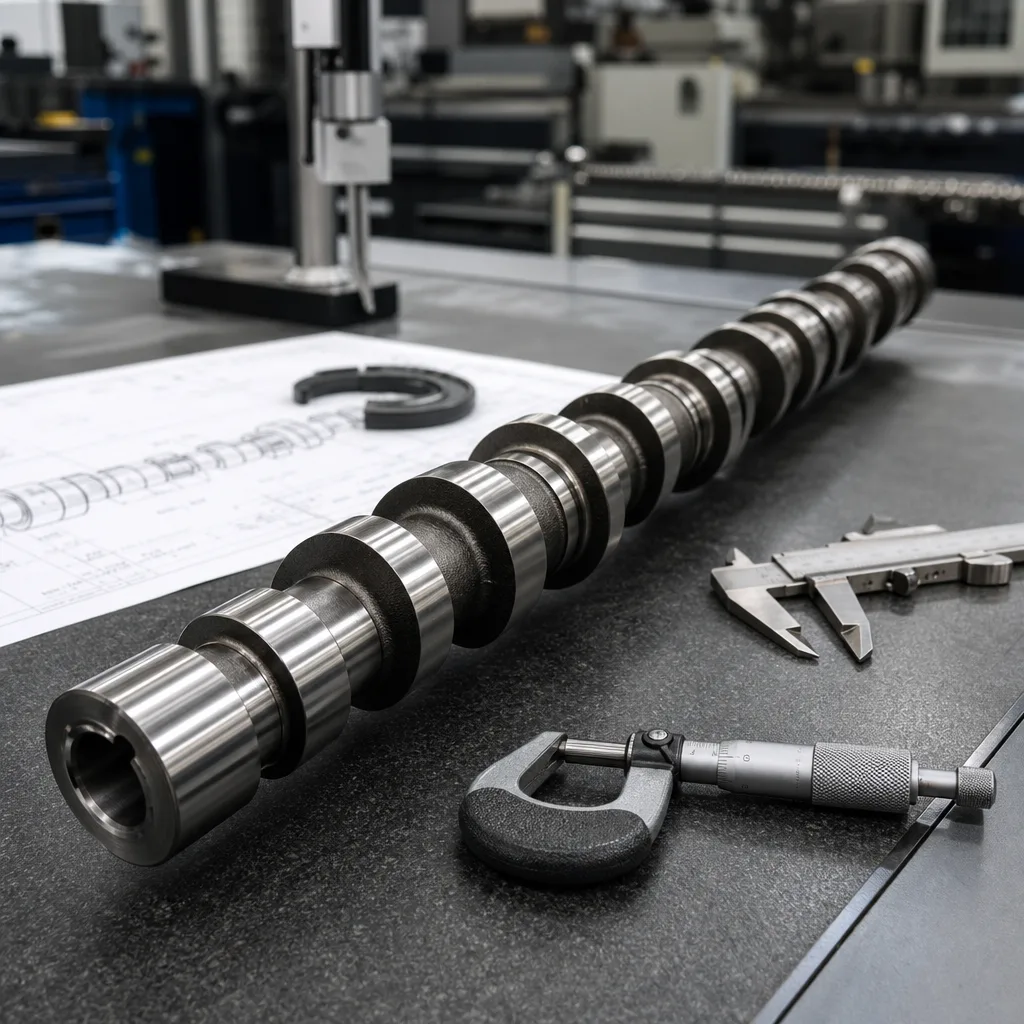
Use standard metrology, not visual judgement alone. A crankshaft can look serviceable and still fail dimensional checks.
Core checks
Journal diameter against the engine specification
Taper and ovality across each main and rod journal
Radial runout on V-blocks or between centres
Thrust face wear and end play
Fillet condition and visible cracking
Keyway, flange, and timing feature integrity
Useful shop methods
1. Clean the crankshaft fully and remove oil residue. 2. Inspect journals under strong light for scoring, blueing, or polishing bands. 3. Measure diameter at multiple points on each journal. 4. Check runout at the centre and outer journals. 5. Compare thrust wear and end play with the engine manual. 6. Use magnetic particle inspection or equivalent NDT where crack risk is high.
For procurement teams, the important point is traceability. A supplier should provide dimensional control, heat-treatment records where applicable, and inspection evidence aligned with IATF 16949:2016 and ISO 9001:2015. For export markets, material and surface treatment expectations may also need to support REACH (EC) No 1907/2006 compliance for the finished supply chain, depending on the application and documentation route.
When replacement is the correct decision
Replacement is usually the correct decision when any of the following are present:
Cracks confirmed by NDT
Journal wear beyond regrind limits
Out-of-spec runout that cannot be corrected
Heat damage after bearing seizure
Flange or keyway damage
Repeated oil seal failure caused by journal condition
If the crankshaft is being sourced for repair or distribution, dimensional match matters more than part label alone. Verify main journal sizes, rod journal sizes, thrust width, flange pattern, sensor target design, and timing gear fit. For some applications, OE 06A… or similar cross-reference data is used only as a fitment reference, not as a manufacturer approval claim.
Driventus supports catalogue supply through our catalog and custom manufacturing for customers who need specific dimensions, machining features, or packaging requirements. Our crankshafts are supplied for passenger car and light-duty engine programmes, with validation available against drawing and sample requirements.
How to reduce repeat failures after installation
A new crankshaft will fail early if the root cause remains in the engine system. Rebuild quality is usually determined by cleanliness, clearance control, and lubrication.
Before installation, confirm:
Block alignment and main bore condition
Bearing shell grade and thickness selection
Oil pump output and pickup clearance
Oil gallery cleanliness after machining
Correct torque sequence and fastener condition
End play within specification
Proper balancing of the rotating assembly
A supplier with a documented quality system should be able to support process control, measurement records, and final inspection data. For engineered variants, custom manufacturing is useful when the customer needs machining changes, sensor tone wheel differences, or packaging tailored to regional rebuild practice.
Driventus also supplies related engine parts through our catalog and broader engine components where buying teams need matched sourcing across the bottom end.
Buying checklist for B2B procurement teams
When you evaluate crankshaft supply, use a technical checklist rather than a price-only comparison.
Confirm the exact engine code and application range
Request material specification and heat-treatment route
Check journal sizes, fillet radius, and runout limits
Verify balance category and any target wheel or reluctor features
Ask for dimensional reports from the production lot
Review packaging, corrosion protection, and export marking
Confirm claim support for nonconforming parts and traceability
For direct sourcing, you can request a quote and ask for drawing review, sample submission, and lot-level inspection data. Driventus works with aftermarket distributors, OEM and Tier-1 supply chains, and repair networks that need stable repeat supply rather than one-off procurement.
Frequently asked questions
Start with knocking noise, hot oil pressure loss, vibration, and metal in the oil filter. Then inspect bearings, journal condition, end play, and runout before deciding on replacement.
Yes. Bearing wear and oil starvation often create the same symptoms as crankshaft damage. Measure clearances and inspect the journals before condemning the crankshaft.
Ask for dimensional data, material and heat-treatment information, traceability, and inspection records. For export supply, confirm IATF 16949:2016 and ISO 9001:2015 controls.
If you need a technical review of fitment, dimensions, or supply options, contact Driventus for documentation and quotation support. Start here: /contact.html