Camshaft for Genesis G80 OE Equivalent: Sourcing Guide
Procurement teams sourcing a camshaft for Genesis G80 OE equivalent need more than a part that fits the engine family. The priority is dimensional match, correct lobe profile, journal finish, heat treatment, and stable supply across batches. For replacement programmes, the part must align with OE reference dimensions and functional targets without claiming manufacturer approval. Driventus supplies engine components to B2B buyers who need consistent fitment, traceability, and export-ready documentation. Driventus is an independent aftermarket manufacturer; brand names are referenced for fitment only. For buyers managing distributor stock, workshop supply, or remanufacturing, the right approach is to verify the OE cross-reference, confirm material and hardness, and review inspection records against IATF 16949:2016 and ISO 9001:2015 controls. This article explains what to check before ordering, how OE-equivalent camshafts are validated, and which sourcing details reduce installation risk and returns.
What OE-equivalent means for a Genesis G80 camshaft
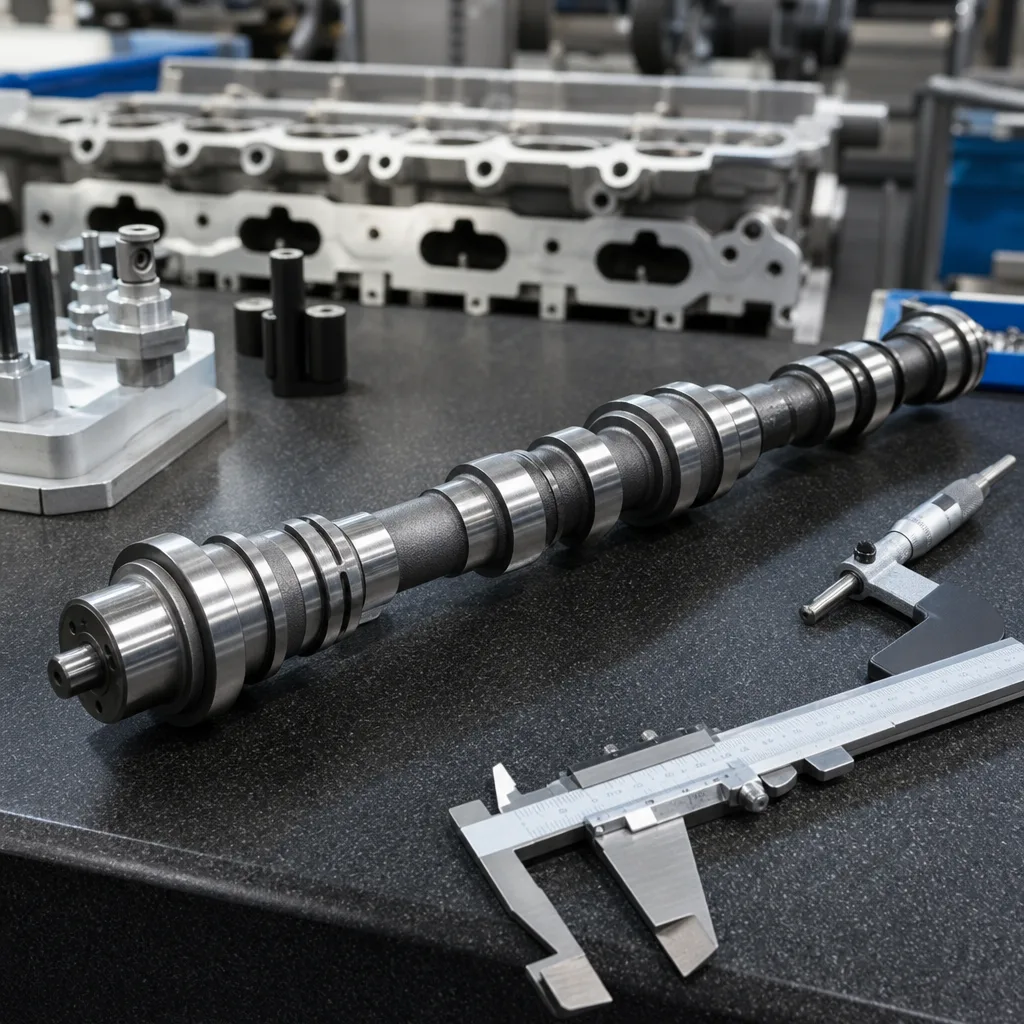
An OE-equivalent camshaft is built to match the original part’s installed function, not to copy a brand name. For a Genesis G80 application, that means the cam profile, base circle, journal diameter, overall length, thrust geometry, and timing references must align with the target engine specification.
For procurement, the phrase should be confirmed with measurable data, not marketing language. Ask for:
OE part-number cross-reference where available, for example OE 06A107065 style references when applicable
engine code and model-year compatibility
cam lobe lift and timing data
journal and bearing surface finish
heat-treatment method and hardness range
packaging and traceability identifiers
Driventus is an independent aftermarket manufacturer; brand names are referenced for fitment only. The buyer’s task is to confirm that the part is functionally interchangeable within the stated engine build and service use.
Validation checks before purchase
A replacement camshaft should be validated against the target engine variant and not only the vehicle nameplate. Genesis G80 platforms can differ by engine family, production year, and market.
Check these points first
1. Confirm engine code and cylinder head variant. 2. Match intake or exhaust position; some applications use different profiles. 3. Verify sensor trigger features, flats, and keyways if present. 4. Compare bearing journal count and thrust face location. 5. Review packaging label, lot code, and inspection report.
Dimensional data buyers should request
Item
Typical procurement check
Overall length
Must match OE drawing or verified sample
Journal diameter
Check against nominal size and tolerance band
Lobe lift
Compare intake/exhaust profile separately
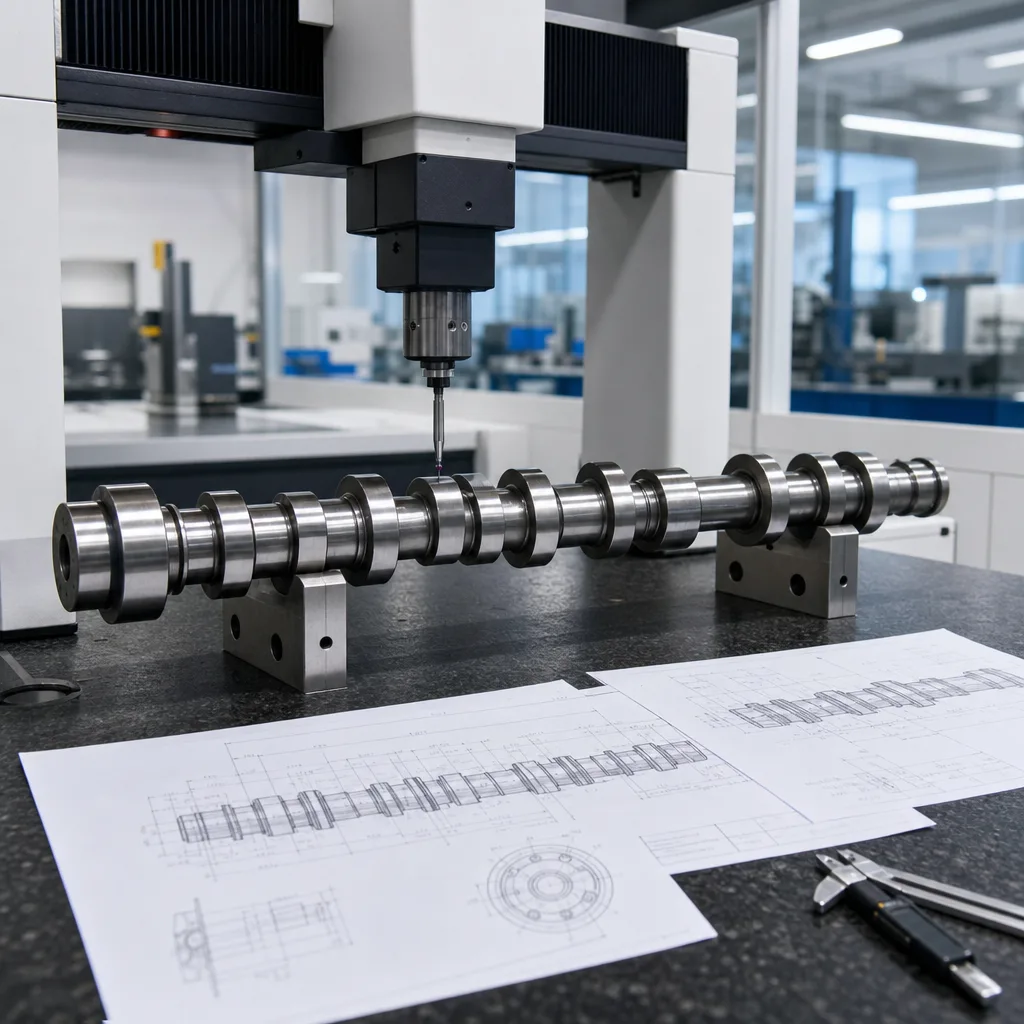
Runout
Request measured value from inspection record
Surface hardness
Confirm heat treatment and hardness range
Surface finish
Ask for Ra value on journals and lobes
</tr></thead><tbody> </tbody></table>For repeat orders, keep one approved master sample and an incoming inspection sheet. That reduces ambiguity when multiple suppliers quote the same application.
Materials, heat treatment, and wear control
Camshaft life depends on material selection and process control. Common production routes include chilled cast iron, ductile iron, and forged steel depending on the duty requirement and design.
For replacement supply, the important questions are:
What material grade is used?
Is the blank normalized, hardened, or induction treated?
Are lobes ground after heat treatment?
Is the final profile checked with a cam measuring system?
Are journals protected against corrosion in storage and transit?
A supplier should be able to state the process sequence and supply inspection evidence. For export buyers, REACH (EC) No 1907/2006 matters for restricted substances in coatings, packaging, and ancillary materials. If the part is sold into markets with emissions-related requirements, align your documentation with the applicable vehicle and engine service regulations, such as ECE R-83 where relevant to the programme scope.
Driventus manufactures engine components in a controlled process flow, with inspection records supported by IATF 16949:2016 and ISO 9001:2015 quality controls.
Comparison: OE-equivalent camshaft versus lowest-cost substitute
Criterion
OE-equivalent replacement
Lowest-cost substitute
Dimensional match
Verified against OE reference or sample
Often partial or undocumented
Lobe profile
Controlled and repeatable
May vary between batches
Surface finish
Measured and recorded
Sometimes unspecified
Heat treatment
Defined process and hardness target
May be inconsistent
Traceability
Lot code and inspection record
Limited or absent
Warranty risk
Lower when installed correctly
Higher due to fitment variation
</tr></thead><tbody> </tbody></table>For procurement, the lower unit price can be offset by higher returns, labour costs, and vehicle downtime. A camshaft is a precision rotating component; small deviations in runout, surface finish, or timing features can affect idle quality, valve events, and long-term wear.
How Driventus supports B2B sourcing
Driventus supplies engine and powertrain components for aftermarket distributors, wholesalers, OEM and Tier-1 supply chains, and repair networks. Buyers can use our catalog to review related engine components, including parts that are often sourced alongside camshafts in service kits.
For programmes that need non-standard packaging, private label support, or drawing-based production, custom manufacturing is available. That is useful when a buyer needs a controlled replacement part but must adapt carton labels, pallet counts, or inspection documents for local distribution.
Our quality system covers documented inspection flow, traceability, and release controls. For broader engine programme sourcing, the engine components page can help buyers coordinate adjacent parts such as gasket sets, water pumps, and timing-related items.
When RFQ timing matters, use the application data, OE cross-reference, target annual volume, and required certification set to shorten quotation time.
What to include in an RFQ
A clear RFQ reduces quoting errors and delays. For a camshaft for Genesis G80 OE equivalent, include the following:
Vehicle model, year, engine code, and market
Intake or exhaust position
OE cross-reference if available
Target annual volume and forecast split
Packaging requirement and barcode format
Required inspection documents
Sample approval or first-article requirement
Destination country and Incoterms
If your programme needs both replacement supply and long-term sourcing support, request a quote with photos, measurements, or a used sample. That lets the supplier confirm dimensional match before production starts.
For ongoing supply, agree on revision control. A small change in lobe timing, thrust face, or sensor feature can make a part unsuitable even if the outside dimensions appear similar.
Frequently asked questions
Not exactly. It is built to match the OE fit, function, and key dimensions for the stated application, but it is not a vehicle manufacturer approved part.
Confirm engine code, intake or exhaust position, OE cross-reference, journal dimensions, and any sensor or timing features. Year alone is not enough.
Yes. Buyers can request inspection records, packaging details, and programme-specific documents aligned with IATF 16949:2016 and ISO 9001:2015 controls.
If you are sourcing a replacement camshaft or building an aftermarket programme, send your application data and target volume to /contact.html and we will review the fitment and quotation requirements.