Camshaft for Acura TLX Replacement: OE Match Checklist
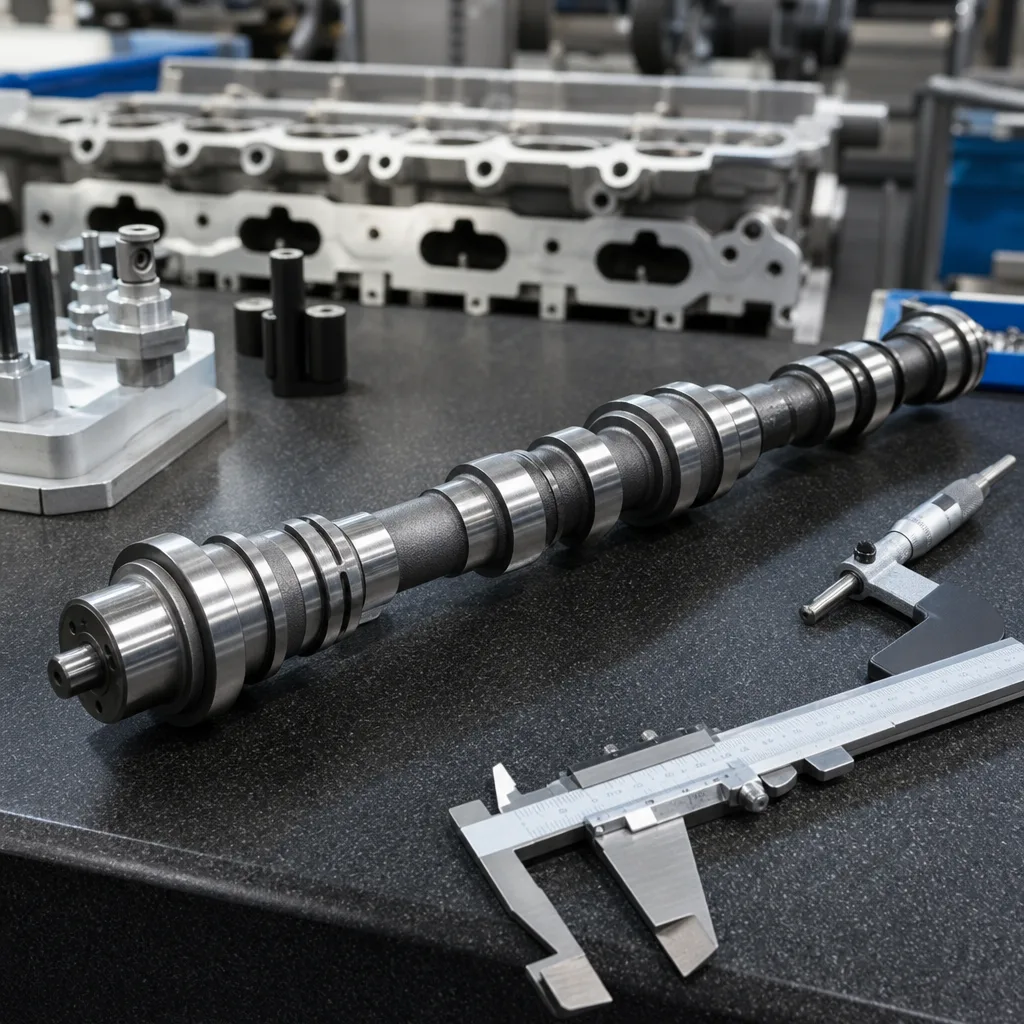
If you are sourcing a camshaft for Acura TLX replacement, the main requirement is dimensional and functional match to the original valve timing design. For procurement teams, that means verifying journal diameter, overall length, lobe profile, timing trigger features, surface finish, and heat treatment against the OE sample or drawing. A correct replacement should install without machining changes, maintain valve event timing, and pass validation under the customer’s duty cycle. Driventus supplies engine and powertrain components for B2B buyers in aftermarket, OEM, and repair network channels. Driventus is an independent aftermarket manufacturer; brand names are referenced for fitment only. Our production and inspection processes are aligned with IATF 16949:2016 and ISO 9001:2015, with material and compliance controls suitable for export programmes in the EU, UK, US, Canada, Australia, and Brazil.
What matters in a direct-fit camshaft replacement
For this part category, replacement quality is not defined by appearance alone. A usable camshaft must match the OE geometry, core hardness, and timing interface so the engine control strategy and valvetrain clearances remain stable.
Key match points to verify
Overall shaft length and nose profile
Journal diameter and journal count
Lobe lift, base circle, and lobe separation
Trigger wheel, reluctor, or sensor target features if fitted
Surface finish on journals and thrust faces
Heat treatment depth and hardness profile
Packaging and preservation to prevent corrosion during transit
If your programme references OE 06A107065 or another OE cross-reference, confirm the exact application by engine code, cylinder head variant, and model year. Small differences in VVT hardware or sensor indexing can make visually similar parts non-interchangeable.
Dimensional and material checks for procurement approval
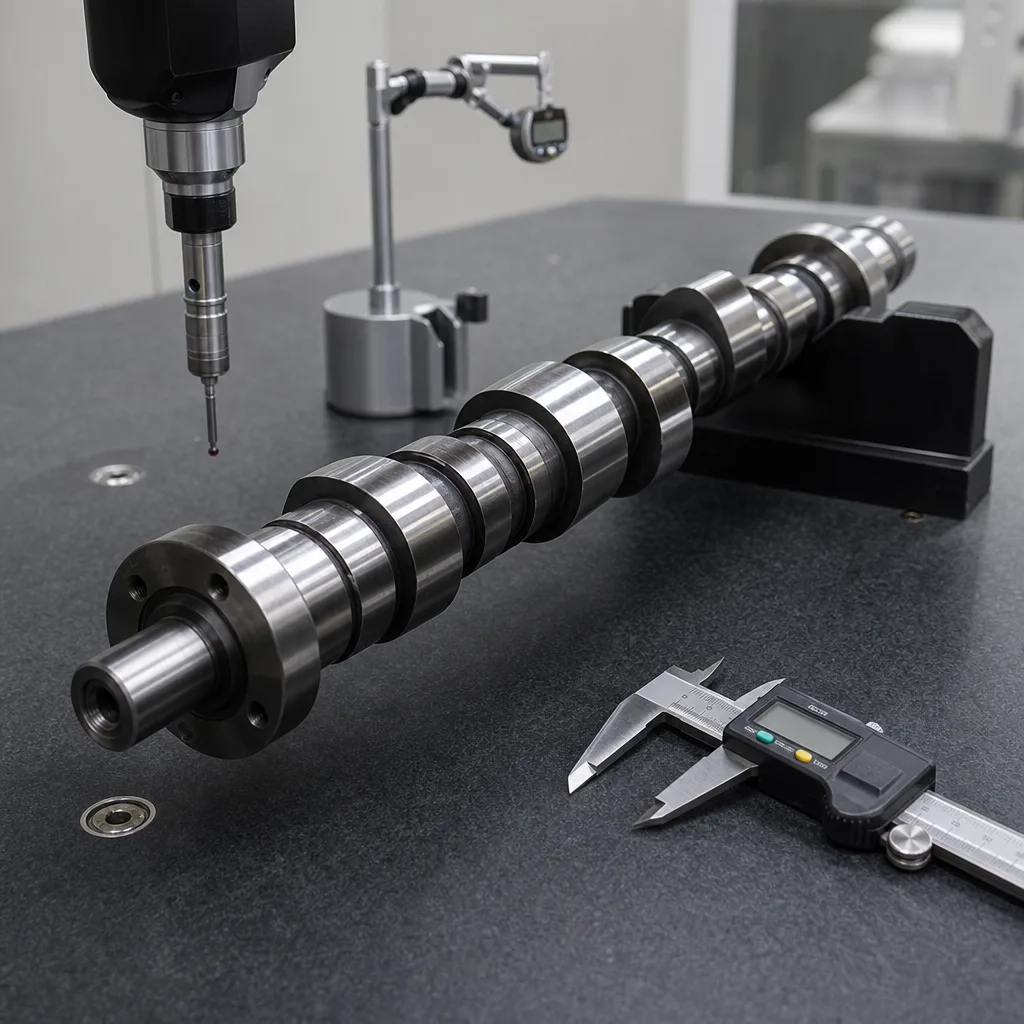
A procurement review should use measured data, not catalogue description only. For a replacement camshaft, request first-article dimensions and a signed inspection report before release.
Check item
What to confirm
Why it matters
Journal OD
Matches OE within drawing tolerance
Controls oil film and bearing load
Lobe lift
Equal to OE target
Preserves valve opening and duration
Runout
Within allowed limit
Prevents vibration and timing error
Hardness
Matches specified heat treatment
Reduces wear on lobes and journals
Thrust width
Matches OE interface
Maintains axial control
Sensor target
Tooth count and angular position correct
Supports cam/crank correlation
</tr></thead><tbody> </tbody></table>For material control, ask for chemistry verification, microstructure review, and hardness data on the finished part. On regulated supply programmes, REACH (EC) No 1907/2006 documentation may also be required for the finished assembly or related coating process.
Validation testing before release to market
A camshaft should be validated in more than one condition. Static inspection is necessary, but it is not sufficient for replacement supply.
Driventus supports validation plans that can include:
Dimensional inspection against the approved drawing
Surface roughness measurement on journals and thrust surfaces
Runout and concentricity checks
Hardness testing and case-depth verification
Metallographic examination for structure consistency
Assembly fit check with matched bearings, seals, and timing components
Engine or bench verification under customer-defined duty cycles
For fleet, distributor, or repair-chain programmes, it is common to require low initial defect rate, traceable batch control, and sample retention. If the application is subject to emissions-related evaluation, testing references may include ECE R-83 or SAE J2527 depending on the programme scope, though those standards are usually associated with vehicle or system-level validation rather than the part alone.
How Driventus supports replacement supply programmes
We manufacture engine components in Taizhou, Zhejiang, with in-house control over machining, heat treatment coordination, and final inspection. That structure helps reduce variation across production lots and supports repeatable replacement fitment.
Our quality system is built around IATF 16949:2016 and ISO 9001:2015 practices, including traceability, corrective action handling, and controlled inspection records. For buyers who need catalogue breadth, our catalog and engine components pages can be used to review related parts such as valves, lifters, timing components, gaskets, and water pumps.
When a programme requires a special profile, coating, or packaging specification, custom manufacturing is available for documented, repeatable production runs. This is useful when the target application uses a specific OE cross-reference, supplier label, or market-specific packaging standard.
Common sourcing risks and how to avoid them
Replacement camshafts fail commercially when the buyer focuses on fit by name only and ignores the measurement set.
Common risks
1. Incorrect sensor trigger geometry 2. Wrong journal size or thrust face width 3. Mixed applications across similar engine codes 4. Inconsistent heat treatment between lots 5. Insufficient packaging leading to corrosion or edge damage
To avoid these issues, approve the part against a master sample, not only a photograph. Ask for batch traceability, CMM records where applicable, and dimensional reports from the actual shipment lot. If you are replacing parts for a regional distribution programme, define acceptance criteria for coating, oiling, bagging, and carton labelling before PO issue.
What to send before you place an order
To shorten sourcing time, send the following with your enquiry:
Vehicle model, year, engine code, and market
OE reference if available, such as OE 06A107065
Photos of the old part and all timing-related features
Required annual volume and forecast split by market
Target packaging style and barcode format
Any compliance documentation required by your customer
Sample, drawing, or measurement sheet if available
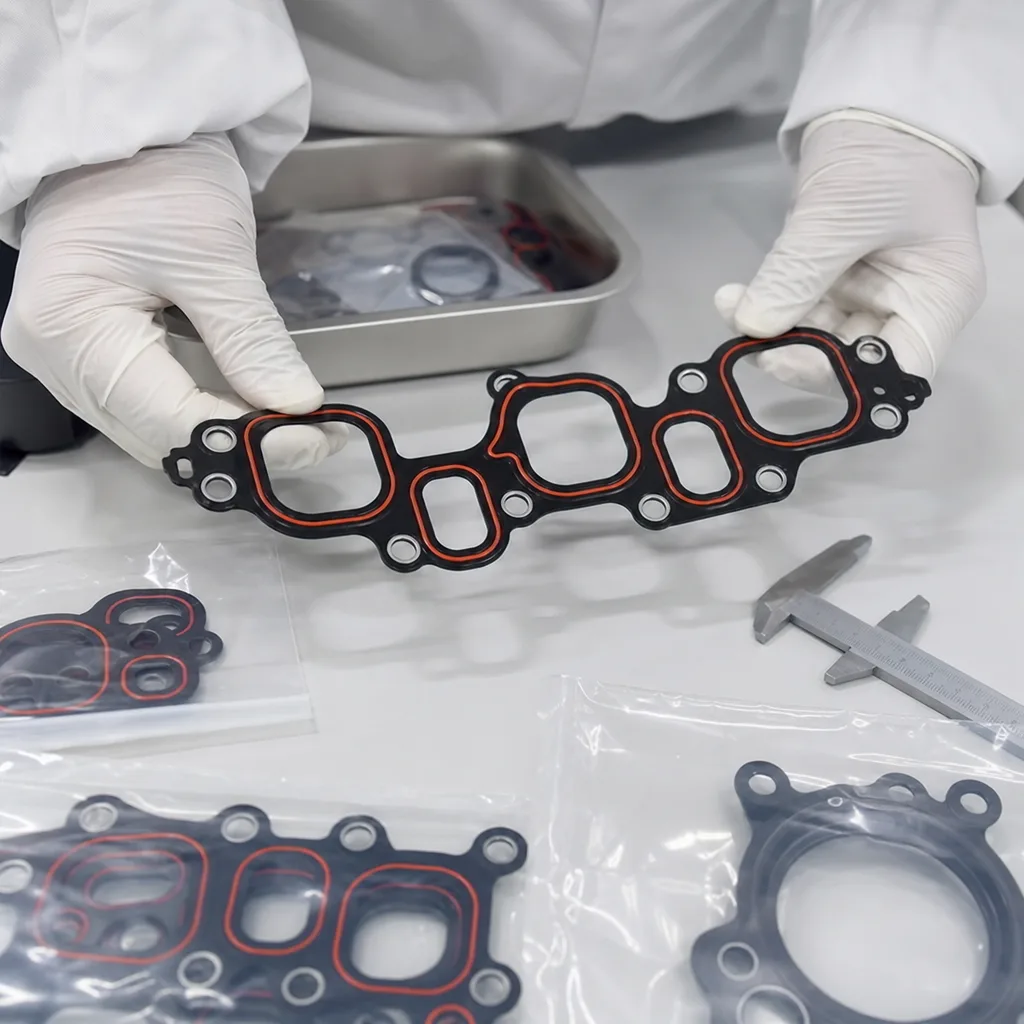
If the application is part of a wider engine refresh package, include the adjacent components that can affect installation, such as cam seals, gaskets, and timing hardware. This reduces the risk of a replacement part arriving that is dimensionally correct but incomplete for the service operation.
Frequently asked questions
Check engine code, OE reference, journal dimensions, lobe lift, sensor trigger features, and thrust width. A visual match is not enough; request measured inspection data from the actual batch.
Yes, provided the application details are verified. Driventus is an independent aftermarket manufacturer; brand names are referenced for fitment only.
Typical documents include dimensional reports, material and hardness data, batch traceability, and compliance files such as IATF 16949:2016, ISO 9001:2015, and REACH-related declarations when required.
If you need a verified replacement part with dimensional control and batch traceability, please [request a quote](/contact.html).