Crankshaft Subaru OEM Supplier: Sourcing and Quality Controls
Procurement teams evaluating a crankshaft Subaru OEM supplier need more than a matching part number. The right source must combine OE-geometry control, documented inspection, stable production capacity, and export-ready paperwork. Driventus supplies crankshafts for passenger-car and light-duty engine programmes through B2B channels, supporting aftermarket distributors, OEM and Tier-1 supply routes, and multi-location repair networks.
Our manufacturing and quality processes are organised under IATF 16949:2016 and ISO 9001:2015, with documentation prepared for cross-border shipments into the EU, UK, US, Canada, Australia, Brazil, and other major service markets. Driventus is an independent aftermarket manufacturer; vehicle brand names are used only to identify fitment and application references. We do not claim approval, sponsorship, or endorsement by any vehicle manufacturer.
For buyers comparing suppliers, the practical questions are clear: does the crankshaft match the required geometry, is machining stable from batch to batch, can inspection records be traced, and can the factory support audit, sampling, packaging, and replenishment requirements? The sections below outline sourcing criteria, dimensional controls, compliance records, and how Driventus supports private-label, distributor, and custom manufacturing programmes.
What buyers should verify in a Subaru crankshaft source
Supplier approval should begin with fitment data, engineering requirements, and process capability rather than unit price alone. A crankshaft is a high-load rotating component, so small deviations in journal geometry, oil-hole finishing, or balance can create bearing wear, vibration, or premature engine failure.
A crankshaft intended for Subaru applications should be reviewed against the buyer’s drawing, sample, or validated reference data. Core checkpoints include journal diameter, stroke, main bearing alignment, fillet radius, runout, surface finish, hardness condition, and oil-passage finishing.
Minimum checks before approval:
OE part-number cross-reference, when supplied by the buyer’s programme or cataloguing convention
Engine application, model-year range, and market-specific fitment notes
Material specification and melting route for the forging or casting input
Heat-treatment condition, journal hardness, and case depth where applicable
Main and rod journal diameter, taper, ovality, and surface roughness
Stroke, counterweight profile, thrust width, and fillet radius
Straightness, runout, and main journal concentricity
Dynamic balancing method and residual unbalance limits
Oil-hole deburring and cleaning process
Packaging method to prevent corrosion, impact damage, and edge marking during export
A credible crankshaft Subaru OEM supplier should be able to provide first-article records, in-process inspection data, and final inspection reports before the programme moves from sampling to repeat order. For broader engine-component sourcing, buyers can review our catalog and engine components.
Production capability and MOQ for B2B sourcing
B2B buyers need a supply plan that separates technical validation from commercial scale-up. Trial lots allow importers, distributors, and repair-chain buyers to confirm fitment, packaging, labelling, and warehouse intake requirements before committing to annual forecasts or framework orders.
Driventus supports development lots and ongoing production orders, with MOQ, lead time, and inspection scope aligned during quotation. This approach helps procurement teams control risk when launching a new crankshaft reference, consolidating suppliers, or adding Subaru applications to an existing powertrain range.
Procurement item
What to confirm
Typical buyer concern
MOQ
Trial lot, production lot, and mixed-part-number options
Can I validate before scaling?
Lead time
Raw material, machining, heat treatment, balancing, packing
Drawing revisions, process changes, packaging updates
Will I be notified before production changes?
</tr></thead><tbody> </tbody></table>If a programme requires non-standard journals, modified counterweights, private-label cartons, barcode labels, or market-specific export packing, use custom manufacturing to align drawings, tolerances, inspection levels, and commercial terms before tooling or production release.
Dimensional control and validation testing
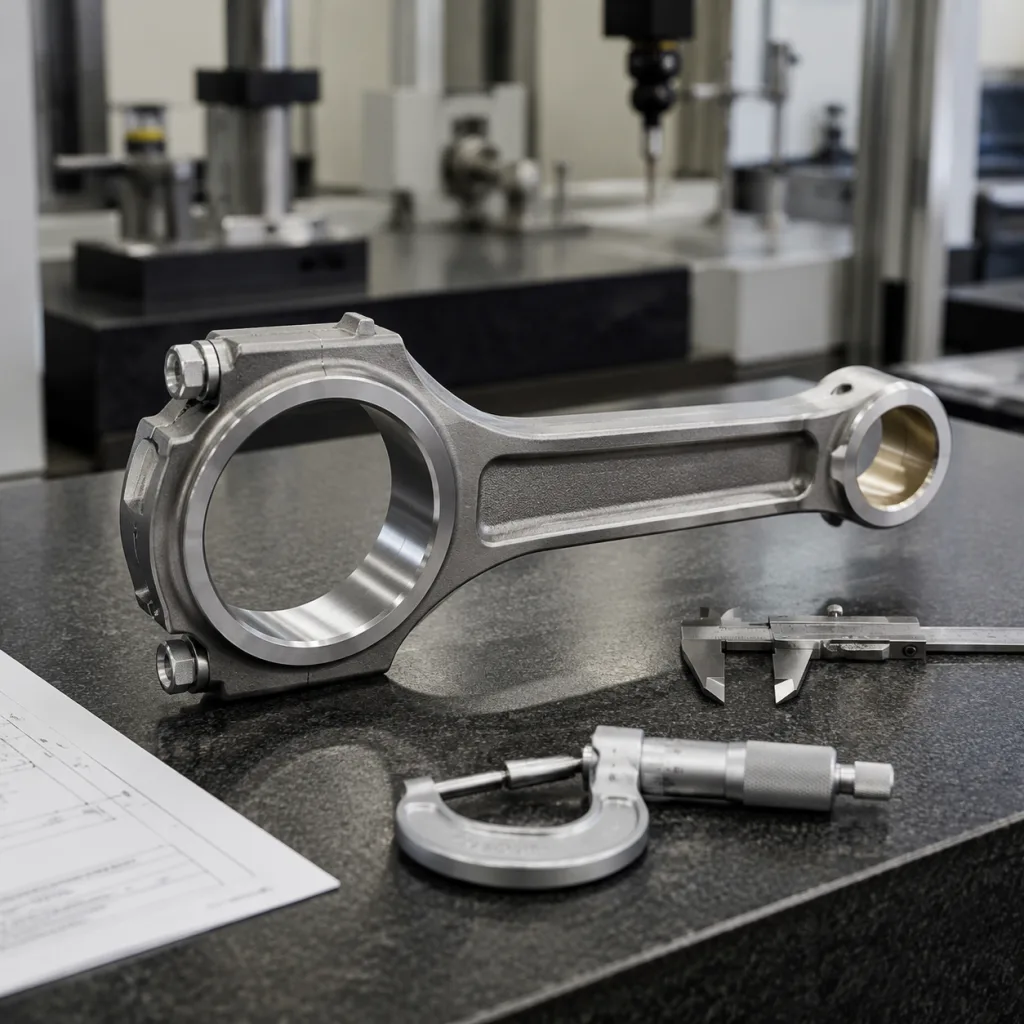
A crankshaft is suitable for supply only when its critical features are measured under a controlled inspection plan. The most common rejection points are bearing journal ovality, taper, thrust-face variation, excessive runout, poor surface finish after grinding, and damage around oil holes or fillets.
Key inspection points
Main journal diameter within drawing tolerance
Rod journal diameter within drawing tolerance
Journal taper and ovality measured at defined positions
Runout measured on centres with a calibrated indicator
Fillet radius maintained after machining and polishing
Thrust face width, flatness, and surface condition verified
Oil-hole deburring checked to reduce stress risers and contamination risk
Surface roughness measured on critical bearing surfaces
Balance condition recorded according to the agreed specification
Final cleaning and corrosion protection confirmed before packing
For export programmes, validation may include metallurgical checks, hardness testing, magnetic particle inspection, dimensional layout reporting, and dynamic balancing. Where customer specifications reference published requirements, Driventus aligns quality documentation with applicable management and compliance frameworks such as IATF 16949:2016, ISO 9001:2015, and REACH (EC) No 1907/2006 for restricted substances control.
Before the first shipment, buyers should confirm the exact test methods, sampling plan, acceptance criteria, gauge calibration status, and record-retention period. These details reduce ambiguity during incoming inspection and make any corrective action faster if a concern appears in the field or warehouse.
How Driventus supports supplier audits and compliance
Procurement managers often need a factory that can support both technical review and commercial due diligence. Driventus maintains documented process control, incoming inspection, in-process checks, final inspection, packaging verification, and traceability records for export shipments. Quality files can be reviewed during supplier qualification, quotation review, desk audit, or on-site audit, subject to programme scope and confidentiality requirements.
Quality documents commonly requested by buyers:
ISO 9001:2015 certificate
IATF 16949:2016 certificate, where programme scope applies
Control plan and inspection records
Material certificates and heat traceability
First-article or sample inspection report
Gauge calibration and measurement-method references
Packaging and labelling specifications
Nonconformance, containment, and corrective action procedures
Change-control process for drawings, materials, and manufacturing routes
Our quality system is structured to support distributors, OEM and Tier-1 channels, and repair-chain replenishment. Driventus is an independent aftermarket manufacturer; brand names are referenced for fitment only. We do not claim vehicle-manufacturer approval or endorsement, but we do provide the records procurement teams need to assess supplier risk, verify compliance expectations, and maintain traceability after shipment.
Commercial terms for distributors, OEM programmes, and repair chains
Different buyer segments need different supply models. Distributors usually prioritise shelf-ready packaging, stable replenishment, correct cross-reference data, and clear carton labelling. OEM and Tier-1 buyers typically focus on drawing control, APQP-style documentation, change management, and consistent process capability. Repair chains often need faster replenishment, practical application data, and packaging that can move efficiently through multiple locations.
For all three channels, the essential commercial questions are similar:
What is the annual volume forecast by part number?
What is the agreed MOQ for sampling and repeat production?
Which packaging standard applies to each destination market?
Are private-label cartons, neutral packaging, or branded labels required?
What documents are needed for customs, internal QA, and customer intake?
How are engineering, process, or packaging changes communicated?
What containment and replacement plan applies if a lot is rejected?
Which Incoterms, payment terms, and shipment schedule are required?
If your team is building a wider powertrain programme, Driventus can combine crankshafts with pistons, gaskets, water pumps, turbocharger components, and related engine parts under one sourcing structure. Review our catalog, then request a quote with your target part list, drawings or OE references, annual volume, packaging requirements, and destination market.
Frequently asked questions
Yes. We support OE-style cross-reference naming when the customer provides the application data, dimensions, and target market requirements. Driventus does not claim manufacturer endorsement, and fitment is verified against the buyer’s drawings, samples, or reference documents.
Typical documents include ISO 9001:2015 and IATF 16949:2016 certificates, inspection records, material traceability, and packing information. Depending on the programme, additional records such as control plans, sample inspection reports, and corrective action procedures can be shared during audit or quotation review.
Yes. We can separate trial lots from production lots so procurement teams can validate fitment, packaging, inspection requirements, and demand before confirming larger volume. Lead time depends on specification, batch size, material availability, and testing requirements.
If you are qualifying a crankshaft Subaru OEM supplier, send your drawing, OE reference, target volume, packaging requirements, and destination market for review. Start with a quotation request at /contact.html.