Crankshaft Hyundai Wholesale: Sourcing Notes for Buyers
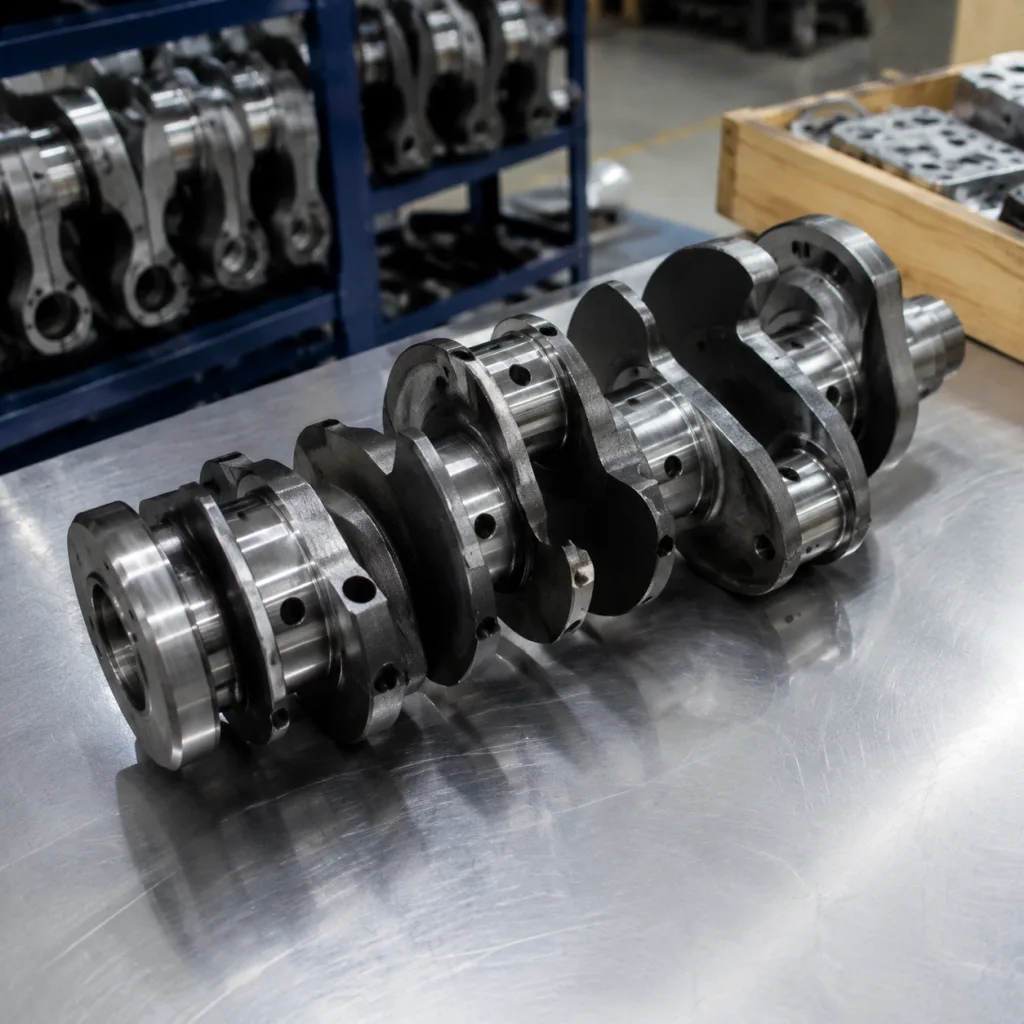
Procurement teams buying a crankshaft Hyundai wholesale need more than a part number and a price. The real checks are OE cross-reference, journal dimensions, material specification, balance grade, surface finish, and packaging that can survive export handling. For engine rebuilders, distributors, and multi-location repair groups, the sourcing decision usually comes down to repeatability across batches and the supplier’s ability to prove it. Driventus supplies crankshafts as an independent aftermarket manufacturer; brand names are referenced for fitment only. We operate under IATF 16949:2016 and ISO 9001:2015, and we support buyers who need stable lead times, inspection records, and clear commercial terms. If you are comparing quotations, treat this as a technical purchase, not a commodity line item.
What procurement teams should verify first
When sourcing a crankshaft, start with fitment data and end-use requirements. For Hyundai applications, buyers should confirm the engine code, OE cross-reference, revision level, and any machining variant such as standard or undersize journals.
Core checks
OE reference and engine family match
Main journal and rod journal diameters
Overall length, thrust face, and flange pattern
Heat treatment and hardness range
Dynamic balance requirement
Packaging and corrosion protection for ocean freight
A low-price offer is not useful if the crankshaft still needs rework at the machine shop. Ask for dimensional inspection reports and batch traceability before you release the purchase order.
Commercial points in a wholesale RFQ
Wholesale buying is usually decided by MOQ, lead time, and documentation. A practical RFQ should specify annual volume, first order quantity, target delivery window, and whether you need mixed part-number consolidation.
RFQ item
Why it matters
OE cross-reference
Confirms application and reduces mis-shipment risk
Target quantity
Sets pricing tier and production plan
Required certificates
Supports supplier approval and inbound QA
Packaging standard
Reduces transit damage and rust risk
Incoterms
Clarifies landed cost and responsibility
Sample approval
Avoids production mismatch
</tr></thead><tbody> </tbody></table>For buyers comparing suppliers, ask whether the factory supports lot-level traceability, incoming material records, and pre-shipment inspection. These are basic controls under a proper quality system, not optional extras. See our quality system for the controls we use on export orders.
Technical specification points that affect fitment
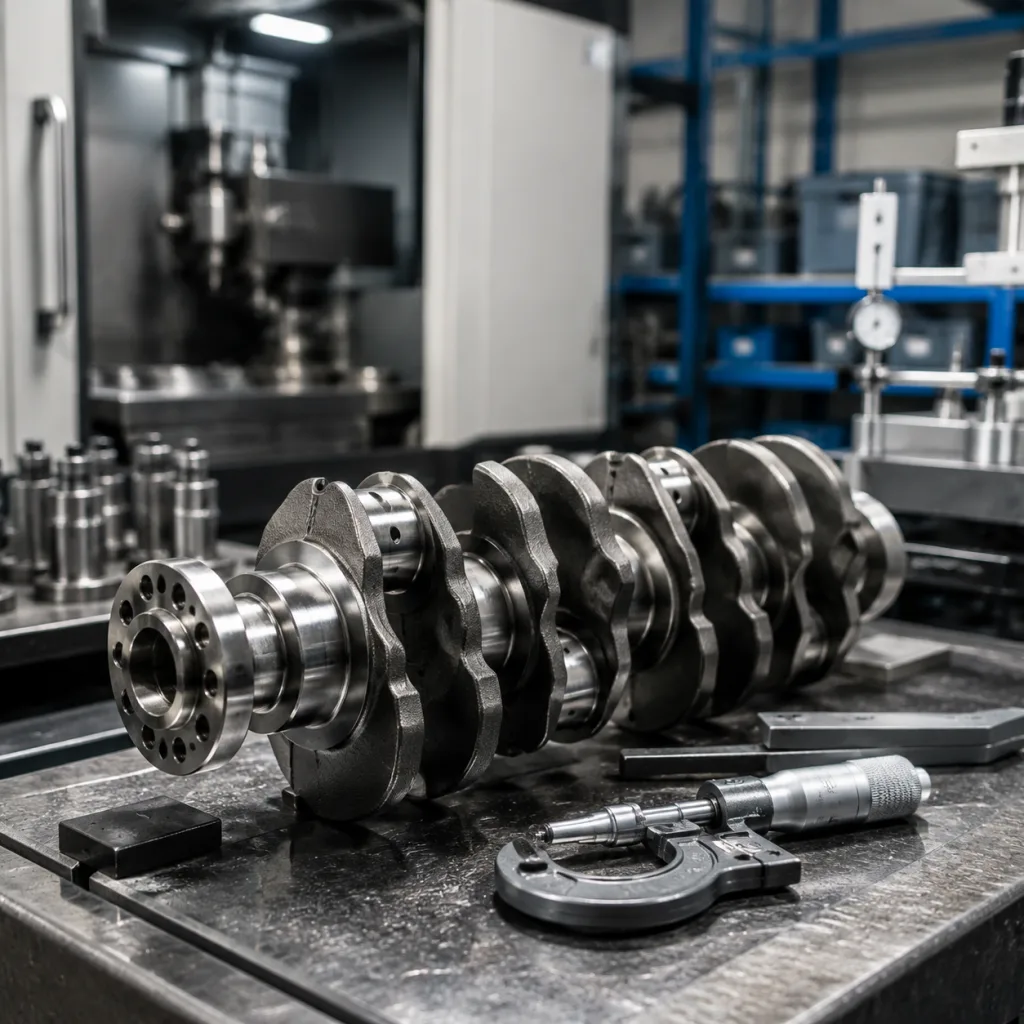
A crankshaft is only interchangeable when the critical geometry is stable. Buyers should request the actual measured values, not only a catalogue description.
Journal diameter tolerance
Straightness and runout
Fillet radius control
Surface roughness on bearing surfaces
Counterweight mass consistency
Oil hole location and chamfer quality
Thrust face width
If the application is being replaced in a remanufacture programme, dimensional match matters more than broad model coverage. For some Hyundai engine families, one revision can change thrust width, rear seal detail, or sensor trigger geometry. That is why OE part-number cross-reference and sample validation should be part of the sourcing process, not an afterthought. Driventus is an independent aftermarket manufacturer; brand names are referenced for fitment only.
How Driventus supports wholesale supply
Driventus is set up for export B2B supply from Taizhou, Zhejiang, with vertical integration across machining and final inspection. That matters when buyers need stable repeat orders and controlled quality at scale.
Our manufacturing support typically includes:
OEM-style sample review for fitment confirmation
Batch traceability for production lots
Export packing suitable for container and pallet handling
Technical communication on material, heat treatment, and finish
Support for custom manufacturing when the application requires a non-standard revision
If your programme needs a modified flange, special balance target, or packaging label set for warehouse systems, review our custom manufacturing. For buyers expanding beyond one crankshaft line, you can also review our catalog and the broader engine components range.
Quality, validation, and audit readiness
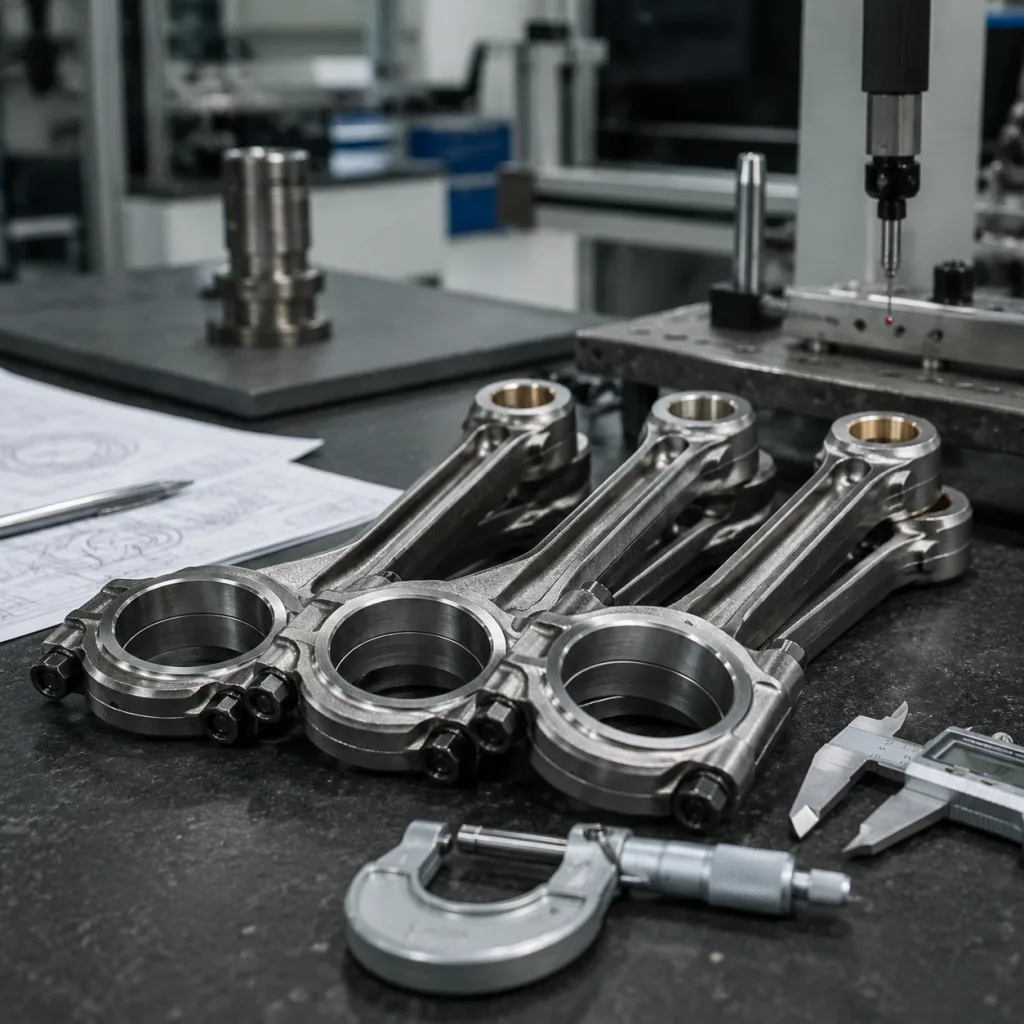
A credible supplier should be able to show how parts are checked before shipment. For crankshaft supply, that normally includes dimensional inspection, hardness verification, visual defect review, and packaging confirmation.
Published standards often referenced in procurement files include IATF 16949:2016, ISO 9001:2015, REACH (EC) No 1907/2006, and, where relevant to emissions-related applications, ECE R-83. Buyers in North America may also ask for salt-spray or corrosion evidence aligned to internal test plans, while some programmes specify SAE J2527 for surface durability evaluation.
Before factory approval, ask for:
Certificate copies in force
Inspection method summary
Calibration status for gauges
Sample report from the exact part number
Corrective action process for nonconformance
If the supplier cannot explain how a shaft is measured, balanced, and packed, the landed cost is likely to rise later through claims and returns.
Lead time, MOQ, and reorder control
Wholesale buyers need predictable replenishment, not only an initial quotation. The practical questions are whether the supplier can hold raw material, repeat the same process route, and ship consistent batches on schedule.
For a dependable supply programme, confirm:
MOQ by part number
Standard production lead time
Sample approval timing
Ability to split shipments
Spare capacity for urgent replenishment
Reorder point based on sales velocity
If you are consolidating purchase orders across multiple branches or markets, ask for packing list consistency and label formats that match your warehouse system. That reduces receiving errors and makes cross-dock handling easier. For pricing and schedule questions, use request a quote once the OE reference and annual forecast are ready.
Frequently asked questions
Yes, but the OE reference should be confirmed with engine code, revision details, and sample data where possible. That reduces the risk of ordering the wrong thrust width, flange, or journal configuration.
Request certificate copies, dimensional inspection results, lot traceability, packaging specification, and sample approval records. Those documents support inbound QA and supplier approval.
Yes. We can review non-standard dimensions, packaging, and programme-specific requirements through our OEM service process. Share drawings, target volumes, and the required validation scope.
If you are comparing suppliers or preparing an RFQ, send the engine code, OE reference, and forecast volume and we will review the fitment and commercial options. Start here: /contact.html