Crankshaft Pulley Dodge Manufacturer China Sourcing Guide
For importers, program managers, and category buyers, sourcing a crankshaft pulley for Dodge applications is more than a unit-price comparison. The decision usually involves dimensional interchangeability, rubber damping behavior, belt alignment, packaging strength, traceability, and the supplier’s ability to respond quickly when an application or cross-reference needs clarification. A crankshaft pulley can appear simple from the outside, yet the bonded elastomer ring, hub bore, keyway geometry, pulley offset, and belt groove runout all influence accessory-drive stability, service life, and NVH performance.
Driventus manufactures engine and powertrain components in Taizhou, Zhejiang, with export supply to more than 60 countries. For Dodge aftermarket programs, we support OE-style cross-reference investigation, sample validation, PPAP-style documentation where required, and neutral or private-label packing for distributors. Driventus is an independent aftermarket manufacturer; brand names are used only to identify vehicle fitment and are not claims of approval or endorsement. This guide explains how procurement teams can evaluate a crankshaft pulley Dodge manufacturer China program before issuing an RFQ, arranging samples, or scheduling a factory audit.
Sourcing priorities for Dodge crankshaft pulley programs
Dodge applications may cover passenger cars, SUVs, pickups, vans, and light commercial platforms, so the first sourcing step is to define the target engine family and market region. A supplier should not be expected to quote accurately from a model name alone. The RFQ should include a pulley drawing, an approved sample, an OE-style or aftermarket reference, or a complete application list with engine information and production years. If the request includes a reference number used for fitment identification, Driventus treats it as a cross-reference for technical investigation, not as a statement of vehicle manufacturer approval.
For a crankshaft pulley Dodge manufacturer China sourcing project, the main procurement variables are:
Application scope: engine code, displacement, model years, drive belt layout, accessory configuration, and destination market.
Material route: cast iron, steel, aluminium alloy, or bonded harmonic damper construction, depending on the original design and service requirement.
Critical dimensions: hub bore, keyway width, bolt pattern, groove profile, pulley offset, overall height, and total indicated runout.
Performance risks: rubber damping consistency, balance condition, corrosion resistance, belt tracking, and durability under heat and vibration.
Compliance documents: IATF 16949:2016, ISO 9001:2015, IMDS where applicable, and REACH (EC) No 1907/2006 declarations when requested for EU supply.
A strong RFQ separates confirmed parts from items that still need identification. This helps both sides avoid quoting errors caused by incomplete OE-style references, regional engine differences, or catalogue data that has not been checked against a physical sample. Buyers can also review related engine component lines in our catalog, including crankshaft pulleys, pistons, gaskets, water pumps, and other rotating components.
Technical specification points to confirm before RFQ
A complete technical package reduces sampling cycles and protects both the buyer and the manufacturer from avoidable mismatch. Crankshaft pulleys should be reviewed as functional components, not only as catalogue line items. The most common fitment problems are incorrect belt groove count, offset deviation, hub bore tolerance, wrong keyway geometry, bolt-hole mismatch, and rubber hardness variation in damped pulleys.
Specification item
Procurement check
Typical evidence to request
Hub bore and keyway
Match sample or drawing; verify gauge method and tolerance range
Dimensional report with measuring equipment ID
Bolt pattern and mounting face
Confirm PCD, hole diameter, face flatness, and mounting orientation
First-article inspection report or sample comparison sheet
Profile inspection, contour data, or CMM data where required
Runout and concentricity
Control belt tracking, vibration risk, and accessory-drive noise
Final inspection record by batch
Elastomer bond
Required for harmonic damper designs and torsional vibration control
Bonding process control, hardness check, and ageing test summary where applicable
Surface protection
Suit destination climate, warehouse conditions, and storage period
Salt spray result, coating specification, or anti-rust procedure
Dynamic balance
Relevant where the design or application requires balance control
Balance record or defined acceptance standard
Packaging
Prevent edge damage, corrosion, and carton failure during sea freight
Carton drop test method, inner protection method, and pallet plan
</tr></thead><tbody> </tbody></table>For new Dodge-related SKUs, Driventus normally recommends comparing a production sample against an approved reference part, followed by first-article inspection before a pilot order is released. For repeat SKUs, retained samples, process inspection records, and batch-level inspection data help maintain consistency across shipments. If the buyer’s market has strict receiving inspection rules, the acceptance criteria should be confirmed before mass production rather than after goods arrive.
Manufacturing controls and quality documentation
Driventus operates under IATF 16949:2016 and ISO 9001:2015 certified management systems. These standards do not replace part-specific validation, but they provide a structured framework for process control, corrective action, document retention, supplier management, and continuous improvement. Procurement teams should still request inspection plans, control plans, and test evidence for the exact crankshaft pulley family being sourced.
Relevant factory control points include:
Incoming material verification for castings, forgings, machined blanks, elastomer compounds, fastener-related materials, and coating supplies.
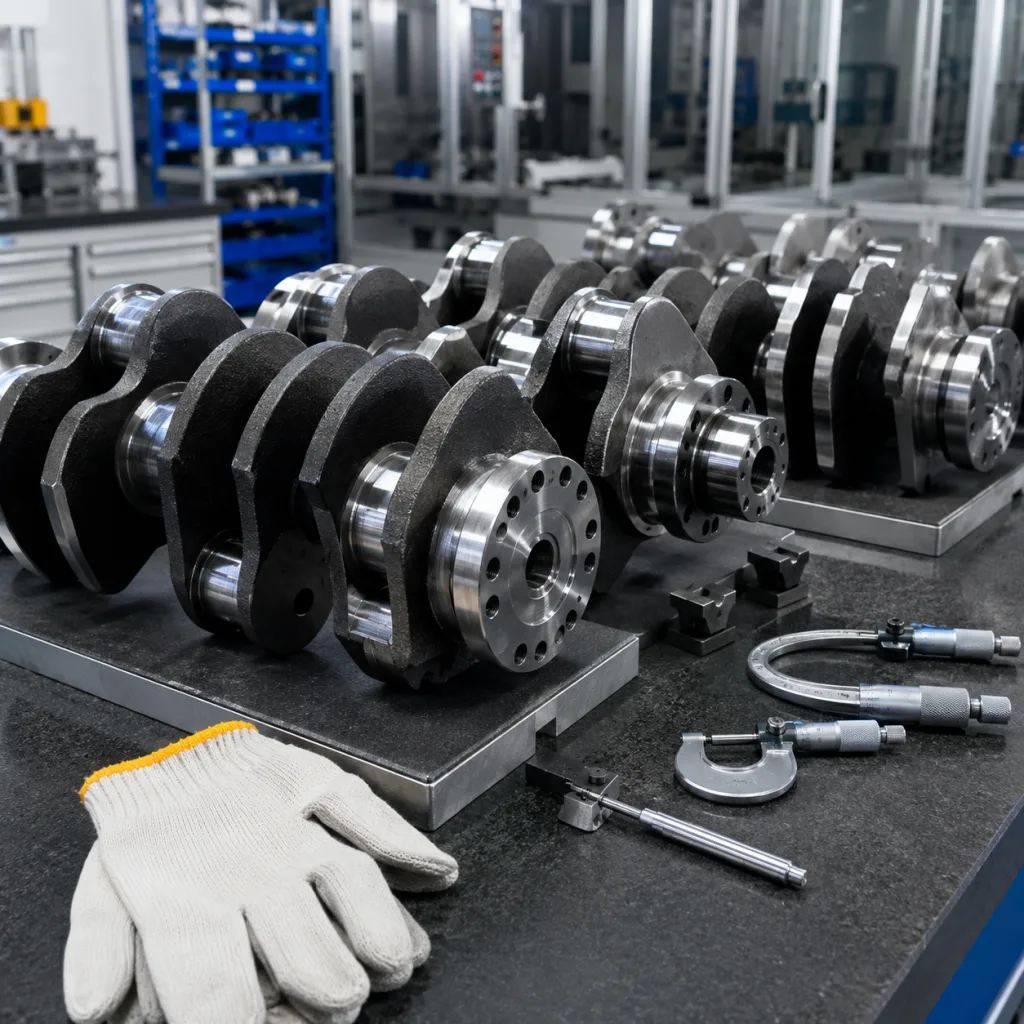
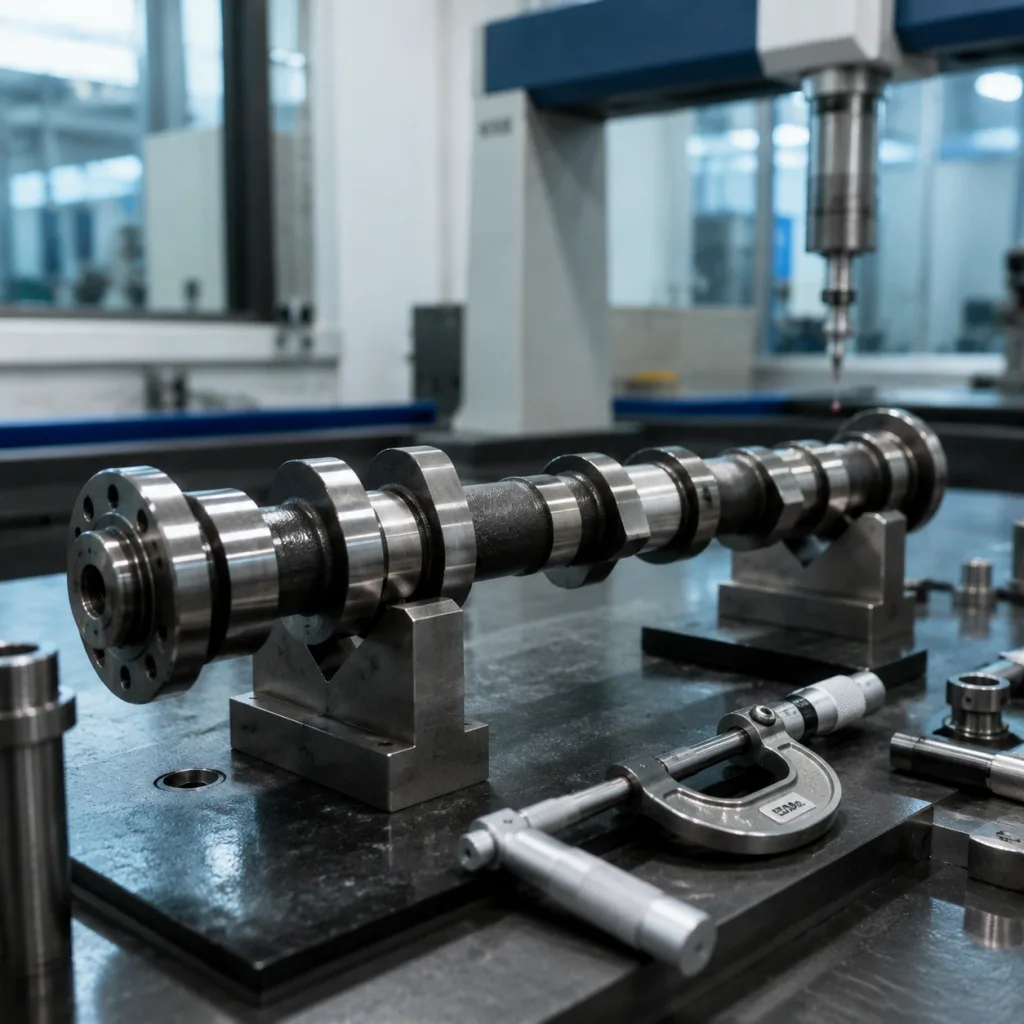
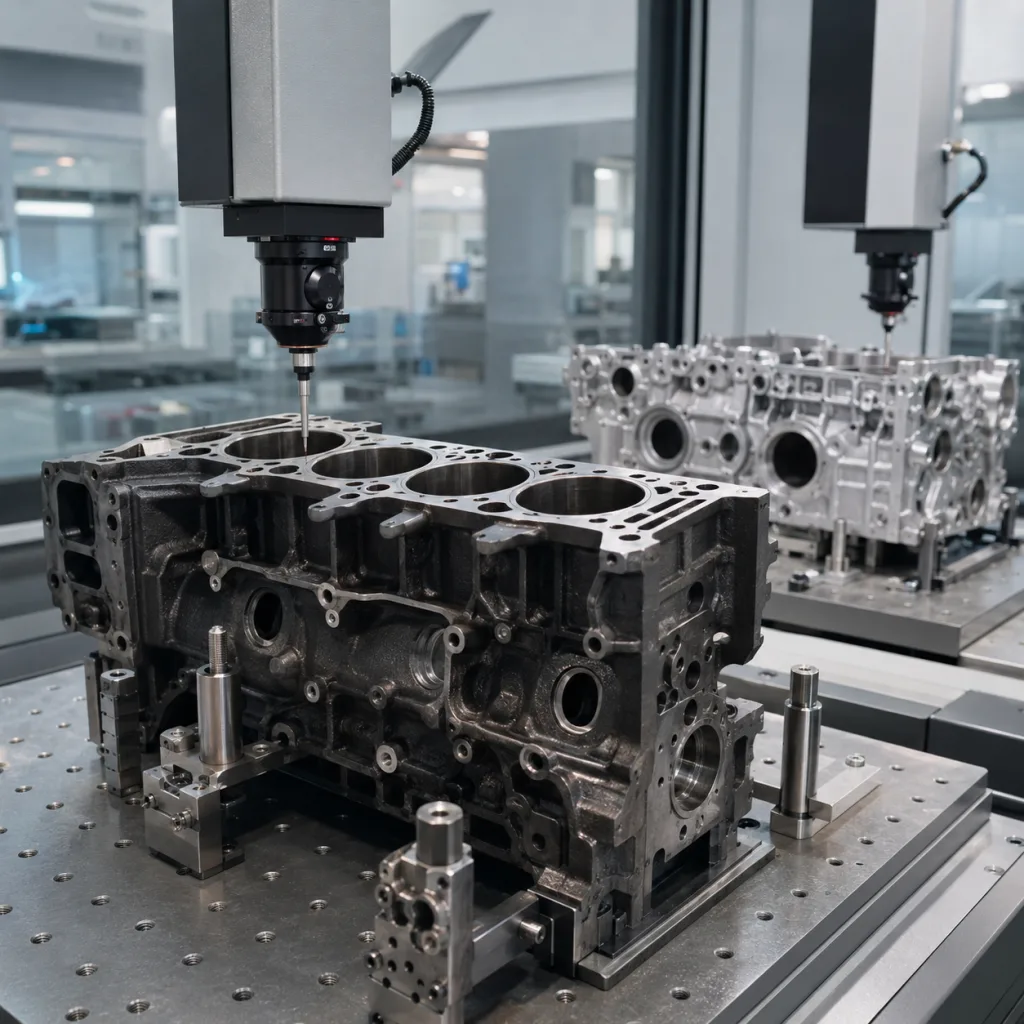
CNC machining control for bore diameter, mounting face, bolt-hole pattern, groove geometry, pulley offset, and chamfer condition.
Rubber bonding process parameters for damped crankshaft pulleys, including surface preparation, adhesive handling, cure time, cure temperature, and post-cure checks.
In-process inspection at defined control points to identify machining drift before a full batch is affected.
Dynamic balance checks where the pulley design, size, or application requires balance verification.
Surface treatment and anti-rust control for storage, long-distance transport, and humid destination markets.
Batch traceability by production date, lot number, inspection record, retained sample, carton label, and packing list.
For distributors supplying Europe, the UK, or Brazil, documentation may also include REACH (EC) No 1907/2006 substance declarations, country-of-origin statements, commercial invoices, packing lists, and export packing specifications. For North American customers, label format, barcode structure, master carton data, and warehouse receiving requirements are usually agreed during the pre-production stage.
When a buyer requires PPAP-style submission, the scope should be defined in advance. Some aftermarket programs need only a dimensional report and sample approval, while others require a control plan, process flow, material declaration, measurement system information, and production part samples. More detail on audit readiness, corrective action handling, and document control is available through our quality system.
MOQ, lead time, tooling, and export packing
Commercial feasibility depends on whether the pulley is already in the production range or requires new development. Buyers should separate catalogue supply from development supply in the RFQ. This avoids delays caused by incomplete samples, unconfirmed OE-style cross-references, missing annual volume estimates, or packaging requirements that are introduced after quotation.
Typical sourcing framework:
Existing SKU: MOQ commonly starts from distributor carton quantities, depending on part size, production status, and packing format.
New sample development: lead time depends on drawing confirmation, sample availability, tooling requirement, rubber mould status, testing scope, and surface treatment.
Tooling confirmation: required when a pulley profile, rubber damper structure, or mounting geometry is not already covered by existing tooling.
Pilot order: used to confirm fitment, packaging, labels, receiving inspection criteria, and initial market feedback before larger replenishment orders.
Production order: scheduled against forecast, material availability, inspection capacity, packing material readiness, and shipping cut-off dates.
Mixed container supply: available when crankshaft pulleys are purchased with other engine components to improve freight efficiency and reduce landed cost per item.
For bonded harmonic damper designs, tooling and process trials should not be compressed too aggressively. Elastomer formulation, bond surface preparation, adhesive control, curing consistency, and dimensional stability after bonding all influence durability. A low unit price has limited value if warranty returns increase because damping performance, pulley alignment, or rubber-to-metal adhesion is unstable.
Driventus can support neutral packing, buyer artwork, barcode labels, inner protective bags, anti-rust packaging where needed, and palletised export cartons. Private-label packaging files should be confirmed before mass production, including carton artwork, label position, barcode rules, language requirements, and pallet height limits. Confirming these details early prevents rework at shipment stage and helps the buyer’s warehouse receive goods without relabelling or repacking.
Factory audit questions for procurement teams
A factory audit should verify whether the supplier can control repeat production, not merely produce acceptable samples. For a crankshaft pulley Dodge manufacturer China program, the audit can be conducted remotely, on site, or through a third-party inspection company. Driventus supports audit documentation review, sample-room verification, and pre-shipment inspection coordination when required by the buyer.
Useful audit questions include:
1. What is the process flow from raw material receipt to finished pulley packing? 2. Which dimensions are classified as critical-to-quality for this part family? 3. How are drawings, samples, engineering changes, and customer specifications controlled? 4. What measuring equipment is used for bore, keyway, groove profile, runout, concentricity, and balance checks? 5. How are gauges calibrated, identified, and linked to inspection records? 6. How are nonconforming machined, coated, or bonded parts identified, segregated, and dispositioned? 7. What controls are used for elastomer compound storage, adhesive application, and curing parameters? 8. How long are inspection records and retained samples stored? 9. What corrective action format is used for customer complaints, and how is recurrence prevented? 10. Can the supplier provide lot traceability from shipment carton to production batch and inspection record?
The audit should also include a review of packing materials, carton strength, palletisation method, warehouse conditions, and export loading practice. Damage during transit can create the same commercial problem as a machining defect, especially for heavy pulleys with exposed machined edges. Buyers planning a wider program can also discuss custom manufacturing, including drawing-based development, application expansion, and coordinated supply across related engine component groups.
How Driventus supports distributor and OEM-style projects
Driventus supplies B2B customers that need stable part availability, clear documentation, and responsive engineering communication. Our team reviews application data, sample photos, critical dimensions, packaging expectations, and expected annual volume before confirming feasibility. If a Dodge crankshaft pulley part is already within range, we can move directly to sample and commercial discussion. If development is required, we define the engineering route, tooling requirement, validation schedule, and expected approval steps before quotation.
Support can include:
OE-style and aftermarket cross-reference review for fitment identification.
Sample comparison against an approved reference part or customer-supplied drawing.
First-article dimensional inspection and production sample submission.
Batch inspection reports for agreed critical dimensions and packaging checks.
Neutral or customer-specified packaging for wholesale distribution.
Barcode, carton, and pallet planning for distributor warehouse requirements.
Export documentation for sea, air, or courier sample shipments.
Consolidation with related engine components from engine components lines when practical.
Driventus does not claim approval or endorsement by any vehicle manufacturer. Driventus is an independent aftermarket manufacturer; brand names are referenced only for fitment identification. For procurement teams comparing suppliers in China, the practical benchmark is evidence: inspection records, repeatable process controls, realistic lead times, clear packaging plans, and transparent communication before the purchase order is placed. A sourcing program is strongest when the buyer and manufacturer confirm both engineering requirements and commercial expectations before production begins.
Frequently asked questions
Send the application list, engine code if available, sample photos, key dimensions, OE-style or aftermarket reference if known, target quantity, packing requirements, destination market, and preferred Incoterms. A physical sample or technical drawing improves quotation accuracy.
Yes. Driventus can supply neutral packing or customer-specified packaging after artwork, barcode format, carton strength, pallet plan, label position, and any warehouse receiving requirements are confirmed before production.
No. Brand names are referenced only to identify vehicle fitment. Driventus is an independent aftermarket manufacturer and does not claim approval, endorsement, or affiliation with any vehicle manufacturer.
For sample review, MOQ discussion, or a documented sourcing quotation, contact Driventus with your application list, reference numbers, and target volumes. You can [request a quote](/contact.html).