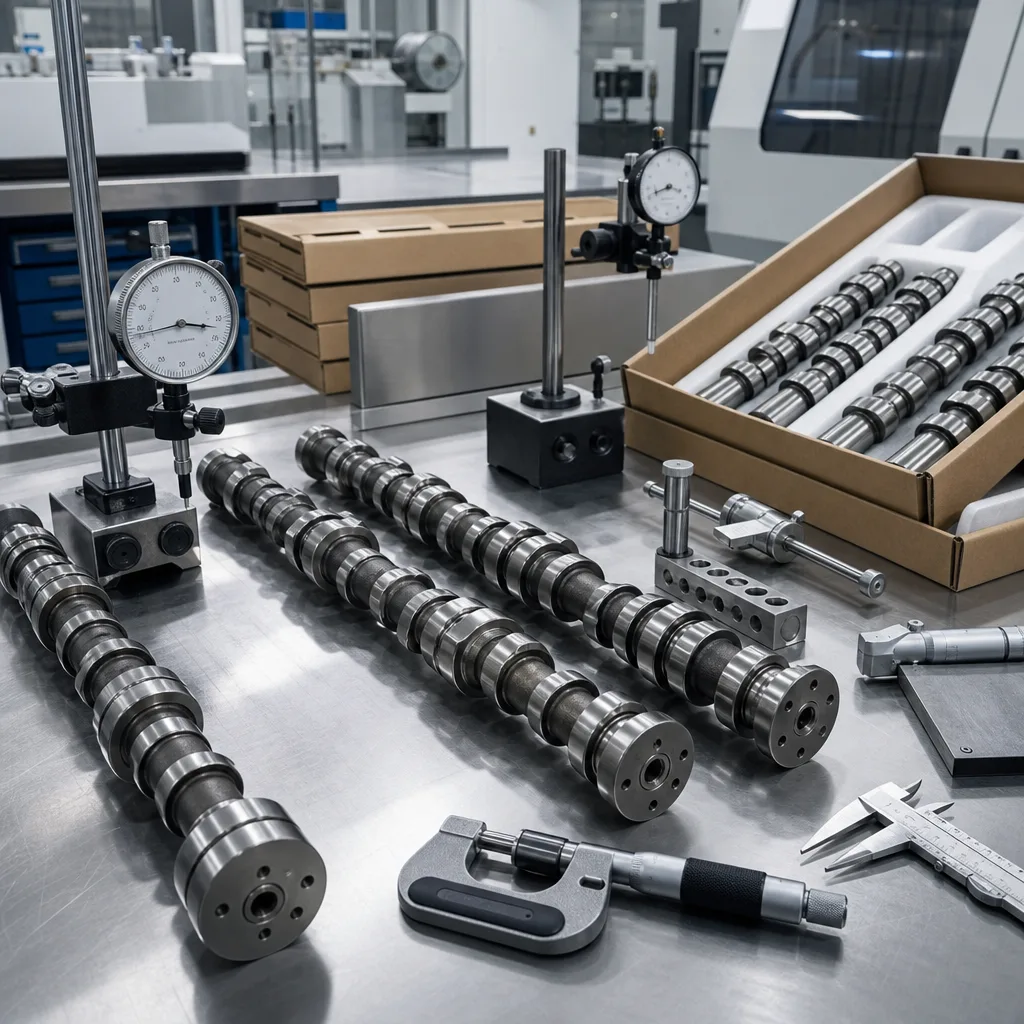
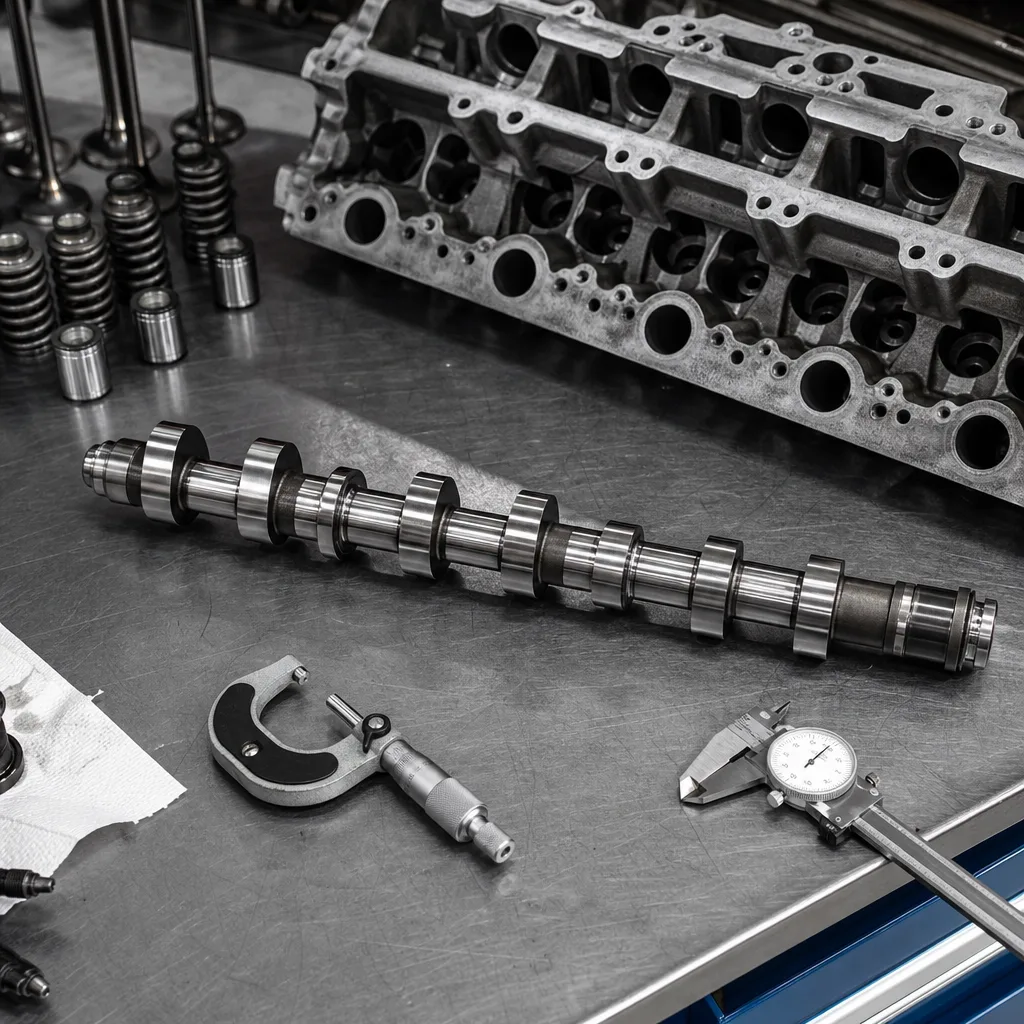
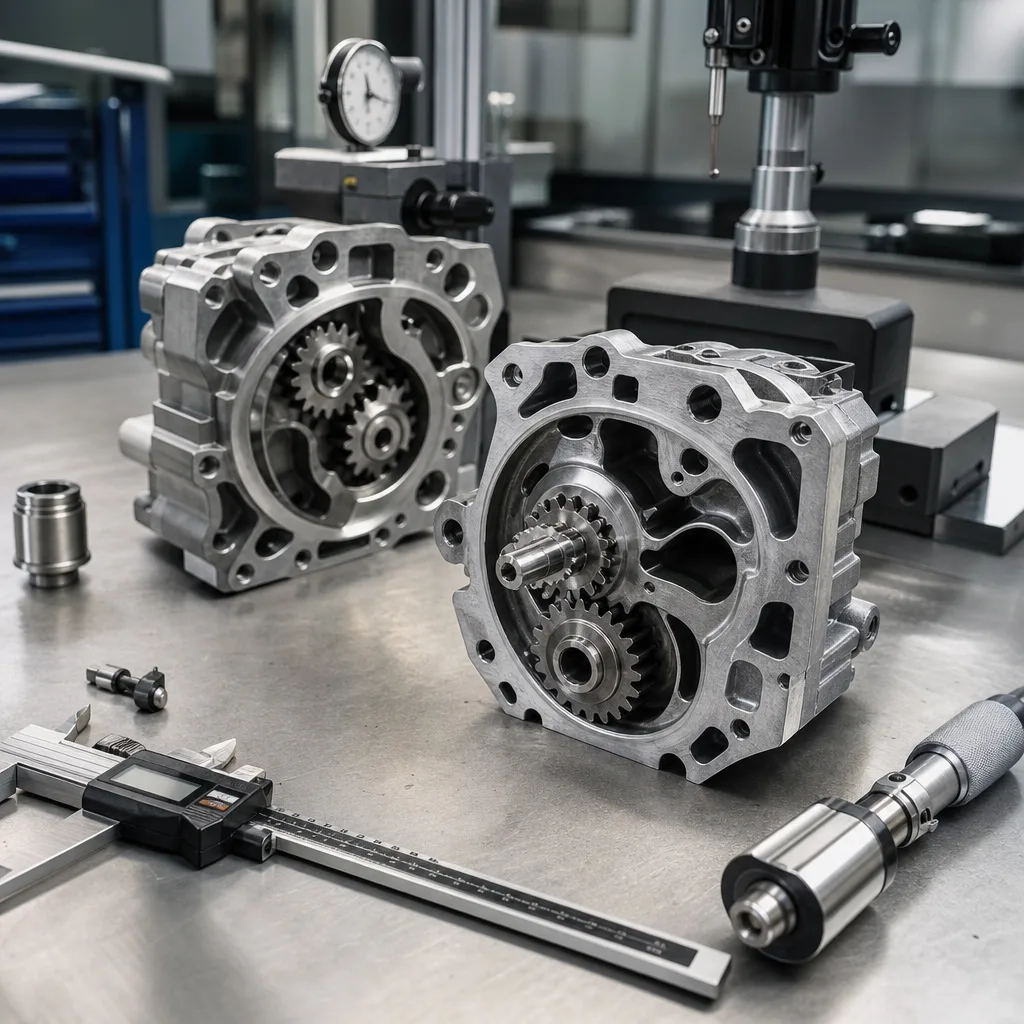
Buyers sourcing a crankshaft pulley Buick wholesale line need more than a catalog hit. The part must match the engine family, belt section, offset, bore, and any damping requirement, then arrive with clean documentation for export and warehouse intake. Driventus supports B2B programmes for distributors, OEM/Tier-1 supply, and repair networks from Taizhou, Zhejiang. Driventus is an independent aftermarket manufacturer; brand names are referenced for fitment only. For buyers comparing stock options, start with [our catalog](/products.html) and the broader [engine components](/products/engine-components.html) range, then move to drawing control or sample-based matching if the Buick application is not a straight carryover. The objective is simple: confirm dimensional match, control variation, and keep the purchase order clean enough for repeat supply.
What Buyers Need To Specify
A Buick pulley request is only usable when the buyer defines the engine family, model year range, accessory-drive layout, and whether the part is a plain pulley or a damping assembly. The same family can use different groove counts, hub offsets, or bore sizes across trims and production runs.
If you already have an OE cross-reference such as OE 06A107065, send it with photos of the old part, the casting marks, and any label on the box. One number is not enough on its own. A good RFQ also states the target market, the required finish, and whether the part must match an existing warehouse barcode or carton spec.
For stocked lines, buyers usually want a fast cross-check against our catalog. For higher-volume or drawing-specific work, the same request can move into custom manufacturing so the fitment record, packaging, and label format are controlled from the start.
Core Dimensions And Build Options
The technical match is usually decided by a short list of measurable points. The table below covers the checks most procurement teams should ask for before they approve a sample.
If the part is replacing a harmonic device rather than a simple pulley, buyers should ask for the damping construction, rubber compound type, and bond retention method, not only the visible dimensions.
Validation And Compliance
For export supply, the production system should be covered by IATF 16949:2016 and ISO 9001:2015. Material declarations may be required under REACH (EC) No 1907/2006, especially when coatings or elastomer content are involved. For endurance context, buyers often ask for shake, thermal cycling, and belt wear results aligned to internal test plans or referenced against SAE J2527 where coating durability is relevant.
If the pulley is supplied into a wider engine programme, the buyer may also ask how the part fits the documentation set around ECE R-83 on the vehicle side. The pulley itself is not homologated in isolation, so the useful question is whether the supplier can provide traceable test records, dimensional inspection reports, and sample approval records that support the program file.
A factory audit should confirm incoming material control, gauge calibration, and lot traceability. Those controls matter more than a brochure claim.
MOQ, Tooling, And Lead Time
MOQ depends on whether the item is a stock replacement, a catalog extension, or a new tooling programme. A standard carryover part can usually move on a shorter lead time. A new groove pattern, special coating, or custom carton spec will add time for sample approval and packaging verification.
Buyers should separate three cases before they issue a purchase order:
Stock line: lower risk, faster shipment, limited change control
Private-label line: label and carton control, moderate MOQ
Drawing-specific line: tooling, PPAP-style approval, and tighter release control
For private-label or programme work, custom manufacturing is the right route because it keeps the drawing revision, sample sign-off, and release quantity aligned. For warehouse buyers, the key variable is not only price per unit. It is the cost of mismatch, rework, and slow-moving inventory.
If the requirement is recurring, ask for a rolling forecast and a packaging standard before you agree on annual volume.
How To Build A Clean RFQ
A clean RFQ shortens the sourcing cycle and reduces sample churn. Include these items in the first email or drawing pack:
Engine code, model year range, and market
OE cross-reference if available
Photos of the removed part from multiple angles
Belt type, groove count, and offset data
Target annual volume and first-order quantity
Packaging requirement, barcode format, and pallet plan
Required documents: material cert, inspection report, and declaration of conformity where needed
If you are comparing suppliers, ask each one for the same measurable data set. That makes the quote review objective instead of subjective. It also helps the buyer compare a stock replacement against a drawing-controlled part without mixing the two.
For buyers who already know the channel and need a fast response, request a quote with the sample photos and the OE cross-reference in the first message.
Frequently asked questions
Match the engine family, groove count, bore, offset, and whether the part is damped or non-damped. Photos of the removed part and the OE cross-reference reduce error.
Ask for dimensional inspection data, material declarations, traceability, and the production system credentials. For export, IATF 16949:2016 and ISO 9001:2015 support the release file.
Yes. Private-label programmes can include carton artwork, barcode format, and batch traceability. Share the required label standard early so the sample matches the release spec.
Send the OE cross-reference, sample photos, and annual demand for a sourcing review, and we will confirm the best build path through [request a quote](/contact.html).