How to Choose an Oil Pump Supplier
Selecting an oil pump supplier is a sourcing decision, not only a price check. The right partner should prove dimensional control, stable production, traceable materials, and a clear response process for samples, corrective actions, and repeat orders. Start by defining the engine application, the pump type, the target annual volume, and any OE cross-reference you need to support fitment. Then ask for the documents that show how the part is made, inspected, packed, and shipped. Driventus is an independent aftermarket manufacturer; brand names are referenced for fitment only. The practical test is simple: can the supplier show technical evidence, commercial stability, and a quality system that will still work after launch?
Define the part before you ask for price
Do not accept a quote that ignores revision control, sample condition, or the test method behind the price. A low number is not useful if the supplier cannot identify which version will be repeated on the next order.
Check the quality documents, not just the certificate
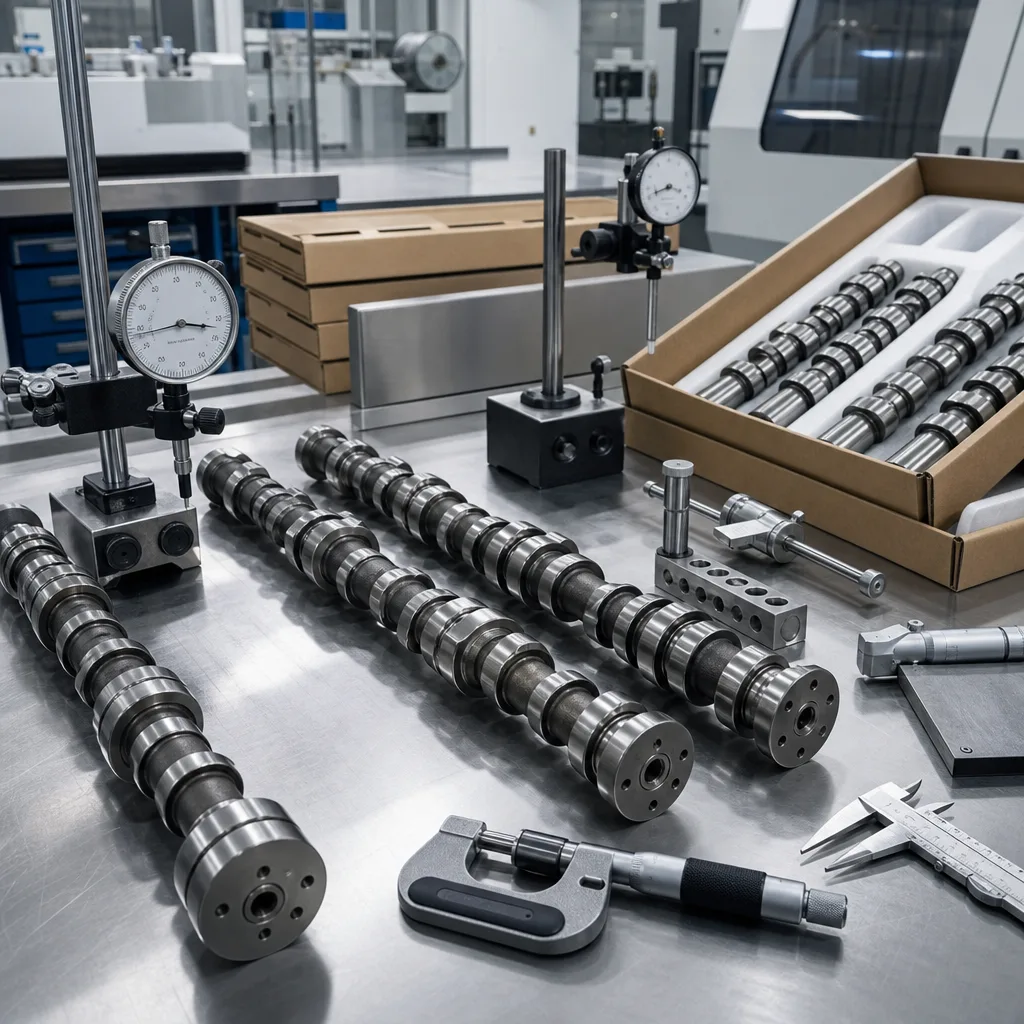
Ask for a dimensional report on the actual sample, not a generic declaration. If the supplier cannot tie the sample to a lot number, a drawing revision, and an inspection record, the sample is not ready for approval.
Validate technical performance under real conditions
Two suppliers can both say their pump passed, but the result means little if one tested at a different viscosity, different temperature, or different speed. Normalise the test conditions before you award the order.
Compare manufacturing depth and supply risk
A supplier that can support multiple engine components often has better process discipline, but verify that the oil pump line has its own controls. Shared tooling without dedicated inspection is a common risk.
Run a short award process before you scale
For procurement teams, the goal is not to find the cheapest quote. It is to find the supplier that can hold the same specification, lot after lot, with a clear escalation path when the process drifts.
Frequently asked questions
Start with current certificates, a dimensional report on the sample, the control plan, material records, and any REACH declaration you need for import compliance. Those five items tell you more than a quotation alone.
Normalise the comparison around landed cost, lead time, tooling ownership, and defect response. A lower MOQ is useful only if the supplier can repeat quality and replenish on schedule.
Use it when the application needs a different relief setting, material, coating, or mounting geometry than the catalogue part. Keep the drawing, sample approval, and test method under revision control.
If you are benchmarking suppliers, send the application details, forecast volume, drawing, and test requirements. [Request a quote](/contact.html) for a technical and commercial proposal.
Request a Quote