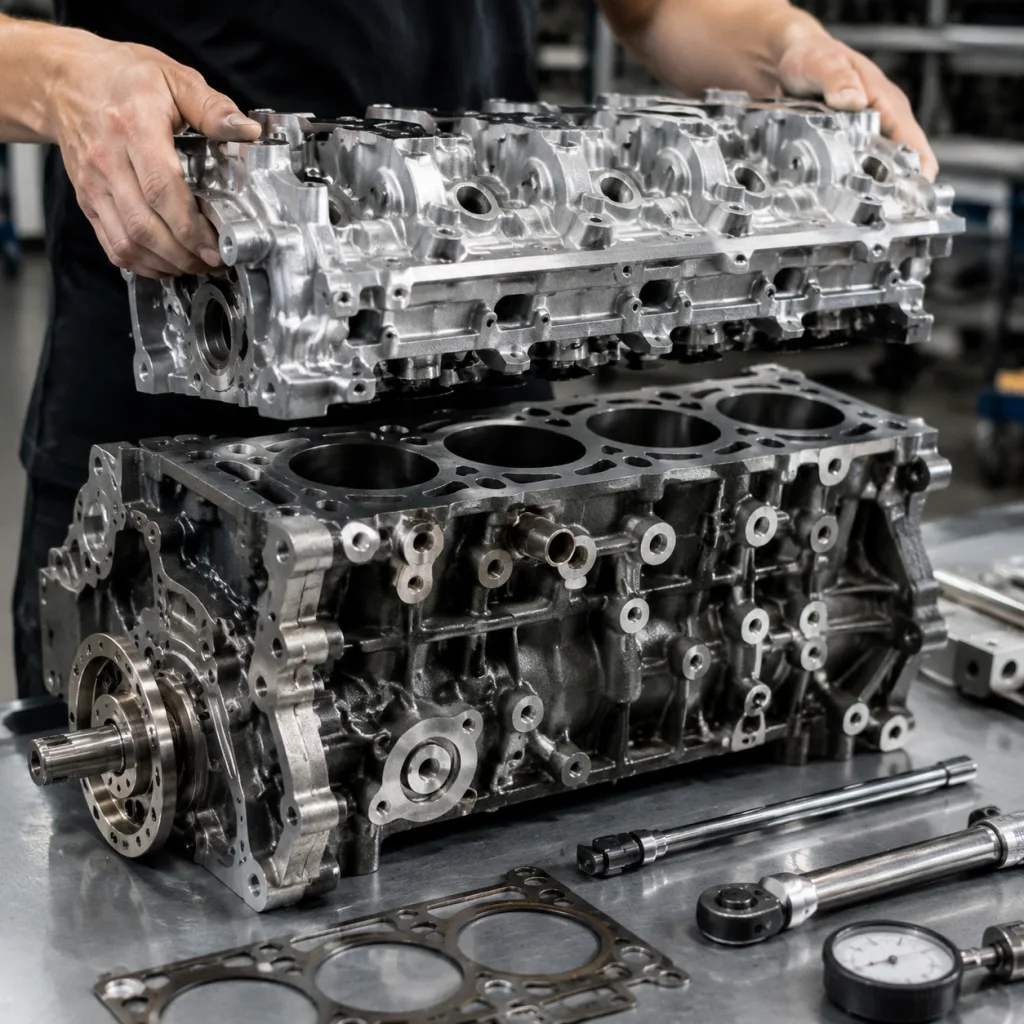
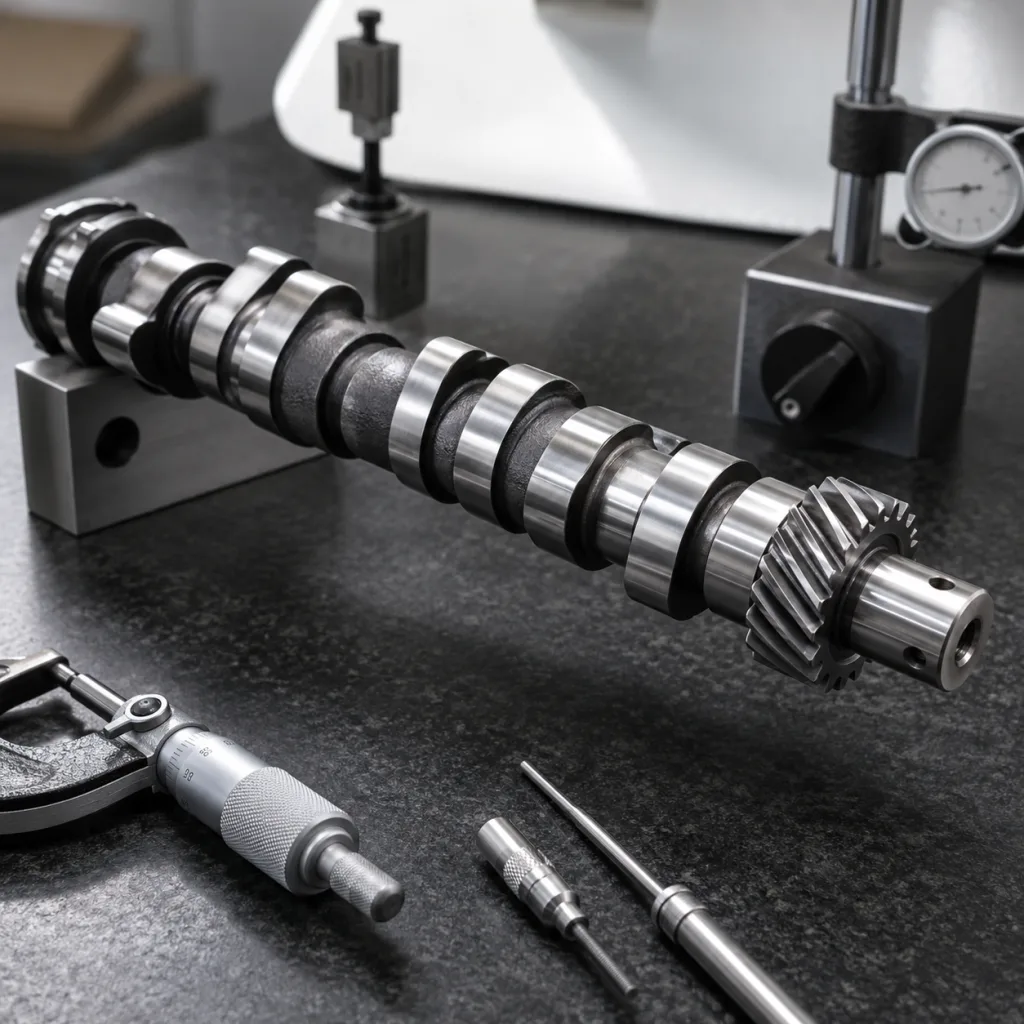
A crankshaft Mitsubishi supplier is not chosen by price alone. The real test is whether the part number, engine fitment, machining route, inspection evidence and replenishment terms all hold up after the first shipment lands. For Mitsubishi-fit applications, small differences in nose length, flange pattern, thrust width, oil-hole geometry or journal finish can turn a low-cost order into returns, warranty arguments and blocked inventory.
Driventus manufactures crankshafts for Mitsubishi-fit engine applications for aftermarket distributors, importers, repair-chain programmes and OEM/Tier-1 sourcing projects. Supply typically covers cast and forged steel crankshafts with heat-treated journals, finished thrust faces, deburred oil holes, rust protection and dimensional inspection before packing. Fitment can be confirmed by engine code, OE cross-reference, buyer drawing, physical sample or approved inspection points.
Driventus is an independent aftermarket manufacturer; brand names are used only to describe fitment. This guide gives buyers a practical way to qualify the part, test the supplier, structure MOQ and lead-time discussions, and avoid the common failure modes that appear after a crankshaft programme moves from sample approval to repeat orders.
Start With the Variant Risk, Not the Price
The first sourcing question is not “What is your best price?” It is “Which exact crankshaft variant are we buying?”
For Mitsubishi-fit crankshaft sourcing, broad engine-family matching is not enough. Two crankshafts can look similar in a catalog and still differ in flange bolt pattern, keyway position, thrust width, oil passage, reluctor interface, journal fillet radius or crank nose length. Those details decide whether the part installs cleanly or becomes a claim.
Build the sourcing file around confirmed data, not assumptions:
Engine code, displacement and production year range where known
Vehicle, equipment or regional market application
OE number, aftermarket reference or previous supplier code
Sample photos from six sides, including nose, flange and thrust faces
Main journal and rod journal nominal diameters, normally stated to 0.01 mm
Requested journal tolerance, roundness and taper limits if drawing-controlled
Stroke, total length, flange bolt pattern and pilot diameter
Oil-hole position, angle and chamfer requirement
Crank nose details: keyway width, gear seat, pulley interface and thread
Thrust bearing position and thrust width
Target monthly demand, first trial quantity and 6- or 12-month forecast
Packaging requirement: neutral, private label or bulk industrial
Required documents: commercial invoice, packing list, certificate of origin, material certificate and inspection report
If no drawing exists, focus the first check on dimensions that usually create fitment disputes: total length, main journal diameter, rod journal diameter, stroke, flange pilot diameter, bolt PCD, keyway width and thrust width. Driventus can compare a supplied sample against internal control points and report critical dimensions for approval before mass production.
Buyers can review standard engine and powertrain coverage in our catalog, including crankshafts and related engine components. If the programme needs a non-standard material, machining revision, balance requirement or private-label pack, Driventus can evaluate drawings and samples through custom manufacturing.
For a new distributor programme, use a staged release: technical confirmation, 1-3 sample pieces where feasible, fitment validation, a pilot batch of 20-100 pieces depending on the part number, then scheduled replenishment. It is slower than guessing. It is also cheaper than sorting mixed variants after arrival.
Where Crankshaft Quality Actually Fails
Crankshaft quality problems rarely come from one dramatic defect. More often, they come from weak control at one ordinary process step: material receipt, heat treatment, grinding, deburring, cleaning or packing. That is why a useful supplier review looks at the manufacturing route, not only the finished part.
Driventus is based in Taizhou, Zhejiang, and supplies engine and powertrain components to more than 60 countries. The company operates under IATF 16949:2016 and ISO 9001:2015 management systems, with production controls aligned to automotive aftermarket and B2B export requirements. Buyers can review the quality system before scheduling a factory audit or supplier onboarding review.
Use the table below as a failure-mode checklist:
Process stage
What can go wrong
Evidence to request
Raw material receipt
Wrong grade, mixed heat or weak traceability
Material certificate, heat number and batch record
Rough machining
Datum shift that affects later grinding
In-process dimensional checks against routing card
Heat treatment
Low wear resistance or uneven hardness
Hardness test, furnace batch record and retained curve where applicable
Straightening
Excess runout before finish grinding
Dial indicator, V-block check or CMM check
Journal grinding
Bearing clearance outside target range
Micrometer, roundness and taper inspection
Fillet and thrust finishing
Stress concentration or bearing-side wear
Radius gauge, profile check or CMM where required
Oil-hole finishing
Burrs, debris or sharp edges
Visual check, chamfer check and deburring record
Cleaning and rust prevention
Contamination or corrosion during storage
Cleanliness check, oiling record and packing inspection
Final inspection
Wrong batch released or weak sampling
Batch inspection report and AQL or agreed sampling record
</tr></thead><tbody> </tbody></table>Common buyer-controlled specifications include main and rod journal diameter tolerance, journal taper, roundness, runout, hardness and thrust-face width. For many aftermarket crankshafts, journal dimensions are controlled in hundredths of a millimetre. Drawing-controlled projects may require tighter limits, additional gauges and more frequent inspection.
Do not leave hardness vague. The purchase specification should state the method, such as HRC or HB, and the acceptance range. The same rule applies to runout, surface finish and critical journal dimensions: write them down before production, not after a claim.
For buyers importing into the EU, UK, US, Canada, Australia or Brazil, documentation should match the destination-market requirement. Where relevant, the supplier should support restricted-substance declarations, including REACH (EC) No 1907/2006 for EU market due diligence. For crankshafts, regulatory review is usually documentation-led; performance acceptance is normally based on drawing conformance, inspection records, sample approval and field fitment feedback.
Plan MOQ Around Risk, Cash and Replenishment
MOQ is a planning decision, not just a supplier rule. A trial order that is too small may not justify setup, inspection and packing work. A first order that is too large can trap cash in an unproven reference. The right quantity depends on crankshaft type, production route, material availability, packing method and whether tooling or fixture changes are required.
Use this order path for most new Mitsubishi-fit crankshaft programmes:
1. Confirm whether the item is active, inactive, sample-based or custom-developed. 2. Approve the technical reference: drawing, OE cross-reference, sample or agreed control points. 3. Order samples where feasible and test fitment before stock commitment. 4. Release a pilot batch for installer feedback, label checks and warehouse setup. 5. Move to scheduled replenishment only after the pilot batch is accepted.
Typical sourcing expectations are:
Existing aftermarket items: sample quantity or small trial lot reviewed by part number, often followed by 50-200 pieces for pilot replenishment when demand is proven
New sample development: buyer sample or drawing required before quotation, with sample cost quoted separately when reverse engineering or fixture work is needed
Pilot batch: used for fitment checks, installer feedback, label confirmation and stock-code creation
Mass order: scheduled by monthly forecast, carton configuration and shipping route
Private label packaging: artwork confirmation, barcode data, carton strength and pallet layout required before production
Slow-moving references: consolidated production is preferred, with buyers grouping several crankshaft items to improve material and packing efficiency
Lead time is shaped by raw material availability, heat-treatment queue, machining capacity, inspection load and export packing requirements. Active references normally move faster than new developments. Custom or inactive items need added time for sample measurement, process planning and first-article inspection.
Ask one important question: when does the quoted lead time start? It may begin after deposit, drawing approval, sample approval, packaging approval or receipt of special materials. Those are different dates.
Review price by total landed cost, not only unit price. Material grade, heat treatment, inspection depth, order quantity, private-label packing, palletisation, Incoterms, payment terms and currency can all change the final cost. A clean RFQ separates unit price, sample cost, tooling or fixture cost if any, packing cost, inland freight, export documentation and validity period.
For repeat orders, share a rolling 3- to 6-month forecast. Slow-moving crankshaft references can sit for weeks and then become urgent when an engine is under repair. A reorder point can be set by adding supplier lead time, sea-freight time, customs clearance and safety stock. For example, a 45-day production cycle plus 30-day transit and 15-day safety stock means the buyer should reorder about 90 days before expected stockout.
Audit the Part Number Through the Factory
A certificate is useful. A part-number walk-through is better.
For a crankshaft Mitsubishi supplier, the audit should follow one part number from incoming material through machining, heat treatment, grinding, cleaning, rust prevention, inspection and packing. This shows whether the supplier’s system is visible on the production floor and traceable in records.
Ask these questions during the audit:
Are material batches traceable from receipt to finished crankshaft by heat number, lot number or production batch?
Are routing cards used to record machining sequence, operator, equipment and inspection status?
Are grinding wheels dressed and recorded according to process requirements?
How are main journal, rod journal, thrust width and flange dimensions checked before release?
How is journal runout checked before final packing, and what is the rejection limit?
Are hardness results linked to the heat-treatment batch and part number?
Are non-conforming parts segregated, labelled and dispositioned by authorised staff?
Are micrometers, dial indicators, height gauges and CMM equipment calibrated and traceable?
Are oil passages cleaned after machining and before rust prevention?
Does the packing method prevent journal impact, flange damage and corrosion during sea freight?
Can the supplier provide batch-level inspection reports and retained sample records where required?
Do not accept only a blank inspection template. Ask for a live or recent report. It should identify the part number, batch quantity, inspection date, inspector, measuring tool, drawing or control-plan revision and measured results. If AQL sampling is required, agree the acceptable quality level and sample size before production. For safety- or warranty-critical dimensions, buyers can specify 100% inspection.
IATF 16949:2016 matters because it requires defect prevention, risk-based thinking, change control and supplier management for automotive production. ISO 9001:2015 supports document control, corrective-action discipline and broader quality management. For crankshafts, these systems should appear as controlled machining plans, inspection frequencies, traceability records, calibration control and corrective actions when deviations occur.
For remote audit preparation, Driventus can provide company profile documents, certification copies, process photos, sample inspection formats and export-documentation examples before an on-site or video audit. For higher-volume programmes, buyers can also request a pre-shipment inspection plan covering dimensions, visual condition, packing, label accuracy, carton count and pallet marking.
RFQ Data That Prevents Wrong-Fit Shipments
A weak RFQ asks for “Mitsubishi crankshaft price.” A strong RFQ tells the supplier exactly which fitment, tolerance, inspection and packaging risks must be controlled.
Mitsubishi-fit crankshafts may be used across passenger cars, light commercial vehicles, industrial engines and regional aftermarket programmes. Similar engine families can still differ in crank nose, flange, trigger-wheel interface, thrust-face width or oil-passage geometry. If a drawing is not available, a controlled sample and agreed measuring points should become the technical baseline.
Include this specification list where available:
Part description: crankshaft for Mitsubishi-fit application
Engine code, displacement and model year range
OE number, aftermarket reference or previous supplier code
Fuel type and aspiration if relevant
Required material: cast iron, cast steel or forged steel where specified
Heat treatment or surface hardening requirement, including hardness range if known
Main journal diameter, tolerance, roundness and taper requirement
Rod journal diameter, tolerance, roundness and taper requirement
Stroke, total length and counterweight configuration
Thrust bearing position, thrust width and thrust-face finish requirement
Flange bolt pattern, bolt-hole diameter, PCD and pilot diameter
Keyway, gear seat, pulley interface and crank nose thread details
Oil-hole angle, diameter and chamfer requirement
Fillet radius requirement for main and rod journals
Runout limit and datum definition if drawing-controlled
Dynamic balance requirement if specified by drawing or sample approval
Surface roughness requirement for journals and thrust faces where specified
Required inspection report format and sampling level
Packing quantity per carton, pallet quantity and corrosion-protection method
For critical dimensions, state whether the tolerance is supplier standard, sample-based or drawing-controlled. A buyer can ask for journal diameters to be reported to 0.01 mm, runout to be reported against the agreed datum, and hardness to be reported with the test method.
Past problems are useful data. If the previous crankshaft caused bearing marks, pulley interference, thrust clearance problems or oil-hole alignment issues, include photos and measurements. The supplier can then focus inspection on the real risk area instead of treating the part like a routine catalog item.
Published standards should be cited only where they apply to the transaction. ISO 9001:2015 and IATF 16949:2016 relate to management systems. REACH (EC) No 1907/2006 relates to chemical compliance for EU market due diligence. Emissions regulations such as ECE R-83 generally apply to vehicle emissions type approval rather than an individual replacement crankshaft, so they should not be used as a crankshaft approval claim.
Driventus does not claim approval or endorsement by any vehicle manufacturer. Driventus is an independent aftermarket manufacturer; brand names are referenced for fitment only.
Which Buyer Scenario Fits Your Programme?
Different buyers judge the same crankshaft programme in different ways. A distributor wants coverage and repeat supply. An importer may care most about landed cost and carton planning. A repair chain wants fewer returns. OEM and Tier-1 teams need process evidence, sample approval and change-control discipline.
Driventus supports these purchasing scenarios through:
Buyer type
Main sourcing need
Driventus support
Aftermarket distributor
Broad coverage and repeat supply
Catalog matching, batch inspection and export packing
Import wholesaler
Landed-cost control
MOQ review, carton planning and shipping documentation
Repair chain
Low return rate
Fitment confirmation and consistent private-label packing
OEM/Tier-1 project
Process evidence
Audit support, sample development and controlled documentation
Regional brand owner
Differentiated offer
Packaging, labelling and custom manufacturing review
</tr></thead><tbody> </tbody></table>For a first discussion, send the engine code, OE reference if available, sample photos or drawing, target quantity, destination market and preferred Incoterms. Driventus can then classify the request as an active item, inactive reference, sample-development case or custom project. The reply can cover availability, estimated MOQ, sample feasibility, inspection documents and expected lead-time driver.
When comparing suppliers, look beyond the first quote. Compare part-number control, manufacturing route, traceability, inspection reporting, lead-time reliability and response speed when a technical issue appears. A low initial price can become expensive if it creates shipment holds, incorrect applications, slow claims handling or warranty disputes.
Before confirming a first mass order, approve five items in writing: technical reference, sample or first-article result, packaging specification, commercial terms and inspection-report format. That written approval gives sourcing, quality, warehouse and sales teams the same baseline before stock arrives.
Frequently asked questions
Yes. Private-label packing can be reviewed for distributors and repair chains. Buyers should provide carton artwork, label data, packing quantity, barcode rules, pallet layout and destination-market requirements before production confirmation.
Driventus can provide certification copies, company profile information, process summaries, sample inspection report formats, batch inspection examples and export documentation examples. Factory audit support can be arranged for qualified B2B sourcing projects.
No. Driventus does not claim approval or endorsement by any vehicle manufacturer. Driventus is an independent aftermarket manufacturer; brand names are referenced for fitment only.
For Mitsubishi-fit crankshaft sourcing, send the engine code, drawing or sample photos, target volume, destination market and preferred Incoterms. Driventus will review availability, MOQ, lead-time drivers and documentation needs; [request a quote](/contact.html)