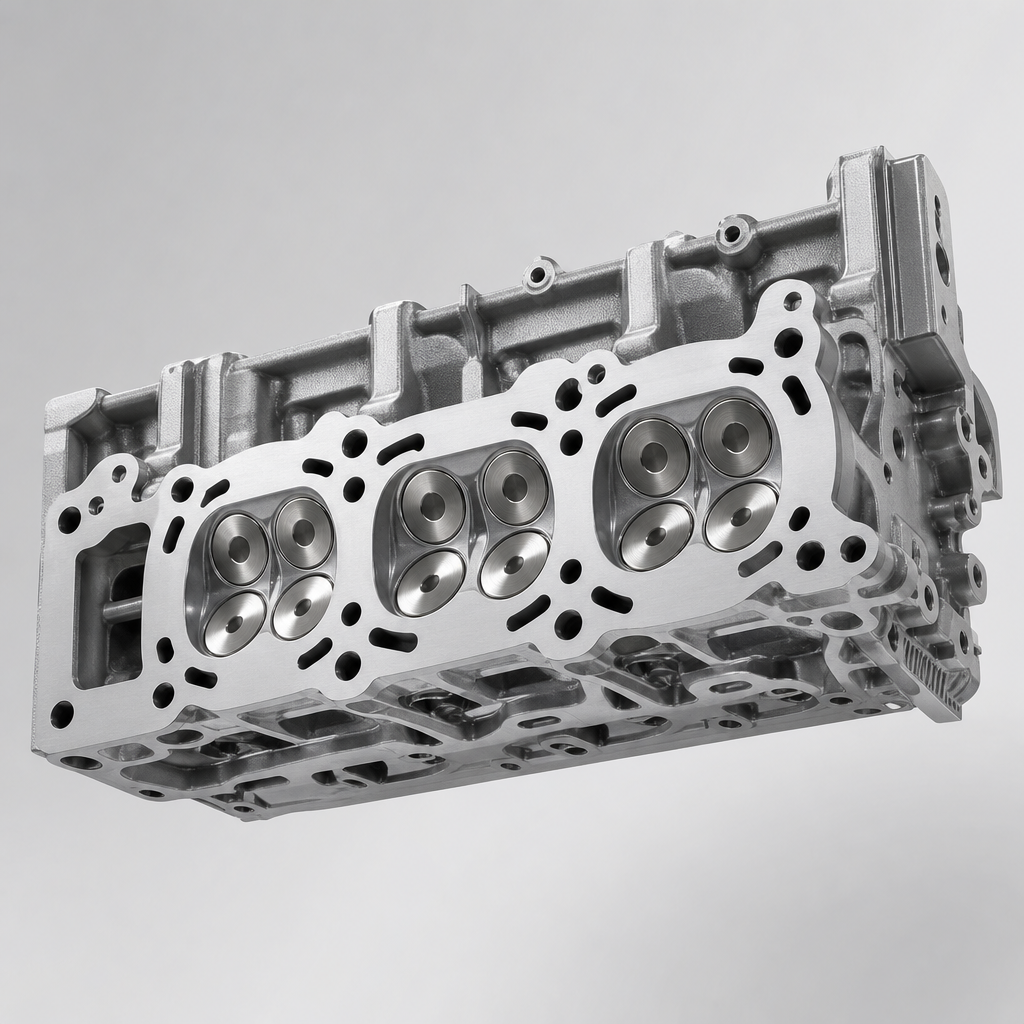
Camshaft for Volkswagen Beetle Aftermarket Replacement
Buying a **camshaft for Volkswagen Beetle aftermarket replacement** should not start with catalogue coverage. It should start with risk. On this product, most expensive failures come from a short list of technical misses: wrong engine-code mapping, unstable lobe geometry, inconsistent hardness, poor journal finish, or weak traceability when claims appear later. For B2B buyers, that means the decision is part engineering review, part supply-control review.
A catalogue note that says "fits Beetle" is not enough. Procurement teams need evidence that the supplier can hold journal size, runout, lobe profile, and heat-treatment consistency across batches, not just on a launch sample. They also need commercial terms that support repeat supply: declared tolerances, inspection frequency, sample approval flow, MOQ, tooling policy, price breaks, and lead times that still hold when production is busy.
This article breaks the sourcing decision into practical angles rather than a generic checklist. It covers what to screen first, which specifications matter most, what validation data reduces warranty exposure, where low-control supply usually fails, and what questions should be settled before nomination within an IATF 16949:2016 and ISO 9001:2015 manufacturing framework.
Start with the approval decision, not the catalogue listing
For any camshaft for Volkswagen Beetle aftermarket replacement, the first question is simple: what exactly are you approving? A model-level listing is too broad. Beetle applications can span different engine families, year bands, and valvetrain layouts, so the safer unit of approval is the specific part number tied to a defined engine code and mating valvetrain.
A workable first-pass approval usually checks four things:
Fitment definition: engine code, production year band, OE cross-reference, and installation notes
Process stability: material route, heat treatment control, grinding capability, and batch traceability
Commercial practicality: MOQ, realistic lead time, packaging standard, and claim-response support
Key technical checks still matter, but they should sit inside that broader decision frame:
Base material: often chilled cast iron or forged/alloy steel depending on engine family and service demand
Lobe profile accuracy: opening ramp, lift, and duration should stay within declared tolerances in mm or cam-angle degrees
Journal diameter tolerance: typically reviewed against drawing limits such as 0.010-0.020 mm by journal position, subject to design
Runout: many buyers set an acceptance target around <=0.03-0.05 mm TIR on the finished shaft, depending on the application
Surface finish: measured Ra values on lobes and journals should be declared, not assumed
Heat treatment consistency: ask for nominal hardness range and allowed hardness spread across one shaft
Traceability: lot marking should connect back to material, machining, grinding, and final inspection records
This is also where related-parts policy needs to be clear. A camshaft that measures correctly can still fail in service if it is installed against worn or incompatible lifters, rocker interfaces, or timing components. Many buyers therefore require the supplier to state whether lifter replacement is mandatory for warranty and whether break-in lubricant or assembly paste is specified.
Commercially, the approval decision should test whether the source can actually support the programme. Clarify whether MOQ is per SKU or per order, whether price breaks start at 100, 300, 500, or 1,000 pcs, and whether a dimensional sample approval is required before serial release. A low piece price is less persuasive when the supplier needs 45-60 days to produce and carries no agreed buffer stock.
Driventus is an independent aftermarket manufacturer; brand names are referenced for fitment only.
Spec deep-dive: the dimensions and materials that actually drive performance
A replacement camshaft should be treated as a precision rotating component. Small variation here shows up quickly in oil clearance, valve timing balance, noise behaviour, and follower wear.
Parameter
Typical buyer concern
Why it matters
Journal diameter
Bearing fit and oil clearance
Excess deviation can cause seizure, unstable lubrication, or low oil pressure
Lobe lift consistency
Cylinder-to-cylinder valve event balance
Variation can affect idle quality, output, and emissions behaviour
Total indicated runout
Rotational stability
Excess runout increases wear, vibration, and valvetrain noise
Lobe hardness
Contact fatigue resistance
Low or inconsistent hardness can lead to scuffing, pitting, or rapid wear
Surface roughness
Lubrication and break-in
Poor finish can accelerate follower wear early in service
End-to-end length and thrust face geometry
Axial fit
Incorrect axial control can disturb timing drive alignment
</tr></thead><tbody> </tbody></table>For approval work, the most useful supplier submission is a measured dimension sheet with tolerance windows. Generic statements like "inspected before shipment" add very little.
Typical review points include:
Journal diameter by position, often recorded to 0.001 mm resolution on production gauges
Lobe lift variation shaft-to-shaft and lobe-to-lobe, with many buyers asking for spread such as <=0.02-0.04 mm against drawing target
Profile deviation at key cam angles, checked on a camshaft measuring machine rather than only by manual lift check
TIR/runout at front, centre, and rear support locations
Surface roughness targets such as Ra 0.2-0.8 um on journals, with a defined lobe-finish window per drawing and process capability
Hardness range, for example HRC 50-60 or equivalent, always tied to the approved material and design
Material choice should be reviewed in context, not by habit. Chilled cast iron is common in replacement camshafts because it can deliver suitable wear behaviour when chill depth and finishing are controlled. Forged or alloy steel routes may be justified where loading, geometry, or durability targets are higher. Buyers should ask whether the blank is cast near-net, rough machined before heat treatment, then finish ground, and whether chill depth or case depth is controlled where relevant.
The process route matters almost as much as the nominal material. A practical review covers blank-source approval, rough machining, heat treatment or chill control, straightness correction if used, semi-finish grinding, final lobe and journal grinding, washing, rust preventive application, marking, and packing. If any critical step is subcontracted, the buyer should know who owns the control plan and who holds the records.
Cost comparison belongs here too. A chilled-cast route may quote lower than an alloy-steel route, but that price difference only matters if hardness stability, scrap rate, and field performance remain acceptable. Ask for real volume breaks such as 100 / 300 / 500 / 1,000 pcs, and clarify whether tooling, gauges, or profile masters are built into the piece price or invoiced separately.
Where emissions durability matters, stable valve event control supports the engine's intended calibration. A camshaft is not certified independently to emissions rules, but repeatable timing and lift behaviour still contribute to downstream compliance targets associated with standards such as ECE R-83 in applicable markets.
How strong suppliers prove the part: validation data before serial release
Dimensional inspection alone does not tell you enough. The safer question is whether the supplier can prove the part at launch and keep proving it in serial production.
A credible validation package for a camshaft for Volkswagen Beetle aftermarket replacement usually combines:
Coordinate or profile measurement of critical lobe geometry against approved drawing data
Hardness testing across multiple lobes and journals per batch
Microstructure review where the material specification requires it
Runout measurement after final grinding
Surface roughness verification on journals and lobes
Salt spray or preservative verification where export storage conditions are demanding
Packaging drop and corrosion-prevention checks for long transit routes
The useful distinction is between initial validation and serial control.
Initial validation often includes first-article dimensional study, material verification, microstructure, hardness map, coating or preservative check, fitment trial, and some level of durability review. Serial control then shifts to defined frequencies: per lot, per shift, per furnace batch, or per machine setup. For camshafts, buyers commonly expect batch-level confirmation of runout, key journal dimensions, hardness, and marking traceability.
Questions worth putting directly into the RFQ:
How many launch samples are measured: 3 pcs, 5 pcs, or 10 pcs?
Is hardness checked on every lot, every furnace batch, or by shift?
Is profile measurement completed at every setup approval and then at fixed intervals such as every 100 pcs or 500 pcs?
What defines a lot: one heat, one grinding shift, or one packed quantity?
How long are records and retained samples kept: 12 months, 24 months, or longer?
The supplier should be able to support these answers within IATF 16949:2016 and ISO 9001:2015 processes, including control plans, calibration, reaction plans, and non-conformance handling. For EU import programmes, chemical compliance for coatings, preservatives, and packing materials should also align with REACH (EC) No 1907/2006 where required.
One practical point gets missed often: lead time should be validated too. A quoted 30-day repeat-order cycle means little if the supplier actually needs 60-90 days whenever blanks, grinding capacity, or heat-treatment slots tighten. The sourcing decision is not only about whether the sample passes. It is about whether conformance remains stable under the delivery pattern your programme will really place.
For claim investigation later, ask whether retained samples or digital inspection records are available by lot number. That support can shorten root-cause analysis materially. Buyers running distributor or private-label programmes should also define an 8D response time, such as containment within 48-72 hours and formal corrective action within 10 working days.
You can review Driventus' quality system for the manufacturing and inspection framework used across engine components.
Where low-control supply breaks down first: common failure modes and warning signs
Most camshaft warranty issues do not come from exotic causes. They come from a few repeatable control failures, and many of them are visible before mass supply starts.
Common supply-side risks include:
Incorrect lobe profile causing rough running, unstable vacuum, or torque loss
Inconsistent hardness leading to rapid lobe wear or weak durability under load
Poor journal finish increasing friction during initial operation
Excess runout creating noise, vibration, and uneven contact patterns
Insufficient rust prevention causing corrosion during sea freight or storage
Weak packaging allowing impact damage on machined edges and journals
The real sourcing task is to separate installation-related failures from manufacturing variation. Buyers should ask whether the supplier can support teardown analysis, measurement reports, metallurgical review, and retained-sample comparison by lot number. That support matters for repair chains, wholesale distributors, and private-label programmes where claim speed affects customer retention.
Catalogue control belongs in the same discussion. A part may be dimensionally acceptable and still generate returns if the engine-code mapping is too broad. On Beetle platforms covering different generations and engine designs, disciplined application mapping is part of quality control, not a sales admin task.
In practice, the process clues often show up early:
Grinding-wheel dressing is not controlled, so profile drift appears across the run
Furnace loads are mixed, creating hardness spread between shafts or lobes
Washing and drying are weak before preservative oil application
Carton design allows axial movement during shipment
Quoted transit protection does not really cover 30-60 days at sea plus 3-6 months in warehouse storage
Commercial behaviour can also expose technical weakness. A supplier that offers an aggressive price at 50 pcs MOQ but refuses to declare runout limit, hardness window, or rust-prevention duration is transferring risk to the buyer. Likewise, a very short lead-time promise may indicate uncontrolled subcontracting or mixed batches used to fill the order.
This is where landed-cost thinking matters. A small unit-price saving disappears quickly if even 1-2% of shipments create returns, replacement freight, inspection labour, debit notes, or account friction. For camshaft programmes, the model should include incoming-inspection cost, expected claim rate, claim-handling time, and whether the supplier credits only the part or also downstream labour where agreed.
If your range includes multiple valvetrain SKUs, it is efficient to source through one programme covering our catalog and related engine components so specification control stays aligned across the assembly set.
Nomination Q&A: the questions that decide whether a supplier is workable
A supplier review for Beetle replacement camshafts should stay document-based and specific. The goal is to leave nomination with fewer assumptions, not more.
A short qualification checklist:
1. Which engine variants, engine codes, and production years are covered by each part number? 2. Is the part reverse-engineered from OE data, produced to drawing data, or approved from a customer sample? 3. What are the declared tolerance limits for journal diameter, runout, lobe lift, and profile deviation? 4. What material grade and heat treatment route are used? 5. How are inspection records linked to batch or serial traceability? 6. Is anti-corrosion protection validated for long-distance export storage and typical warehouse dwell time? 7. Can the supplier support private label or custom manufacturing with controlled packaging, markings, and documentation?
Where OE references are supplied by the customer, use a standard cross-reference format only, such as OE 06A107065, and verify that every linked fitment is documented in the quotation and sample-approval file where applicable. Tight cross-reference discipline reduces catalogue errors and unnecessary returns.
Before nomination, buyers should ask for a commercial matrix alongside the technical file. It should show:
MOQ per SKU and whether mixed-SKU orders are allowed
Price breaks by volume band, for example 100 / 300 / 500 / 1,000 pcs
Tooling or sample charges, and whether they are refundable after order placement
Sample lead time versus serial production lead time
Standard production lead time, such as 30-45 days, plus peak-season assumptions
Incoterm basis such as EXW, FOB, or CIF
Packaging quantity per inner box and master carton
Warranty terms and claim-response process
The useful follow-up is to test how those numbers are built. A 30-day lead time may only be real when blanks are already stocked. If blank casting, heat treatment, finish grinding, and packing all start after PO release, the actual cycle may be 45-60 days. Buyers should also ask what happens below MOQ, because small replenishment orders often carry a surcharge or wait for the next shared production run.
For teams launching a new camshaft for Volkswagen Beetle aftermarket replacement line, the right benchmark is not the cheapest ex-works offer in isolation. It is stable installed performance, low claim frequency, clear corrective action, and documentation strong enough for distributor and importer audits. In practice, the best nomination decisions combine approved dimensions and validation data with commercial terms that clearly define MOQ, lead time, packaging, traceability, and corrective-action obligations.
Frequently asked questions
Request drawing or key-dimension data, material certificates, hardness records, runout inspection results, surface finish data, traceability method, packaging specification, and quality certification to IATF 16949:2016 and ISO 9001:2015. For commercial approval, also request MOQ by SKU, price-break structure, sample and production lead times, packing quantity, and warranty claim procedure.
No. Hardness is only one control point. Buyers should also review lobe geometry, journal tolerances, runout, surface finish, heat treatment consistency, material verification, and packaging protection for transport and storage. A usable approval package should show actual measured values, tolerance limits, and test frequency, not only a pass statement.
Yes. Many B2B programmes require custom labels, cartons, preservative methods, trace codes, and branded markings. These changes should be documented in the approved specification and then controlled through ongoing production. Buyers should also confirm any MOQ uplift, artwork approval timing, and whether custom packaging changes standard lead time or carton quantity.
If you are qualifying a new replacement camshaft source for Beetle applications, Driventus can provide technical data, inspection support, and programme options. Use our [request a quote](/contact.html) page to discuss your requirements.