Crankshaft Mini Wholesale: Sourcing Guide for Buyers
Mini crankshafts are rarely a simple catalog buy. In crankshaft mini wholesale sourcing, the real decision is whether the part matches the engine, holds tolerance in production, and arrives with evidence you can audit. Buyers should check journal sizes, stroke, runout, hardness, finish, and lot traceability before treating any quote as comparable. Driventus is an independent aftermarket manufacturer; brand names are referenced for fitment only. We manufacture in Taizhou, Zhejiang, and export to more than 60 countries, with systems aligned to IATF 16949:2016 and ISO 9001:2015. For buyers in the EU, UK, US, Canada, Australia, and Brazil, the practical questions are MOQ, landed cost, lead time by process stage, packaging integrity, and whether the factory can document incoming material and final inspection. This article focuses on the checks that separate a workable wholesale supply from a cheap but risky one.
Start with the buying decision, not the part name
Mini crankshaft wholesale usually means buying finished precision components in carton or pallet quantities for distribution, workshop networks, or parts programmes. That sounds straightforward until fitment, tolerances, and process control start to diverge. A part that is technically the right family can still fail the programme if the journal size, stroke, balance, or surface finish is off.
Use this short decision frame before you compare suppliers:
Is the part a stock replacement, a revised variant, or a custom build?
Do you need OE cross-reference only, or full drawing-level control?
Can the supplier prove critical dimensions, not just list nominal sizes?
Will your market accept the packaging, traceability, and lead time offered?
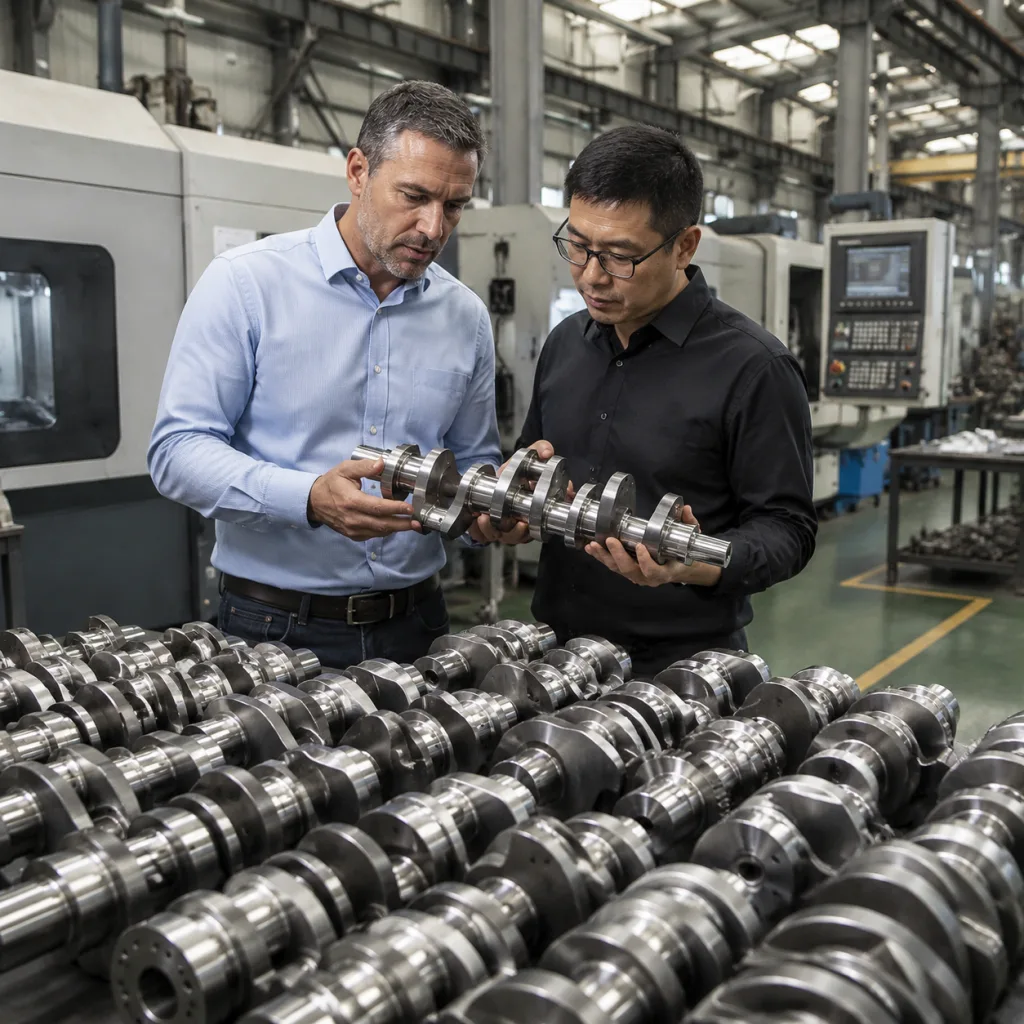
For a first order, the safest path is a sample or pre-production batch with measured dimensions, hardness results, and a visual defect report. For repeat orders, ask for a control plan that ties the drawing to inspection frequency. If a supplier cannot explain how it controls runout, hardness, and finish, the quote is not yet comparable.
Specs that decide fit, life, and returns
A serious wholesale quotation should include the measurable details below. If the supplier leaves these out, you do not yet have a complete offer. For crankshafts used in small engines, compact car engines, and light industrial engines, the numbers that matter are the ones that affect fit, balance, and fatigue life.
Item
What to confirm
Typical buyer note
Material
Forged steel, cast steel, or nodular iron
Match to engine duty and OE design
Journal diameter
Main and rod journal sizes
Must match bearing set and housing
Stroke
Crank throw specification
Controls displacement and compatibility
Overall length
End-to-end finished length
Must clear block, seal, and timing components
Runout
Measured at a defined datum
Ask for a target such as ≤0.03 mm on critical units
Concentricity
Journal relationship to centerline
Lower values reduce vibration and bearing wear
Hardness
Surface hardness after heat treatment
Typical finished range may be 50-60 HRC depending on design
Surface roughness
Journal finish and fillet quality
Common buyer target is Ra 0.20-0.40 μm on bearing surfaces
Balance
Dynamic balance standard
Request residual unbalance target and method
Fillet radius
Radius at journal transitions
Important for fatigue resistance and crack prevention
Traceability
Heat number and batch ID
Needed for claims and audits
Coating or rust protection
Oil, phosphate, or VCI treatment
Important for export and storage life
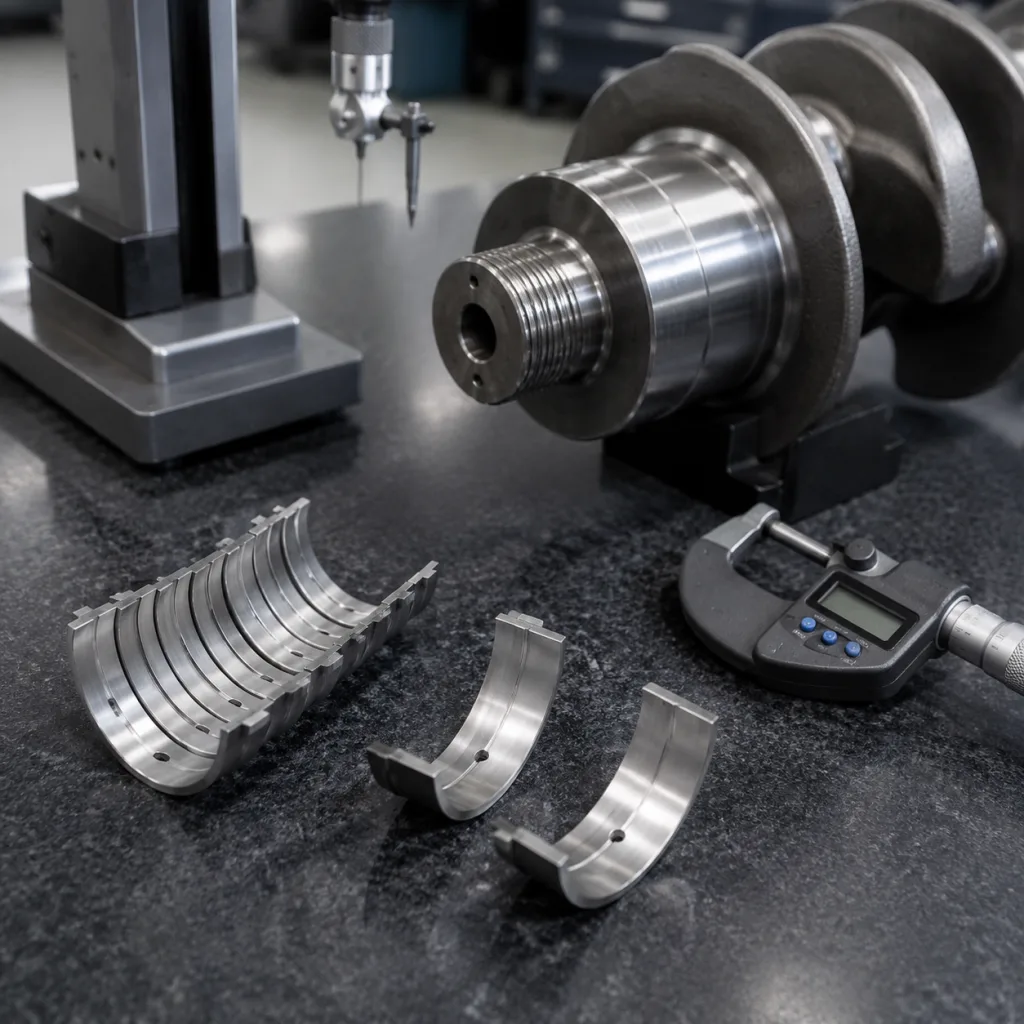
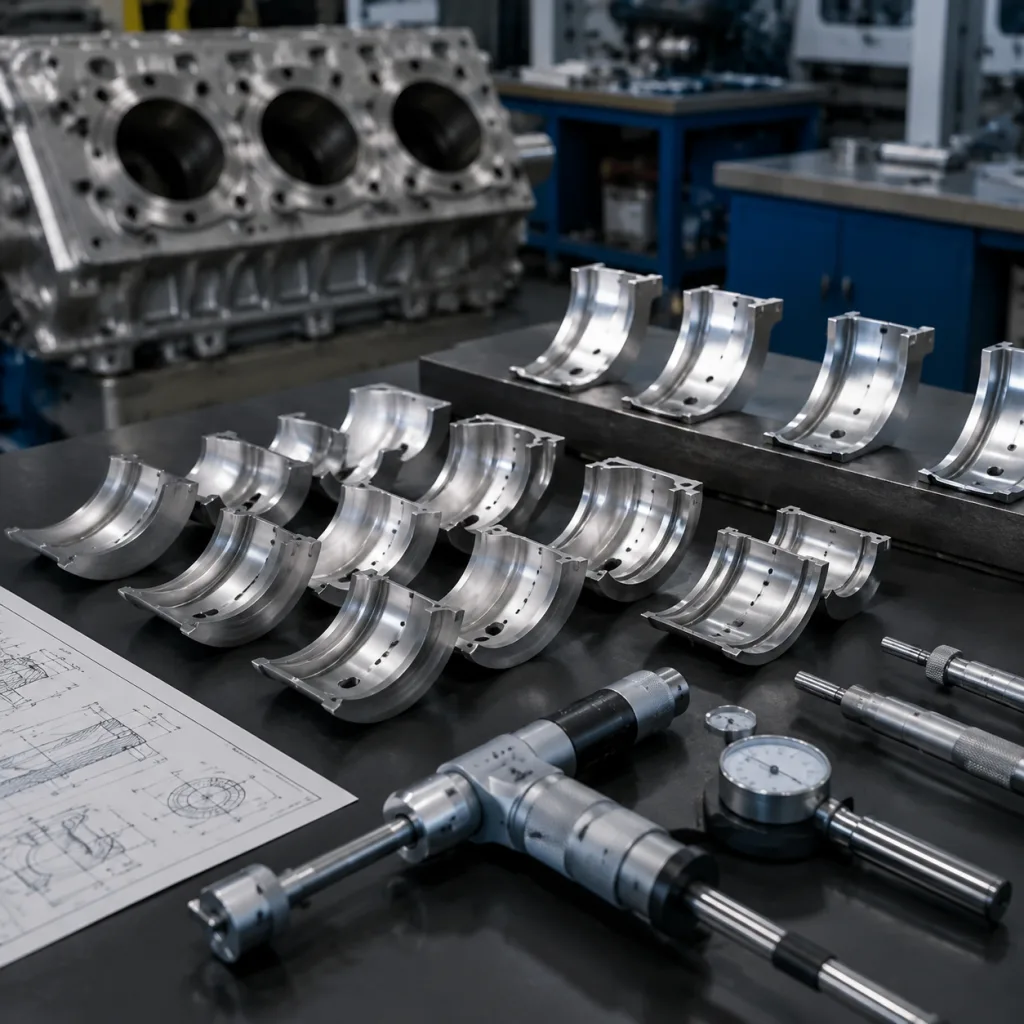
</tr></thead><tbody> </tbody></table>Where the application is sensitive, request dimensional inspection against the drawing and ask whether the plant uses calibrated CMMs, profilometers, hardness testers, and crack-detection methods such as magnetic particle inspection or equivalent NDT where relevant. If the part is quoted against an OE number such as OE 06A107065, the supplier should confirm fitment and not imply manufacturer approval. Ask for tolerance callouts on the critical dimensions, not only nominal sizes. For example, a journal diameter might be held to ±0.01 mm, stroke to ±0.02 mm, and runout to a defined maximum in millimeters; the exact limits should match the engineering drawing or approved sample.
Compare MOQ, lead time, and packaging together
Wholesale buyers usually compare three variables at once: minimum order quantity, production lead time, and landed condition on arrival. A lower MOQ helps trial sales, but it can increase unit cost if setup time, heat-treatment batching, and packaging are spread across fewer pieces. For stable programmes, ask for tiered pricing at 50, 100, 300, and 500 units, then compare the shipping plan with your inventory turnover and forecast demand. The best negotiation point is not the lowest unit price; it is the best landed cost at an order size you can repeat.
A practical MOQ structure for mini crankshaft wholesale is often 50-100 pieces for stocked SKUs, 100-300 pieces for made-to-order variants, and a higher threshold for new tooling or first-article approval runs. If a supplier offers a quote below those levels, verify whether the price includes packaging, inspection, and setup or whether those items are being hidden in freight or later surcharges. Ask the factory to break pricing into ex-works price, packing cost, and optional freight service so you can model the landed cost cleanly.
Lead time depends on whether the crankshaft is stocked, made to order, or a new tooling project. For a stocked mini crankshaft, a realistic supplier should quote dispatch timing separately from sea freight, such as 3-7 working days to dispatch plus transit time. For made-to-order items, a realistic production window is often 20-35 days after deposit and sample approval, depending on machining load, heat-treatment queue, and inspection backlog. For a new or revised part, expect longer timing because first-article approval, drawing review, and pilot batch checks may add 2-4 weeks.
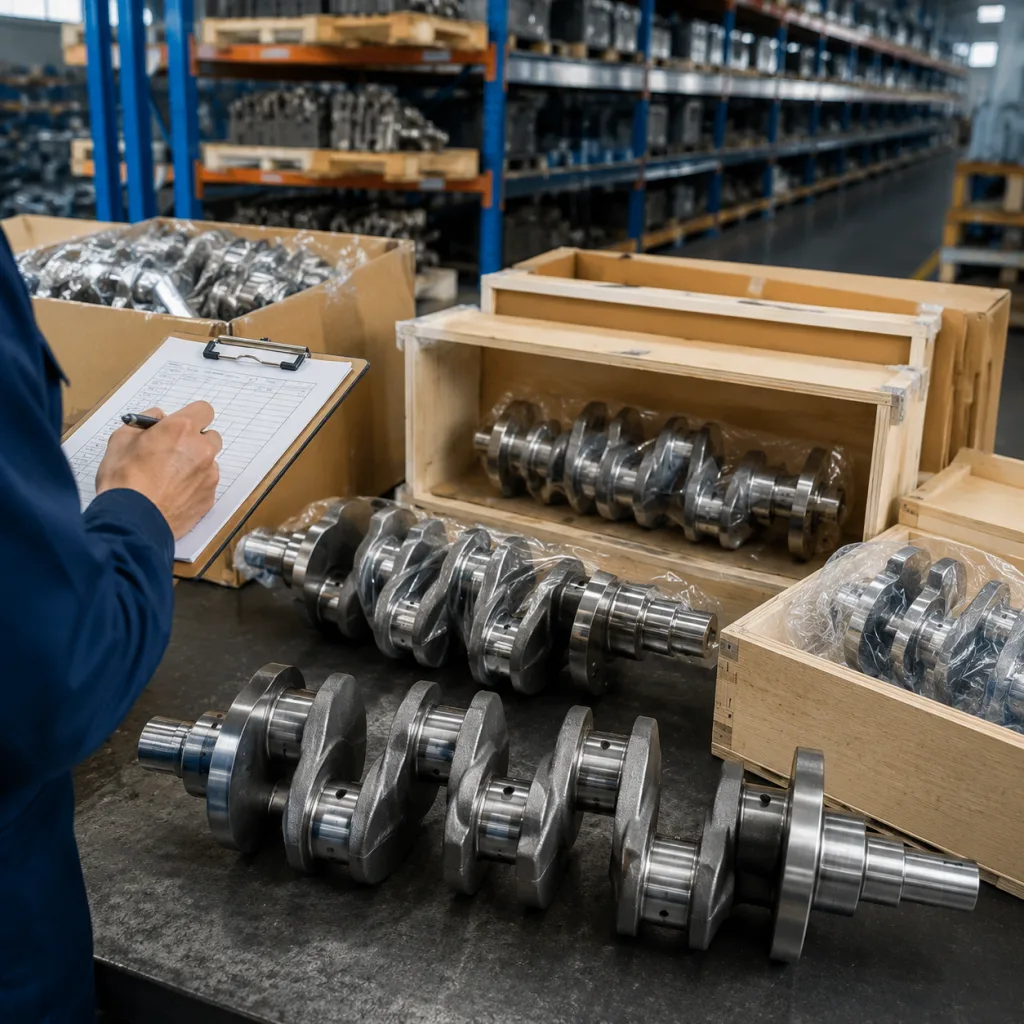
Packaging should include rust prevention, dividers, and impact protection for journals and keyways. If the part is polished and ground, avoid loose carton packing. For export orders, request carton counts, pallet height limits, carton gross weight, and moisture control details in writing. A suitable wholesale pack for a precision crankshaft usually includes VCI paper or oil film, a form-fitted tray or divider, and a carton that keeps journal surfaces from touching each other. If the supplier cannot state pack quantity per carton, carton dimensions, and pallet count, the transit-damage risk is materially higher.
Check the quality system before you place the order
Procurement teams should verify the supplier’s quality system before they lock the order. At minimum, ask whether the factory operates under IATF 16949:2016 and ISO 9001:2015, and request recent internal or external audit evidence if available. The documentation should not be generic. Buyers should also request the actual process flow, because a crankshaft quote is only meaningful if the plant can show how it controls machining, heat treatment, grinding, cleaning, and packing.
Inspection points to review
Material certification tied to heat or batch number
Incoming material chemistry against the specification
Journal diameter and stroke inspection report
Runout measurement method and acceptance limit
Hardness after heat treatment
Fillet radius and surface finish verification
Crack-check method and acceptance criteria
Final visual inspection criteria
Packing inspection before despatch
For export markets, also check whether the supplier can support REACH (EC) No 1907/2006 declarations where relevant for the finished article and packaging materials. If the product is intended for emission-related use in a regulated application, discuss whether ECE R-83 or other vehicle-specific compliance requirements affect the wider parts programme. Do not assume a generic wholesale source can cover every market without documented verification.
A strong process file should show the order of operations, such as forging or casting, normalizing, rough machining, heat treatment, finish grinding, balancing, cleaning, inspection, and packing. Buyers should ask for the control points that protect critical dimensions: for example, rough machining before heat treatment to reduce distortion, finish grinding after heat treatment to lock in journal size, and 100% runout measurement before packing. If the supplier uses SPC, ask for capability data on the critical characteristics; for a mature line, a Cp/Cpk target above 1.33 on key dimensions is a useful benchmark for repeat programs.
When custom manufacturing beats catalog sourcing
Custom manufacturing is the right choice when the part is no longer economical to source from stock, when the OE reference has been superseded, or when you need a controlled variant for a regional engine build. It also makes sense when the buyer needs special packaging, laser marking, a different balance target, or a revised surface treatment. In crankshaft mini wholesale sourcing, custom work matters most when the part number alone is not enough to guarantee the right production spec.
Driventus supports custom manufacturing for buyers who need documented engineering control rather than catalogue-only supply. Our quality system covers incoming material control, in-process checks, and final inspection records. For buyers building a broader engine range, our catalog and engine components overview help map adjacent parts such as gaskets, pistons, water pumps, and turbochargers into one sourcing programme.
Driventus is an independent aftermarket manufacturer; brand names are referenced for fitment only.
Use this checklist before you issue the PO
Use this checklist before you issue a purchase order:
Confirm OE cross-reference and engine code
Verify material, hardness, finish, and balance data
Request dimensional report for the sample or first batch
Confirm critical tolerances for journal size, stroke, and runout
Review MOQ and price breaks at 50, 100, 300, and 500 units
Ask for ex-works price, packing cost, and freight assumptions separately
Confirm pack quantity, carton dimensions, and anti-corrosion protection
Check certification scope and traceability documents
Ask for lead time by stage: production, inspection, packing, and dispatch
Align inventory cover with your sales forecast and freight mode
If you are comparing suppliers for a mini crankshaft wholesale programme, ask for one sample, one production quotation, and one repeat-order quotation. That makes pricing and capability easier to compare because you can separate one-time engineering cost from steady-state supply. If the factory also supports related rotating components, your sourcing cycle can be shorter and your vendor list smaller. For best results, require the quote to state whether the price is for a stocked SKU, a batch-produced item, or a custom-engineered variant, since those three price structures should not be compared as if they were identical.
Frequently asked questions
It should include application cross-reference, material, key dimensions, MOQ, lead time, packaging details, and inspection data. For OE-linked items, the supplier should confirm fitment only and avoid claiming manufacturer approval. A useful quote also states runout, hardness range, surface finish, and whether price is ex-works or includes packing.
Ask for IATF 16949:2016 and ISO 9001:2015 coverage, then request inspection records for material, dimensions, hardness, and final packing. Batch traceability is important for claims and repeat orders. You should also confirm the process flow, the tolerance on critical dimensions, and whether the factory can provide sample or first-article reports.
Yes. We support custom manufacturing for controlled variants, packaging needs, and programme-specific requirements. Share your drawing, sample, or OE reference through the contact form for review. For custom work, we can discuss tolerance targets, balancing requirements, marking, and packing format before the order is placed.
If you are sourcing a mini crankshaft programme and need a quotation, drawings review, or sample plan, please [request a quote](/contact.html).