engine bearing · 2026-06-16

Engine Bearing Manufacturer China: Sourcing Guide

Buying engine bearings from China is a sourcing decision, not a catalogue lookup. Procurement teams need dimensional consistency, alloy control, traceable batches, and repeatable supply across passenger car, light commercial, and selected heavy-duty applications. If you are searching for an engine bearing Mitsubishi manufacturer China, the real question is whether the supplier can hold journal diameter, crush, wall thickness, overlay quality, and surface finish within spec—and prove it. Driventus is an independent aftermarket manufacturer; brand names are referenced for fitment only. We supply B2B customers in the aftermarket, OEM, and Tier-1 channels, as well as multi-location repair networks, from Taizhou, Zhejiang. Our production system is certified to IATF 16949:2016 and ISO 9001:2015, with material and process controls aligned to customer drawings, OE cross-references, and sample approval requirements.

Decision framework: what matters before you source

Treat engine bearings as a controlled-engineering purchase, not a commodity buy. A low unit price is only useful if the part survives fitment, oil pressure, and endurance checks.

Use this checklist first:

  • Material system: tri-metal or bi-metal construction, substrate composition, and overlay type.
  • Dimensional control: wall thickness, bearing width, oil clearance, crush, and chamfer geometry.
  • Surface condition: finish quality, freedom from scoring, coating consistency, and anti-fatigue overlay integrity.
  • Traceability: lot coding, inspection records, batch retention, and sample retention by production date.
  • Supply terms: MOQ, repeat-order lead time, packaging spec, carton labelling, and re-order price breaks.

For Mitsubishi applications, confirm the OE number, engine code, journal size, thrust requirement, and whether the bearing is standard, undersize, or oversize. A visual match is not enough. Dimensional verification against the sample or drawing is required before mass-order release. As a working control point, buyers commonly ask for ±0.01 mm on critical thickness checks, with journal clearance confirmed against the engine builder’s spec before approval.

Spec deep-dive: the measurements that decide bearing life

Bearing life is shaped by clearance, lubrication, alignment, and crankshaft finish. Even the correct part can fail if the surrounding system is out of tolerance.

Common technical checks

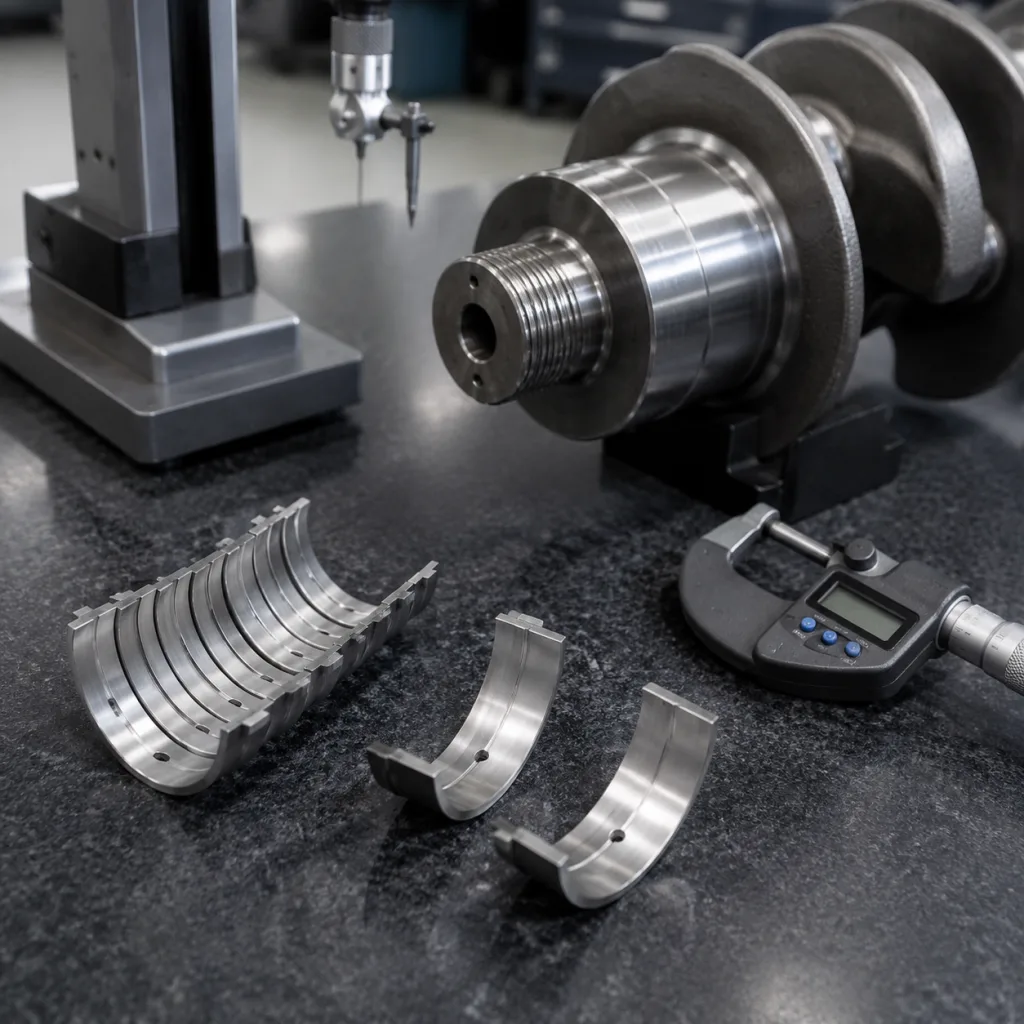
  • Journal finish: crankshaft surface roughness and concentricity must suit the bearing grade; many programmes specify Ra 0.2-0.4 μm on finished journals.
  • Oil clearance: verify with plastigage, micrometer, or bore gauge methods during build; a typical passenger-car range is often 0.02-0.06 mm, but the engine-specific drawing always takes priority.
  • Thrust control: end play must stay within the engine builder’s specified range; many assemblies target 0.05-0.25 mm depending on engine family.
  • Housing bore: cap torque, block distortion, and cap mix-up can change crush, so bore sizing should be verified after torque to spec.
  • Contamination: dust, old sealant, or abrasive residue shortens bearing life quickly, so clean handling and oil-flush checks matter during assembly.

For aftermarket supply, published standards matter. Our manufacturing and control system aligns with IATF 16949:2016 and ISO 9001:2015. Where customer programmes require regulatory conformity, we can support material declarations relevant to REACH (EC) No 1907/2006. If the programme includes emissions-related engine systems, documentation may also need to reference platform-specific validation expectations such as ECE R-83 or durability protocols like SAE J2527, where applicable to the wider assembly rather than the bearing itself. On request, buyers can also specify acceptance criteria for visual defects, edge burrs, and coating continuity, with AQL sampling commonly set at 1.0 or 1.5 for production release audits depending on account risk.
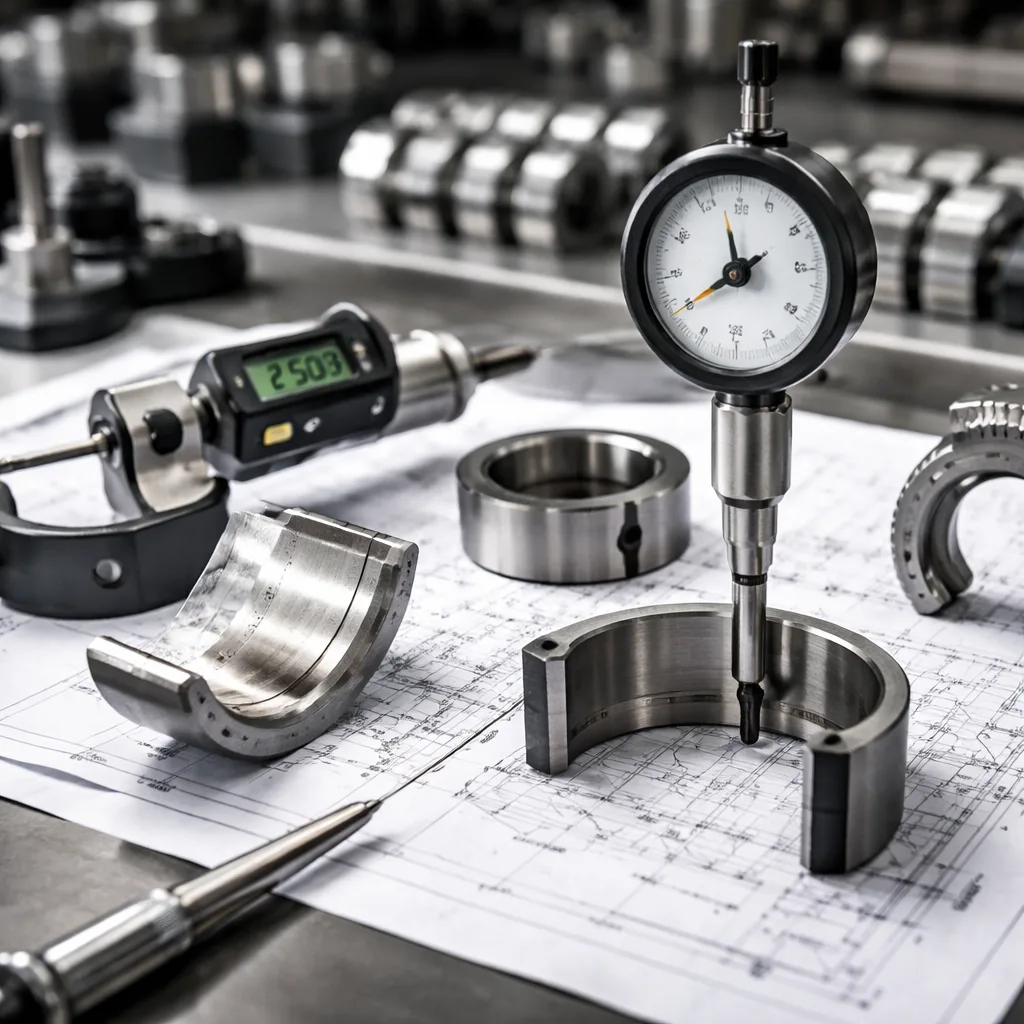
Spec deep-dive: the measurements that decide bearing life

Comparison: sourcing routes and where each breaks down

</tr></thead><tbody> </tbody></table>For procurement teams, a direct manufacturer is usually the better route when annual volumes, packaging control, and part-number discipline matter. It also simplifies technical communication on OE 06A-type references and other engine-family cross-references when the customer already knows the engine code or assembly variant. If the buyer needs a stable commercial structure, direct sourcing also makes it easier to lock in a price ladder by quantity break, such as sample pricing, pilot pricing, and annual contract pricing.

Step by step: how Driventus supports B2B sourcing

Driventus manufactures engine and powertrain components for distributors, importers, and channel partners that need stable repeat supply. For bearing programmes, we support a simple release path:

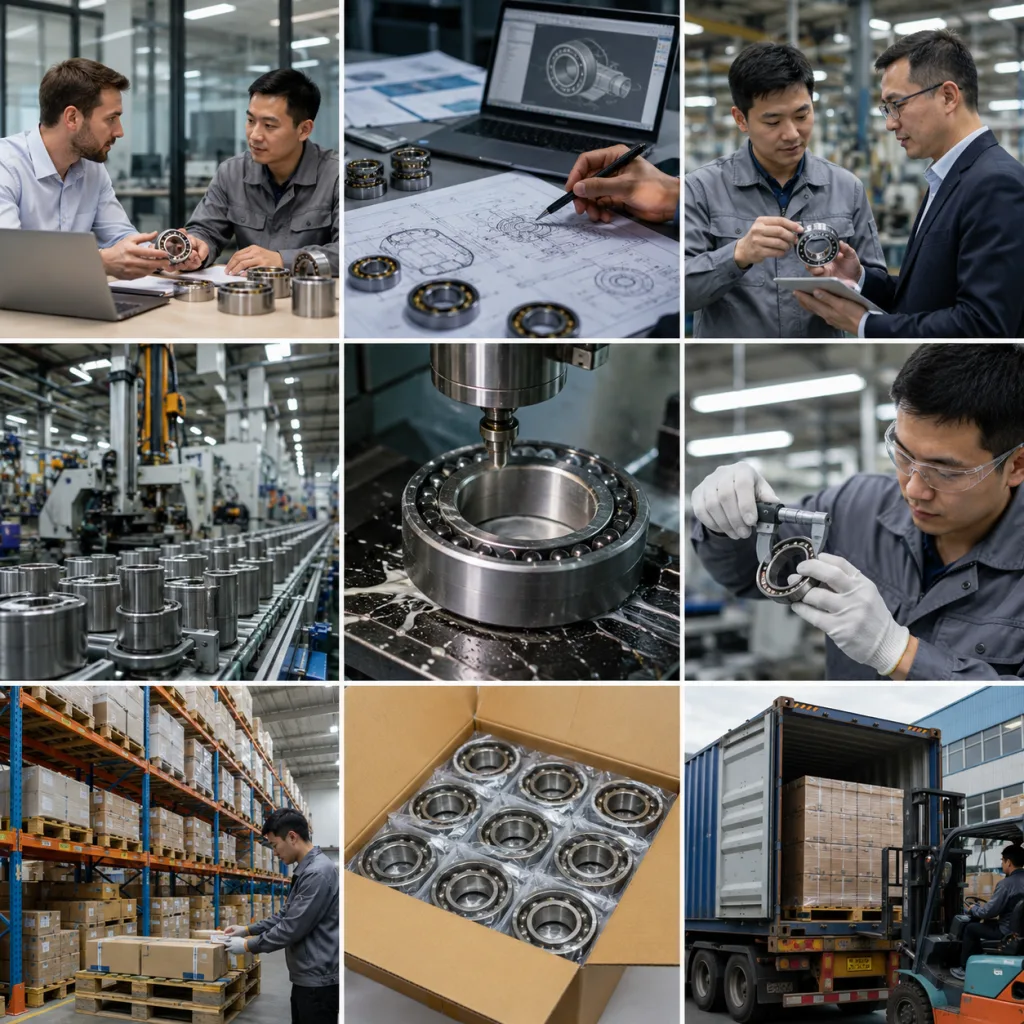
1. Part identification against customer RFQ data, photos, or sample parts. 2. Drawing review and dimensional confirmation, including nominal size, oversize, and undersize reference checks. 3. Pilot sample production and fitment validation, typically 5-20 sets for pre-production review depending on programme complexity. 4. Packaging and label definition for warehouse handling, including inner box count, master carton count, and barcode format. 5. Production release with lot traceability, certificate support, and retained samples.

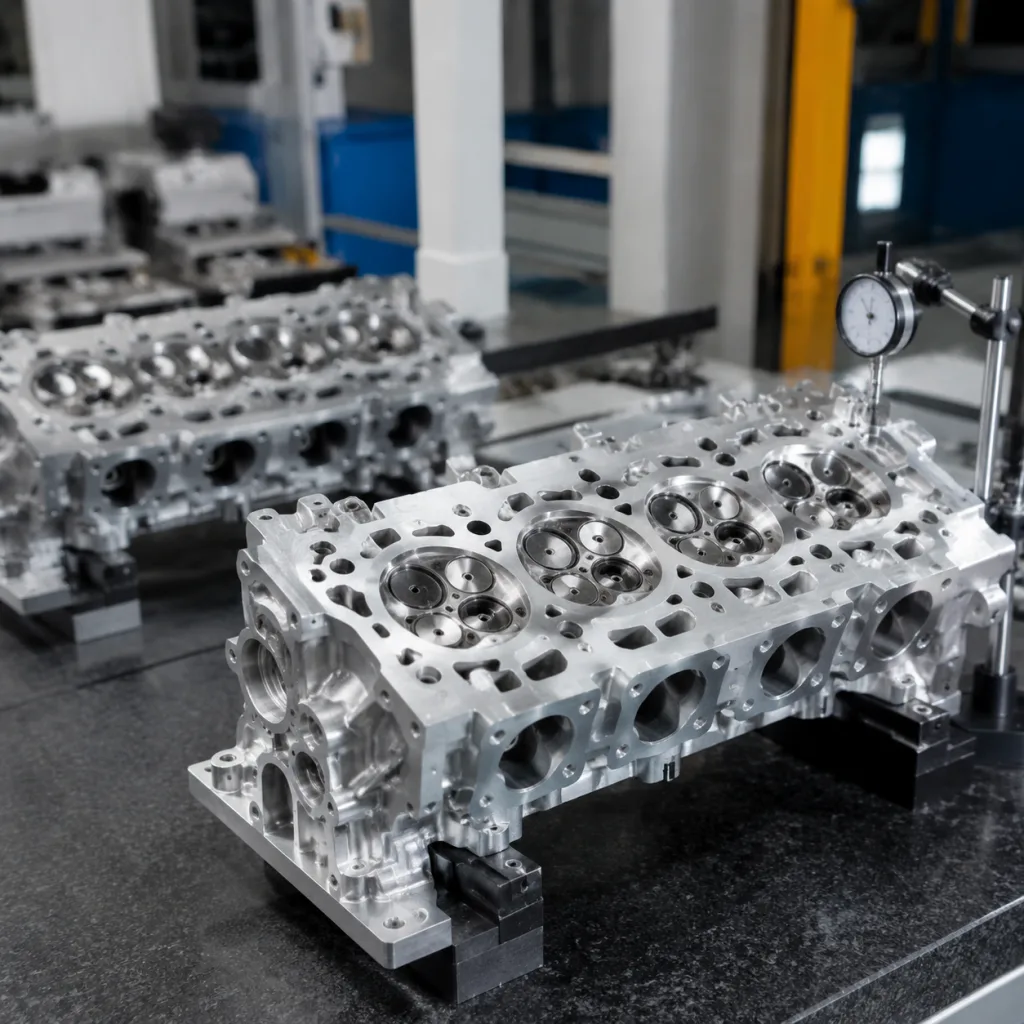
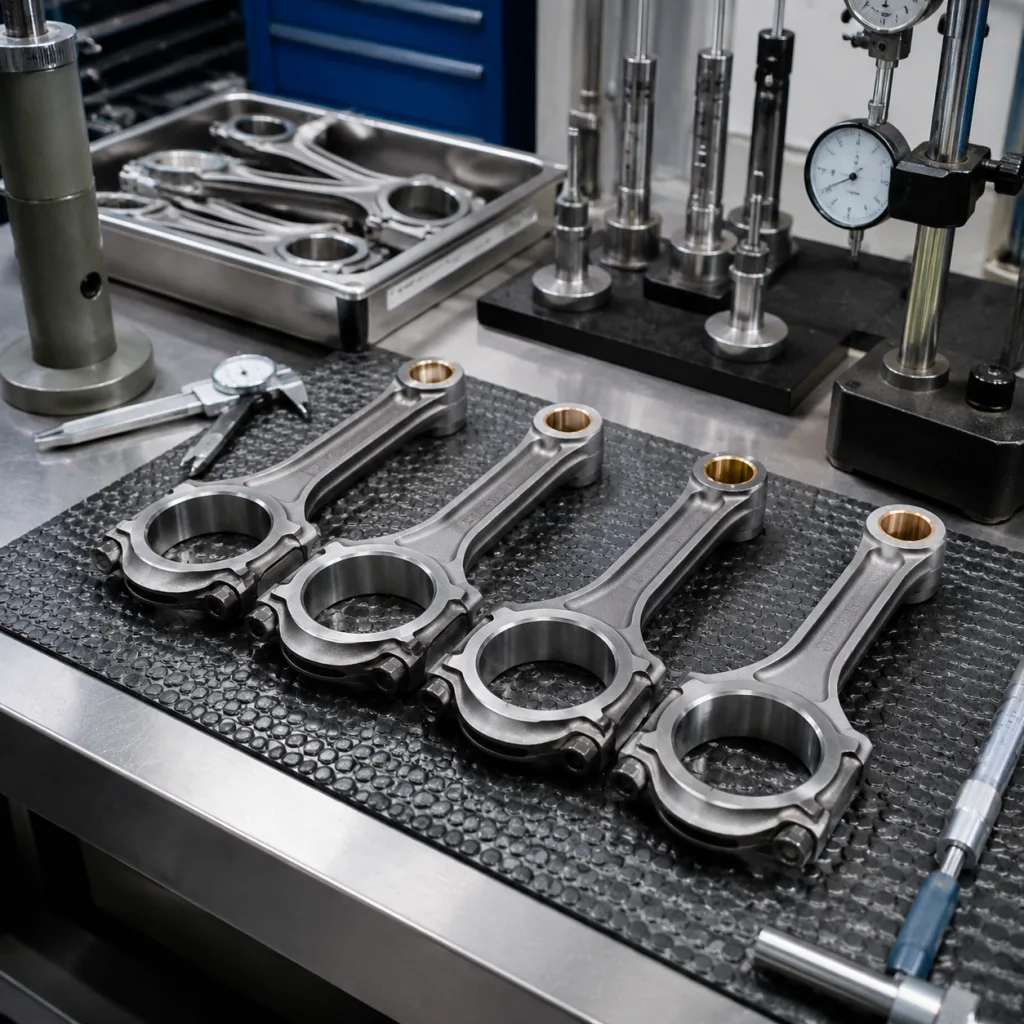
We also support adjacent engine families through our catalog and engine components, which helps buyers consolidate vendors when a programme includes pistons, gaskets, water pumps, or related rotating-assembly parts. If a customer needs a private-label format, barcode carton spec, or mixed-SKU packing plan, custom manufacturing is available under agreed technical and commercial terms. For recurring programmes, we can also align a release plan by forecast bucket so the buyer can balance inventory without overcommitting to one large order.

Step by step: how Driventus supports B2B sourcing

Scenario: what a clean RFQ looks like

A professional RFQ should define more than the part number. Include:

  • Annual forecast and first-order quantity
  • Required MOQ per SKU
  • Target lead time for samples and mass production
  • Accepted quality standard, AQL, and inspection format
  • Label language, carton count, and pallet requirement
  • Claims process for nonconforming material
  • Target price by volume tier and currency basis

In practice, the first shipment is often a validation order, not a full replenishment order. That is normal. The right supplier will support sample approval, dimensional records, and controlled pilot lots before committing to long-term supply. A practical buying structure is often sample order MOQ 5-10 sets, pilot MOQ 50-100 sets, and regular production MOQ 200-500 sets per SKU, with final quantities dependent on bearing family and packaging format. Lead time is usually 7-15 days for stocked samples, 15-25 days for new samples, and 25-45 days for repeat production after order confirmation, assuming the drawing is frozen and raw material is available. Price should be discussed against monthly or quarterly demand, because one-off spot buys often carry a higher unit cost than annual contract orders. Quality system information should be available before factory audit or onboarding review.

Frequently asked questions

Yes. We support aftermarket and B2B supply programmes using customer OE references, engine codes, drawings, or samples. Driventus is an independent aftermarket manufacturer; brand names are referenced for fitment only. For launch projects, we can confirm standard, undersize, or oversize variants and align the bearing set to the engine code before sample approval.

We can provide product specifications, inspection records, packaging details, and quality system information tied to IATF 16949:2016 and ISO 9001:2015 processes, subject to the programme and part type. Where needed, we can also share dimensional reports, material declarations, lot traceability records, and sample approval data.

Send the OE reference, engine code, photos, sample quantity, target annual volume, destination market, and any required tolerance or packaging notes. Use [request a quote](/contact.html) to begin the review and get a commercial reply. If you already have a target price and lead-time window, include those as well so the quotation can be structured around your buying plan.

If you are sourcing engine bearings from China and need technical confirmation before release, send your RFQ and target volume through [request a quote](/contact.html).

Request a Quote
Sourcing route Strength Limitation Best fit
Local resellerFastest purchaseHigher unit cost, limited controlEmergency replacement
Trading companyBroad availabilityVariable traceabilitySpot buying
China manufacturerBetter cost control, direct spec supportRequires more technical reviewProgramme sourcing
OEM/Tier-1 channelStrong process disciplineHigher commercial thresholdLong-term supply