crankshaft · 2026-06-16

Crankshaft Infiniti Supplier for B2B Sourcing

Procurement teams sourcing a crankshaft Infiniti supplier need more than a line-item price. They need stable metallurgy, controlled machining, traceable inspection records, export documentation, and a supplier that can support mixed aftermarket demand without uncontrolled substitutions. Driventus manufactures engine and powertrain components in Taizhou, Zhejiang, including crankshafts for passenger car and light commercial applications. We supply aftermarket distributors, wholesalers, OEM programmes, Tier-1 buyers, and repair chain procurement teams across the EU, UK, US, Canada, Australia, and Brazil. This article explains how to evaluate a crankshaft Infiniti supplier, what to request before purchase, and how Driventus manages sourcing, validation, packaging, and repeat supply. Driventus is an independent aftermarket manufacturer; brand names are referenced for fitment only.

How to decide if a supplier is fit for Infiniti crankshafts

A crankshaft is not a commodity part with forgiving tolerances. For Infiniti-fitment sourcing, the first question is simple: can the supplier prove fit, consistency, and traceability before price enters the discussion?

Start with the hard checks:

  • Engine family, displacement, fuel type, and year range
  • OE cross-reference, if the buyer has one
  • Journal diameters, stroke, fillet radius, and overall length
  • Nose, flange, keyway, reluctor, and rear-end features
  • Material grade, heat treatment, and hardness range
  • Balance requirement and surface finish target
  • Packaging method and export documentation needs

If a supplier cannot map those points clearly, the quotation is not ready. The result may still look cheap, but the receiving risk is high. That is the usual failure mode in this category: the part arrives, the carton is correct, and the crankshaft is wrong by a detail that matters.

Driventus supports fitment matching through drawings, samples, reverse engineering, and buyer-supplied references. For broader engine sourcing, buyers can review our catalog and the engine range at /products/engine-components.html. We do not claim approval or endorsement by any vehicle manufacturer.

Where crankshaft programs fail in practice

Most sourcing issues are not dramatic. They show up as noise, reject rates, or delayed launches.

Common failure points include:

  • Incorrect cross-reference from incomplete application data
  • Journal wear or finish that misses the drawing target
  • Balance drift between batches
  • Oil hole burrs left after machining
  • Fillet geometry that looks acceptable but weakens fatigue life
  • Packaging that protects the part in warehouse storage but not in sea freight
  • Missing traceability when a complaint needs root-cause analysis

These are the reasons a supplier should be evaluated as a process owner, not just a seller. If the manufacturing line is stable, the paperwork usually is too. If the paperwork is vague, the process usually is as well.

Driventus confirms the inspection plan during quotation and can align key characteristics, sampling frequency, and documentation format under custom manufacturing. Where the buyer has an existing control plan, we can work to it instead of forcing a generic supplier template.

What the specs and controls should actually look like

Crankshaft production depends on repeatable control from incoming material to final packing. The technical discussion should be specific, because vague language hides quality gaps.

</tr></thead><tbody> </tbody></table>The process flow is straightforward, but only when each step is owned: material receipt, blank prep, rough turning, heat treatment where specified, finish turning, grinding, drilling, balancing, cleaning, corrosion protection, final inspection, and packing. For buyers who need PPAP-style support, the submission can be aligned to the characteristic list, including dimensional results, material traceability, and control-plan coverage.

For Infiniti-fitment orders, Driventus can confirm the inspection plan at quotation stage. Buyers with their own gauge strategy or release format can send it up front instead of reconciling it later.

The audit and compliance questions buyers should ask

A serious crankshaft Infiniti supplier should stand up to a technical audit. Price matters, but auditability is what lets a procurement team repeat the order.

Driventus operates under IATF 16949:2016 and ISO 9001:2015 quality management frameworks. Those systems support documented process control, corrective action, supplier management, traceability, and continual improvement.

For regulated destination markets, buyers may also ask for material and packaging declarations. Depending on the programme and destination, documentation may reference REACH (EC) No 1907/2006 for chemical substance control and RoHS Directive 2011/65/EU where applicable to the supplied product scope. Engine mechanical components are not emissions-certified parts by themselves, so standards such as ECE R-83 should not be used as a direct crankshaft approval claim.

An audit usually checks:

  • Quality manual and process flow documentation
  • Incoming inspection and material traceability
  • Machining capability and gauge calibration
  • Nonconforming product control
  • Packing and warehouse segregation
  • Export documentation process
  • Corrective action records and complaint handling
  • Control-plan discipline for critical dimensions
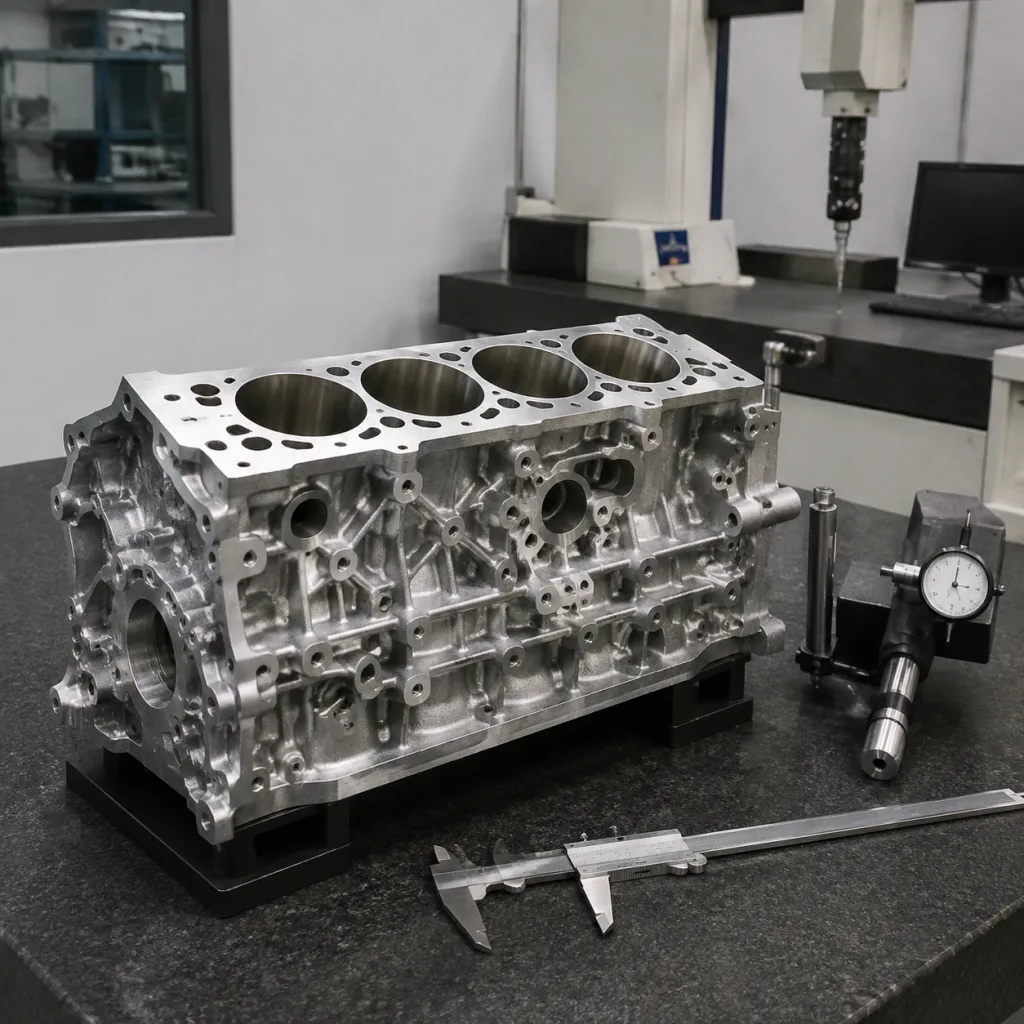
  • Calibration status for micrometers, bore gauges, height gauges, hardness testers, and balance equipment

Buyers can review our quality system before requesting a remote or on-site audit. If needed, we can prepare an audit pack showing certificate status, equipment lists, inspection forms, and a sample traceability chain from material lot to finished carton.

MOQ, lead time, and pricing: what changes the number

MOQ and lead time are usually the most misunderstood parts of the quote. The number is rarely fixed; it changes with part maturity, tooling status, raw material availability, and documentation load.

Control area What is checked Buyer-relevant target
Raw materialGrade, chemistry, supplier lot, hardness rangeChemistry matches the approved spec and lot traceability is retained
Main journalsDiameter, roundness, cylindricity, surface finishSize commonly held to ±0.005 mm to ±0.010 mm depending on design
Rod journalsDiameter, stroke position, indexingControlled to drawing; indexing avoids phasing error
FilletsRadius and surface continuityRadius must match drawing; sharp transitions raise fatigue risk
Oil passagesPosition, drilling quality, deburring, cleanlinessBurr-free passages and verified outlet location reduce lubrication risk
Dynamic balanceUnbalance value against drawing requirementTypical target is set per drawing, often 20–40 g·cm or better
Final cleaningParticle and oil residue controlCleanliness and rust inhibitor type should be defined before shipment

</tr></thead><tbody> </tbody></table>For established references, the commercial offer is often more flexible because tooling and machining programs are already validated. New development parts need more time because the supplier has to prove the spec, not just quote it.

A rolling 3–6 month forecast helps reduce spot-order risk and improves container utilisation. If demand is seasonal, reserve production slots before peak overhaul periods. For landed-cost comparisons, keep the incoterm, carton configuration, and inspection scope identical across suppliers. Otherwise the lowest quote is usually just the least complete one.

What should ship with the order

Cheap sourcing becomes expensive when receiving inspection fails or cartons arrive with inconsistent contents. The shipment should arrive with evidence, not just a packing list.

Recommended document package:

  • Commercial invoice, packing list, and certificate of origin where required
  • Part number list and buyer cross-reference table
  • Material certificate or conformity statement
  • Dimensional inspection report for critical characteristics
  • Hardness or heat treatment verification where applicable
  • Balance inspection record when specified
  • Surface finish or visual inspection record where required
  • Carton label template and pallet packing photos before dispatch
  • Container loading photos and seal number for export shipments

Packaging deserves the same attention as machining. Crankshafts need corrosion protection oil, VCI packing where required, journal protection sleeves, and pallet stacking limits that match sea freight reality. A part can leave the factory clean and still arrive compromised if the packaging spec was too thin.

If a buyer needs a receiving plan, Driventus can support AQL-style sampling or 100% checks on defined characteristics such as part number marking, visual damage, journal size, and pack count. Critical dimensions can be inspected at shipment and tied to the batch number for traceability.

How to qualify Driventus without slowing the program

The fastest qualification path is staged. It keeps the buyer in control and it tells both sides where the risk sits.

Suggested sequence:

1. Send application list, forecast, packing requirement, destination market, and target incoterm. 2. Confirm fitment references, required dimensions, and commercial terms. 3. Approve sample, inspection plan, label format, and packaging method. 4. Review audit documents or conduct a remote factory audit. 5. Place a pilot order and review fitment feedback, receiving results, and damage rate. 6. Move to scheduled purchasing after approval with an agreed reorder point and release plan.

If the buyer only has an engine code and a sample crankshaft, we can measure the sample and build a cross-reference discussion from there. If the buyer has a drawing, we can quote against the drawing tolerance and inspection requirements directly.

A practical pilot order is usually 5–20 pcs for engineering validation or 50–100 pcs for market launch. For distributor programs, define the reorder point from 4–6 weeks of sell-through plus transit time. That is enough structure for aftermarket distribution, private-label supply, and selected OEM/Tier-1 component programs where buyer specifications are available.

Frequently asked questions

Yes. Driventus supplies crankshafts for selected Infiniti-fitment applications based on buyer-provided application data, samples, drawings, or OE-style references such as OE 12200…. We do not claim vehicle manufacturer approval or endorsement.

Driventus operates under IATF 16949:2016 and ISO 9001:2015 quality management systems. Buyer-specific inspection plans, traceability records, and audit documentation can be reviewed during supplier qualification.

Please provide engine application, year range, destination market, quantity, forecast, packing requirement, target incoterm, and any available sample, drawing, or OE cross-reference. This helps confirm fitment, lead time, and price breaks before quotation.

If you are comparing suppliers for Infiniti-fitment crankshafts, send your application list and forecast to [request a quote](/contact.html).

Request a Quote
Order type Typical MOQ Typical lead time Pricing logic
Existing aftermarket reference50–100 pcs30–45 daysBest unit price usually begins at 100+ pcs or a full mixed container
Mixed container programmeBy item mix45–60 daysUnit price improves when the order fills a 20ft/40ft container
New sample development5–20 pcs60–90 daysSample charges may apply if new gauges or reverse engineering are required
Annual supply agreementForecast-basedScheduled releasesContract pricing can be locked for 3–6 months with material-index review thereafter