Engine Block Hyundai Supplier: Sourcing and Quality
Procurement teams sourcing an engine block for Hyundai applications need more than a part-number match. A dependable supplier has to control casting metallurgy, bore and main-tunnel machining, deck-face geometry, oil-gallery cleanliness, corrosion protection, traceability, and export packaging, while still keeping pace with distributors, OEM programmes, and repair-chain replenishment. When comparing an engine block Hyundai supplier, the useful questions are concrete: what alloy or iron grade is used, how are cylinder bores and deck faces measured, what capability data supports repeat production, what documents ship with each lot, and how quickly can the factory respond to drawing revisions or sample feedback. Driventus is an independent aftermarket manufacturer; brand names are referenced for fitment only. The sections below outline the technical, quality, and supply-chain evidence buyers should verify before RFQ, audit, or first-article approval.
What buyers should verify before RFQ
For procurement teams, the first screen is fitment confidence. A catalogue match helps, but it does not prove the block will suit the target engine family, model-year range, accessory layout, emissions-market variant, or repair-market expectation. Before asking for price, confirm whether the supplier can work from an OE sample, customer drawing, 3D scan, CMM report, or reverse-engineered benchmark. Also ask how the factory manages differences between regional engine variants. A serious engine block Hyundai supplier should be able to discuss material grade, casting process, CNC machining sequence, datum strategy, inspection points, preservation method, and export packing before the conversation turns commercial.
Use our catalog and the engine-related range in engine components to map the part family before you request samples. The strongest RFQs give the supplier enough context to assess fitment, tooling feasibility, fixture risk, and quality risk together. For a Hyundai engine block programme, the RFQ pack should normally include:
- Engine code, platform reference, displacement, fuel type, and target model-year range
- OE reference number, sample availability, benchmark unit photos, or 3D scan data
- Casting material, heat-treatment requirement, hardness target, and customer material specification
- Bore diameter, deck height, main bore layout, cylinder count, liner type, and oil/coolant passage requirements
- Datum scheme for machining and inspection, including critical A/B/C datum faces if defined
- Critical threaded holes, sensor bosses, engine-mount points, transmission interface, and accessory interfaces
- Surface finish, flatness, perpendicularity, and cleanliness targets for machined faces and galleries
- Annual volume, batch release pattern, forecast split, PPAP or first-article requirement, and target lead time
- Packaging, palletisation, labelling, VCI or rust-preventive oil requirements, and container-loading constraints
- Required documents for internal approval, customs, IMDS or material declaration, and quality records
The RFQ stage should also define what the buyer expects from samples. Some projects need one visual sample; others require a first-article inspection report, dimensional layout, material certificate, hardness result, leak-test record, cleanliness check, and packed-unit photos before trial assembly. If a supplier quotes from a broad description such as “Hyundai engine block” without asking for application data, drawing revision, or critical characteristics, it is not ready for controlled production supply.
Materials, casting route, and machining controls
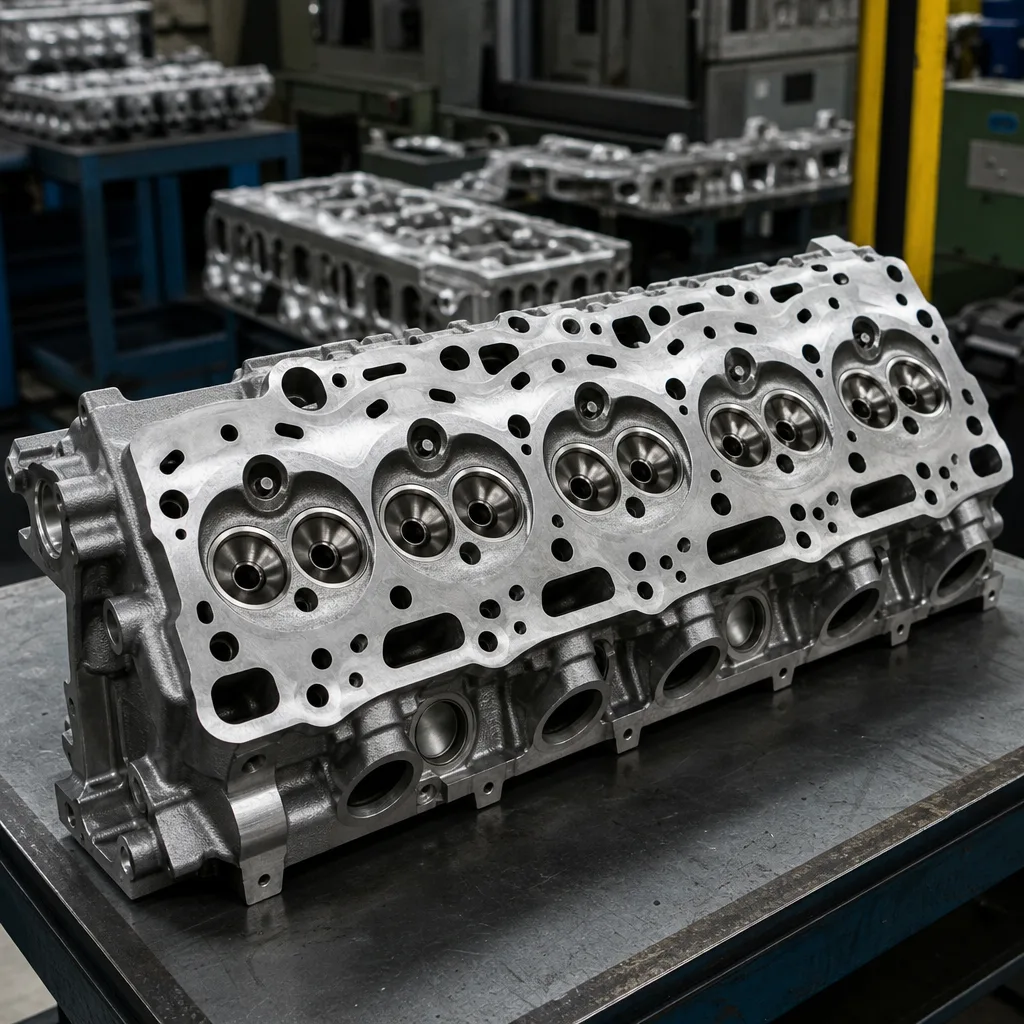
Engine blocks often fail commercially not because the base casting is unusable, but because the machining process is not stable enough for repeat supply. Buyers should ask how the foundry controls chemical composition, melt temperature, inoculation, sand core assembly, riser design, shrinkage, core shift, sand removal, and post-cast cleaning. Then move to the machining line: how does it maintain datum alignment from rough machining through final inspection? The supplier should also explain whether casting, heat treatment, pressure or leak testing, and machining are controlled under one organisation or through approved subcontractors, since split responsibility affects traceability, response time, and containment if a defect appears in the field.
The material route has to match the application. Grey cast iron is commonly specified where damping, bore wear resistance, and cost stability matter; typical buyer checks include tensile grade, hardness range, microstructure, and graphite form. Aluminium alloy blocks are selected where weight reduction and thermal transfer are priorities, but buyers should verify alloy grade, heat treatment condition, liner or bore coating policy, porosity control, and thread-insert requirements. Compacted graphite iron may appear in heavier-duty applications that require higher stiffness and fatigue strength than conventional grey iron. In every case, ask how chemical composition is verified by heat, how lot identity is preserved, and how porosity, cracks, inclusions, cold shuts, and core shift are detected before value is added through machining.
A practical supplier review should cover the items below.
| Check point | Buyer requirement | Why it matters |
|---|---|---|
| Material route | Grey iron, compacted graphite iron, or aluminium alloy by application and drawing | Determines stiffness, wear resistance, mass, thermal behaviour, and repair compatibility |
| Chemistry and hardness | Spectrometer record by heat and hardness checks on defined locations | Confirms the casting matches the specified grade and machines consistently |
| Casting integrity | Porosity limit, core location, crack detection, leak-test policy, and cleaning method | Reduces coolant leakage, oil-pressure loss, and hidden assembly defects |
| Bore machining | Controlled diameter, roundness, taper, cylindricity, and plateau-hone surface finish where applicable | Affects ring seating, compression, oil consumption, and service life |
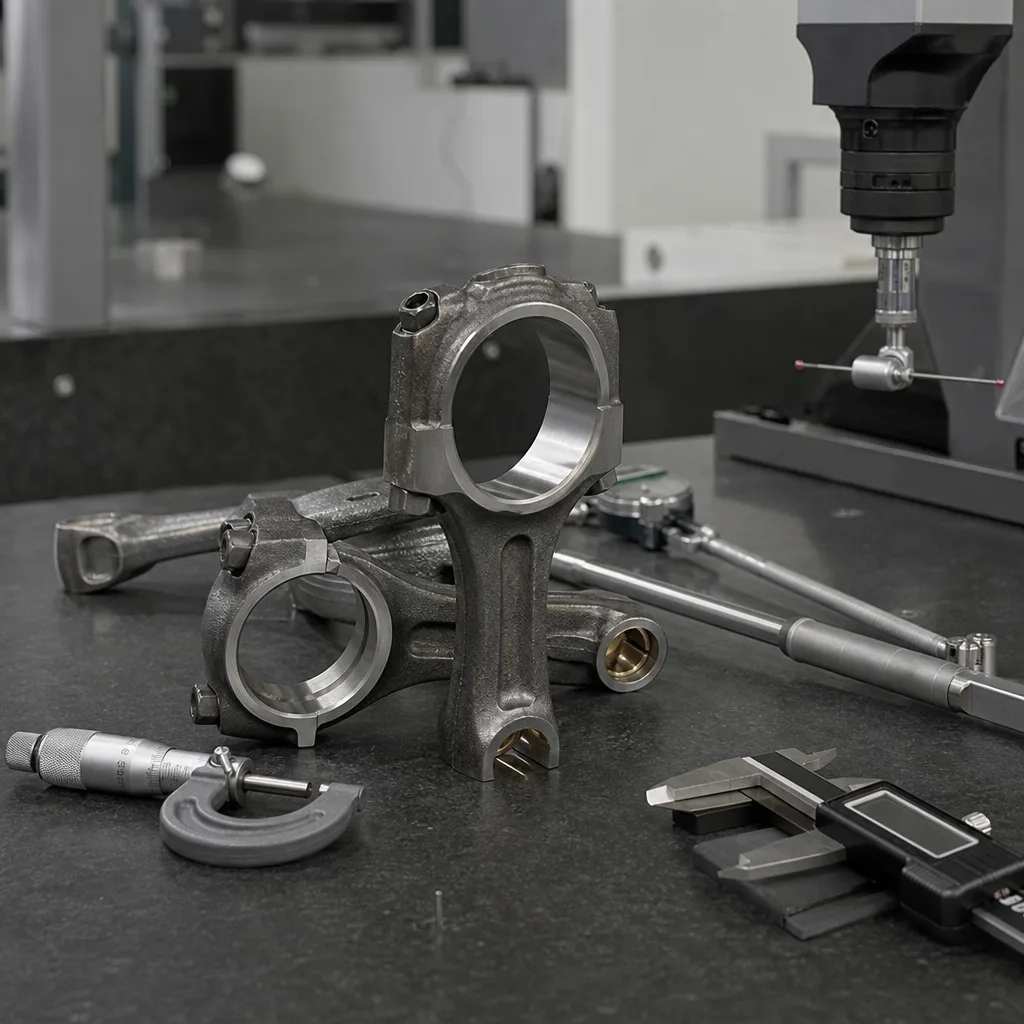
| Deck face | Flatness, roughness, parallelism, and gasket-surface protection measured on calibrated equipment | Prevents head-gasket loading issues and coolant or combustion leakage |
| Main bore alignment | Line boring or honing verified for diameter, coaxiality, and bearing-cap fit | Protects crankshaft support, oil-film stability, NVH, and durability |
| Threaded holes and bosses | Position, depth, pitch, perpendicularity, thread quality, and insert policy where applicable | Prevents assembly delays, cross-threading, stripped holes, and warranty claims |
| Oil and coolant galleries | Passage location, plug seating, burr removal, and cleanliness verification | Protects bearings, pumps, seals, and downstream engine assembly |
| Traceability | Heat number, casting lot, machining batch, operator or cell record, and inspection report | Supports containment, claims handling, and customer audits |
| Packaging | VCI, rust-preventive oil, machined-face guards, bore protection, and pallet stability | Reduces transit damage, corrosion, and rejected receiving inspections |