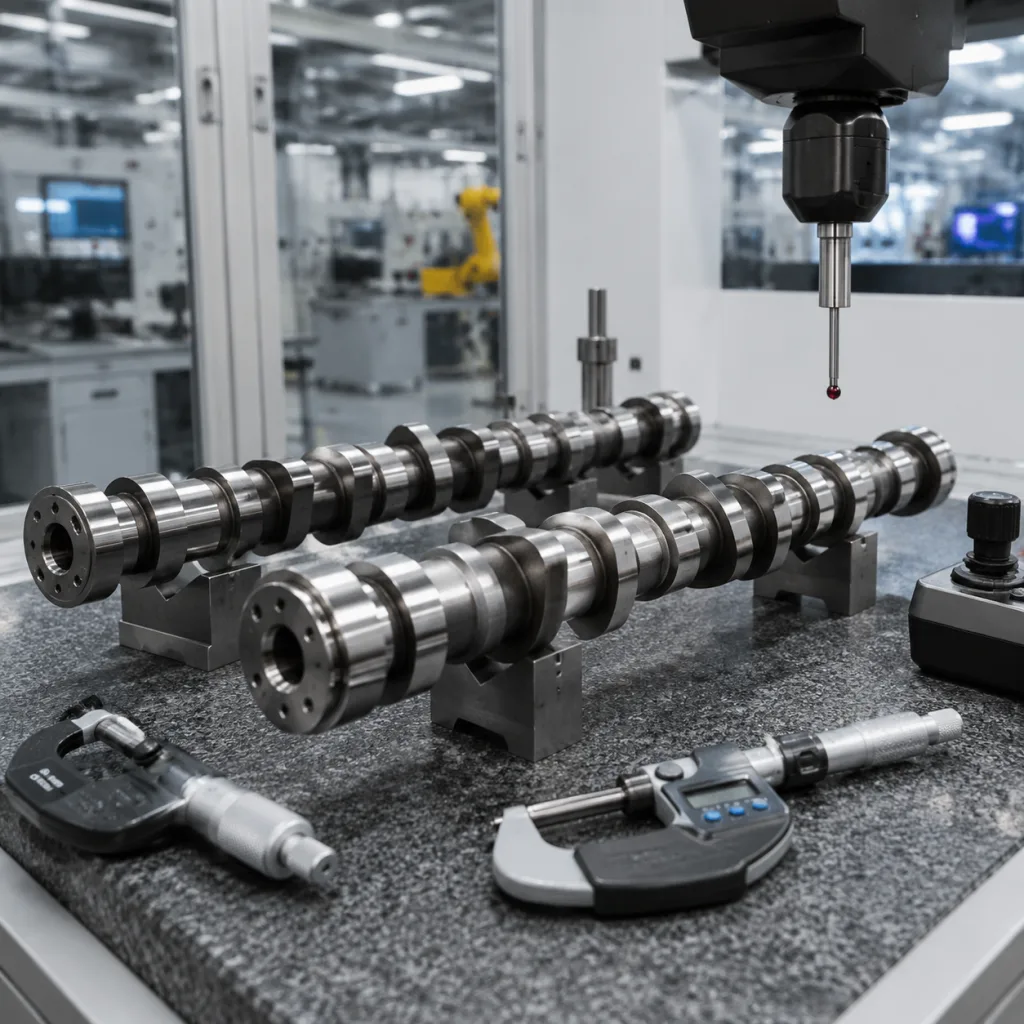
Procurement teams searching for a crankshaft Dodge OEM supplier need more than a unit price. The real sourcing decision depends on dimensional control, material selection, machining accuracy, traceability, packaging, and the factory’s ability to support repeat orders without quality drift. For distributors, repair-chain buyers, remanufacturing programs, and Tier-1 sourcing teams, the practical question is whether a supplier can deliver Dodge-fit crankshafts with consistent journal geometry, controlled balance characteristics, and documented inspection records at commercial volume.
Driventus manufactures engine and powertrain components in Taizhou, Zhejiang, and supplies export markets in more than 60 countries. We support B2B buyers with crankshaft sourcing, OE-style part-number cross-referencing where applicable, private-label packaging, and project documentation under IATF 16949:2016 and ISO 9001:2015 quality systems. Driventus is an independent aftermarket manufacturer; brand names are referenced for fitment identification only.
Supplier Evaluation Criteria for Dodge-Fit Crankshafts
A crankshaft is a high-risk sourcing item because small deviations in journal size, fillet radius, hardness, straightness, or oil-hole finish can lead to bearing damage, oil-pressure loss, vibration, installation problems, or premature engine return claims. Buyers should qualify suppliers through process evidence, not catalogue claims.
Key evaluation points include:
Quality certification: Confirm valid IATF 16949:2016 and ISO 9001:2015 certificates, certificate scope, issuing body, and expiry date.
Material control: Require alloy-grade records, heat-treatment batch traceability, and hardness verification.
Machining capability: Review CNC turning, grinding, polishing, oil-hole drilling, dynamic balancing, and final inspection equipment.
Dimensional evidence: Request inspection reports for main journals, rod journals, thrust faces, oil holes, runout, fillet radius, and surface finish.
For multi-location repair chains, a stable supplier reduces line downtime and return variability. For wholesalers, it protects catalogue coverage, fill rate, and margin discipline. For OEM and Tier-1 buyers, the audit trail matters as much as the part itself because it supports internal approval, batch release, and claim investigation.
Manufacturing Controls and Validation Data
Driventus controls crankshaft production from raw material sourcing through machining, finishing, inspection, and export packing. Typical Dodge-fit aftermarket programs may involve forged steel or cast iron designs depending on the engine family, target application, load profile, and buyer specification. We do not claim approval or endorsement by any vehicle manufacturer.
A sourcing file should define the technical controls before sampling:
Control item
Typical procurement requirement
Evidence to request
Main journal diameter
Buyer drawing or sample-based tolerance
Final inspection report
Rod journal diameter
Buyer drawing or sample-based tolerance
Gauge record and batch report
Journal surface roughness
Controlled in the specified Ra range
Surface finish readings
Runout
Controlled against drawing requirement
Runout measurement log
Fillet radius
Matched to drawing or master sample
Radius inspection record
Hardness
Matched to material and heat-treatment route
Hardness test record
Dynamic balance
Application-specific balance target
Balance report where required
Oil-hole finish
Burr-free flow path
Visual and process inspection
</tr></thead><tbody> </tbody></table>Crankshaft validation should be based on fitment, dimensional match, material conformity, and functional risk. Depending on project scope, buyers may request PPAP-style documentation, material test reports, first-article inspection, process flow charts, control plans, gauge calibration records, and packaging drop-test evidence. Where emissions-related components are involved in a wider engine program, buyers should also consider the regulatory context of ECE R-83. For material and chemical compliance in export markets, REACH (EC) No 1907/2006 may apply to substances, coatings, anti-rust treatments, and packaging declarations.
MOQ, Lead Time, and Ordering Structure
A practical crankshaft Dodge OEM supplier discussion should start with order structure. A factory may quote very different costs depending on whether the buyer needs an established reference, a mixed-container assortment, or a new engineered part that requires tooling and validation.
Typical sourcing stages are:
1. Cross-reference review: Buyer provides OE-style references, sample photos, drawings, engine code, VIN-market context where useful, or an application list. Use generic formats such as OE 06A107065 only when relevant to the quoted program. 2. Feasibility check: Engineering confirms material, dimensions, machining route, testing plan, available tooling, and any special characteristics. 3. Sample order: Samples are produced or selected from controlled stock for dimensional checks, installation review, and packaging confirmation. 4. Pilot lot: A small production batch validates repeatability, batch records, export packing, and import documentation. 5. Recurring order: Forecast-based production supports container planning, stable unit cost, and replenishment timing.
Commercial terms vary by part number and technical scope, but procurement teams should define MOQ per reference, mixed-SKU carton rules, standard lead time, buffer-stock options, replenishment cadence, and the point at which new tooling costs apply. Established crankshaft references usually move faster than new development programs. Custom programs require additional time for tooling, sample approval, inspection review, and validation before mass production.
Buyers can review related engine hard parts in our catalog or discuss drawing-based custom manufacturing for crankshafts, pistons, gaskets, water pumps, turbochargers, and other powertrain components.
Factory Audit Points for Import Managers
Factory audits should focus on repeatable production controls. A clean showroom is not enough; import managers and sourcing engineers should inspect the process path from material receipt to finished-goods release, then compare what they see on the floor with the records provided by quality and production teams.
Recommended audit checklist:
Incoming material inspection records and supplier qualification files
Heat-treatment traceability, batch separation, and rework controls
CNC machining programs, tool-wear controls, and changeover records
Grinding-wheel dressing records and journal-polishing controls
Oil-hole drilling, deburring, and cleaning procedures
Gauge calibration under a documented calibration schedule
Non-conforming product quarantine and corrective-action records
Final inspection sampling plan and full-check criteria for critical dimensions
Packaging line controls for rust prevention, impact protection, and label accuracy
Export document review process for invoices, packing lists, certificates, and origin documents
Under a robust quality system, audit findings should link to corrective actions with owners, deadlines, and follow-up evidence. Buyers should also confirm whether inspection data can be provided per batch and whether special characteristics can be marked on drawings and control plans. For repeat crankshaft programs, this discipline reduces dispute time when a field claim is reported and helps both sides separate installation issues from manufacturing risks.
Fitment References, Packaging, and Compliance
Dodge-fit crankshafts may be sourced for aftermarket replacement, remanufacturing support, private-label distribution, or fleet service programs. The buyer should define the fitment boundary clearly: engine family, displacement, production years, market version, transmission considerations where applicable, reluctor or tone-wheel configuration, thrust bearing design, and any known supersession history. Brand names and vehicle names should be used only to identify fitment.
Packaging is both a commercial and technical control point. Crankshafts are heavy, machined parts with polished journals that must be protected from corrosion, impact, and handling damage from factory packing through final warehouse receipt. Common export packing requirements include:
VCI bag or anti-rust oil protection according to buyer preference
Journal guards or formed supports to prevent contact damage
Inner carton, foam support, or wooden case for heavy units
Palletisation suitable for sea freight, air freight, or courier movement
Neutral, private-label, or buyer-specified carton artwork
Barcode, batch number, part number, and country-of-origin labelling where required
For North American, European, UK, Australian, and Brazilian buyers, compliance documentation may include material declarations, REACH (EC) No 1907/2006 statements where applicable, packaging declarations, certificate copies, and customer-specific supplier onboarding forms. If brake-related products are included in the same supplier audit, standards such as SAE J2527 may be relevant to those categories, but not to crankshaft validation itself. Keeping the scope clear avoids irrelevant test requests and speeds approval.
How Driventus Supports B2B Sourcing Programs
Driventus supports crankshaft sourcing for aftermarket distributors, wholesalers, OEM and Tier-1 purchasing teams, repair-chain supply departments, and private-label importers. Our work is based on controlled production, fitment verification, batch documentation, and export readiness rather than retail selling.
For a crankshaft Dodge OEM supplier project, buyers can request:
OE-style cross-reference review and application mapping
Sample inspection against supplied drawings or master samples
Material, hardness, and dimensional inspection records
Batch traceability and packaging specification sheets
Mixed-SKU order planning for distributors
Private-label packing and carton labelling
Support for factory audit questionnaires and supplier onboarding files
Export documentation aligned with destination-market requirements
Driventus also manufactures other engine and powertrain components, including pistons, gaskets, water pumps, turbochargers, and related assemblies. Buyers evaluating wider engine programs can review engine components alongside crankshaft requirements.
We recommend sending the target application list, annual forecast, required documentation level, destination market, packaging rules, and any existing inspection standard at the start of the RFQ. This allows engineering and commercial teams to quote accurately and avoid later changes in tolerance, validation, or logistics scope. To start a controlled sourcing discussion, request a quote.
Frequently asked questions
Yes. Driventus can review Dodge-fit crankshaft requirements using drawings, samples, application data, and OE-style references. Supply depends on part scope, tooling availability, validation requirements, and order volume. Driventus is an independent aftermarket manufacturer; brand names are referenced for fitment only.
Typical documents include IATF 16949:2016 and ISO 9001:2015 certificates, first-article inspection, material test reports, hardness records, dimensional reports, control plans, packaging specifications, gauge calibration records, and batch traceability records. Requirements should be agreed before sampling.
Yes. Private-label and neutral export packaging can be supported for qualified B2B programs. Buyers should provide carton artwork rules, barcode format, country-specific labelling requirements, anti-rust preference, batch labelling rules, and pallet configuration during RFQ.
If you are comparing suppliers for Dodge-fit crankshafts, send your application list, forecast, and documentation requirements. Driventus can review feasibility, validation scope, and pricing through /contact.html