Crankshaft Citroen OEM Supplier: Sourcing and Quality Guide
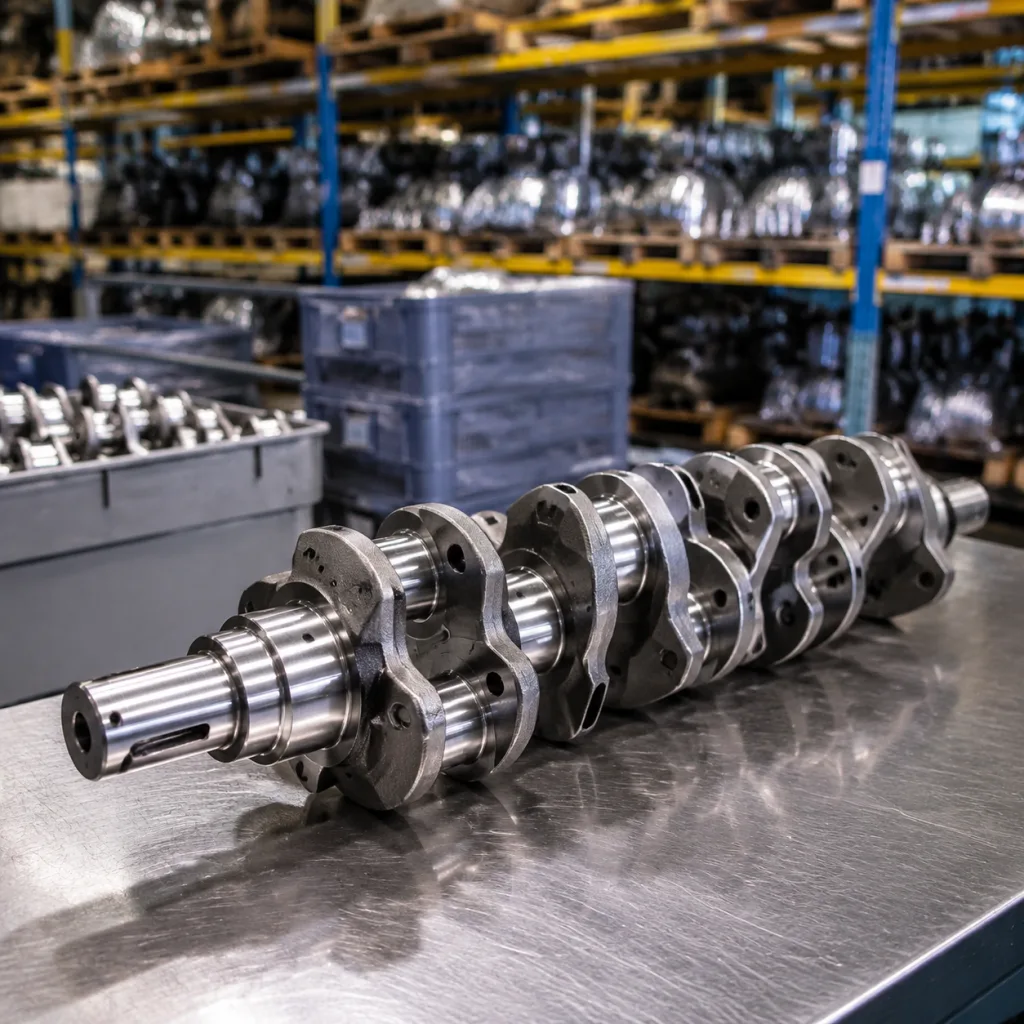
Buying a Citroen crankshaft for aftermarket or OEM programs is mainly a sourcing and verification task. The right supplier must match the drawing, hold stable material control, and support repeatable delivery across multiple part numbers and vehicle applications. For procurement teams, the key questions are not only fitment and price, but also whether the factory can prove metallurgy, machining accuracy, balance control, and export documentation. Driventus is an independent aftermarket manufacturer; brand names are referenced for fitment only. That matters because the commercial relationship should be based on technical evidence, not implied approval. This guide sets out what to check before sending an RFQ, how to compare stock and custom options, and which quality documents a serious crankshaft supplier should provide for Citroen programmes.
What buyers should expect from a Citroen crankshaft supplier
For procurement teams, the supplier test is simple: can the factory deliver a crankshaft that matches the application, the tolerance stack, and the commercial schedule without forcing repeated rework? For Citroen programmes, that means clear part identification, defined material grade, controlled machining, and full traceability back to heat and batch.
A credible source should be able to support both catalogue supply and drawing-based development. Review our catalog and engine components to see whether the supplier offers adjacent parts such as pistons, gaskets, and water pumps. A broader engine range is useful when you are consolidating vendors or bundling shipments.
The minimum commercial checks are:
MOQ by part family, not a generic blanket number
Lead time for stock, made-to-order, and first article runs
Export packaging, pallet count, and container loading plan
Document package: invoice, packing list, COO if required, and material certificate
If the supplier cannot answer these points in writing, it is not ready for a procurement-led RFQ.
Technical data to verify before you issue an RFQ
A crankshaft quote is only useful when the technical base is complete. Before requesting pricing, collect the engine code, OE reference if available, journal dimensions, stroke, main bearing count, thrust location, front and rear seal details, and any pulley or gear interface requirements. If the part is for a remanufacturing line, include the measured sample, wear pattern, and reject reason so the factory can judge whether the original geometry still applies.
Item
What to verify
Why it matters
Material
Forged steel, cast iron, or micro-alloyed steel
Affects fatigue life and machining response
Journal size
Main and rod diameters, fillet radius
Controls bearing fit and oil film stability
Balance
Static and dynamic balance limits
Reduces vibration and warranty returns
Surface finish
Journal roughness and hardening depth
Influences wear and seizure resistance
Traceability
Heat number and batch record
Needed for claim handling and audit work
</tr></thead><tbody> </tbody></table>For new development or variants, custom manufacturing is the correct path. It is also the right route when the customer needs a design tweak, such as a different counterweight profile or a revised fillet treatment.
Material, machining, and balance control
A crankshaft is not a commodity turned on a lathe. The useful comparison is between factories that only machine to print and factories that control the upstream metallurgy, heat treatment, and final balance as one process. For Citroen applications, that process control matters because a small error in journal concentricity or counterweight mass can create noise, vibration, or bearing distress after installation.
A production-ready supplier should explain:
Base material source and incoming inspection
Forging or casting route, including post-forming normalisation where used
CNC machining sequence for journals, oil holes, and keyways
Heat treatment method and hardness range
Final balancing method and acceptable residual imbalance
A practical sourcing rule is to ask for the control plan, not just the finished part drawing. If the factory can only quote a finished dimension without describing how it holds that dimension over a full batch, you do not yet have a stable supply base. For programme planning, that matters more than a one-time sample result.
Quality documents and standards that buyers should ask for
Procurement teams should treat documentation as part of the product, not an optional extra. At minimum, the factory should operate under quality system controls aligned with IATF 16949:2016 and ISO 9001:2015. For international shipments, REACH (EC) No 1907/2006 declarations may also be relevant if the programme includes chemical compliance review or downstream EU distribution.
A credible documentation set usually includes:
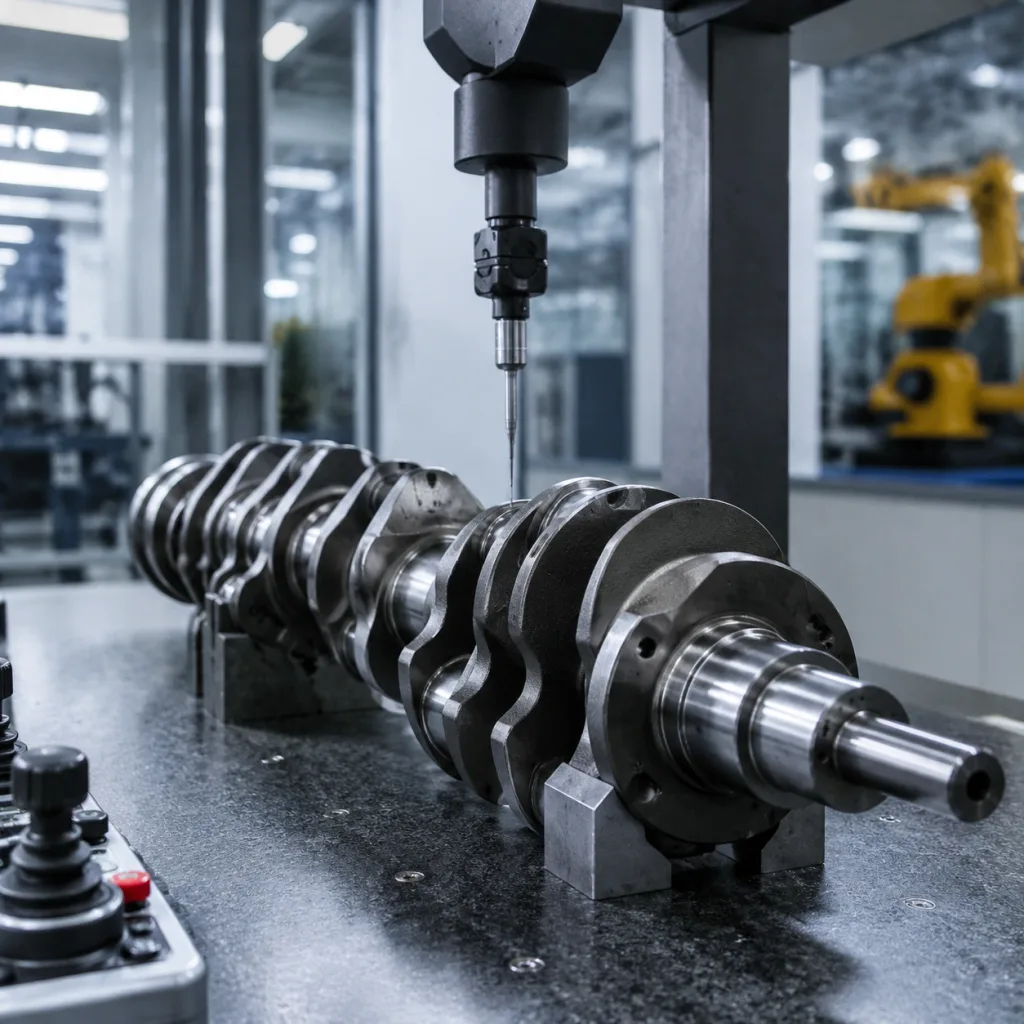
Inspection report with measured dimensions
Material certificate linked to heat number
Hardness report for the finished crankshaft
Balance record and final visual inspection result
Nonconformance process and containment method
If the supplier supports OEM or Tier-1 workflows, ask whether it can provide PPAP-style evidence, process flow, and control plan summaries. The exact submission level depends on your customer, but the principle is the same: the supplier should prove that the process is repeatable before volume release. This is also where audit readiness matters. If your team plans a factory visit, the questions should focus on traceability, calibration, gauge control, and incoming material segregation rather than only on output volume.
MOQ, lead time, and how to structure supply
For a Citroen crankshaft program, the commercial model should be selected before price negotiations begin. Stock items suit urgent replacement demand, but many buyer programmes need a hybrid approach: a baseline stock position for fast-moving references and a make-to-order agreement for lower-volume variants.
Supply model
Best for
Buyer benefit
Main risk
Stock purchase
Fast-moving service parts
Short lead time
Limited part coverage
Scheduled production
Stable reorder patterns
Better cost control
Requires demand visibility
Custom manufacturing
Variant-specific or drawing-based parts
Exact fitment control
Longer initial approval
</tr></thead><tbody> </tbody></table>When you compare quotes, ask for the ex-works lead time, first-order tooling or setup cost if any, and the monthly output capacity by reference. A supplier that can also support adjacent engine lines may reduce inbound freight and simplify vendor management. If your team is building a multi-part sourcing plan, keep the relationship tied to documented fitment and quality controls rather than informal cross-references. For quoting and programme review, use request a quote.
Frequently asked questions
A credible supplier can show traceability, stable machining control, balance data, and document-backed quality systems. IATF 16949:2016 and ISO 9001:2015 alignment are strong indicators, but the actual inspection records matter more than the certificate alone.
Yes, if it has separate processes for catalogue parts and drawing-based work. Stock parts need repeatable replenishment, while custom programmes need engineering review, sample approval, and a controlled change process.
Ask for the technical drawing, material certificate, hardness report, balance record, packaging spec, and lead time by quantity. If the programme is for EU supply, also confirm REACH (EC) No 1907/2006 documentation where relevant.
If you are building a Citroen crankshaft sourcing list, send the reference, annual volume, and target market for review. We can confirm fitment, supply options, and documentation via [request a quote](/contact.html).