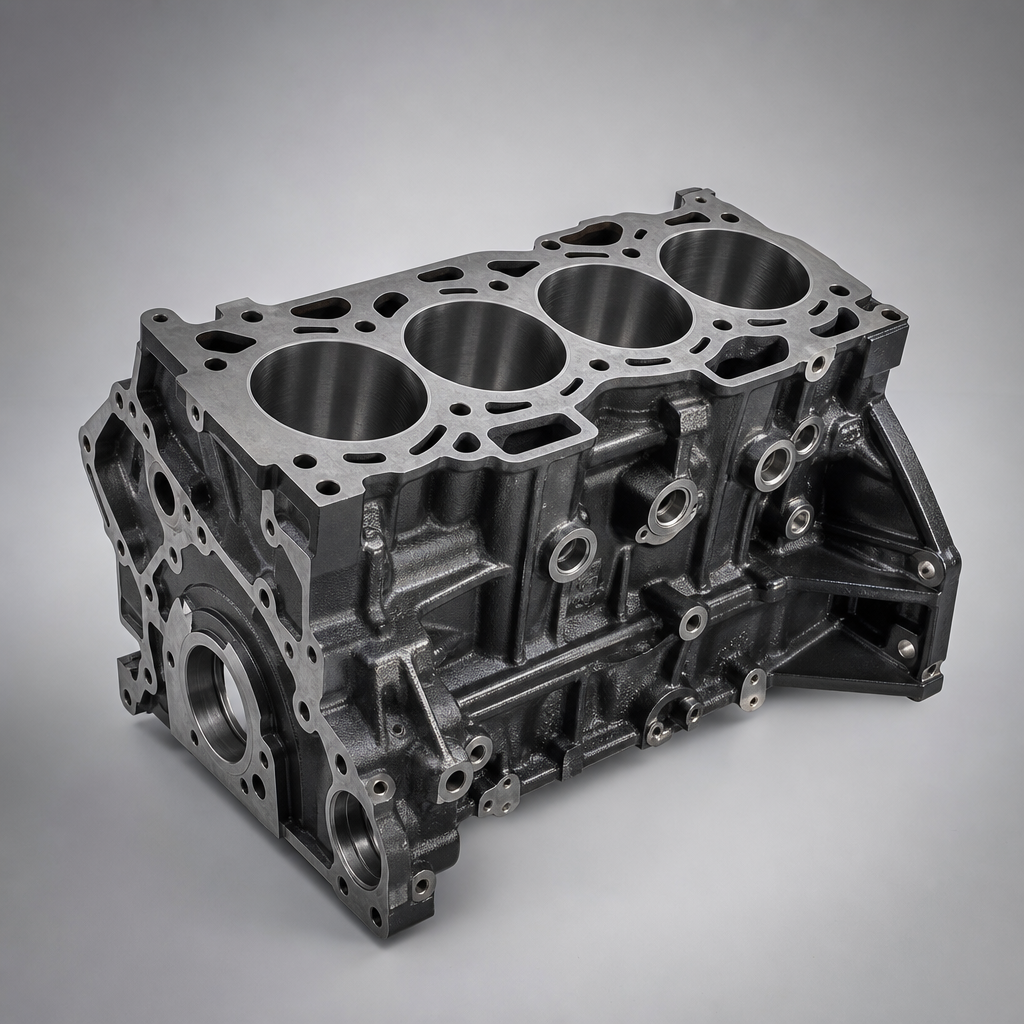
Camshaft Mini Wholesale: How Buyers Separate Reliable Supply from Costly Guesswork
Buying camshafts for Mini applications is less about finding a supplier with a long fitment list and more about proving that the part will install correctly, run quietly, and repeat from batch to batch. Procurement teams usually discover the real risk in the details: material grade, lobe profile control, heat treatment, packaging protection, traceability, and the supplier's discipline when a lot falls out of spec.
The commercial side matters just as much. MOQ, production lead time, PPAP support where needed, and a workable process for containing non-conforming lots all affect landed cost and claim exposure. In camshaft mini wholesale programmes, a cheap quote can become expensive quickly if interchange data is loose, inspection records are thin, or replenishment timing slips.
This article breaks the evaluation into practical buying lenses rather than a generic checklist. It covers the technical controls that affect interchangeability and service life, the commercial terms that shape stocking decisions, and the audit questions that reveal whether a factory's claims hold up on the shop floor. Buyers should push for quantified controls wherever possible: journal diameter tolerance in microns, lobe lift tolerance in millimetres, hardness range in HRC or HB, packaging protection for sea freight, and written lead-time commitments by order type. Driventus is an independent aftermarket manufacturer; brand names are referenced for fitment only.
Start Here: The Go/No-Go Questions Before You RFQ
In camshaft mini wholesale sourcing, the first decision is simple: can the supplier control the part and prove it, or are they mainly selling a fitment list?
Before issuing a serious RFQ, buyers should request:
- Base material specification, such as chilled cast iron, ductile iron, or forged/alloy steel depending on the application
- Heat treatment route and target hardness range for lobes and journals, for example lobe hardness often controlled around 52-60 HRC on hardened steel camshafts or equivalent validated hardness ranges on cast designs
- Journal diameter tolerance, lobe lift tolerance, runout limit, and surface finish data, such as journal diameter within +/-0.010 to +/-0.020 mm, lobe lift within +/-0.02 mm, total runout not exceeding 0.03-0.05 mm, and journal surface finish around Ra 0.2-0.8 um depending on design
- Valve timing profile control method during production and final inspection, including how opening/closing angle and lobe separation are checked against the master profile
- Batch traceability from raw material intake to the finished packing label, ideally linking heat number, machining lot, heat-treatment lot, final inspection record, and shipment record
- Corrosion protection and packaging method suitable for sea freight and warehouse storage, such as VCI bagging, rust-preventive oil, plastic end protection, individual boxes, and export master cartons
- Warranty terms and a defined non-conformance handling process, including response time, quarantine rules, and replacement or credit path
Fitment review also needs more discipline than many buyers expect. A large share of sourcing failures starts with incomplete interchange mapping, not obvious manufacturing defects. Ask the supplier to confirm OE reference mapping, engine code, production year range, trigger feature details where relevant, and mating valvetrain assumptions before approving the first order.
For distributors, mixed-SKU shipment support is another early filter. It is hard to build a Mini range if every slower-moving reference has to stand on its own MOQ. A common working model is 20-50 pieces per stocked SKU with mixed orders consolidated to 100-300 pieces total, while non-stock or newly tooled items may require 100-300 pieces per SKU to make production economical.
Where buyers are building a wider engine range, reviewing our catalog and related /products/engine-components.html coverage can show whether one supplier can consolidate camshafts with other engine components in the same container.
Where Camshaft Supply Usually Fails: The Technical Controls That Prevent Claims
Camshafts punish small process mistakes. A part can arrive looking clean and still create timing variation, accelerated follower wear, lubrication problems, or valvetrain noise if lobe geometry, hardness, or straightness drifts outside control limits.
Key technical checkpoints
A credible supplier should explain process control in measurable terms, not general language. The core checkpoints are:
- Lobe profile accuracy: controlled against a drawing or master profile, with inspection records retained by batch; on critical references, profile deviation is often held within 0.01-0.03 mm depending on the measured point
- Journal roundness and diameter: verified to maintain oil film stability and proper bearing fit; roundness is commonly controlled within a few microns and journal diameter within the tolerance band defined on the drawing
- Runout: checked between centres to reduce vibration, uneven wear, and installation issues; many buyers use a practical acceptance target of <=0.03-0.05 mm total indicated runout unless the drawing specifies tighter control
- Hardness consistency: monitored after heat treatment to avoid soft lobes or brittle working surfaces; the supplier should define the test location, sampling frequency, and acceptance range by part family
- Surface finish: controlled on contact areas to support lubrication during running-in and normal service; journals and thrust faces should have a specified Ra target rather than a visual-only acceptance standard
The deeper question is how those numbers are held. Buyers should ask whether every camshaft is checked for key dimensions or whether the factory relies on first-off plus interval sampling. A common control plan is 100% checking for runout and key timing features, with periodic sampling for full profile verification, hardness, and surface finish.
Process flow matters too. If the route is rough machining -> heat treatment -> finish grinding -> washing -> rust prevention -> final inspection -> packing, critical geometry is usually more stable than in a route that depends heavily on pre-heat-treatment machining allowances. That difference does not show up in a quotation sheet. It shows up later in repeatability.
If the buyer supplies its own drawings or modified timing requirements, the supplier should clearly separate standard aftermarket supply from custom manufacturing work. Tooling, validation scope, control plans, and approval documents can differ significantly between the two. For custom profiles, expect extra cost for masters, checking fixtures, trial runs, and approval samples, plus lead times that can extend from a normal 30-45 production days to 45-75 days depending on tooling readiness.
For quality governance, buyers should expect systems aligned with IATF 16949:2016 and ISO 9001:2015. These standards do not guarantee part performance by themselves. They do, however, tell you whether the supplier likely has discipline around document control, corrective action, and traceability. In camshaft mini wholesale purchasing, repeatability usually matters more than a one-time sample result.
Price Table or Risk Table? Compare Commercial Terms the Right Way
Commercial terms shape the real buying outcome. Mini references are often medium- or slower-moving, so the best supplier is not always the one with the lowest headline price. The right question is whether MOQ, lead time, packaging, and claims handling fit the way you actually stock and ship.
| Sourcing factor | What to ask | Why it matters |
|---|---|---|
| MOQ per SKU | Minimum pieces for standard stock items and for non-stock items | Determines stock commitment and SKU rationalisation |
| Mixed container policy | Whether multiple part numbers can ship in one order | Helps distributors manage range breadth without overbuying |
| Lead time | Ex-stock, production, and peak-season timing | Affects replenishment planning and safety stock |
| Packaging | VCI protection, end-cap protection, individual boxing, master carton strength | Reduces corrosion and transit damage |
| Labelling | Batch code, part number, country of origin, barcode format | Supports warehouse receiving and traceability |
| Claims process | Response time, evidence requirements, containment actions | Limits cost from field issues |