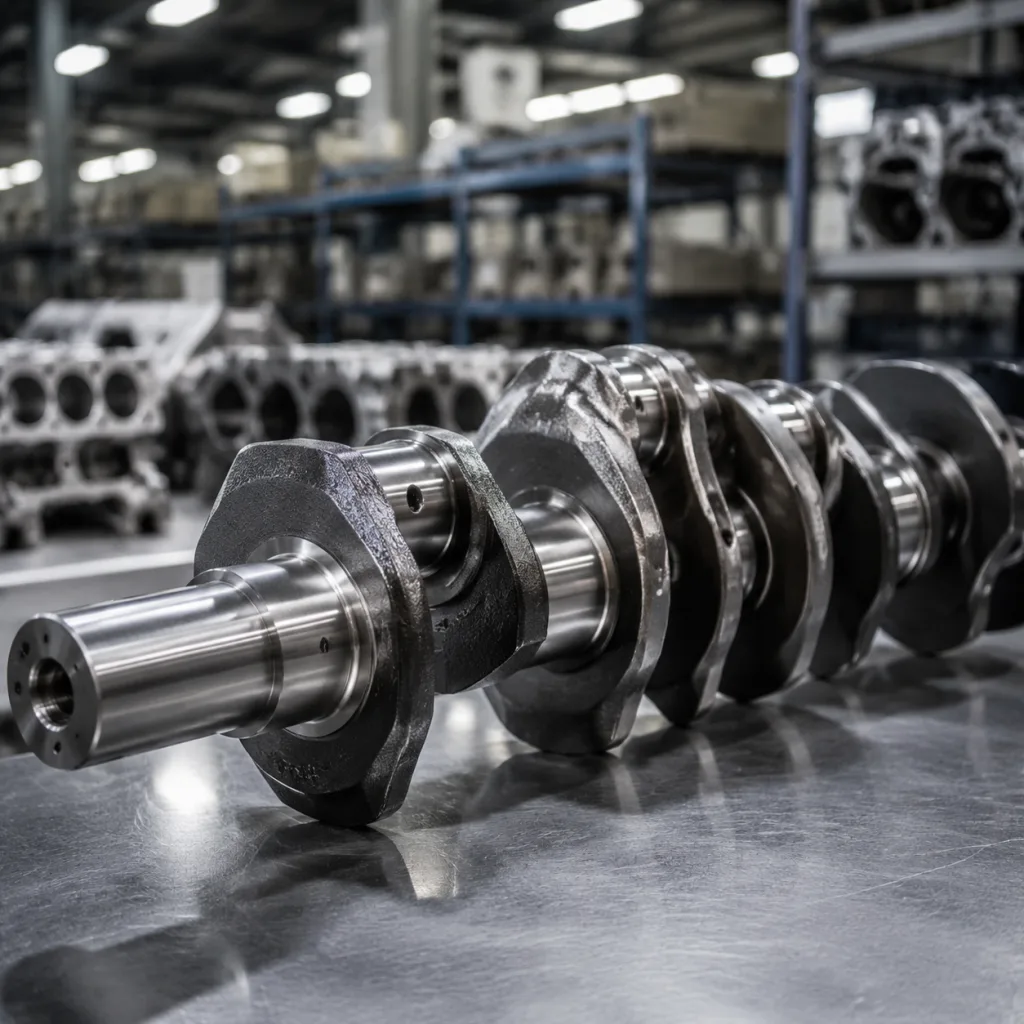
Crankshaft Audi Supplier Guide for B2B Buyers
Selecting a crankshaft Audi supplier is a sourcing, engineering, and validation exercise, not a simple catalogue purchase. Procurement teams should confirm the fitment basis, journal dimensions, material route, heat treatment, balance specification, corrosion protection, and export documentation before a crankshaft enters distribution, assembly, or repair-chain replenishment. Low unit price only matters when the part passes incoming inspection, installs with the specified bearing clearances, and repeats from lot to lot.
Driventus supports B2B crankshaft programmes with sample approval, drawing review, OE cross-reference checking, production planning, and documentation control for aftermarket distribution, OEM supply, and professional repair networks. Buyers can browse our catalog or the engine components category to review adjacent parts, and can review the quality system for our documentation pack and process controls. Driventus is an independent aftermarket manufacturer; brand names are referenced only to identify fitment and application context.
What buyers should expect from an Audi crankshaft source
A credible crankshaft Audi supplier should do more than issue a price and confirm that a part is "available." For Audi fitments, buyers usually need a controlled comparison between the requested reference, engine code, customer drawing or sample, and the supplier's production file. The supplier should be able to explain the manufacturing route, which characteristics are CTQ, how balance is verified, and how the part is protected for sea freight and warehouse storage.
Driventus supports programmes that need repeatable supply rather than isolated replacement purchases. That can include production planning for regional distributors, documented sampling for repair chains, scheduled replenishment for high-demand SKUs, and private-label packing when required through custom manufacturing. The aim is to create a supply file that procurement, quality, logistics, and aftersales teams can all use without rebuilding the specification after every order.
A practical supplier review should cover:
- Material route: forged steel, cast steel, or nodular iron, matched to engine load, application class, and buyer specification
- Journal geometry: main journal diameter, rod journal diameter, thrust width, oil-hole position, fillet radius, taper, ovality, roundness, and runout limits
- Balance control: static or dynamic balancing method, correction location, residual imbalance target, and records for the approved part number
- Surface condition: journal grind finish, hardness range, thrust face finish, oil passage cleanliness, and anti-corrosion protection
- Traceability: heat number, batch or lot code, inspection record retention, packaging label format, and shipment-level identification
- Fitment basis: customer OE cross-reference, engine code, sample part, drawing revision, or agreed aftermarket interchange reference
The important point is to lock these items before purchase. If they are left vague, the risk moves downstream into bearing clearance problems, crankshaft noise, oil film instability, vibration complaints, warranty disputes, or rejected incoming inspection. A supplier that can define the technical basis early is easier to audit, easier to reorder from, and safer for long-term B2B programmes.
Technical checks that matter before purchase
The safest way to source an Audi crankshaft is to validate the part against the customer drawing, approved sample, and engine build requirement rather than by appearance alone. Crankshafts can look similar while differing in journal width, thrust face detail, oil-hole chamfering, counterweight profile, reluctor or timing feature, pilot bore, keyway, or rear flange geometry. Those differences can affect bearing life, sealing, vibration, sensor timing, or compatibility with the customer's assembly process.
Small deviations are especially important on rotating components. A fillet radius that is too sharp can reduce fatigue strength. A thrust surface that is too rough can accelerate wear. Journal taper or ovality can disturb hydrodynamic oil-film formation. Excessive runout can create vibration or premature bearing load. For buyers comparing multiple suppliers, the question is not only whether the crankshaft matches the reference, but whether the supplier can prove the match with measured evidence from calibrated gauges.
| Check | Why it matters | Evidence to request |
|---|---|---|
| Main and rod journal diameter | Controls bearing clearance and oil film thickness | Dimensional report with actual measured values by journal |
| Taper, ovality, and roundness | Prevents uneven bearing contact and oil pressure variation | Inspection record by journal position, with tolerance basis stated |
| Runout and concentricity | Supports vibration control and long-term durability | Runout report from the approved sample or production lot |
| Fillet radius and corner finish | Protects fatigue strength at journal transitions | Drawing match, radius gauge notes, and visual inspection record |
| Thrust face width and finish | Affects axial movement and thrust bearing life | Dimensional data and surface finish result |
| Oil-hole position and chamfer | Supports lubrication and reduces stress concentration | Visual inspection notes and machining confirmation |
| Balance condition | Influences NVH, bearing load, and smooth operation | Balance report showing correction method and acceptance target |
| Material and heat treatment | Determines strength, wear resistance, and fatigue performance | Mill certificate, hardness data, and heat-treatment record |
| Cleaning and rust prevention | Reduces assembly contamination and transit corrosion | Cleaning confirmation, oil-passage protection, and packing photos |