camshaft · 2026-06-16

Camshaft Jeep Supplier: sourcing guide for B2B buyers

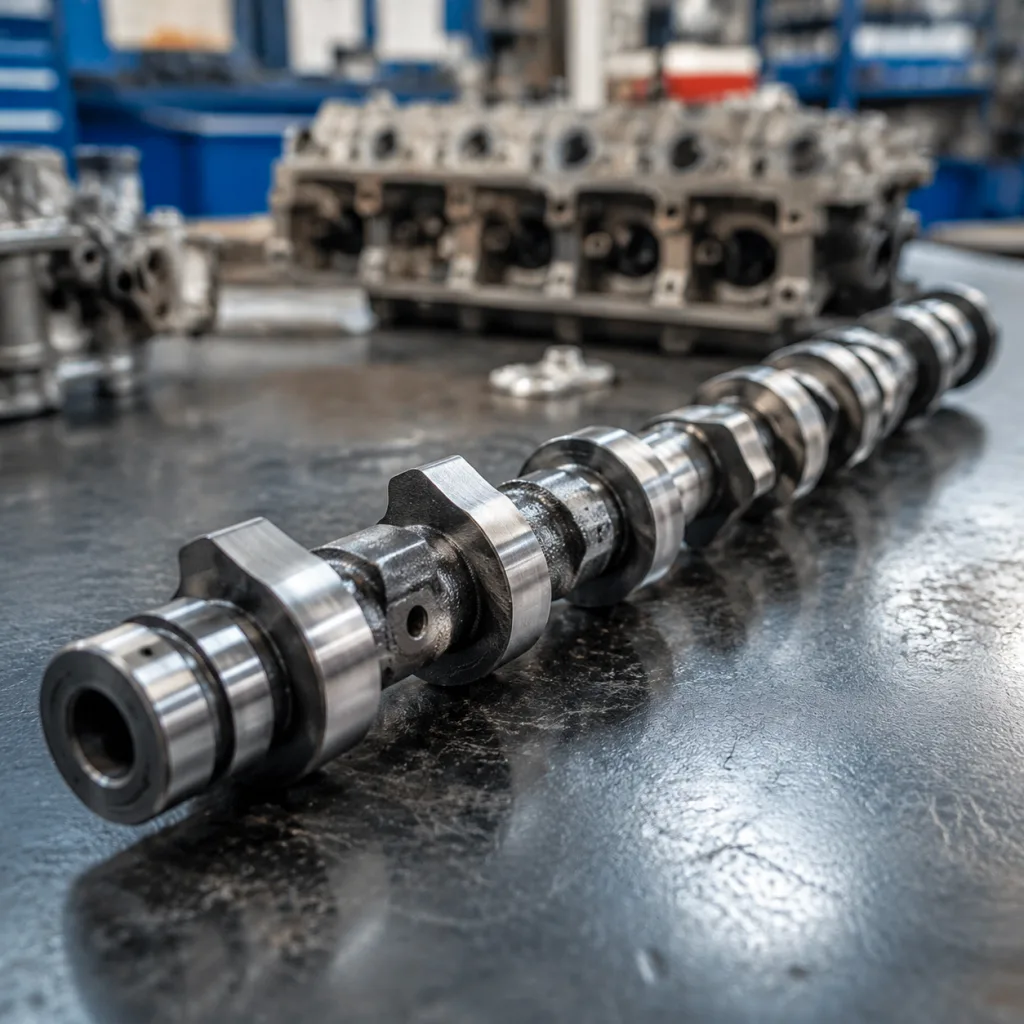
If you are sourcing a camshaft Jeep supplier for aftermarket distribution, OEM supply, or repair-chain demand, the key questions are technical and commercial, not promotional. Procurement teams need confidence in dimensional control, material traceability, production capacity, and repeatable lead times. A camshaft must match the engine family, valve timing specification, surface hardness, and installation envelope; otherwise, even a visually similar part can fail on fitment or durability. The right supplier also needs documented quality control, stable process capability, and clear handling of OE cross-references. Driventus is an independent aftermarket manufacturer, and brand names are referenced for fitment only. We supply camshafts for engine programmes built to `IATF 16949:2016` and `ISO 9001:2015` processes, with export documentation for the `EU`, `UK`, `US`, `Canada`, `Australia`, and `Brazil`. This article explains what to verify before placing a purchase order, how to compare suppliers, and which details reduce risk in repeat-buy programmes.

How to separate a usable camshaft supplier from a risky one

For Jeep programme sourcing, the first pass should confirm engine code, valve count, cam profile, journal dimensions, OE cross-reference, and the exact installation envelope. A camshaft that appears similar can still fail on lobe height, base-circle diameter, thrust-face width, sensor-reluctor position, or keyway indexing, so visual inspection alone is not enough.

Minimum buyer checklist

  • Engine family and displacement, such as `2.0L`, `3.6L`, or `4.0L`
  • Valve count and bank position, where applicable
  • OE reference when available, such as `OE 06A107065`
  • Material type: cast iron, chilled cast, or billet steel
  • Surface treatment and hardness target, for example `55–62 HRC` on lobe surfaces where specified
  • Dimensional tolerance targets for journals, runout, and thrust faces
  • Packaging standard, barcode format, and label requirements
  • Annual usage, forecast, target MOQ, and launch or replenishment schedule

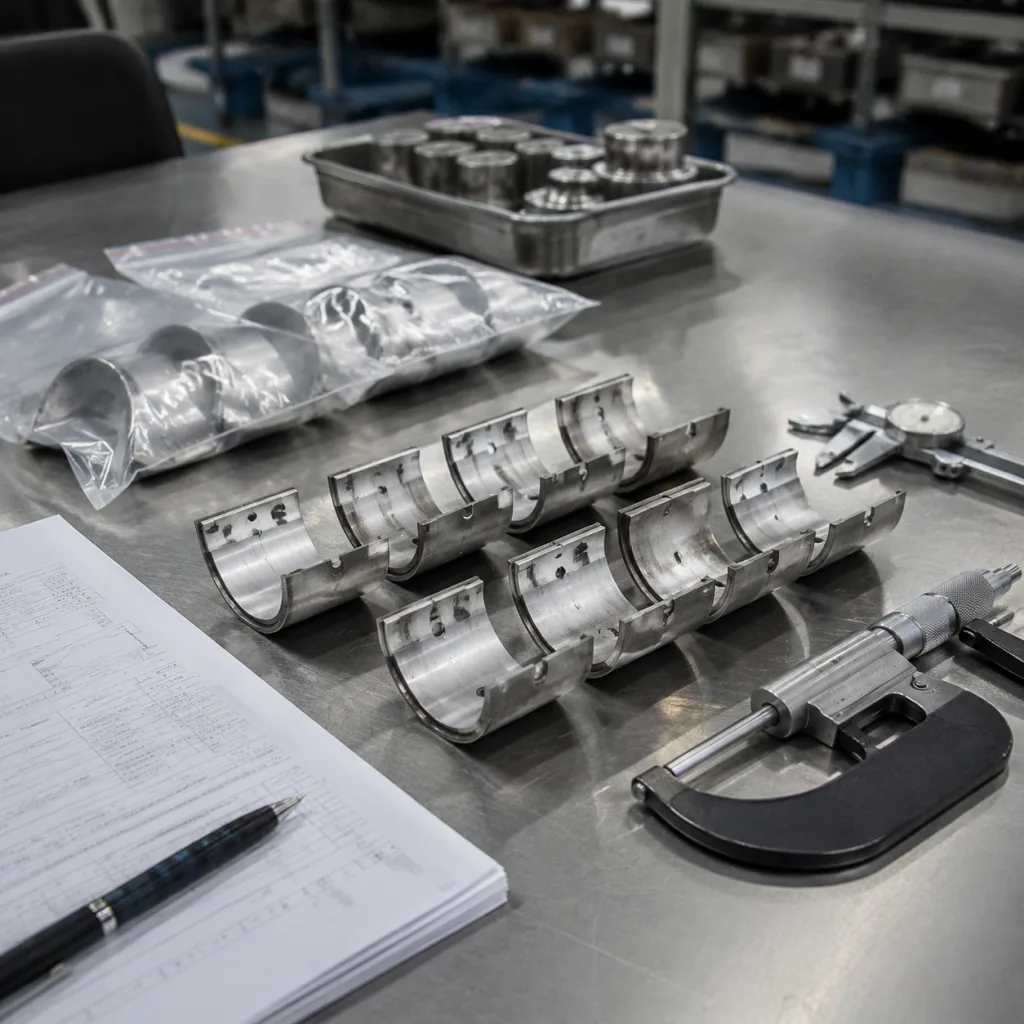
For approval, ask for a 2D drawing with critical-to-quality dimensions, a first article sample, and an inspection report that includes journal diameter, lobe lift, runout, and overall length. Typical buyer tolerances for a production camshaft programme are often held around `±0.01 mm` to `±0.03 mm` on critical journals, with runout commonly controlled to `≤0.03 mm` or a programme-specific limit stated on the drawing; the exact numbers should come from the application spec, not a generic catalogue claim. If the application is a private-label or catalogue line, request sample approval parts and locked master data before committing to replenishment. Driventus can support `our catalog` and programme-level sourcing through `custom manufacturing` when fitment coverage needs to be expanded.

What the spec sheet needs to say, not imply

Procurement decisions usually depend on a short list of commercial and technical variables. The table below gives buyers and audit teams a practical way to compare suppliers and confirm that key requirements are documented rather than assumed.

</tr></thead><tbody> </tbody></table>For a stable supply chain, buyers should also confirm whether the supplier can hold repeat samples against the master drawing and whether inspection equipment is calibrated under a documented `quality system`. That matters as much as unit price when the same part number must be replenished across multiple order cycles. As a commercial benchmark, many B2B buyers start comparing landed cost only after confirming that the supplier can hold an agreed annual tolerance band, such as `±5%` to `±10%` on critical supply variables like lead time and fill rate, and can maintain revision control on the part number across reorders.

What the spec sheet needs to say, not imply

Where lead times slip, and how to spot it early

Lead time is often the deciding factor for distributors and repair-chain networks. A supplier should be able to state sample lead time, standard production lead time, and the conditions that extend either one. Ask whether the quoted lead time includes raw material purchase, heat treatment, rough machining, finish grinding, final inspection, and packing, because those steps can change the delivery promise materially.

A practical commercial structure for a camshaft programme is often a sample run of `7–15` working days after drawing confirmation, a first production run of roughly `30–45` days depending on material availability and heat-treatment queue, and a reorder lead time of `25–35` days once tooling and process parameters are locked. MOQ is usually tied to process setup cost and packaging format; for aftermarket distribution, buyers often see `50–100 pcs` per SKU for a standard catalogue part, while custom profiles or low-volume OE-equivalent programmes may start closer to `200–500 pcs` per part number to cover setup, qualification, and batch control.

Questions to ask before approval

  • What is the standard MOQ per part number, and does it change by material?
  • What is the sample lead time, and does it include shipping to the approval site?
  • Can the factory support mixed-pallet export packing and carton-level barcode labels?
  • Which inspection stages are in-process, and which are final?
  • Are PPAP-style documents, control plans, or sample reports available on request?
  • What happens if the material grade, heat code, or subcontract process changes between batches?
  • Is the quoted price fixed for a rolling forecast, or does it change with volume bands?

A credible supplier should also support factory review. For a camshaft programme, audit focus should include heat-treatment controls, grinding stability, process capability for critical dimensions, calibration status, and segregation of finished goods from WIP. Buyers should ask for actual process evidence such as `Cp/Cpk` for journal diameter or runout, with a target of `≥1.33` for critical dimensions where the programme requires capability data. These controls help reduce the risk of lot-to-lot variation after the first shipment and make it easier to negotiate price tiers based on real process performance rather than promised capacity.

What validation evidence actually protects a launch

Camshaft buyers should ask for evidence rather than generic claims. Published standards are relevant where surface durability, emissions fitment, or quality management are involved. Common references include `IATF 16949:2016`, `ISO 9001:2015`, `REACH (EC) No 1907/2006` for regulated substances, and where applicable `ECE R-83` or `SAE J2527` for programme-level validation contexts.

Useful evidence pack

  • Dimensional inspection report with actual readings and tolerance limits
  • Material certificate by heat or lot, including chemistry if requested
  • Surface hardness result, with method, location, and sample count
  • Runout and concentricity checks with datum definition
  • Profile or lobe-lift verification where the application requires it
  • Packaging and corrosion-prevention spec, including salt-spray or storage target when required
  • Traceability record tied to batch number and production date

For buyers managing multiple regions, consistent evidence matters more than a single pass/fail result. That is especially true when the same part number is sold into different channel requirements, from distributor shelf stock to workshop replenishment. A strong evidence pack also makes internal approval faster when a programme expands into a new market. If the buyer needs a launch gate, a sensible acceptance rule is to require zero critical defects in the pilot lot, full dimensional conformity on all CTQ items, and documented correction of any minor nonconformance before release to regular production.

Why Driventus fits repeat-buy and private-label programmes

Driventus operates as a vertically integrated manufacturer in Taizhou, Zhejiang, supplying engine and powertrain parts to more than 60 countries. For camshaft programmes, that structure helps buyers reduce handoffs between casting, machining, heat treatment, and inspection, which in turn improves control over lead time and repeatability.

What a procurement team can expect

  • Clear OE cross-reference handling without brand endorsement
  • Batch traceability for export control and warranty review
  • Programme support for private label or catalogue expansion
  • Controlled documentation for sample approval and reorders
  • Responsive communication for forecast changes and rolling replenishment
  • Price breaks tied to annual volume, forecast stability, and packing standard

If you are consolidating suppliers, compare not only price but also audit readiness, dimensional consistency, and the ability to support long-term supply without frequent tool or process changes. A practical sourcing model is to negotiate a pilot MOQ, then step into a forecast-based price ladder once fill rate, defect rate, and lead-time adherence are proven on the first two or three purchase cycles. Start with `our catalog`, review the `quality system`, and use `request a quote` when you have a target application, volume, and OE reference.

Frequently asked questions

Yes, when the fitment data is clear and the application is validated. We use OE references for identification and fitment only, not endorsement.

Part number, engine code, OE reference if available, annual volume, destination market, packaging requirements, target lead time, and any critical dimensions are usually enough to begin.

Yes. Through our OEM service route, we can support custom manufacturing, packaging, and programme-level documentation when the project scope is defined.

If you are sourcing a camshaft Jeep supplier for repeat orders or a new catalogue programme, send your application details and volume target through /contact.html.

Request a Quote
Item What to confirm Why it matters
MaterialCast iron / chilled cast / steel, with heat code and supplier certificateAffects wear resistance, machinability, and cost
HardnessSurface and core targets, plus test method and sample countInfluences lobe life and break-in behaviour
RunoutMeasured at defined journals and stated datum pointsControls valvetrain stability and noise
Lobe profileLift, duration, base circle, and lobe separationAffects timing, idle quality, and performance
Dimensional toleranceJournal dia., thrust width, keying, and overall lengthEnsures correct fit and assembly
TraceabilityHeat, batch, shift, and inspection recordsSupports warranty control and recalls
PackagingAnti-rust treatment, VCI bag, tray count, carton specReduces transit damage and corrosion