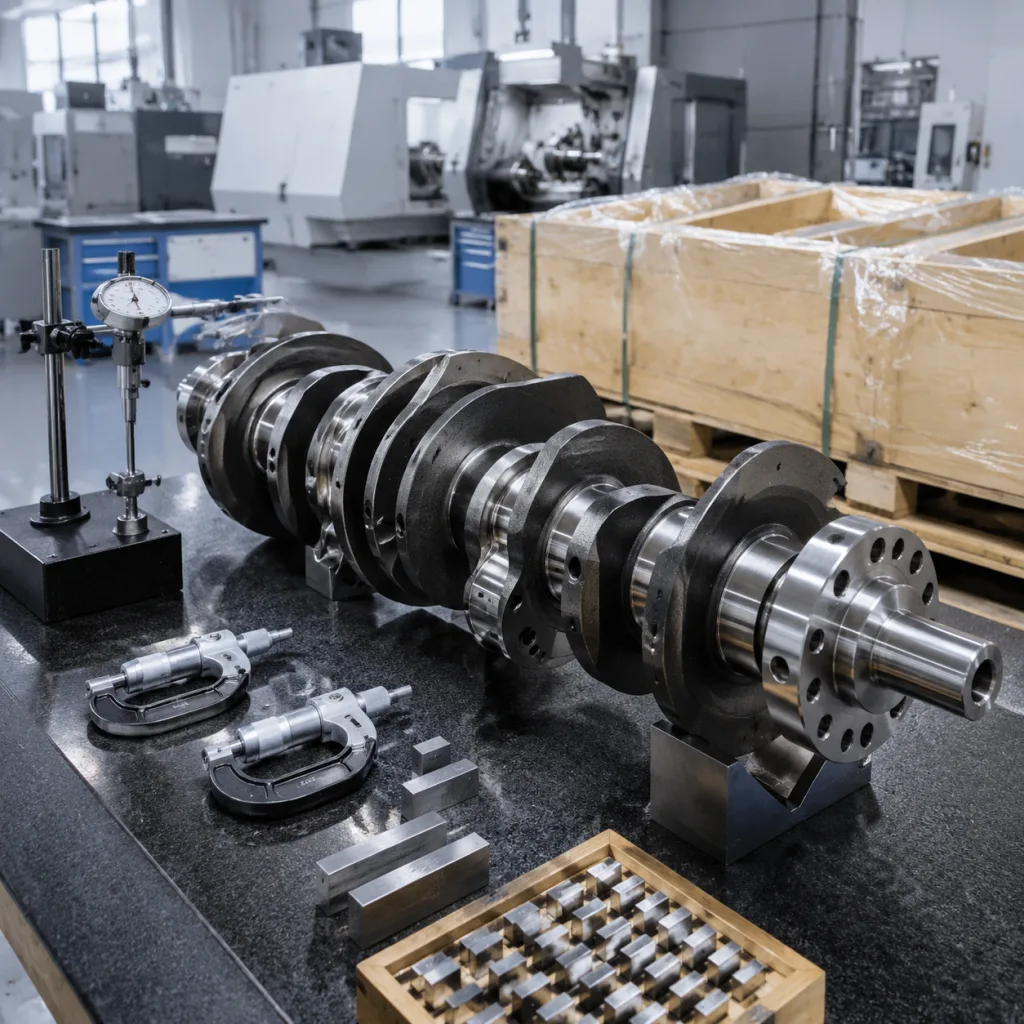
connecting rod · 2026-06-06

Connecting Rod Opel Manufacturer China: Sourcing Guide

When buyers source engine hard parts, supplier choice is rarely about headline price alone. In most cases, the decision comes down to process capability, drawing control, lot traceability and how reliably the supplier handles day-to-day execution. For Opel-fitment connecting rods from China, the real questions are practical: forged steel or powder-metal route, cracked-cap or conventional split design, steel grade, heat-treatment window, bore geometry capability, weight matching, packing standard, MOQ and response time for PPAP-style or audit requests. Buyers also need confidence that the supplier can manage engine-code-level aftermarket fitment while supporting stable repeat production.

When searching for a connecting rod Opel manufacturer China, procurement teams are usually comparing several sources. The meaningful differences tend to appear in the technical details: whether the supplier works to engine-code-level fitment instead of broad vehicle naming, whether critical bores and centre distance stay controlled from lot to lot, whether the process flow is documented, and whether the commercial team can answer dimensional and metallurgical questions clearly. A low unit price offers little value if the rods arrive with poor traceability, uncontrolled weight spread, cap mismatch risk or incomplete application confirmation.

Driventus manufactures engine and powertrain components for export programmes across 60+ countries, with production controls aligned to IATF 16949:2016 and ISO 9001:2015. This guide explains what procurement teams should verify when assessing a source for Opel-fitment connecting rods, including manufacturing route, inspection points, documentation package and supply planning. It is intended to help importers, distributors, wholesalers and OEM-related buyers build a practical supplier checklist before quotation, sampling and serial ordering. Driventus is an independent aftermarket manufacturer; brand names are referenced for fitment only.

What procurement teams should check first

A connecting rod is a high-cycle fatigue component that works under alternating tensile and compressive loads, so sourcing should start with technical risk, not catalogue breadth. For Opel-fitment programmes, buyers usually review four areas first:

  • Application coverage: engine code, displacement, piston pin diameter, crankpin size, rod style and OE cross reference must match the intended programme
  • Material and process: forged steel grade or powder-metal route, heat-treatment method, shot peening, bushing specification and cap alignment control
  • Dimensional capability: centre-to-centre length, big-end housing bore, small-end bore, side-face width, bend/twist and weight variation limits
  • Commercial readiness: MOQ, sample timing, serial lead time, packaging standard, export documents and after-sales response

These checks matter because Opel-fitment connecting rods are not interchangeable by model name alone. A supplier may describe a part as “Opel 1.6” or “Opel 2.0,” but buyers should push for exact confirmation: engine code, OE cross reference, drawing revision status, bolt specification and any known supersessions. Differences of only a few tenths of a millimetre in centre distance, housing bore, pin bush finish size or side width can affect bearing crush, piston pin fit, deck height or oil clearance. In hard-part sourcing, “close” is not good enough.

For buyers assessing a connecting rod Opel manufacturer China source, the fastest first-step review usually includes:

1. Part identification Confirm OE number, aftermarket reference, engine code, vehicle application range, rod length, pin size and crank journal match. 2. Technical construction Ask whether the rod is hot-forged steel, powder-forged, conventional split-cap or fracture-split, and whether bolts, nuts and bushings are included. 3. Inspection capability Verify which characteristics are 100% checked, which are SPC-controlled by sampling, and what gauges or fixtures are used. 4. Supply status Clarify whether the item is a standard serial-production part, a made-to-order reference, or a custom development requiring tooling or fixture preparation. 5. Documentation readiness Check whether the supplier can issue dimensional reports, hardness data, batch traceability and compliance statements without delay.

Where a supplier offers multiple engine hard parts, it is useful to review the wider range in our catalog and related /products/engine-components.html pages to confirm programme depth. A broad range does not prove process control by itself, but it can show whether the supplier supports complete engine-component programmes rather than one-off trading orders.

For aftermarket distribution, buyers should also ask whether the supplier controls supersession mapping and internal cross-reference records. If a buyer provides a sample or drawing tied to an OE reference such as OE 06A107065, the supplier should confirm fitment through drawing review and measurement, not informal naming alone. This matters particularly where similar engine families share commercial descriptions but use different rod geometry, cracked-cap structure or piston-pin configuration.

An early warning sign is the way a supplier handles follow-up questions. Strong suppliers usually answer with numbers, tolerances, process steps and clear application boundaries. Weak suppliers tend to respond with a generic “can supply.” In practice, that difference tells buyers a lot about whether the source is suitable for long-term Opel connecting rod procurement.

Manufacturing route and control points for connecting rods

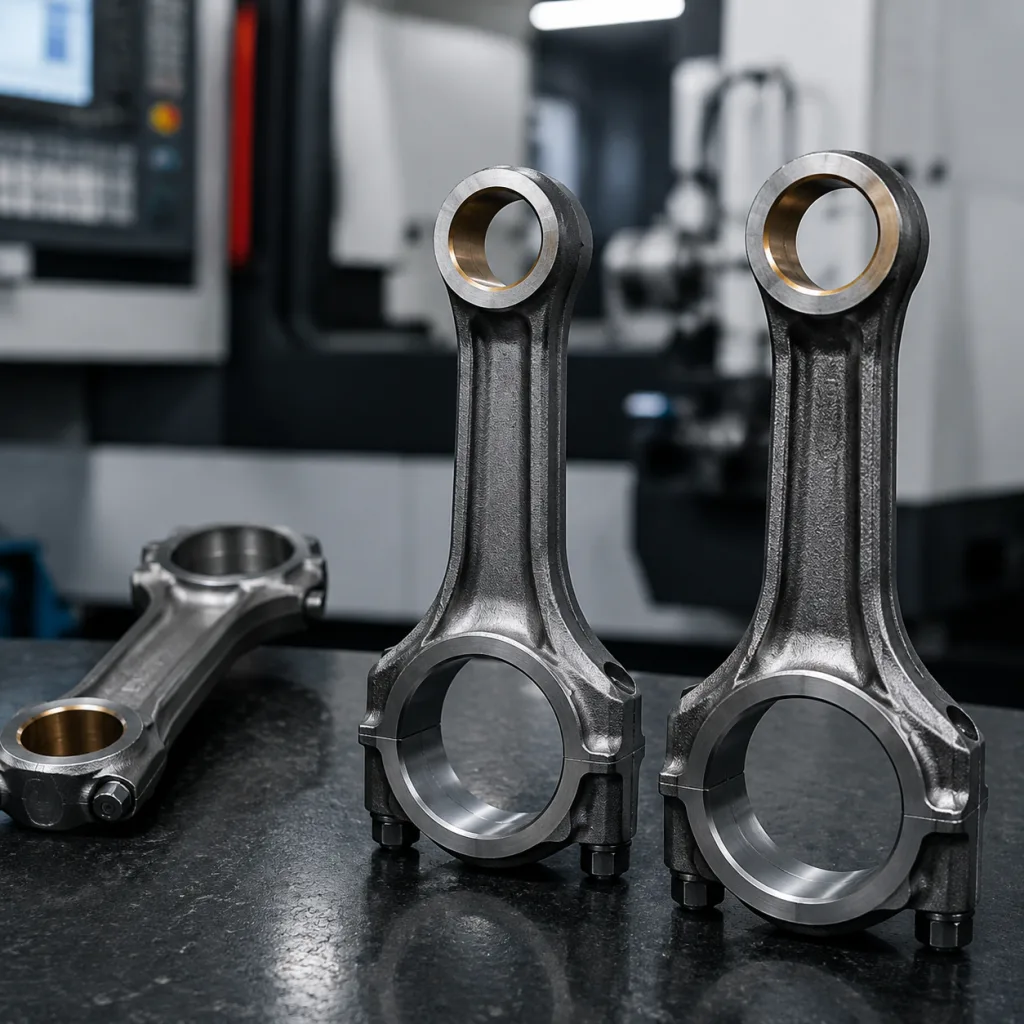
Most passenger-vehicle connecting rods in this segment are produced from hot-forged steel blanks, followed by heat treatment, machining, surface strengthening and final weight matching. Depending on the engine family, some applications may use powder-metal fracture-split rods instead of conventional forged-and-machined rods. A credible supplier should be able to explain the exact route used for the quoted part and the inspection plan that supports it.

For buyers evaluating a connecting rod Opel manufacturer China supplier, this matters because the process route directly affects fatigue strength, bore stability, fitment accuracy and field reliability. Two suppliers may quote the same nominal part number, yet the one with controlled forging flow, stable heat treatment and repeatable bore finishing will usually deliver lower lot-to-lot variation.

Typical production flow

1. Steel billet cutting and forge blank production 2. Trimming, normalising or quench-and-temper heat treatment depending on design route 3. Crack splitting or conventional cap sawing/machining depending on rod construction 4. Rough machining of parting faces, bolt seats, side faces and reference datums 5. Finish machining of big-end and small-end features 6. Bushing press-fit and finish honing where specified 7. Shot peening, cleaning and corrosion protection 8. 100% critical checks, batch marking, weight grading, packing and palletisation

Each stage should have a defined control method. Forging quality influences grain flow orientation and blank integrity. Heat treatment sets the balance of strength, hardness and machinability. In supplier discussions, the factory should be able to state whether the rod uses quenched-and-tempered medium-carbon alloy steel, micro-alloy forged steel or powder-metal material, and what hardness range is accepted after heat treatment. For many forged steel connecting rods, buyers typically expect a controlled hardness band rather than a single nominal figure, for example within a defined HRC or HB window agreed to the drawing or control plan.

Key control points usually include:

  • Big-end housing bore size, roundness and cylindricity
  • Centre-to-centre length tolerance
  • Bend and twist relative to datum faces
  • Parting-face integrity or fracture-face matching
  • Bolt-seat geometry and bolt-hole positional accuracy
  • Small-end bore size and surface finish after bushing/honing
  • Set weight and total weight tolerance within one batch
  • Hardness range after heat treatment

In practice, buyers should ask not only *what* is controlled, but *how*. Useful follow-up questions include:

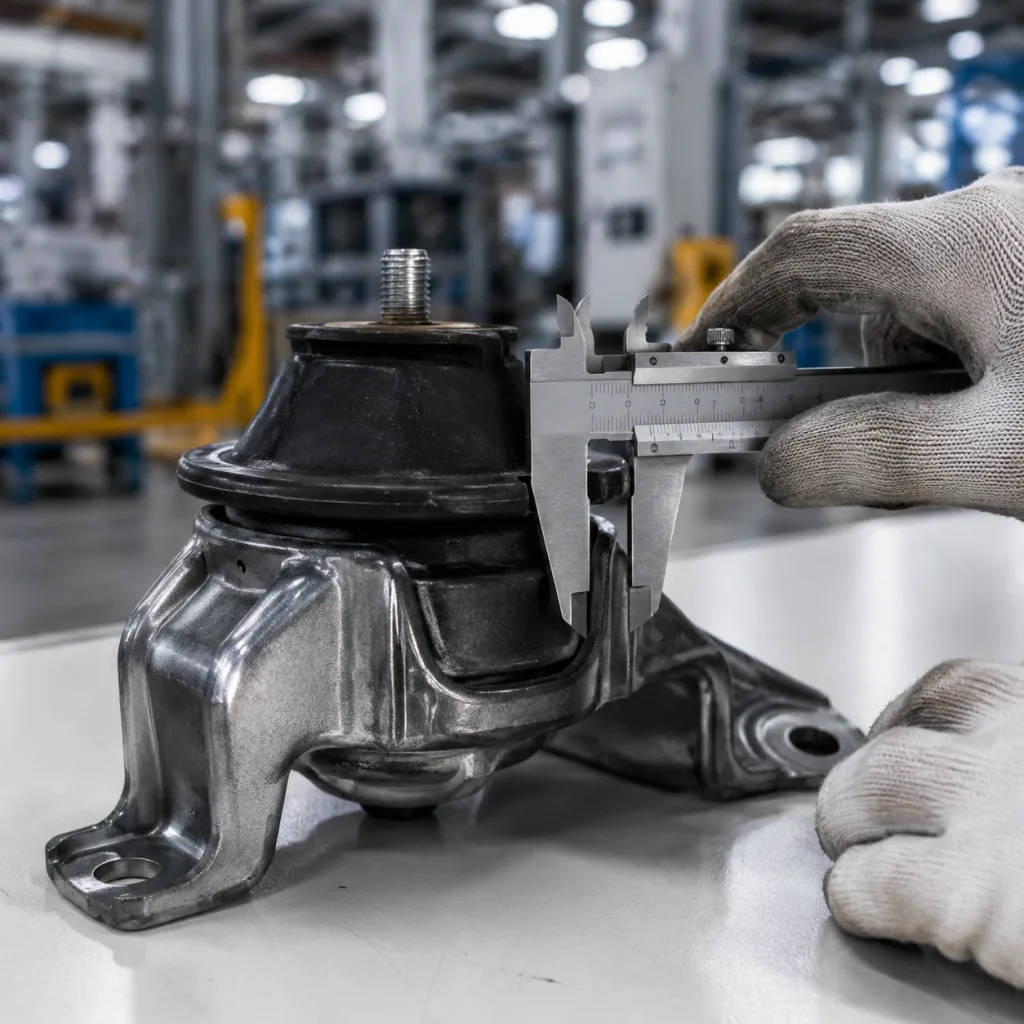
  • Are big-end bores checked 100% with air gauges, bore gauges or dedicated fixtures, or only by sampling?
  • Is centre distance checked on a dedicated fixture, height master or CMM?
  • How are bend and twist measured, and is the result recorded by lot?
  • What hardness range is accepted after heat treatment, and at what sampling frequency?
  • How are rod and cap matched and protected from mix-up during machining and packing?
  • What batch code links the finished part back to raw material, heat treatment and final inspection?

For fracture-split designs, cap mating integrity is especially important. The supplier should explain how the cracked faces are preserved, how caps remain paired with the original rod body through all downstream processes, and how bolt-seat geometry is protected during machining, washing and packing. For conventional split-cap rods, the main concerns are cap alignment, parting-face flatness and bore geometry after bolt tightening.

Bushing control is another common checkpoint. If the Opel-fitment rod uses a small-end bushing, buyers should confirm bushing material, interference-fit range, lubrication-hole orientation where relevant, finish bore tolerance and whether honing takes place after insertion. One typical issue is press-fit distortion changing the finished pin bore, which is why post-installation honing and final size verification are important. Pin-bore finish is often specified tightly because excessive clearance or tightness directly affects piston-pin assembly and service life.

For buyers planning private-label or drawing-based supply, custom manufacturing support matters. This should include sample development, dimensional submission, packaging customisation and controlled engineering changes. In these programmes, the supplier should also define how drawing revisions are controlled, how first samples are identified, and how process changes such as forging source, heat-treatment subcontractor or gauge replacement are communicated before serial shipment.

Overall, the strongest suppliers are the ones that can connect each process step to a measurable control point and a clear acceptance criterion. That is the practical difference between a factory that manufactures connecting rods under process discipline and a source that mainly coordinates outside production.

Supplier evaluation table: what to request before placing an order

Before placing an order, buyers should ask for objective evidence rather than relying on quotation claims. A structured checklist helps procurement, quality and engineering teams assess the same supplier against the same criteria.

</tr></thead><tbody> </tbody></table>The table is a starting point, but buyers should usually go one level deeper before approving a supplier. For example:

  • Under certification, ask whether the certificate scope covers the actual manufacturing site and process, not only a trading office or an unrelated production line.
  • Under material control, ask whether the supplier verifies incoming steel by certificate only or also by internal PMI, hardness or chemistry confirmation, depending on the project requirement.
  • Under dimensional records, ask which characteristics are classed as special or critical and whether the report reflects routine production, first samples or only hand-selected pieces.
  • Under traceability, confirm whether the batch code links back to raw material heat/lot, forging batch, heat-treatment batch, machining route and final inspection status.
  • Under validation, ask whether fatigue, grain-flow or metallographic data is standard product-validation evidence or available only for special development projects.

A supplier audit should also confirm gauge calibration, MSA discipline where applicable, operator training records, nonconforming-material control and document revision control. These are standard expectations under a mature quality system. Buyers should check whether rejected product is physically segregated, how rework is approved, whether reworked parts are re-inspected, and how customer complaints are logged and closed.

For a connecting rod Opel manufacturer China sourcing programme, it is often useful to request a pre-order pack containing:

  • product photos from actual production
  • sample packaging images
  • current inspection template
  • batch-marking example
  • certificate copies
  • standard lead-time confirmation
  • contact point for technical questions

This pack helps internal stakeholders align before the first order. Procurement can review terms, quality can review controls, engineering can assess dimensional logic, and warehouse teams can review labels and packing standards.

Another practical step is to compare the requested documents with the overall quality of the supplier’s responses. A reliable factory usually sends organised, version-controlled files and answers questions in a consistent technical format. A weak supplier may send incomplete scans, inconsistent dimensions or generic statements with no measured data. Those signs often point to later difficulties in claims handling, ECN control and repeat supply.

MOQ, lead time and programme planning

For procurement teams, commercial feasibility often depends on whether a supplier can support both trial quantities and repeat production without losing dimensional consistency from lot to lot.

Typical considerations include:

  • MOQ by part number: standard aftermarket items may be offered per reference or as part of a mixed shipment, while low-turn references may require a grouped production quantity
  • Tooling or fixture cost: relevant for new rod designs, revised cap geometry, new gauges, custom broaching/reaming fixtures or customer-specific weight grading
  • Sample timing: buyers should distinguish between stock samples, first-off samples and fully validated production-intent samples
  • Repeatability across batches: one acceptable pilot lot is not enough if subsequent lots show wider bore or weight spread
  • Container utilisation: mixed engine-component loads can lower freight cost per unit, but packaging density and carton weight limits must be planned

When evaluating a connecting rod Opel manufacturer China source, MOQ and lead time should be discussed in context, not as isolated numbers. A catalogue item already in regular production may support lower MOQ and shorter dispatch timing. A drawing-based or lower-volume Opel reference may require forging-slot reservation, fixture preparation, sample confirmation or a grouped machining schedule, which changes both MOQ and timing.

A practical sourcing discussion should cover:

  • forecast horizon
  • annual volume band
  • destination market
  • required labels and barcodes
  • claim handling process
  • reserve stock policy for fast movers

Buyers should also separate three different timing stages:

1. Technical review stage Time needed for drawing review, application confirmation, sample assessment and quotation clarification. 2. Sample stage Time needed to prepare available stock samples or produce first-off samples from a new or adjusted route. 3. Serial production stage Time needed for forging, heat treatment, machining, inspection, final packing, export preparation and shipment booking.

This distinction helps avoid a common sourcing mistake: assuming that sample speed equals production readiness. A supplier may be able to ship one sample quickly from existing stock, but repeat batches still depend on forging schedule, machining capacity, heat-treatment slots, subcontract turnaround where applicable and final-inspection resources.

For planning purposes, buyers should ask specific commercial questions such as:

  • Can different Opel references be combined in one order?
  • Is MOQ calculated by piece count, order value or by part family/process family?
  • Are there surcharges for low-volume weight matching, custom labels or private packaging?
  • What is the lead-time difference between neutral packaging and private-label packaging?
  • Does the supplier maintain safety stock for established fast-moving references?
  • What happens if forecast changes after raw material or forging capacity has been reserved?

For many distributors, the most efficient model is to combine connecting rods with pistons, rings, gaskets and related engine parts in one supplier programme. That can simplify inbound inspection and supplier management, provided the manufacturer has real process depth rather than only trading capability.

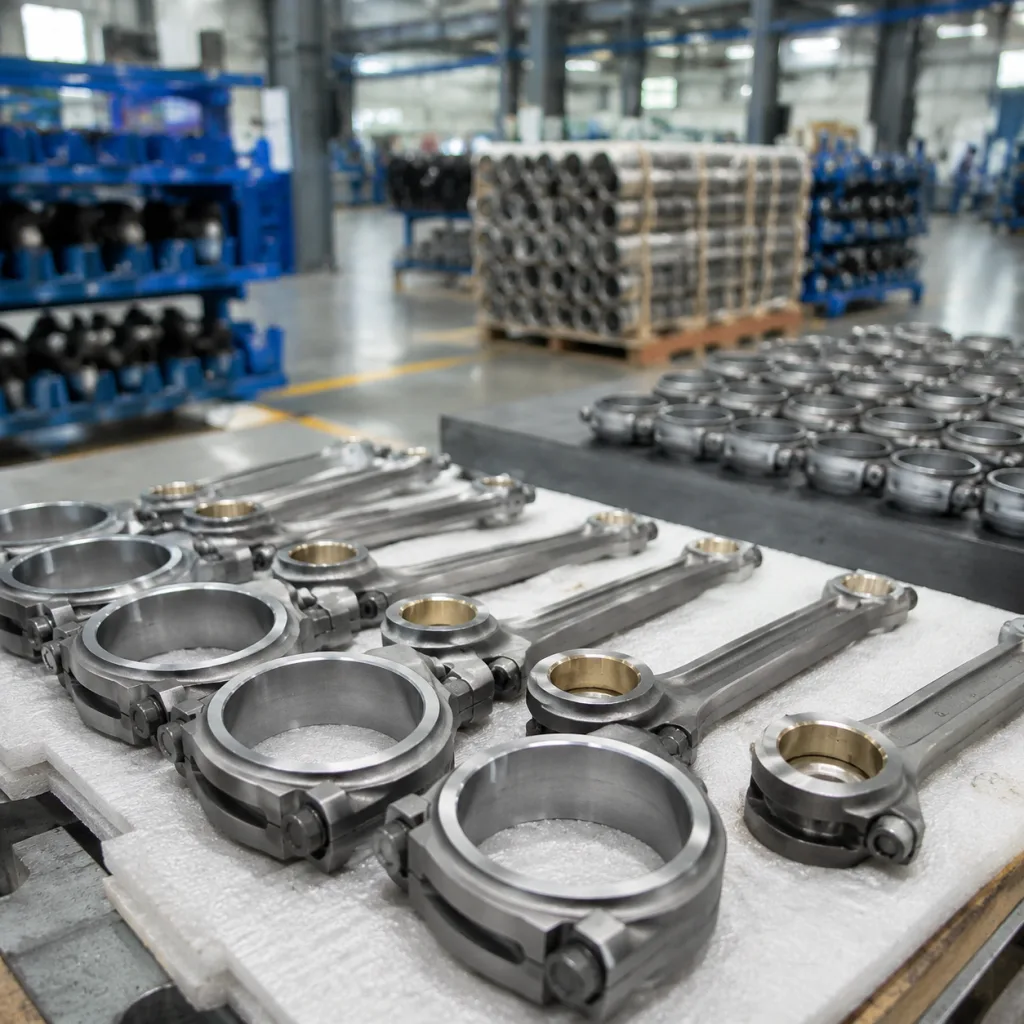
Programme planning should also reflect logistics realities. Connecting rods are dense steel components, so carton gross weight, divider protection, VCI/rust-preventive method and pallet stacking pattern matter for warehouse handling and sea freight. A good supplier should recommend pack quantities that prevent impact damage and cap mix-up while also supporting efficient container loading and receiving.

In long-term Opel aftermarket programmes, stable replenishment usually matters more than the lowest one-time quote. Buyers benefit from choosing a supplier that can maintain batch consistency, provide realistic lead times and communicate early if capacity, tooling, subcontract heat treatment or raw material conditions change.

Documentation, audit readiness and compliance expectations

Professional buyers increasingly expect a documentation package that supports internal approval, customs clearance and downstream traceability. For connecting rods, the exact package depends on whether the programme is aftermarket stock supply or a drawing-controlled OEM service project.

For a connecting rod Opel manufacturer China supplier, documentation quality often says a great deal about operational maturity. Factories with controlled processes usually produce faster, cleaner and more consistent paperwork. That matters because delays in import programmes often come not from production failure, but from missing dimensional data, unclear labels or slow compliance responses.

Common documents buyers request

  • Commercial invoice and packing list
  • Certificate of origin where required
  • Batch inspection report with measured values for key characteristics
  • Material or process conformity statement
  • REACH (EC) No 1907/2006 declaration where applicable
  • Internal dimensional report for critical characteristics
  • Product photos and packaging approval record

Depending on the customer and destination market, buyers may also request:

  • certificate copies with current validity dates
  • pallet and carton label format
  • rust-prevention method statement
  • sample approval record
  • engineering drawing acknowledgement
  • change-notification agreement
  • complaint-response template or 8D format

For audit readiness, the supplier should be able to explain:

  • incoming material inspection method
  • in-process patrol inspection frequency
  • final inspection sampling or 100% checks for key dimensions
  • calibration schedule and gauge identification
  • corrective action workflow for customer complaints

These points should not be explained only in general terms. Buyers should look for specific evidence such as inspection frequency sheets, control plans, calibration status labels on gauges, traceable report numbers and documented responsibilities for containment and corrective action. If a supplier says “all checked carefully” but cannot show controlled records, that is not equivalent to a documented quality system.

Where PPAP-style submission is requested by the buyer, scope should be agreed in advance because aftermarket and OEM documentation expectations differ significantly. Even when formal PPAP is not required, drawing review, first-sample approval, deviation approval and change-notification rules should be documented before serial supply begins.

A practical way to define this is to agree the documentation package at quotation stage. For example:

  • Catalogue aftermarket supply may require batch inspection, packing list, invoice and basic compliance declarations.
  • Private-label distribution may additionally require approved label artwork, carton marks and packaging photos.
  • Drawing-controlled development may require first-sample dimensional layouts, material confirmations, process-flow review, PFMEA/control-plan alignment and formal change control.

Compliance should also be handled realistically. For engine components such as connecting rods, buyers commonly request REACH-related statements and general material conformity declarations. If the destination market has additional rules or customer-specific restrictions, these should be communicated early so the supplier can confirm whether supporting declarations, test reports or label content can be provided.

Finally, audit readiness is not only about passing a customer visit. It also shows whether the supplier can retrieve records months later when a market claim, warranty review or traceability question arises. In engine hard parts, that retrieval discipline can materially reduce containment time, sorting cost and commercial risk.

How Driventus supports Opel-fitment connecting rod sourcing

Driventus supplies engine and powertrain components to B2B customers including distributors, wholesalers, OEM-related buyers and repair-group procurement teams. For connecting rod enquiries, support typically includes application review, drawing confirmation where available, dimensional inspection reporting, export packing and coordinated shipment with other engine parts.

For buyers specifically looking for a connecting rod Opel manufacturer China partner, the value is not only supply availability. It is also structured execution. Opel-fitment programmes often require careful cross-reference control, confirmation at engine-code level, and practical coordination between technical review, production planning and export handling. Driventus supports this process by focusing on the details that influence approval and repeat ordering.

Support typically covers:

  • Application review: checking engine code, OE-style references, pin size, rod style and fitment scope against available data
  • Technical confirmation: reviewing sample, drawing or critical dimensions where available, including major bore and length characteristics
  • Production communication: clarifying process route, inspection points, traceability method and expected batch controls
  • Documentation support: providing inspection records, packaging details and commercial export documents
  • Shipment coordination: combining connecting rods with related engine components where programme efficiency requires it

Buyers assessing a China source usually want clear answers on three points: can the supplier manufacture consistently, can the supplier document the process, and can the supplier communicate quickly when something changes. That is where controlled production and structured account handling matter more than broad claims.

In practical sourcing discussions, useful starting information includes:

  • target part number or OE cross reference
  • engine code and vehicle application
  • annual demand or forecast band
  • destination country or region
  • packaging or branding requirement
  • whether the project is stock supply or custom/drawing-based supply

If you are qualifying a new source, send the target part reference, engine code, annual volume and destination market. Driventus can review stock-supply options from our catalog or discuss custom manufacturing for drawing-based programmes. For direct commercial discussion, use request a quote.

For buyers building a long-term aftermarket programme, Driventus can also support consolidated sourcing across engine-component categories. This is often useful when the goal is to reduce supplier count, align documentation standards and improve freight efficiency while keeping technical review under one account structure.

The overall objective is straightforward: help buyers move from initial enquiry to validated, repeatable Opel-fitment connecting rod supply with fewer technical misunderstandings and better control over quality, timing and documentation.

Frequently asked questions

MOQ depends on whether the item is a standard catalogue reference, a low-volume made-to-order item or a custom development. Established aftermarket references are often more flexible and may support mixed orders, while new developments may require a higher minimum to cover tooling, setup, forging allocation and validation. Buyers should also confirm whether MOQ is calculated by part number, total order value or grouped production batch.

At minimum, request certification status, critical-dimension inspection records with measured values, batch traceability details, packaging specification and any applicable compliance declarations such as REACH (EC) No 1907/2006. For higher-control programmes, ask for hardness data, material confirmation, batch-marking examples and sample packaging photos. For drawing-based projects, agree the submission scope before sampling.

Yes, but fitment should be confirmed by drawing, measurement and application data rather than part number alone. If you provide an OE-style cross-reference or physical sample, the supplier should verify major dimensions such as centre distance, big-end housing bore, small-end bore, width and cap style against the intended engine application before quotation. This is important because similar commercial descriptions may still correspond to different rod geometries or engine-code variants.

If you are reviewing a supplier for Opel-fitment connecting rods, send your target references, annual volume and delivery market for a practical assessment. Contact Driventus here: /contact.html

Request a Quote
Evaluation item What to request Why it matters
CertificationValid certificates for IATF 16949:2016 and ISO 9001:2015, including scopeConfirms structured quality management and whether the site scope actually covers machining/manufacture of engine components
Material controlMaterial certificate, steel grade declaration and incoming verification methodSupports consistency in strength, hardness, cleanliness and machinability
Dimensional recordsInspection report for critical dimensions with measured values and tolerance limitsReduces fitment, bearing crush and assembly risk
TraceabilityBatch-code format, retention period and backward trace pathSpeeds root-cause analysis if a claim occurs
ValidationHardness, metallographic and fatigue or endurance test records where applicableIndicates whether the supplier verifies functional performance beyond size only
Surface protectionRust-preventive oil/VPI method and storage/packing standardImportant for sea freight, humidity exposure and warehouse dwell time
MOQStandard MOQ by part number, mixed-order policy and surcharge rulesAffects inventory planning and launch cost
Lead timeSample lead time, first-order lead time and repeat-order lead timeSupports replenishment planning
PackagingUnit pack, carton count, maximum carton weight, pallet standard and labelsReduces transit damage and receiving errors
ComplianceREACH (EC) No 1907/2006 declaration where relevantRequired by many EU import programmes