connecting rod · 2026-06-08

Connecting Rod Mercedes-Benz Wholesale Sourcing Guide

Sourcing Mercedes-Benz-fit connecting rods at wholesale level requires more than matching a model name to a part number. Buyers need controlled steel quality, repeatable machining, dependable packaging, and traceability from raw material intake through final inspection. Driventus Auto Parts manufactures engine and powertrain components in Taizhou, Zhejiang for distributors, wholesalers, OEM and Tier-1 programmes, and multi-location repair chains serving the EU, UK, US, Canada, Australia, and Brazil. This guide explains how to assess a connecting rod Mercedes-Benz wholesale programme, covering fitment definition, technical specifications, validation documents, MOQ planning, audit evidence, packaging, and order controls. It is written for professional buyers comparing independent aftermarket supply options, not for retail repair decisions. Driventus is an independent aftermarket manufacturer; brand names are used for fitment identification only.

Wholesale fitment scope and sourcing position

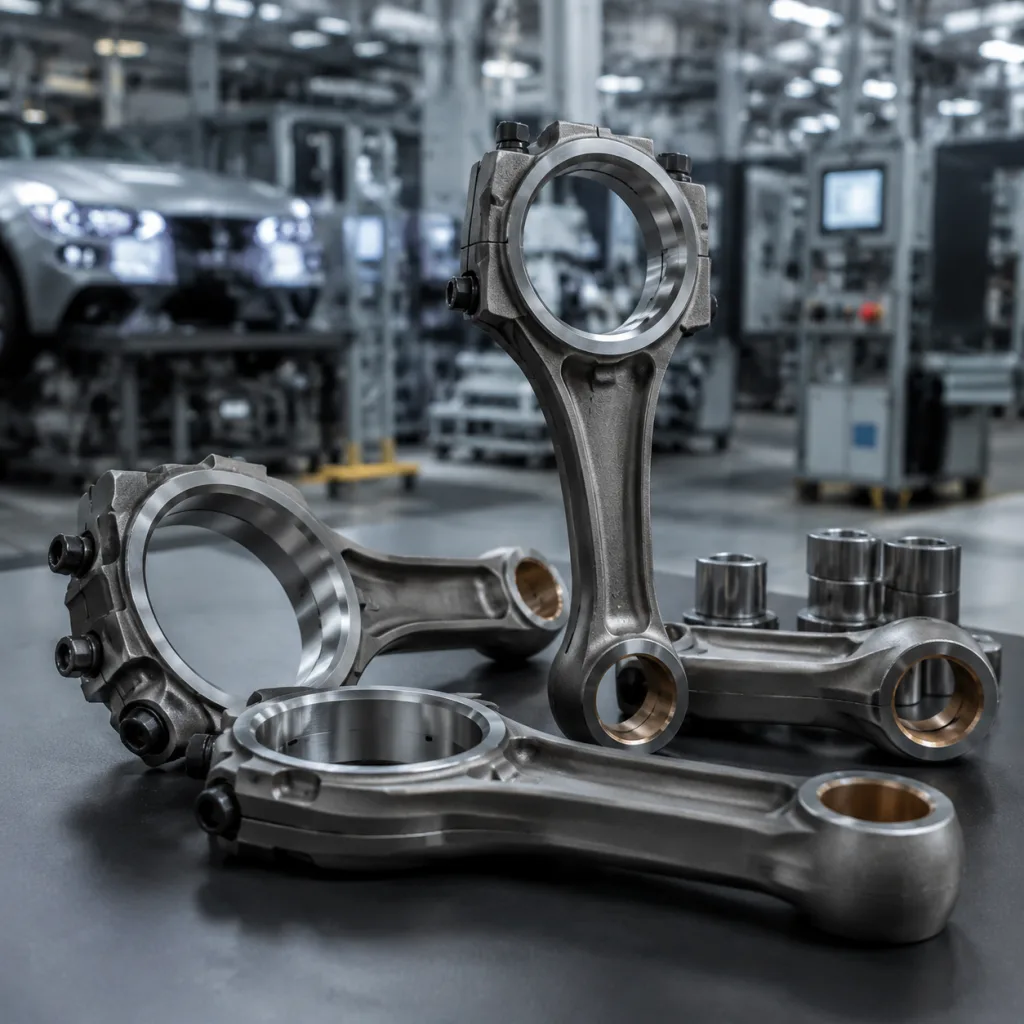
Mercedes-Benz passenger car and light commercial applications span petrol and diesel engine families with different rod lengths, big-end diameters, small-end bush designs, bolt styles, and cap structures, including fracture-split and machined-cap designs. For wholesale purchasing, the programme should be managed by engine code, piston pin diameter, bearing shell reference, and OE-style dimensional envelope rather than by vehicle model alone.

Driventus supplies connecting rods as independent aftermarket components for professional distribution. Buyers can review wider engine coverage in our catalog and related engine component categories at /products/engine-components.html. Typical purchasing use cases include:

  • Consolidating slow-moving Mercedes-Benz-fit engine references into one export shipment.
  • Developing a private-label connecting rod range for regional wholesalers.
  • Supporting repair-chain engine rebuild programmes with consistent batch labelling.
  • Creating new drawings or revised material requirements through custom manufacturing.

For a connecting rod Mercedes-Benz wholesale enquiry, the most useful inputs are engine code, sample part or clear photos, drawing if available, target annual volume, packaging requirement, and destination-market compliance expectations.

Technical specification points buyers should verify

Connecting rods operate under repeated tensile and compressive loads, so small deviations in bore geometry, weight, surface finish, or bolt preload can affect bearing clearance, oil film stability, vibration, and fatigue life. Procurement files should define measurable acceptance criteria instead of relying only on the phrase “OE equivalent”.

</tr></thead><tbody> </tbody></table>A robust production route usually includes forged steel input inspection, normalising or quench-and-temper heat treatment according to design requirements, CNC machining of big-end and small-end bores, cap matching, bolt and thread checks, magnetic particle inspection where specified, cleaning, and final dimensional sorting. For qualified programmes, Driventus can provide PPAP-style documentation when the buyer’s project scope requires formal validation evidence.

MOQ, lead-time, and export planning

MOQ should reflect part complexity, tooling status, packaging format, inspection workload, and forecast reliability. A distributor ordering an active Mercedes-Benz-fit reference may need a different arrangement from an importer launching 20 engine references under a private label.

A practical wholesale sourcing framework is:

  • Stocked references: lower MOQ when raw materials, fixtures, and inspection gauges are already active.
  • Reactivated references: moderate MOQ to cover setup, sample verification, and batch-level inspection.
  • New development: higher MOQ or tooling contribution where forging dies, machining fixtures, or bush tooling are required.
  • Private-label packing: MOQ affected by printed cartons, barcode labels, pallet marks, and country-specific wording.
  • Mixed shipments: consolidation with pistons, crankshafts, gaskets, or water pumps can reduce freight cost per line.

Lead-time depends on the production status of each reference. Active parts can usually be scheduled faster than new developments requiring sample measurement, drawing confirmation, and approval samples. For repeat wholesale programmes, buyers should share rolling forecasts covering 3 to 6 months, including seasonal demand, shipment cadence, and destination port. This helps plan steel purchasing, heat-treatment capacity, machining slots, inspection resources, and export packing without relying on emergency surcharges or rushed freight.

Quality system, traceability, and audit evidence

Procurement teams should request evidence that the supplier’s quality management system covers both document control and shop-floor execution. Driventus operates under IATF 16949:2016 and ISO 9001:2015. Buyers can review our quality system when preparing supplier qualification files.

For connecting rods, a credible audit package may include:

  • Business licence, export registration, and certification copies.
  • Process flow chart from raw steel receipt to final packing.
  • Control plan covering forging, heat treatment, machining, cleaning, inspection, and packing.
  • Material certificate and heat-treatment record by batch.
  • Dimensional inspection report with critical-to-function characteristics.
  • Traceability format linking carton label, production batch, and inspection record.
  • Nonconforming product procedure and corrective action format.

Factory audits should examine gauge calibration, segregation of matched caps, bolt traceability, operator training, machining-process control, and storage conditions for finished rods and bushings. Buyers importing into the EU should also consider material disclosure and chemical compliance expectations under REACH (EC) No 1907/2006 where applicable to the wider product and packaging programme.

Private-label and custom programme options

Wholesale buyers often need more than loose components; they need consistent presentation across warehouses, branches, catalogues, and e-commerce-enabled B2B systems. Driventus supports neutral packing, buyer-brand packing, barcode labels, multilingual carton marks, and pallet-level shipping labels, subject to agreed artwork and legal review.

For custom manufacturing projects, the enquiry should define whether the target is dimensional replication, performance uprating, cost optimisation, discontinuation support, or consolidation of several supplier references. Engineering review normally covers sample measurement, 3D drawing confirmation, material selection, bolt specification, surface finish, weight tolerance, and validation plan.

Documentation normally requested by importers

  • Quotation sheet with Incoterms, MOQ, currency, and validity period.
  • Fitment list by engine code and vehicle application range.
  • Sample inspection report before mass production.
  • Batch inspection report before shipment.
  • Packing list, commercial invoice, and certificate of origin if required.
  • Product images without vehicle manufacturer logos for B2B listings.

Driventus is an independent aftermarket manufacturer; brand names are used for fitment identification only. No wholesale listing, carton, catalogue entry, or online product page should imply approval, sponsorship, or endorsement by a vehicle manufacturer.

Supplier comparison checklist for procurement teams

Before awarding a connecting rod Mercedes-Benz wholesale contract, compare suppliers on evidence rather than quoted price alone. A low unit price can be outweighed by warranty exposure, inconsistent labelling, delayed approvals, or incomplete export documents.

Specification item Typical verification method Procurement relevance
Material gradeMill certificate, chemical analysis, hardness testConfirms steel consistency and heat-treatment response
Big-end bore roundnessCMM or precision bore gaugeSupports bearing fit and oil-clearance control
Small-end bush IDPlug gauge, bore gauge, surface checkControls piston pin fit and lubrication path
Rod weight groupingDigital balance, batch recordReduces balancing work for engine rebuilders
Bolt thread and seatingThread gauge, torque-angle validationSupports clamp-load repeatability
Surface cleanlinessVisual inspection, burr control, residue checkReduces assembly contamination risk

</tr></thead><tbody> </tbody></table>A structured request for quotation should include target part families, engine codes, expected annual quantity, destination port, packaging style, required inspection documents, and whether the buyer needs exclusivity for a region or label. For programme pricing, buyers can request a quote with the relevant engine codes, samples or drawings, and target volumes.

Frequently asked questions

Send the engine code, sample photos or drawings, target quantity, destination country, packaging preference, and required inspection documents. If the reference is already in production, quotation is faster. New development requires sample measurement, engineering review, and approval timing.

Yes. Driventus supports neutral and private-label packing, barcode labels, carton marks, pallet labels, and consolidated shipments. Artwork, wording, and fitment references must avoid implying vehicle manufacturer approval. Brand names are used for fitment identification only.

No. Driventus manufactures independent aftermarket components for fitment replacement and wholesale distribution. Driventus is an independent aftermarket manufacturer; brand names are used for fitment identification only. No vehicle manufacturer approval or endorsement is claimed.

For MOQ, lead-time, audit documents, and Mercedes-Benz-fit connecting rod coverage, send your sourcing brief to Driventus. Start a technical wholesale enquiry at /contact.html

Request a Quote
Evaluation area What to ask Why it matters
CertificationIATF 16949:2016 and ISO 9001:2015 certificate scopeConfirms automotive QMS coverage
Dimensional controlCritical bore, weight, and bolt inspection recordsReduces assembly and warranty risk
Batch traceabilityLot code format and retention periodSupports claims investigation
MOQ flexibilityStocked, reactivated, and new-tooling termsAligns purchasing with demand
Lead-time reliabilityProduction schedule and shipment historyProtects distributor fill rate
Packaging capabilityNeutral, private-label, barcode, pallet marksReduces warehouse relabelling work
Engineering supportSample reverse engineering and drawing reviewSupports custom or discontinued references