Connecting Rod Fiat Wholesale: Sourcing Guide
Buying Fiat connecting rods at wholesale level is not a catalogue exercise. The risk sits in the gaps: a bore that is technically listed but not controlled, a rod set that cannot be weight-matched on reorder, a low quote that hides relabelling or inspection work, or a supplier that can approve one sample but cannot repeat it six months later. For distributors, engine rebuilders, and multi-location repair networks, the useful question is not only “what is the unit price?” It is “can this part be stocked, traced, installed, and reordered without creating claims?”
Driventus is an independent aftermarket manufacturer; brand names are referenced for fitment only. We manufacture engine and powertrain parts in Taizhou, Zhejiang, and supply B2B customers in more than 60 countries. Production is managed under IATF 16949:2016 and ISO 9001:2015, with export documentation aligned to REACH (EC) No 1907/2006 where applicable.
This guide reframes connecting rod Fiat wholesale sourcing around decision points: what to verify first, where failures usually appear, how to compare offers, and how to move from sample approval to repeat supply with fewer surprises.
Start With the Stocking Decision, Not the Catalogue Listing
A Fiat connecting rod can look easy to buy when the enquiry begins with a part number. Wholesale approval is different. The buyer is deciding whether the item can become a repeat warehouse SKU, a controlled rebuild-programme component, or a one-time project purchase.
Use this first split:
- Recurring stock item: requires stable fitment data, repeatable tolerances, packaging consistency, and predictable replenishment terms.
- Engine rebuild programme part: requires tighter documentation, weight matching where specified, installation validation, and clear bolt data.
- Controlled project purchase: acceptable when volume is limited, fitment is narrow, or validation depends on a customer-owned sample.
For Fiat applications, a qualified supplier should support OE part-number cross-reference review, dimensional verification against the target engine family, material and heat-treatment records, batch traceability, and replenishment terms that match the buyer's channel.
Do not approve stock from a catalogue number alone. Ask for nominal centre-to-centre length, big-end bore, small-end bore, weight class where matched sets are required, bolt specification, and supply configuration. Confirm whether the rod ships with bush, cap, and bolts or as a bare component.
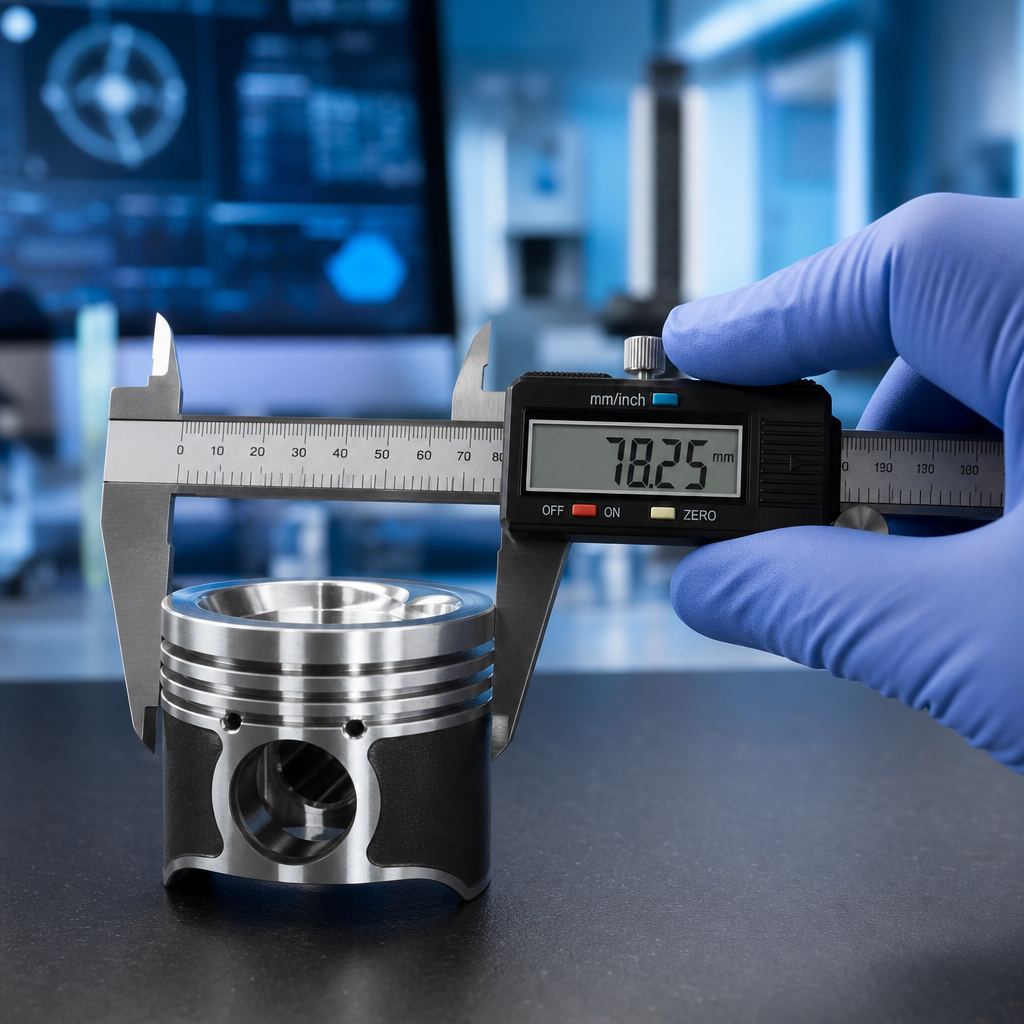
A practical benchmark: many wholesale buyers want centre-to-centre length stated to 0.01 mm, bore sizes to 0.005 mm, rod weight to 1 g, and bolt thread, grade, and torque data shown on the drawing or inspection sheet. The supplier should also state the inspection method, such as CMM, air gauge, bore gauge, hardness tester, or magnetic particle inspection. Those details decide whether a connecting rod Fiat wholesale item belongs in open stock or in a controlled approval file.
The Pre-PO Gate: Dimensions That Stop Claims Later
The best time to prevent a connecting rod claim is before the purchase order is released. For this part category, the high-value checks are mechanical and process-related. Cosmetic review is secondary.
Minimum data set to request
| Item | Why it matters | Buyer question |
|---|---|---|
| Centre-to-centre length | Affects compression height and piston position | Does the rod length match the target OE application, usually within +/-0.03 mm unless the drawing states otherwise? |
| Big-end bore | Controls bearing fit and oil clearance | Is roundness and cylindricity controlled after cap assembly and final honing? |
| Small-end bore | Controls pin fit and bushing life | Is the pin bore finish-machined and checked after bushing installation where applicable? |
| Rod weight | Supports balancing and set matching | Are rods supplied in matched weight groups, commonly within 2 g to 5 g per engine set depending on programme requirement? |
| Bolt grade and torque spec | Affects clamp load and fatigue life | Are bolts new, traceable, and supplied with torque, angle, or stretch data? |
| Surface finish and shot peening | Influences fatigue resistance | Is the part shot peened, deburred, and inspected where specified? |
| Comparison point | Low-risk offer | Higher-risk offer |
|---|---|---|
| Fitment data | OE cross-reference, dimensions, engine code, and validation sample supplied | Listing only, no technical sheet |
| Quality records | Inspection report, traceability, controlled process, and batch number | No batch records or limited paperwork |
| Materials | Declared material, heat treatment, hardness range, and certificate option | Material not disclosed |
| Tolerances | Critical dimensions shown with actual measured values | Nominal size only, no tolerance basis |
| Supply stability | Stated MOQ, price breaks, repeat lead time, and forecast process | One-off quote only |
| Packaging | Labelled, protected, shelf-ready cartons with consistent counts | Loose packing or mixed labelling |
| Commercial support | Procurement contact, claim process, and reorder process | No post-sale technical contact |