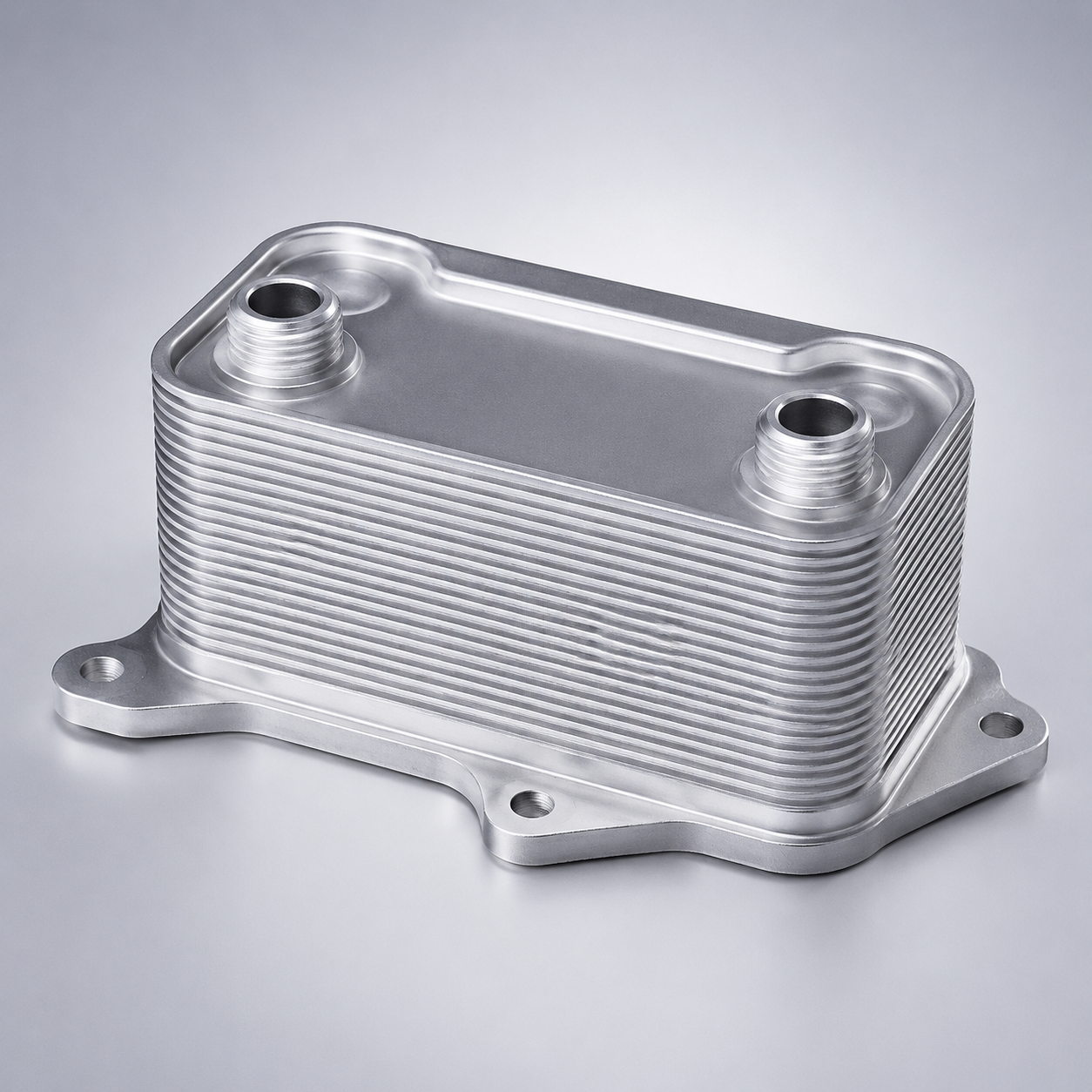
Dual Mass Flywheel Vauxhall Wholesale Buying Guide
A dual mass flywheel Vauxhall wholesale order should not start with the lowest line price. It should start with the failure you cannot afford: wrong fitment, unstable damping, starter noise, clutch complaints, or a batch that cannot be traced once it reaches installers.
The buying decision is therefore technical before it is commercial. Procurement teams need to confirm the OE cross-reference, engine code, gearbox family, crank flange, starter position, clutch kit pairing, and installation profile. They also need evidence that mass, inertia, bolt geometry, ring gear specification, axial runout, balance, and torsional behaviour are controlled against written limits, not copied by appearance.
Driventus is an independent aftermarket manufacturer; vehicle and brand names are used for fitment reference only. This guide shows how to judge a supplier, what to ask for in a quote, where wholesale programmes usually fail, and when a custom manufacturing route makes more sense than adding another catalogue SKU.
Start With the Buying Decision, Not the SKU List
For wholesale sourcing, the hard part is not finding a part that looks right in a catalogue. The hard part is approving a repeatable programme that keeps installers, branches, and warranty teams out of trouble.
Use three decision gates before approving a dual mass flywheel line:
1. Fitment control: Does the reference match the exact engine code, gearbox code, clutch diameter, production year range, crank flange, and starter position? 2. Functional control: Are inertia, free-play angle, torsional travel, damping curve, ring gear position, axial runout, and balance checked against agreed limits? 3. Supply control: Can the supplier repeat the same drawing revision, inspection method, packing format, label logic, and batch traceability across replenishment orders?
The documents behind those gates should include:
OE cross-reference coverage for the exact engine code, gearbox code, clutch diameter, and production year range
Vehicle application list by model year, displacement, fuel type, drivetrain family, and market variant
Flywheel outside diameter, friction face diameter, pilot bore, crank bolt pattern, starter ring gear tooth count, and mounting offset
Rotational inertia, free-play angle, torsional travel, damping curve, and stop-position control against the approved sample
Critical machining limits for axial runout, face flatness, concentricity, bolt-hole position, and ring gear seating height
Export packing method, corrosion protection, pallet stacking rules, carton strength, and shock protection for sea freight
Traceability by raw material batch, machining shift, assembly lot, inspection record, and dispatch carton or pallet
Test evidence against defined acceptance criteria, not only a catalogue cross-reference
For Vauxhall and related European vehicle families, the range normally splits into fast-moving references and lower-volume applications. Treat them differently. A-moving SKUs can sit in a scheduled replenishment plan; slow references often need forecast-based batching. Driventus supplies dual mass flywheel parts through our catalog, with production organised for B2B repeat orders, distributor replenishment, and programme-based supply rather than retail one-off demand.
Spec Deep-Dive: The Checks That Separate Fitment From Guesswork
A dual mass flywheel is not a commodity casting. Small differences in the wrong place can create clutch judder, starter engagement noise, crankshaft seating problems, or a return that is expensive to diagnose. The RFQ should therefore ask for the drawing revision and the inspection method for every critical feature.
Item
What to verify
Why it matters
Outer diameter
Match to OE specification, with machining tolerance agreed on the drawing, often within +/-0.10 to +/-0.30 mm depending on feature
Affects clutch package geometry and bellhousing clearance
Bolt circle and holes
Correct count, pitch circle diameter, thread form, hole chamfer, flange depth, and bolt seating face
Prevents installation errors, poor seating, clamp-load loss, and imbalance
Ring gear
Tooth count, pitch, chamfer direction, interference fit, hardness, heat-treatment depth, and runout after assembly
Affects starter engagement, cranking noise, and tooth wear
Axial runout
Measured on the agreed datum and friction face; many programmes control this below 0.10 to 0.20 mm depending on design
Excess runout can increase vibration, clutch judder, and facing wear
Balance
Dynamic balance grade and residual unbalance limit by part family, verified after ring gear and damping assembly work
Reduces NVH complaints and protects crankshaft and gearbox input components
Torsional angle / spring travel
Free angle, working angle, stop angle, torque curve, and return behaviour must suit the engine and transmission damping requirement
Friction face roughness, flatness, parallelism, machining marks, burr limits, and cleaning standard
Affects clutch engagement, bedding, heat distribution, and service life
Corrosion protection
Phosphate, VCI bag, anti-rust oil, coating, desiccant, or equivalent protection method with a stated shelf-life target
Improves warehouse life and reduces export handling damage
</tr></thead><tbody> </tbody></table>Do not treat an OE reference as a full specification. It is a starting point. A quoted cross-reference such as OE 06A107065 still needs to be checked against the dimensional drawing, vehicle application list, clutch pairing, crankshaft flange depth, starter motor position, and installation profile before approval for wholesale supply.
Inside the Control Plan: How Driventus Keeps Batches Repeatable
Driventus builds engine and powertrain components under an integrated manufacturing model. For dual mass flywheel programmes, control begins at material intake and continues through machining, heat-treatment confirmation, ring gear preparation, balancing, assembly inspection, final review, and packing.
Our quality framework is aligned to our quality system and certified to IATF 16949:2016 and ISO 9001:2015. These certifications do not replace buyer validation. They do, however, give procurement teams a defined audit baseline for process control, corrective action, calibration, nonconformance handling, supplier management, and traceability.
Typical controls for dual mass flywheel production include:
Incoming material verification for chemical composition, casting or forging condition, hardness, and supplier batch certificate
First-article inspection after CNC setup, with checks on critical diameters, bore locations, bolt holes, datum faces, face flatness, and offset
In-process gauging at defined intervals, commonly every setup, tool change, and sampled production quantity agreed in the control plan
Ring gear inspection for seating, tooth form, chamfer direction, induction hardening consistency, and assembled runout
Dynamic balance verification by part family and agreed residual unbalance tolerance
Torque, rotation angle, free-play, stop-angle, and travel checks on spring and damping assemblies
Friction face inspection for burrs, cracks, contamination, roughness, and machining pattern
Batch marking or label coding linking the part to material lot, production date, inspection record, and dispatch batch
Final packing inspection for VCI protection, foam or divider placement, label accuracy, barcode readability, carton integrity, and pallet condition
For repeat programmes, Driventus can support export documentation, inspection records, control plans, sample retention, and batch-level reporting. That matters when a distributor serves multiple markets. If a field issue appears, the investigation can start from the production lot instead of a broad shipment date.
MOQ and Lead Time: Choose the Right Sourcing Structure
Wholesale buyers usually need two supply tracks: stock programme work for active references and build-to-order production for slower or market-specific parts. Mixing those two tracks without a plan leads to weak availability, rushed substitutions, and avoidable freight cost.
For established references, orders may be supported from scheduled production runs or finished-stock allocation. Where tooling, approved drawings, and packaging are already active, repeat production is usually the fastest route. For lower-volume or market-specific references, MOQ is normally tied to CNC changeover, ring gear preparation, balancing setup, inspection setup, packaging efficiency, and carton MOQ.
As a working rule, expect higher MOQs for new or slow-moving references than for catalogue SKUs. First orders are often structured around one production batch, not a very small trial quantity.
Lead time is usually driven by four factors:
1. Material availability for the flywheel body, damping assembly, spring set, grease, bearing elements, and ring gear 2. Capacity at machining, assembly, inspection, balancing, cleaning, and anti-rust packing stations 3. Approval status for drawings, samples, carton artwork, customer part numbers, and barcode labels 4. Packing, labelling, export consolidation, customs paperwork, and destination documentation requirements
A practical model is simple: approve a sample or pilot order first, then move the confirmed reference into scheduled replenishment. Price follows the same logic. Small first batches carry more setup, inspection, and packaging cost per unit. Larger repeat batches dilute changeover and documentation cost.
For category managers, the goal is to align purchase forecasts with the production cycle instead of relying on spot buying. That reduces out-of-stock risk, emergency freight, and forced substitution. Where a dual mass flywheel Vauxhall wholesale programme needs dedicated packaging, part-number mapping, or a new reference outside the catalogue, custom manufacturing is the correct route.
Validation Evidence: What a Responsible Quote Should Prove
A wholesale quote should give your internal team enough evidence to approve the part without guessing. The exact test package depends on market, volume, and risk level, but the approval file should contain measurable limits and production checks, not broad assurances.
Ask for:
Dimensional inspection report for critical features, including OD, bore, PCD, bolt holes, offset, ring gear position, friction face flatness, and datum references
Runout and balance verification, with measuring points, equipment type, and acceptance limits stated on the report
Material hardness or heat-treatment confirmation where applicable, especially on ring gear teeth and wear-sensitive surfaces
Torque-angle or torsional travel data for the damping assembly, compared with the approved sample or target curve
Ring gear inspection and starter engagement confirmation where required, including tooth count, chamfer, seating, and assembled runout
Visual inspection standard for machining marks, burrs, cracks, coating, oil residue, corrosion, and handling damage
Packaging drop, stacking, humidity, and transit suitability checks for export cartons and pallets
Sample approval against the nominated OE cross-reference, clutch kit pairing, and vehicle application
If the target market requires it, buyers may also request corrosion and durability evidence aligned to published standards such as neutral salt spray methods, SAE J2527 for environmental exposure where relevant, or buyer-specific validation procedures. Use standards carefully. They only help when they match the part function, the validation plan, and the market requirement.
One approved sample is not the finish line. The production batch must be repeatable. Ask for the same drawing revision, inspection points, acceptance criteria, packaging method, label format, and batch code structure that will be used in mass supply.
Failure Modes: Where Cheap Replacements Become Expensive
Some buyers treat dual mass flywheel parts as direct replacement items and compare them mainly by unit price. That is risky. A 3% to 5% saving disappears quickly if one extra labour claim, diagnostic dispute, or rejected shipment appears.
The common failure modes are specific:
Wrong engine code or transmission family, especially where the same model name covers multiple powertrains
Incorrect crankshaft flange depth, pilot location, bolt length requirement, or bolt pattern
Mismatched clutch kit pairing, including friction diameter, pressure plate height, and release system compatibility
Ignoring starter ring gear tooth count, chamfer direction, or starter engagement depth
Substituting a visually similar part with different damping behaviour, free-play angle, or spring rate
Missing model-year changes, emissions updates, engine revisions, or gearbox changes within the same vehicle family
Reusing bolts where the repair procedure requires new stretch bolts or a specified torque-plus-angle sequence
The visible symptom may be vibration, starting noise, clutch engagement trouble, or installation failure. The real cost is wider: returns, labour claims, technical support time, replacement freight, credit notes, and lost installer confidence.
That is why OE cross-reference management, sample matching, carton labelling, installation notes, and batch traceability should be part of the commercial offer from the beginning. They are not administrative extras. They protect the margin the buyer is trying to make.
Compare the Four Supply Routes Before You Commit
Procurement teams usually choose from four sourcing models. The right one depends on whether the buyer is filling an urgent stock gap, building a repeat wholesale line, or expanding a private label range.
Supply model
Best use case
Advantages
Trade-offs
Spot buy
Emergency replenishment or short-term gap filling
Fast decision, low commitment, useful for covering a temporary shortage
Higher risk of inconsistent quality, limited documentation, unclear batch history, and short availability
Low-volume, special-fit, or catalogue expansion references
Exact programme control, packaging and marking options, drawing alignment, and technical review
Needs drawings, validation samples, clearer forecast commitment, and a longer approval path
</tr></thead><tbody> </tbody></table>For most B2B buyers, catalogue wholesale is the best starting point because it balances availability, documentation, and manageable order planning. Private label and custom manufacturing become useful when sell-through is stable, SKU confusion needs to be reduced, cartons and barcodes must follow the buyer's system, or the market requires a specific packing specification.
Our catalog shows the broader engine and powertrain range, including related components in engine components where programme bundling is useful.
RFQ Checklist: Send the Data That Prevents Requoting
A clean RFQ shortens the quotation cycle and reduces the chance of a wrong match. Send fitment data and commercial planning data together. The supplier can then confirm the part, calculate a realistic MOQ, and quote a lead time that reflects production and packing work.
Include the following items where available:
Vehicle make and model family, including market region and model-year range
Engine code, displacement, fuel type, power rating, and transmission code
OE reference or cross-reference, such as OE 06A107065 when applicable
Current supplier part number, sample photo, drawing, or measured part data if available
Annual volume, first-order quantity, reorder frequency, and forecast range by SKU
Target price level, preferred price breaks, and whether pricing should be quoted by SKU or mixed container
Target market and packing requirement, including single carton, master carton, pallet, VCI, desiccant, or private label carton
Required labels, carton language, barcode format, customer part number, country-of-origin marking, and installation note requirement
Delivery term, destination port or warehouse, required incoterm, and consolidation preference
If the request covers multiple Vauxhall references, group them by engine family or drivetrain platform. That helps the factory plan batching, tooling checks, inspection fixtures, ring gear preparation, and packaging work. It also reduces the risk of quoting a superficially similar part that does not match the installation profile.
Driventus supports procurement reviews with technical drawings, commercial terms, export packing details, and batch documentation where required. Buyers can request a quote once the target reference list and forecast volume are ready for review.
Frequently asked questions
Yes. We supply B2B customers on a wholesale basis for aftermarket distribution, repair chains, and selected OEM or Tier-1 programmes. Fitment is controlled by OE reference, vehicle application, engine and transmission data, clutch pairing, and drawing revision.
Yes. Private label marking, carton artwork, barcode labelling, customer part numbers, and market-specific packing can be handled through a custom programme. Technical approval is still based on the agreed drawing, sample set, label file, and carton specification.
Our manufacturing system is certified to IATF 16949:2016 and ISO 9001:2015. Depending on the programme, we can also align inspection, testing, documentation, batch traceability, and packing controls to buyer requirements and relevant published standards.
Send the OE reference, vehicle application, engine and transmission code, expected annual volume, first-order quantity, packaging requirement, and destination market. If possible, include a sample photo, drawing, or current supplier reference. That lets us confirm fitment and prepare a commercial offer faster.
Send your reference list, application data, first-order quantity, and forecast volume for technical and commercial review. Start with /contact.html and we will confirm fitment, MOQ logic, packaging, documentation, lead time, and next steps.