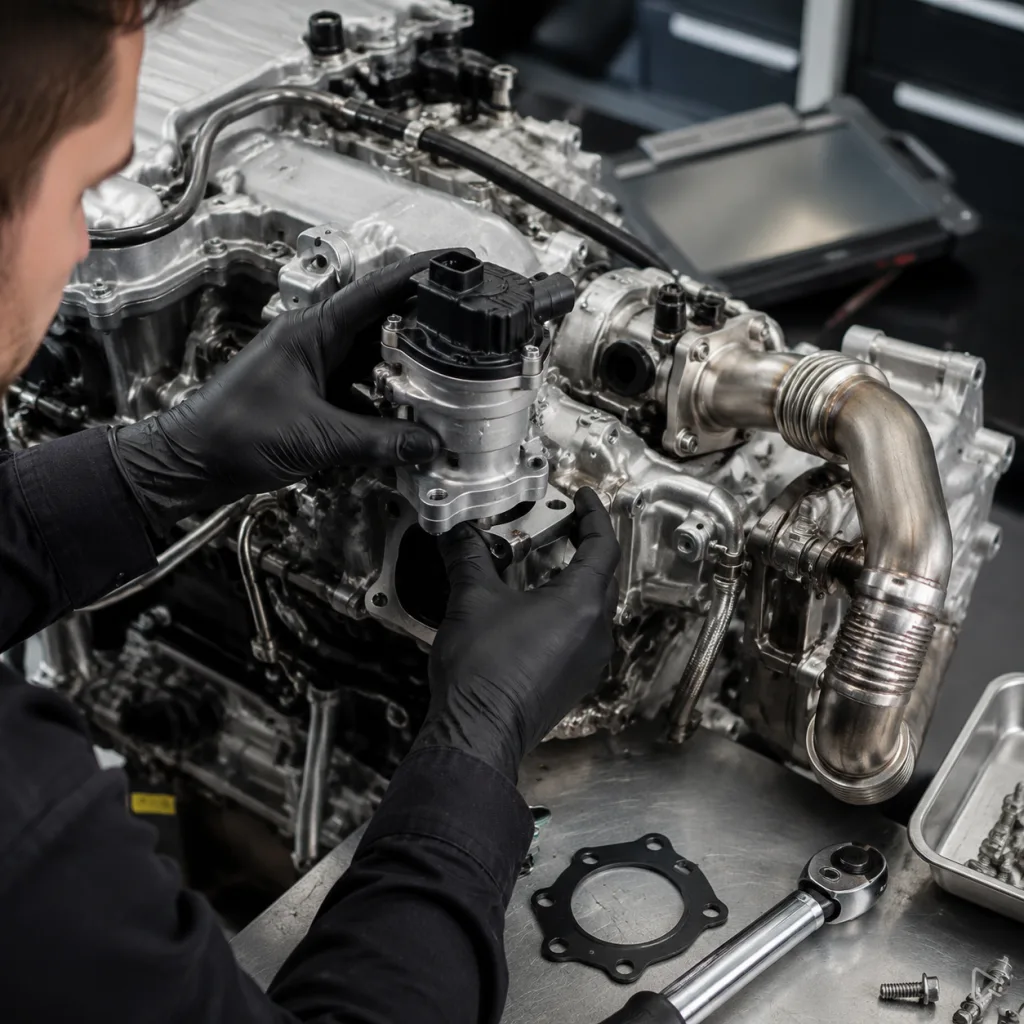
A connecting rod for Fiat Ducato replacement is typically sourced during diesel engine overhaul, crankshaft repair, piston-seizure recovery, bearing-damage repair, or fleet rebuild programmes. For procurement teams, the main risk is not cosmetic quality; it is dimensional mismatch, big-end bore distortion, incorrect weight grouping, unsuitable bolt specification, or weak fatigue validation. Ducato applications span multiple engine families, emissions stages, production years, and regional variants, so buyers should confirm engine code, rod length, bearing housing size, piston-pin bore, bolt type, and OE part-number cross-reference before placing volume orders. Driventus manufactures connecting rods for independent aftermarket supply, with inspection controls aligned to IATF 16949:2016 and ISO 9001:2015. This guide explains what importers, wholesalers, and repair-chain buyers should verify when sourcing OE-equivalent rods for Fiat Ducato applications. Driventus is an independent aftermarket manufacturer; brand names are referenced for fitment only.
Fitment Scope and OE-Equivalent Replacement Requirements
Fiat Ducato vans are widely used in delivery, municipal, camper, ambulance, and light-commercial fleets across Europe, the UK, Australia, Brazil, and other markets. Replacement demand is usually linked to high-mileage diesel service, turbocharger failure, overheating, oil starvation, bearing damage, or complete engine rebuild work.
For a connecting rod for Fiat Ducato replacement, procurement should not rely on the vehicle model name alone. The same commercial name can cover different displacement, emissions stage, engine code, crankshaft journal size, piston-pin diameter, rod length, and rod-bolt specification. Buyers should request application mapping by engine family and OE part-number convention where available, rather than assuming that one Ducato listing covers all versions. If a programme already uses a reference pattern such as OE 06A…, that reference should still be checked against the target engine code and physical dimensions.
Key fitment checks include:
Engine code and displacement, not only model year
Centre-to-centre rod length
Big-end bore diameter after cap assembly
Small-end bore diameter and bush material
Big-end width and small-end width
Piston-pin type: full-floating or press-fit, where applicable
Rod-bolt size, thread, and tightening method
Weight-group tolerance for matched engine sets
Bearing-shell compatibility with crankshaft journal size
Connecting rods operate under repeated tensile and compressive load, especially in turbocharged diesel engines used for commercial duty cycles. A rod may look acceptable at receiving inspection but still create risk if bore geometry, cap alignment, or material condition is outside specification. For B2B replacement supply, the purchase specification should define measurable acceptance criteria before samples or mass-production parts are released.
Inspection item
Why it matters
Typical control method
Centre distance
Affects compression height and piston protrusion
CMM or dedicated fixture
Big-end bore roundness
Controls bearing crush and oil-film stability
Bore gauge after bolt torque
Big-end bore cylindricity
Prevents local bearing overload
Multi-plane bore measurement
Small-end bore size
Controls pin clearance and noise
Air gauge or bore gauge
Parallelism and twist
Prevents side loading and abnormal wear
Rod alignment fixture
Rod weight grouping
Reduces engine imbalance
Precision weighing by set
Bolt preload consistency
Prevents cap movement at high load
Torque-angle validation
Surface defects
Reduces fatigue-initiation risk
Magnetic particle or visual inspection
</tr></thead><tbody> </tbody></table>For diesel light-commercial applications, matched-set supply is often preferable to mixed loose pieces. Importers serving repair chains should request rods packed as balanced sets where the engine repair procedure requires weight grouping. If single-rod replacement is requested, the distributor should still confirm that the replacement weight is within the repairer’s accepted range when compared with the remaining rods.
Driventus controls connecting rod machining through defined process routes that may include forging inspection, heat-treatment verification, CNC machining, cap fracture or cap machining where applicable, bush installation, honing, bolt assembly, and final dimensional inspection. The company’s quality system is structured around IATF 16949:2016 and ISO 9001:2015 requirements.
Material, Heat Treatment, and Fatigue Validation
Most modern replacement connecting rods for diesel van engines are produced from forged steel, often using medium-carbon or alloy steel grades selected for fatigue strength, machinability, and heat-treatment stability. The exact grade should be agreed by drawing, sample validation, or buyer specification. Procurement teams should avoid vague descriptions such as “high-strength steel” unless the supplier can provide inspection evidence and a documented control plan.
Recommended technical documentation for a connecting rod sourcing file includes:
Material certificate for each steel batch
Heat-treatment record and hardness range
Microstructure or grain-flow confirmation when required
Tensile or impact-test record when agreed in the control plan
Big-end and small-end bore inspection report
Bolt material and mechanical-property certificate
Fatigue or durability validation summary for the approved design
PPAP-style submission package when required by OEM or Tier-1 programmes
For aftermarket replacement programmes, validation typically focuses on dimensional conformance, hardness, bolt retention, fatigue resistance, and bearing-housing stability under load. These checks help confirm that the rod can support OE-equivalent fit and function within the intended repair environment. For OEM or Tier-1 work, Driventus can support additional documentation through custom manufacturing, subject to drawing, annual volume, and validation scope.
Regulatory compliance may also affect import requirements. For the EU market, buyers should consider material and chemical-substance obligations under REACH (EC) No 1907/2006. Packaging, labelling, and batch traceability should be aligned with the destination market, importer procedures, and distributor warranty rules.
Replacement Failure Modes to Consider During Sourcing
A connecting rod replacement is often ordered after another system has already failed. If the root cause is not identified, a new rod may be blamed for a repeat failure caused by lubrication, cooling, injector, crankshaft, bearing, or assembly issues. This is especially important for fleet and repair-chain buyers, where warranty decisions need consistent technical evidence across many workshops.
Common failure links include:
Oil starvation: Worn oil pump, blocked pickup, incorrect oil grade, low oil level, or extended drain interval can damage big-end bearings and overheat the rod housing.
Hydraulic lock: Coolant or fuel entering the cylinder can bend the rod without immediate visible bearing failure.
Overheating: Loss of cooling capacity can distort pistons, reduce oil-film stability, and increase pin-bore load.
Turbocharger failure: Oil contamination, shaft failure, or intake debris may accelerate bearing, piston, and cylinder damage.
Incorrect assembly: Reused torque-to-yield bolts, wrong bearing shells, poor cap matching, contaminated mating faces, or insufficient lubrication can cause early failure.
Injector over-fuelling: Excessive cylinder pressure can overload rods, pistons, bearings, and crankshaft journals.
For distributors, these points matter because warranty claims often depend on inspection evidence rather than the damaged part alone. A useful warranty process should request photos, engine code, mileage, bearing condition, crankshaft journal measurement, oil condition, rod-bolt condition, installation record, and any related injector or turbocharger findings. This protects both the repairer and the supplier from incomplete failure analysis.
Replacement rods should be marketed as OE-equivalent in fit and function when supported by measurement and validation. They should not be described as approved, authorised, genuine, or endorsed by any vehicle manufacturer unless a formal approval exists and is documented.
Procurement Checklist for Importers and Repair Chains
The purchasing process should separate fitment confirmation, engineering approval, commercial terms, and logistics. This structure is especially useful for multi-location repair chains and national distributors that need to reduce returns caused by mixed applications, unclear labels, or inconsistent workshop ordering data.
Use the following checklist before placing a volume order:
Confirm target engine codes, year range, displacement, and emissions variant.
Provide sample, drawing, or verified OE cross-reference convention when available.
Request first-article inspection before mass shipment.
Define acceptable dimensional tolerances on the purchase specification.
Confirm whether rods are supplied individually or as matched-weight sets.
Specify rod bolts: included, pre-assembled, or supplied separately.
Confirm surface treatment, rust protection, and export packaging.
Request batch traceability from forging or steel lot to final packing.
Verify IATF 16949:2016 and ISO 9001:2015 certification status.
Agree claim-handling evidence before shipment.
A practical receiving inspection plan for wholesalers should include random dimensional checks, packaging review, label verification, rust-protection review, and sample weight measurement. For repair-chain supply, a QR-coded batch record or clear carton labelling can reduce warehouse errors and make claim investigation faster.
Driventus exports engine and powertrain parts to more than 60 countries from Taizhou, Zhejiang. For replacement programmes, typical commercial discussions cover MOQ, annual forecast, private-label packaging, inspection level, payment terms, and shipment schedule.
How Driventus Supports Ducato Rod Programmes
Driventus supplies engine components including pistons, crankshafts, gaskets, water pumps, turbochargers, and connecting rods for aftermarket and B2B customers. For Fiat Ducato replacement programmes, the company can support catalogue-based supply or sample-driven development when the buyer has a defined application need and clear fitment data.
Support typically includes:
Fitment review using buyer-supplied application data
Sample comparison against an existing replacement part
Dimensional inspection report for approval samples
Material and heat-treatment documentation where agreed
Batch traceability and export packing
Private-label packaging for distributors
Engineering discussion for non-standard requirements
For buyers serving EU, UK, US, Canadian, Australian, or Brazilian channels, the most efficient enquiry includes engine code, required quantity, target delivery market, packaging requirement, and any known OE or aftermarket reference already used in the buyer’s system. With those details, Driventus can confirm whether the requirement matches an existing item or needs a custom development route.
Driventus is an independent aftermarket manufacturer; brand names are referenced for fitment only. Buyers can request a quote with application details and expected annual volume.
Frequently asked questions
Confirm engine code, rod length, big-end bore, small-end bore, rod width, bolt specification, bearing compatibility, and weight group where relevant. Model year alone is not enough because Ducato applications vary by engine family, emissions stage, and market.
Yes. For overhaul programmes, matched-weight sets are usually preferred to reduce imbalance and simplify repair-chain inventory. The required weight tolerance, packing format, and inspection method should be agreed before production or shipment.
No. Driventus is an independent aftermarket manufacturer; brand names are referenced for fitment only. Replacement parts are supplied for OE-equivalent fit and function based on dimensional checks, material controls, and validation requirements.
For application confirmation, sample review, or distributor pricing, send engine details and target volumes to Driventus. Start with a soft enquiry at /contact.html