Connecting Rod for Audi A3 OE Equivalent: Buyer Guide
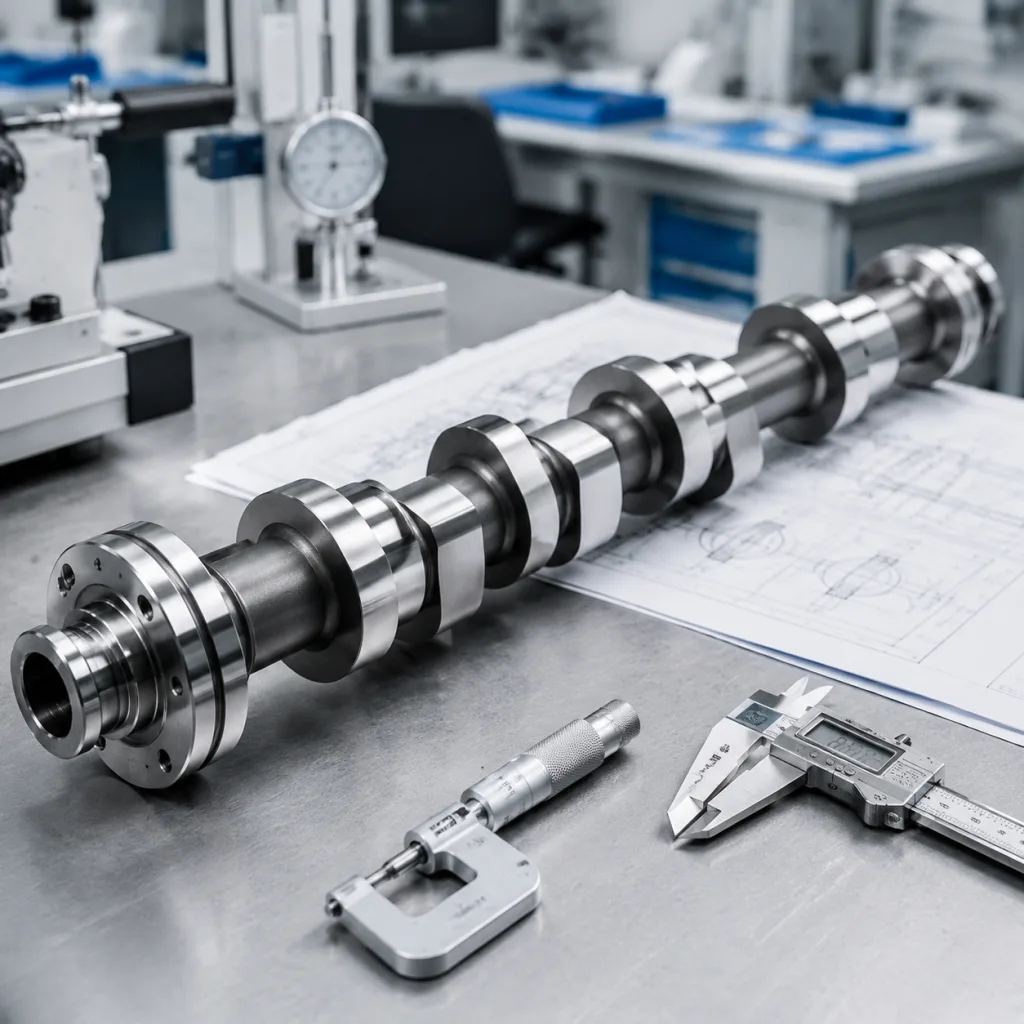
A connecting rod for Audi A3 OE equivalent needs more than a matching outline. Procurement teams should confirm centre-to-centre length, big-end and small-end bore sizes, cap alignment, bolt specification, mass balance, and material condition before approving supply. A visual match alone is not sufficient. If rod length, bore finish, or fastener design differs, the engine can develop noise, oil temperature rise, bearing wear, or piston contact issues after assembly. The safest sourcing approach is to compare the target OE reference, confirm the engine code and application, and validate dimensional inspection data against the build standard. Driventus is an independent aftermarket manufacturer; brand names are referenced for fitment only. For buyers who need repeatable supply, documentation, and cross-reference control, this part family is best sourced through a supplier that can provide inspection records, traceability, and batch consistency under IATF 16949:2016 and ISO 9001:2015.
What OE-equivalent means for a connecting rod
OE-equivalent means the part matches the original application’s function, fit, and durability target, not just the visual shape. For a connecting rod, the buyer should treat these as minimum acceptance points:
Centre-to-centre length held to the OE drawing tolerance, typically within ±0.02 to ±0.05 mm on precision aftermarket programs
Big-end bore and small-end bore within diameter, roundness, and taper limits that preserve bearing crush and pin fit
Rod bolt thread, seat geometry, and clamp-load capability matched to the original load path
End-to-end mass control suitable for matched-cylinder assembly, commonly within 1 to 3 g for passenger-car programs unless the drawing is tighter
Material specification and heat-treatment state verified by certificate and hardness test
Surface finish, parting-line quality, and cap alignment sufficient to prevent bearing distress and fretting
For Audi A3 sourcing, buyers should verify the engine code first, then confirm the OE number in the target catalogue, for example `OE 06A107065` where that exact cross-reference applies. Do not buy on model name alone. Different A3 engines can use different rod lengths, wrist-pin diameters, bore widths, and bolt designs. Driventus is an independent aftermarket manufacturer; brand names are referenced for fitment only.
Key dimensions and inspection points
Below is the minimum data set procurement should request before approving a replacement rod.
Inspection item
What to request
Typical acceptance logic
Centre-to-centre length
Drawing value with tolerance and actual measured result
Match OE nominal; verify lot report shows stable process capability
Big-end bore
Diameter, roundness, taper, face width, and honing condition
Bore must suit bearing shell crush and oil-film stability
Small-end bore
Diameter, bushing ID if fitted, and surface roughness
Pin fit should remain free-running with controlled clearance
Rod bolt spec
Bolt grade, thread class, under-head geometry, and tightening method
Clamp load must meet the original design intent
Rod mass
Individual weight and matched-set spread
Passenger-car replacement programs often target 1-3 g spread; tighter if requested
Material and heat treatment
Material grade, hardness range, and process route
Forged or powder-metal route must be disclosed and consistent
Cap alignment
Parting-face geometry and cap-to-rod index control
Misalignment increases bearing edge loading
Surface finish
Roughness on bore and critical faces
Finish should support bearing seating and fatigue life
</tr></thead><tbody> </tbody></table>For production control, ask for first article inspection, in-process gauge records, and final dimensional reports. For a buyer-friendly process, a supplier should also state the measurement equipment used, calibration status, sampling frequency, and whether 100% checking applies to bolt threads or bore dimensions. If the part is intended for turbocharged or high-load use, ask for fatigue data, bolt-preload data, and a clear declaration of the maximum recommended engine load envelope. A rod that is dimensionally close but unstable under load is not acceptable as a replacement source.
How to validate fitment before purchase
Start with the engine code, not the vehicle badge. Then confirm the following points before sending a PO:
1. Cross-reference the OE number against the exact engine variant and power output. 2. Confirm whether the original rod is forged, cracked-cap, or powder-metal based, because service parts are not interchangeable unless the design and bolt system match. 3. Compare the rod length, pin size, big-end width, and cap interface with a verified sample or drawing. 4. Confirm whether the application uses standard, undersize, or oversize bearing shells, since that affects final clearance. 5. Check whether the supplier’s part includes bolts, and if so, whether they are torque-to-yield or reusable high-strength fasteners.
If the buyer cannot inspect the OE part directly, request photographs with measurement points marked, plus a scan or print of the OE reference label. A supplier should be able to provide a dimensional drawing, material declaration, and batch traceability within the quotation cycle. For buyers working under regulated procurement or quality gates, REACH (EC) No 1907/2006 declarations and material compliance statements should be part of the file. Validation should also include packaging control, part marking, corrosion protection for storage, and export handling details such as carton quantity, gross weight, and pallet configuration.
Why sourcing control matters for replacement programs
Replacement programmes fail when interchangeability is assumed instead of verified. Common issues include mixed engine references, inconsistent bolt supply, and rod-to-rod mass variation across lots. These problems increase returns and workshop rework, especially when buyers source from multiple channels without common inspection criteria.
A practical sourcing program should include three commercial controls. First, require a target MOQ that matches your forecast, but allow pilot lots for validation; many B2B buyers start with 50 to 100 pieces for test-fit and then scale to 300 to 1,000 pieces per release depending on engine coverage. Second, ask for an explicit price ladder: sample pricing for validation, tier-1 pricing at MOQ, and annual contract pricing at committed volume. Third, link lead time to process stage: stock items may ship in 7 to 15 days, standard production in 25 to 35 days, and drawing-based custom work in 45 to 60 days or more, depending on tooling and inspection depth.
Driventus supports B2B buyers with controlled production, inspection records, and export documentation. Our quality system is built around IATF 16949:2016 and ISO 9001:2015. For aftermarket programmes, that matters because repeatability is as important as single-piece fitment. If you need quoting discipline, request incoterms, unit price by tier, PPAP-style documentation if required, and a firm validity window for both price and lead time.
If your catalogue needs broader engine coverage, see our catalog and engine components. If you need target-specific development, custom manufacturing is available for drawing-based and sample-based projects.
Specification request checklist for buyers
Use this checklist when requesting a quote or audit pack:
OE reference and application range, including engine code and model year breakpoints
Engine displacement, fuel type, turbo/non-turbo status, and emission family where relevant
Rod length, big-end bore, small-end bore, face width, and bolt specification
Material grade, heat-treatment method, and hardness range with test method
Dimensional tolerance report, runout/roundness data, and sample count
Rod mass, matched-set limit, and balancing method
Packaging, labelling, barcoding, carton quantity, and pallet requirement
MOQ, tiered price breaks, quotation validity, and sample charge policy
Lead time by order size, production slot, and replenishment method
Country of origin, HS code if available, and export paperwork set
Traceability format, lot code structure, and retention period for records
For durability-related verification, buyers may also ask for fatigue or corrosion testing references where applicable. For surface durability in related components, standards such as SAE J2527 or ECE R-83 may be cited where relevant to the test programme, but only when the part and test method genuinely apply. Before placing a production order, align the acceptance criteria in writing so that inspection results, commercial terms, and delivery promises all point to the same part standard.
Frequently asked questions
No. OE-equivalent means it is designed to match the original fit and function, but it is not a vehicle maker’s approved part. Buyers should verify dimensions, material, and application before purchase.
Confirm the engine code, OE cross-reference, rod length, bore sizes, bolt specification, and whether the original design is forged or cracked-cap. Model name alone is not enough.
Yes. We support B2B sourcing with dimensional documentation, traceability records, and quality paperwork for procurement review. Use the contact form for project-specific requests.
If you are sourcing a connecting rod for Audi A3 OE equivalent, send the OE reference and engine code through our contact form and we will review fitment data with you: /contact.html