Clutch Kit Volvo Supplier for B2B Sourcing
A clutch kit Volvo supplier should be judged by how well it reduces repeat-order risk, not by how many references appear in a catalogue. For B2B buyers, the real cost sits in wrong-fit returns, noisy installations, unstable release bearing geometry, stock gaps and claims that are hard to trace back to a batch. Driventus manufactures and exports aftermarket engine and powertrain components from Taizhou, Zhejiang, supplying buyers in more than 60 countries. For Volvo-fitment clutch kits, we support part-number cross-reference review, sample validation, batch inspection, export documentation and buyer-specific labelling. The work suits aftermarket distributors, wholesalers, OEM and Tier-1 programmes, and multi-location repair chains that need controlled supply instead of one-off purchasing. Driventus is an independent aftermarket manufacturer; brand names are referenced for fitment identification only.
Define the Buying Scope Before You Compare Suppliers
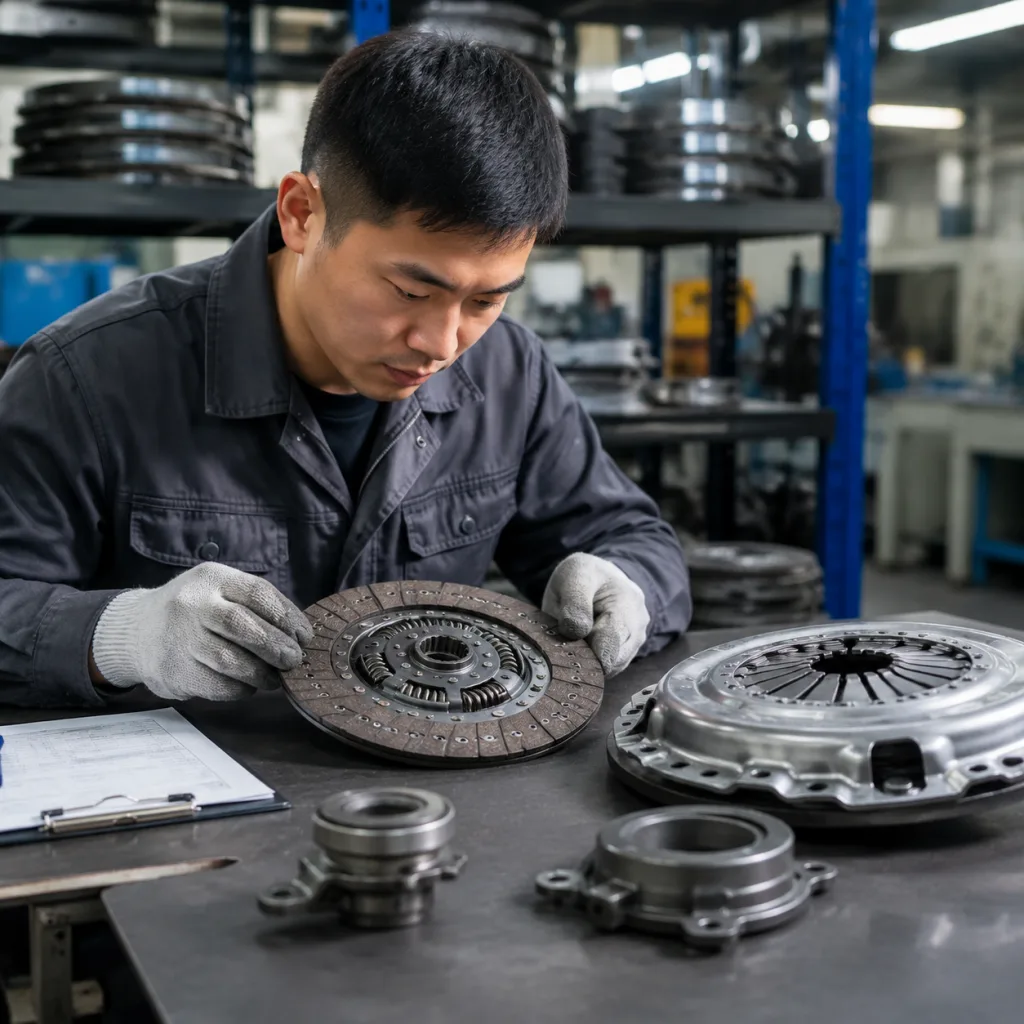
Start with the kit, not the catalogue line. A Volvo-fitment clutch kit usually includes a clutch cover assembly, driven disc and release bearing. Some programmes also require a concentric slave cylinder, pilot bearing, alignment tool, flywheel bolts, release fork clip or grease sachet. If two suppliers quote different kit contents, the lower price may simply be a smaller bill of materials.
The sourcing decision should answer three questions:
- Which references are commercial launch items, and which are only coverage samples?
- Which components must remain source-controlled across repeat orders?
- Which inspection records are required before the shipment can be released?
Driventus supports sourcing by cross-referencing buyer-supplied references, sample markings, vehicle application data and drawings where available. We do not claim approval or endorsement by any vehicle manufacturer. Brand and model names are used only to identify aftermarket fitment demand.
Useful RFQ data includes:
- Target vehicle application, engine code, transmission type, production years and market region
- OE-style reference format, aftermarket interchange number or existing supplier code
- Driven disc diameter, such as 215 mm, 228 mm, 240 mm or 250 mm where known
- Spline count and input-shaft size, for example 20T, 22T or 23T with measured major diameter
- Required kit contents and whether a CSC or separate release bearing is included
- Annual demand forecast by SKU, split by first order, repeat order and safety-stock target
- Packaging format: neutral carton, distributor brand or repair-chain programme pack
- Required inspection plan, documentation level and sample quantity
A practical RFQ separates high-turn SKUs from exploratory coverage. One distributor might request 5–10 validation samples, then order 20–50 sets per fast-moving reference and 10–20 sets per slow-moving reference. Buyers can review related powertrain and engine products through our catalog, including complementary parts for distributor consolidation.
Audit the Failure Points, Not Just the Factory Floor
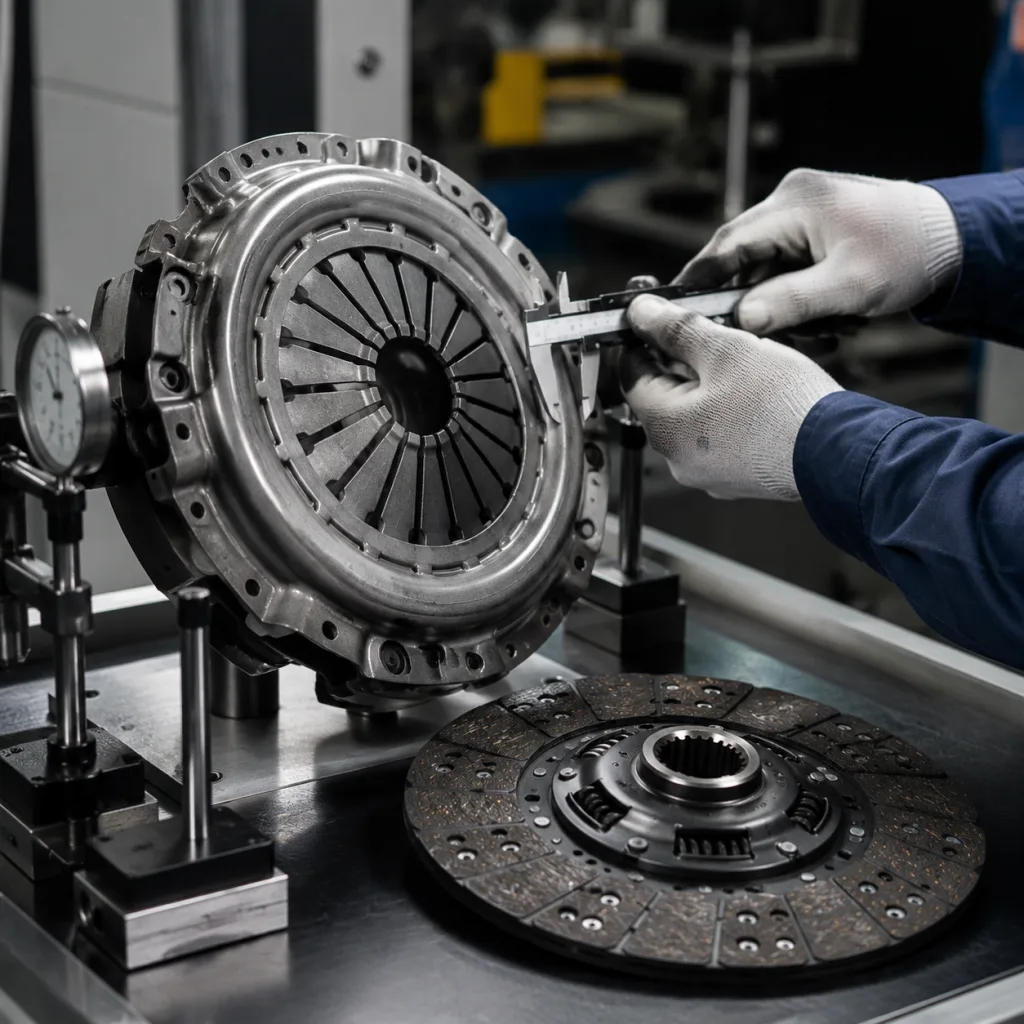
A tidy workshop does not prove a clutch kit will behave correctly after installation. The important audit question is where failure can enter the process. Clutch performance depends on friction material consistency, pressure plate machining, diaphragm spring characteristics, rivet integrity and bearing smoothness. Small variation can become pedal vibration, incomplete disengagement, abnormal noise, premature slip or reduced service life.
Driventus operates under IATF 16949:2016 and ISO 9001:2015 based management systems. These standards do not replace part validation, but they provide a framework for document control, traceability, nonconforming product handling, corrective action and supplier management. Buyers can review our quality system before arranging a remote or on-site audit.
| Failure mode to prevent | What procurement should check | Evidence to request |
|---|---|---|
| Lining or steel variation | Steel grade, friction lining batch, bearing source and certificate match | Material certificates, RoHS/REACH declarations where required and incoming inspection records |
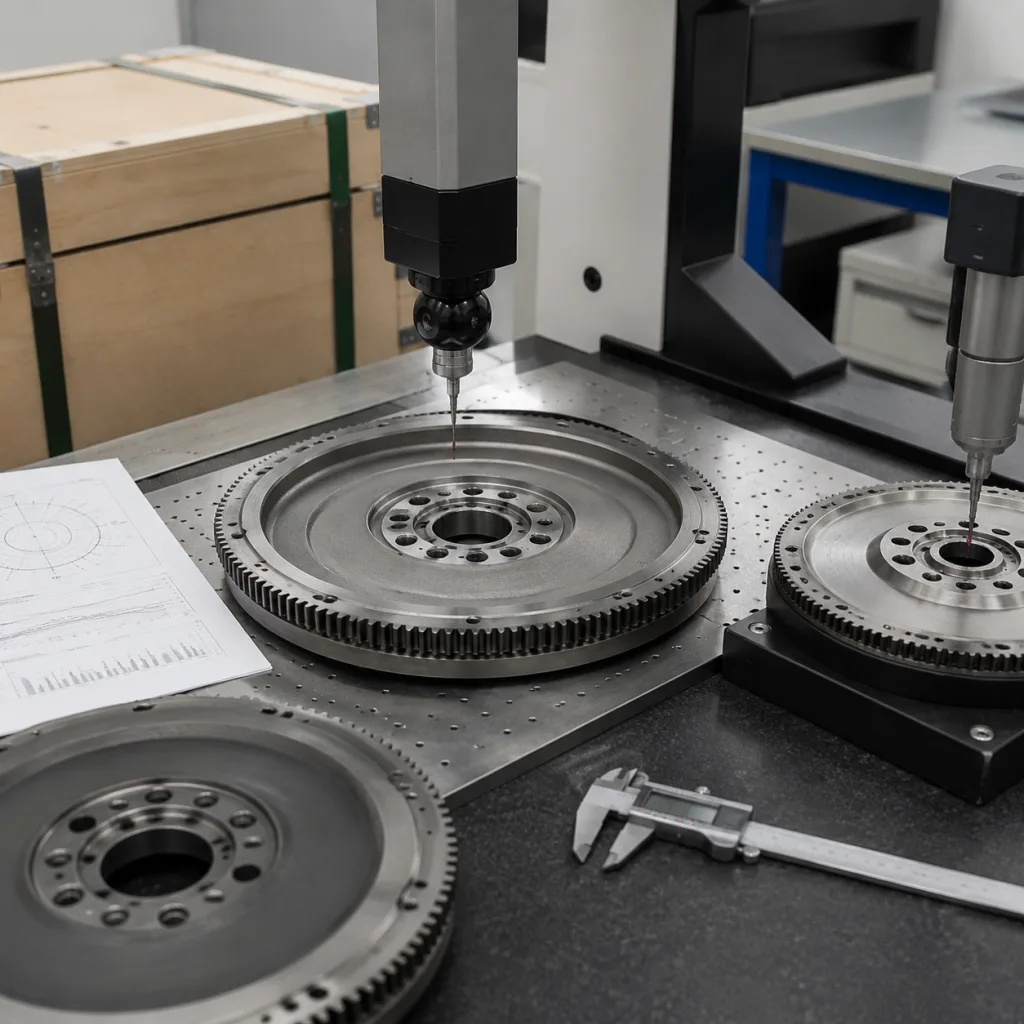
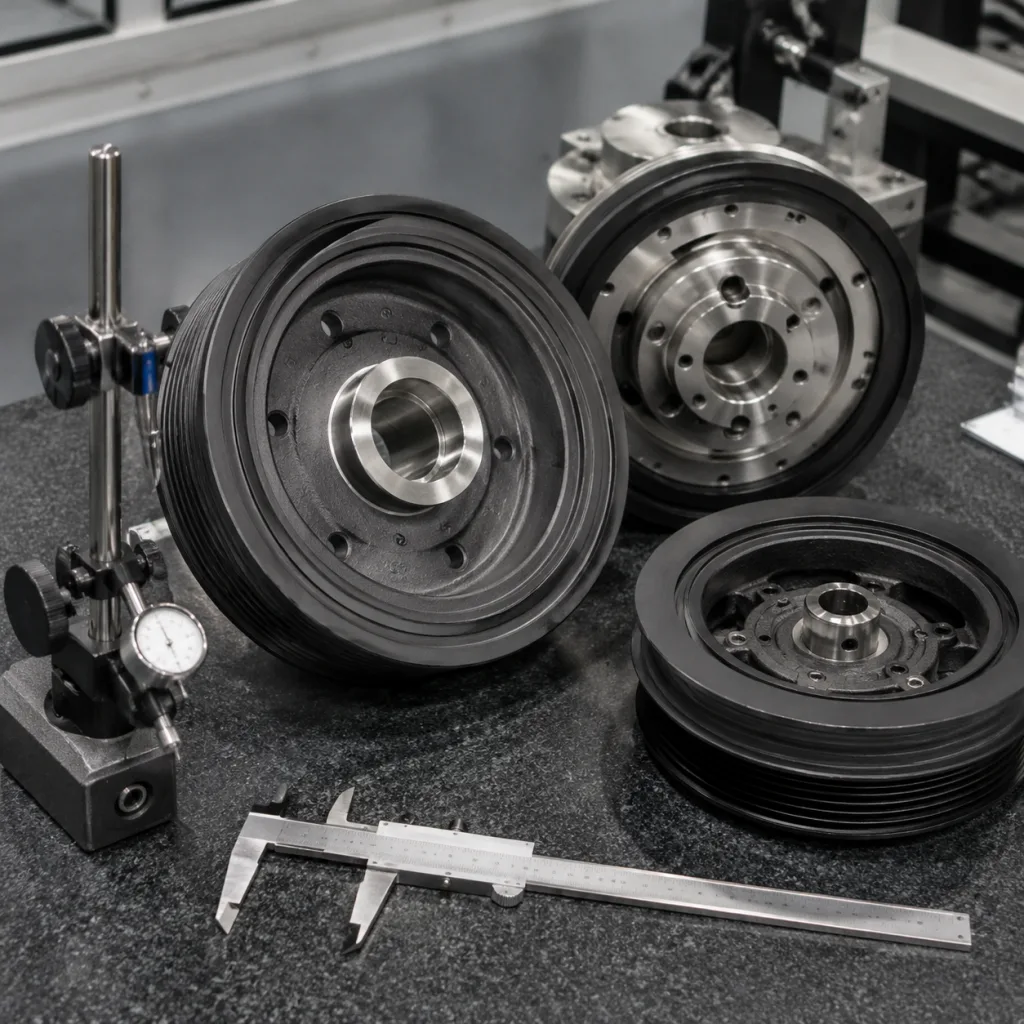
| Incorrect mounting geometry | Pressure plate flatness, cover height, dowel hole position and bolt circle | Control charts, calibrated gauge list and first-piece/last-piece records |
| Weak or inconsistent assembly | Rivet setting, spring height, disc runout and bearing fit | Work instructions, torque/rivet force records and in-process checks |
| Poor release feel or noise | Clamp load, release travel, rotational balance and bearing noise | Batch test reports, sample lot results and test equipment calibration records |
| Untraceable field claim | Batch identification from finished kit back to cover, disc, bearing and lining | Lot code, packing record and component batch register |
| Repeated defect after complaint | Response to field returns, incoming defects or dimensional drift | 8D report, containment record and verification of corrective action |
| Procurement factor | Typical consideration |
|---|---|
| MOQ | Existing references often start from 20–50 sets per SKU; private-label cartons usually require 100–300 sets per artwork or agreed mixed-SKU carton run |
| Sample lead time | 7–15 days for stocked or existing references; 20–45 days for new configuration, CSC inclusion or buyer-specific components |
| Mass production lead time | 30–45 days after deposit and packaging approval for repeat items; 45–75 days where lining, bearing or tooling capacity must be reserved |
| Price logic | Unit price moves with disc diameter, bearing type, CSC inclusion, packaging, inspection level and forecast commitment |
| Incoterms | FOB Ningbo/Shanghai, CIF destination port or FCA factory/forwarder depending on buyer logistics control |
| Packaging | Neutral cartons, private label cartons, palletised export packing, shrink-wrapped kits or repair-chain installation packs |
| Documentation | Commercial invoice, packing list, certificate of origin, inspection report, material declaration and buyer-specific label file |