Clutch Kit Volkswagen Manufacturer China: Sourcing Guide
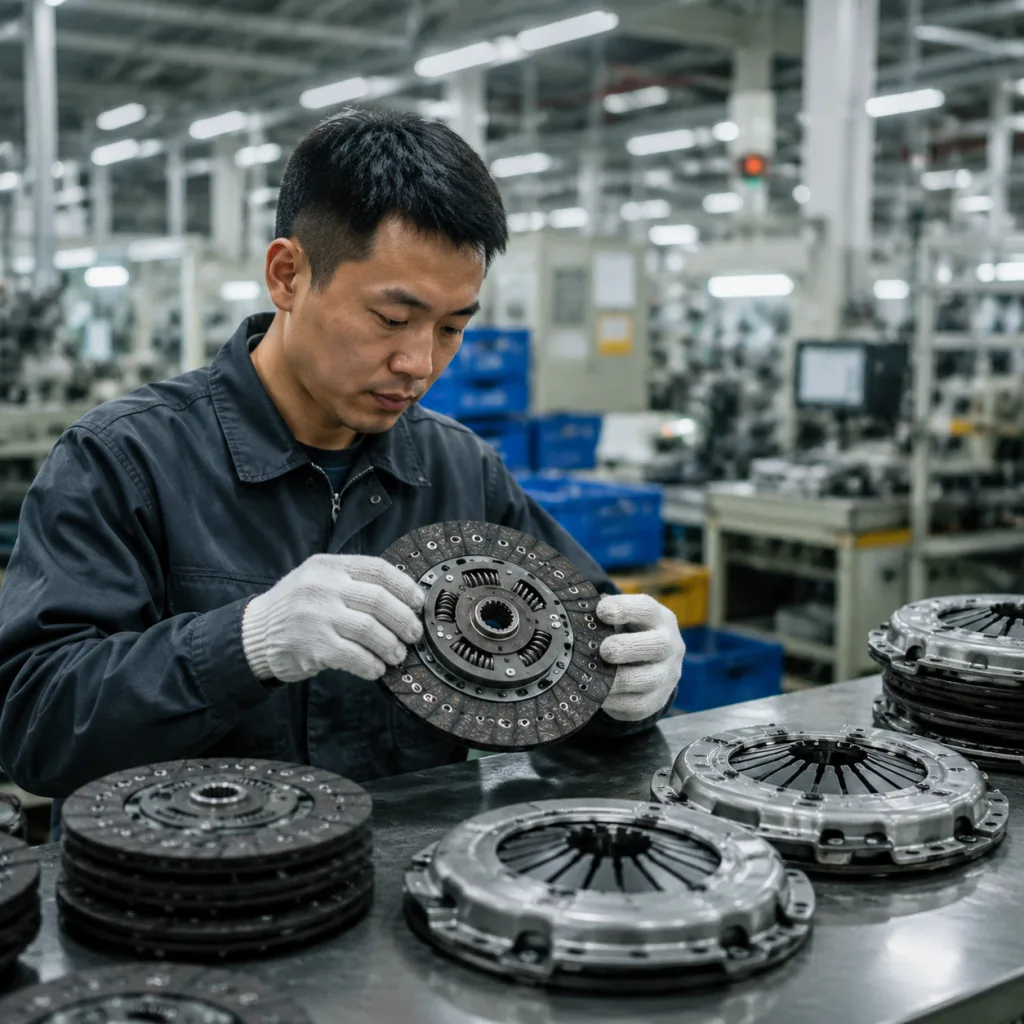
Sourcing a Volkswagen-compatible clutch kit from China is a procurement decision, not a simple catalogue match. Buyers need verified fitment, stable friction materials, controlled manufacturing, and delivery terms that protect aftermarket, OEM, or service-network schedules. Driventus Auto Parts manufactures clutch kit programmes in Taizhou, Zhejiang, for B2B customers in more than 60 export markets, with documented quality systems and programme-based supply support. Our clutch kits are developed for aftermarket distributors, OEM and Tier-1 supply chains, and multi-location repair networks that require consistent pedal feel, reliable release performance, and predictable service life. Driventus is an independent aftermarket manufacturer; Volkswagen and other vehicle brand names are used for application reference only. When a buyer searches for a clutch kit Volkswagen manufacturer China, the decision usually comes down to MOQ, lead time, auditability, packaging control, and whether the supplied kit matches the OE interface dimensions and torque requirements for the target application.
How to decide if a Volkswagen clutch kit is source-ready
A clutch kit only becomes source-ready when the technical file and the commercial file agree. For Volkswagen-compatible applications, that means fitment data, dimensional evidence, and packaging requirements all need to be locked before a buyer scales beyond sampling.
Start with the vehicle itself, not the part description. The minimum decision set should identify:
- Vehicle platform, engine code, transmission type, and model-year range
- OE or aftermarket cross-reference already used by the programme
- Disc outer diameter, spline count, hub height, hub offset, and facing thickness
- Pressure plate clamp load, cover height, cover runout, and bolt pattern
- Release bearing type, contact position, and installation depth
- Packaging format, label content, barcode needs, and batch traceability rules
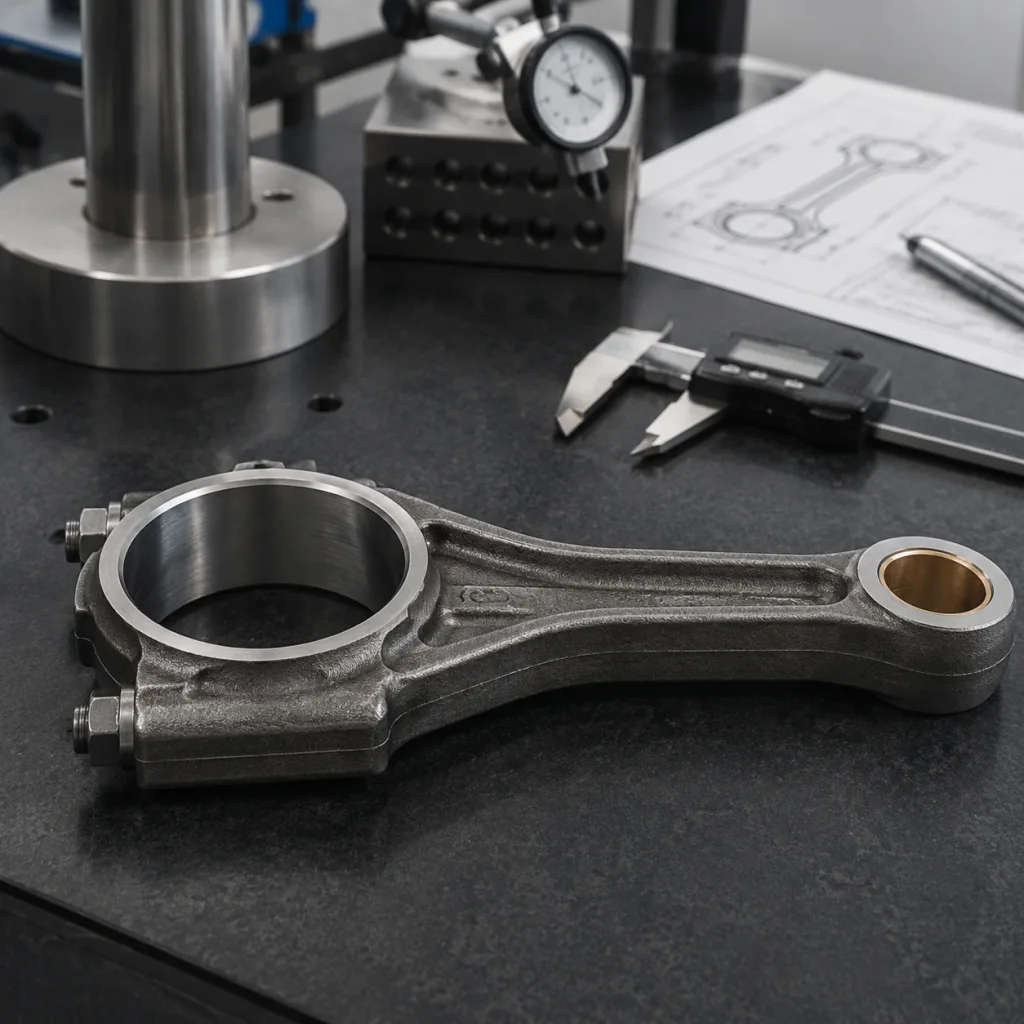
A useful sourcing file replaces vague language with measurable targets. For example, a request should state disc diameter to the nearest millimetre, spline count, pressure plate bolt circle, and acceptable runout. Practical tolerances often specify disc thickness within ±0.15 mm, cover height within ±0.20 mm, and friction surface runout under 0.30 mm, subject to the exact vehicle platform and approved reference sample.
Do not rely on an OE number alone. A reference such as `OE 06A107065` helps, but cross-references vary by market, engine family, and transmission specification. The safer approach is to combine the reference number with measured dimensions, application data, and a confirmed sample comparison.
For European importers and distributors, material declarations for REACH (EC) No 1907/2006 should also sit in the file where applicable. That supports customs review, downstream compliance checks, and customer audits.
To reduce quoting friction, ask suppliers to respond to the same template: application, OE reference, drawing or sample photo, dimensional tolerances, target annual volume, carton requirement, and requested incoterm. If the suppliers quote the same way, comparison becomes much faster and much cleaner.
What factory controls separate a dependable supplier from a low-cost one
Price is visible immediately; process control is not. In clutch kit sourcing, the difference between a dependable supplier and a risky one usually shows up in how the factory controls materials, assembly, and traceability.
Driventus runs clutch kit production under `IATF 16949:2016` and `ISO 9001:2015`. For procurement teams, those systems matter because they require controlled processes, batch records, inspection points, and corrective-action discipline. In practical terms, that reduces variation in friction material bonding, disc balance, plate flatness, spring consistency, and final assembly quality.
The controls that deserve attention are straightforward:
| Control point | Why it matters |
|---|---|
| Incoming material inspection | Confirms steel, friction facings, springs, bearings, and purchased components before production |
| Process parameter control | Keeps bonding, riveting, heat treatment, and assembly steps within defined limits |
| Dimensional inspection | Checks runout, thickness, spline accuracy, cover height, and bolt geometry |
| Functional testing | Confirms release behaviour, engagement characteristics, and assembly consistency |
| Batch traceability | Links materials, production records, inspection data, and shipment lots for claim review |
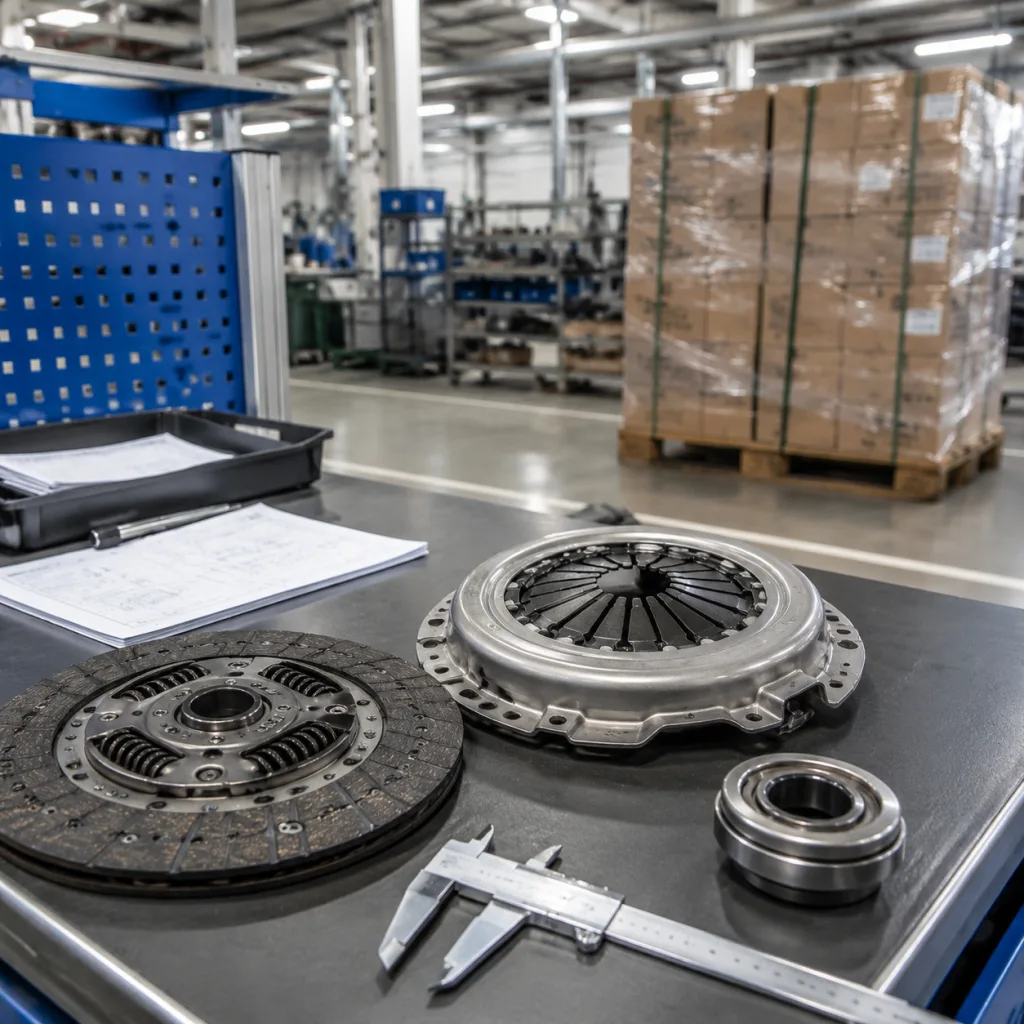
| Final packaging check | Reduces transit damage and confirms labels, cartons, and export packing match the order |