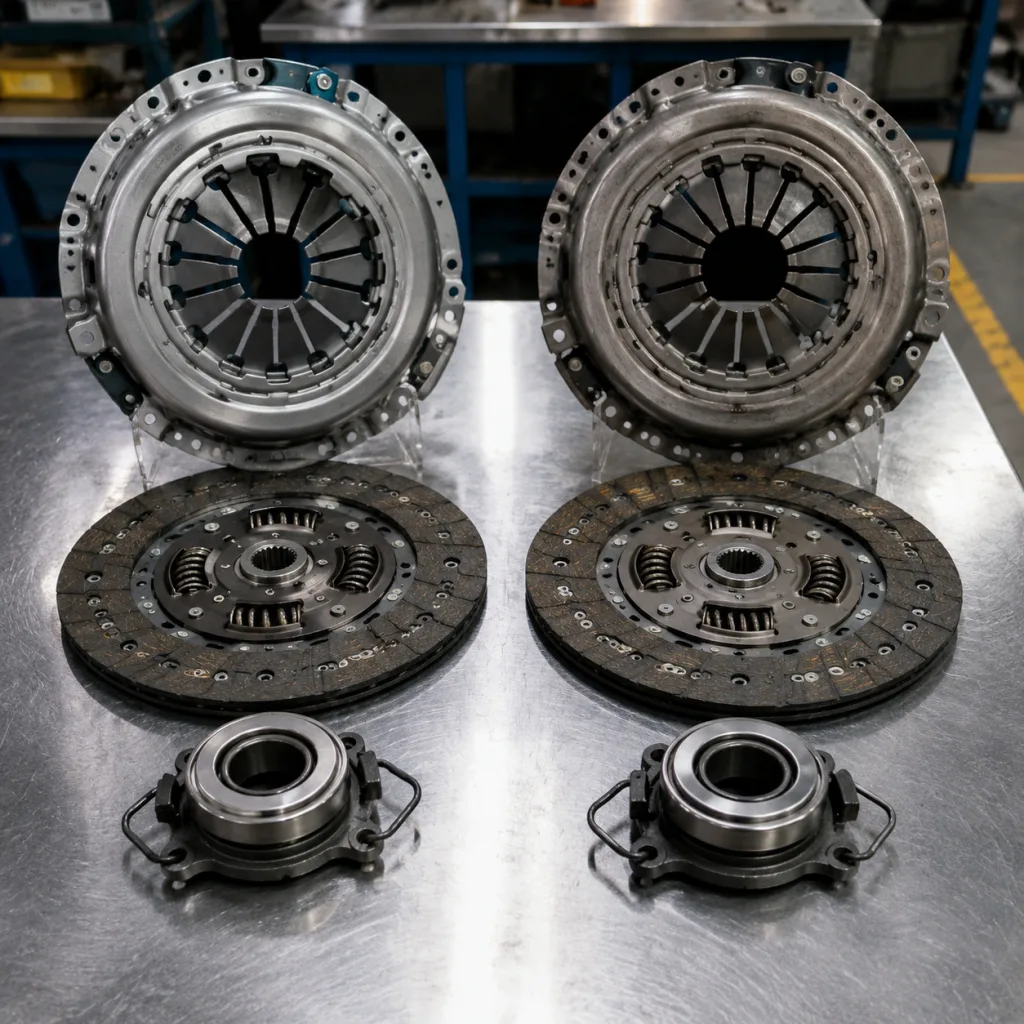
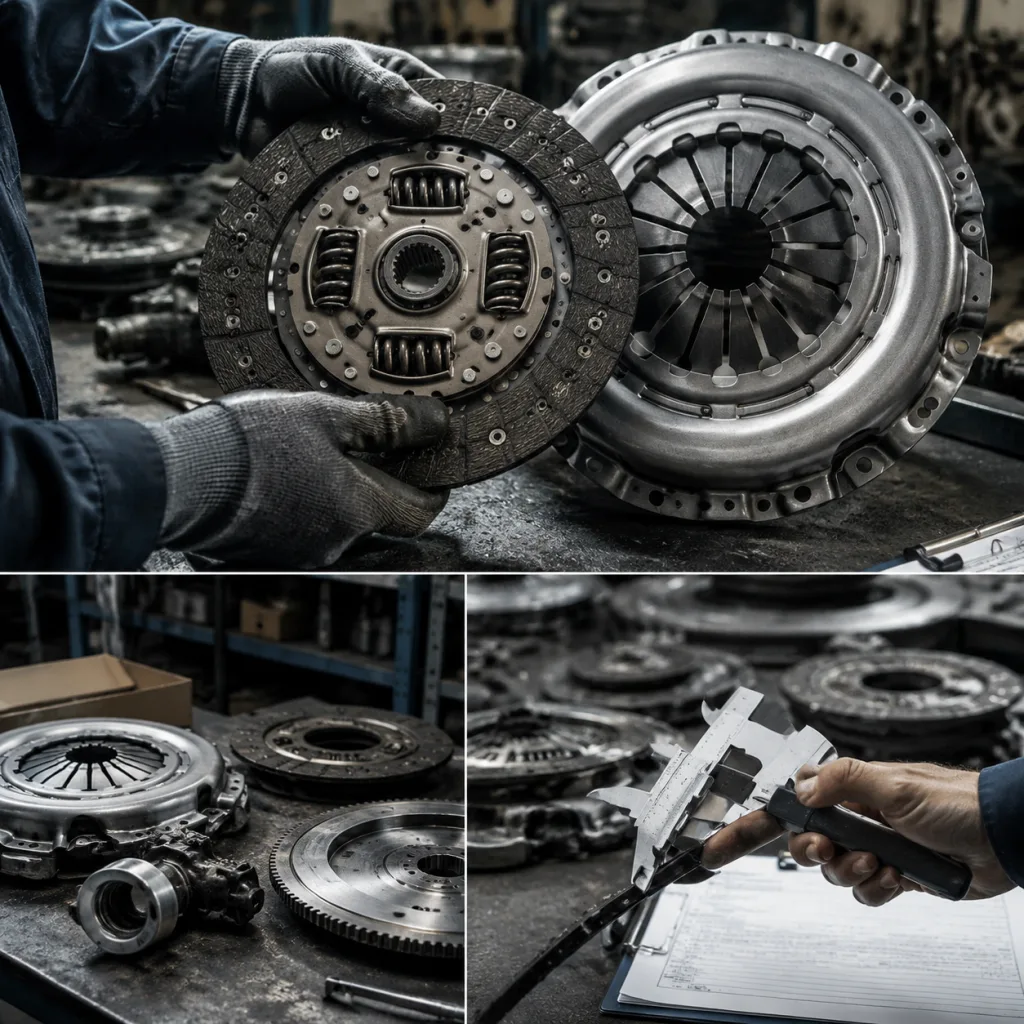
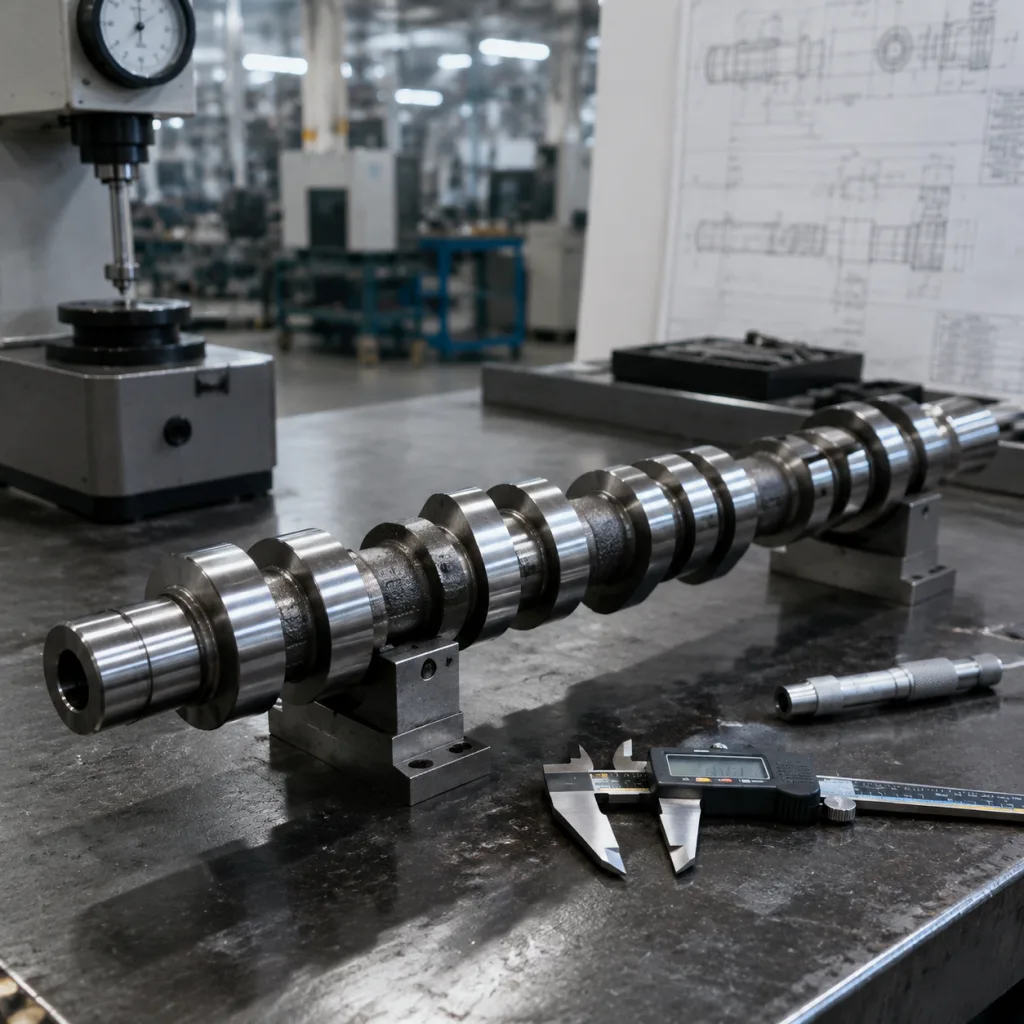
Choosing a clutch kit Isuzu replacement is a fitment decision first, a brand decision second. The wrong spline count, cover pattern, bearing type, or flywheel step can still let the kit bolt up while creating harsh engagement, noise, slip, or early wear. Driventus is an independent aftermarket manufacturer, so brand names appear here only as fitment references. Our sourcing method is straightforward: match OE geometry, verify material pairing, and confirm performance with dimensional inspection and validation testing. That matters for distributors, repair networks, and fleet buyers that need repeatable service life across multiple batches. Driventus manufactures clutch-related powertrain parts under IATF 16949:2016 and ISO 9001:2015 controls, with traceable lot records and export documentation for international supply.
Spec check: what must match first
Start with the vehicle record, then confirm the part geometry. For Isuzu light-duty and medium-duty applications, buyers should lock down the engine code, transmission model, flywheel diameter, release system type, and service-clearance tolerances before they compare quotations.
Minimum verification list
Disc outside diameter, spline count, and spline major diameter
Hub offset, spring-window layout, and damper ring clearance
Cover assembly bolt pattern, pitch-circle diameter, and installed height
Release bearing inner diameter, outer diameter, and contact-face style
Diaphragm spring free height, installed clamp load, and release-travel window
Flywheel step height, runout, and friction-surface condition
Practical sourcing tolerances
Disc OD: nominal OE size with ±0.5 mm dimensional variance
Spline fit: no binding through the full engagement length; target clearance only where specified by OE drawing
Cover runout: typically within 0.15 mm TIR on the assembled face for stable release feel
Flywheel runout: typically within 0.10 mm TIR after machining or resurfacing
Step height: match the OE service spec exactly, commonly within ±0.05 mm
If the vehicle uses an OE cross-reference such as `OE 8-970...` or a similar catalogue code, treat it as an index only. Final approval should come from dimensional match, tolerance confirmation, and test records, not the cross-reference alone. For bulk buying, request the exact drawing revision and acceptance range for critical dimensions before you issue a purchase order.
OE-equivalent or not? Use this comparison
OE-equivalence is measurable. It means the replacement part fits the same envelope, interfaces with the same adjoining components, and performs inside the same functional window.
Checkpoint
What to match
Why it matters
Disc diameter
Same nominal size as OE, with verified thickness tolerance
Preserves clamp geometry and wear rate
Spline profile
Same tooth count, major diameter, and lead-in chamfer
Prevents shaft mismatch and chatter
Cover height
Same installed height and spring position
Maintains release travel margin
Bearing type
Same contact face, ID/OD, and seal type
Avoids noise and uneven load
Friction material
Equivalent lining family and heat-rating class
Controls fade, bite point, and engagement feel
Clamp load
Same functional load band at installed height
Prevents slip under torque and prevents pedal overload
</tr></thead><tbody> </tbody></table>This is the point to compare a sample against a reference part on the bench, not in the catalogue. A practical incoming inspection routine measures at least three units per lot and checks disc thickness, hub offset, cover height, and bearing dimensions against the approved drawing. If pedal feel matters, ask for a clamp-load curve instead of a single value; a defined band is more useful than a headline number. Dimensional parity lowers return risk and keeps warehouse substitutions clean across variants.
Validation deep-dive: what a supplier should prove
Driventus validates clutch components through controlled inspection and functional checks before shipment. The exact test plan depends on the application, but the baseline should include dimensional inspection, concentricity checks, balance verification where relevant, and material traceability review.
We align validation practices with IATF 16949:2016 and ISO 9001:2015 controls. For export markets, buyers may also ask for REACH (EC) No 1907/2006 support when restricted-substances documentation is needed.
Typical validation points
Friction lining thickness and rivet depth, with a common acceptance band of ±0.10 mm on lining stack-up where the design allows
Pressure plate flatness and runout, typically checked to 0.15 mm TIR or tighter for light-duty programs
Diaphragm spring force consistency, confirmed against the drawing at the specified installed height
Hub torsional damping response, checked for smooth progression and no abnormal backlash
Static balance on rotating parts where the application requires it, with correction only inside the approved mass window
Packaging integrity for sea freight and warehouse handling, including drop and compression checks for export cartons
Release-readiness checks
Confirm that the bearing slides smoothly on the guide tube without tight spots
Verify that the fork contact point sits in the intended travel window
Check that the disc spring window and damper springs clear adjacent components during full stroke
Confirm that the friction surfaces are free from oil contamination before packing
If your team needs a part programmed to a specific vehicle range, Driventus can also support custom manufacturing for private-label or platform-specific programs. For new programs, we can align the drawing, packaging spec, and inspection plan before pilot production so the first PO reflects the final commercial spec rather than a provisional sample.
Failure modes: where replacement programs go wrong
Replacement programmes fail when the kit is chosen from incomplete data. The usual causes are mixed catalogue descriptions, vehicle-year overlap, unverified sub-model differences, and missing fitment tolerances on the source drawing.
The failure pattern is predictable. The kit arrives, it bolts on, and then the field report starts: high pedal effort, chatter on takeoff, slip under load, or an early comeback because the bearing or flywheel spec was never matched to the vehicle.
To reduce risk:
1. Match by VIN, engine code, transmission code, and axle or duty rating where available. 2. Request photos of the old clutch assembly, including the disc hub, friction face, release bearing, and flywheel step. 3. Confirm whether the flywheel is solid or dual-mass, and whether resurfacing has changed the step height. 4. Ask for dimensional drawings, tolerance bands, and at least one pre-production sample before bulk purchase. 5. Require batch traceability, lot numbers, and inspection records for repeat orders. 6. Define an acceptance plan for incoming goods, including sample size, critical dimensions, and reject thresholds.
For multi-location repair chains, standardising on one validated bill of materials reduces counter sale delays and avoids fitment disputes between branches. It also improves re-order accuracy: once the approved spec is locked, the buyer can reorder by internal part number, keep returns below target, and compare quotations on an apples-to-apples basis.
Commercial logic to include in RFQs
MOQ: request a supplier MOQ by kit type; many programs price best at 100-300 sets, while pilot orders may require 20-50 sets at a higher unit cost
Price breaks: ask for tiered pricing at sample, pilot, and mass-production volumes so landed cost is visible before commitment
Lead time: separate first-order tooling or sample approval lead time from repeat-order production lead time
Packaging: specify carton quantity, pallet pattern, and label format so warehouse receiving is not delayed
Warranty data: require a written claim threshold or failure-mode summary for recurring orders
A clear RFQ should ask for unit price at 100, 300, and 500 sets, standard lead time in business days, sample lead time, and any surcharge for custom labels or non-standard cartons. That makes supplier comparison practical and helps the buyer decide whether to qualify a second source.
Buying scenario: distributor and fleet decisions
Buyers usually need more than the part itself. They need stable packaging, clear labelling, predictable replenishment, and commercial terms that support branch inventory.
Driventus supplies clutch programmes with:
Batch traceability and carton-level identification
Export packing suited to mixed-container loads
Consistent carton counts for warehouse picking
Documentation support for customs and inbound QA
Cross-reference alignment for catalogue integration
MOQ and replenishment planning tied to forecasted annual volume
Quote options for sample, trial, and repeat-production pricing
Typical supply terms to request
MOQ: 20-50 sets for sample or pilot runs; 100-300 sets for standard production quotes depending on kit complexity and packaging needs
Unit price: separate EXW price, packaging surcharge, and any label or documentation fee
Lead time: 7-15 days for stock samples when available, 30-45 days for standard production, and longer for new-tool or label-program approval
Payment terms: clarify deposit percentage, balance before shipment, and any L/C or open-account options for repeat buyers
Quality documents: request COA, inspection report, and lot traceability on every shipment
Browse our catalog for related engine and powertrain lines, or review the broader range of engine components when building a consolidated sourcing list. For supplier qualification details, see our quality system. If your distribution team needs stable reorder pricing, ask for a 12-month forecast band so the supplier can hold production capacity and reduce expedite fees on repeat POs.
Frequently asked questions
Start with VIN, engine code, transmission model, flywheel diameter, and whether the flywheel is solid or dual-mass. Then verify disc spline count, cover bolt pattern, release bearing dimensions, and the key tolerances on disc thickness, cover runout, and flywheel step height against the reference sample or drawing.
No. Driventus is an independent aftermarket manufacturer; brand names are referenced for fitment only. We focus on OE-equivalent dimensions, defined tolerances, and validated aftermarket supply rather than OEM endorsement.
Yes. We support [custom manufacturing](/oem-services.html) for specific applications, packaging needs, MOQ planning, and catalogue structures, subject to technical review, sample approval, and order volume.
If you are sourcing a validated clutch kit Isuzu replacement, send your application data, target volumes, and preferred packing spec through our contact page. We will review fitment details, confirm MOQ and lead-time options, and respond with the next technical step at [/contact.html](/contact.html).