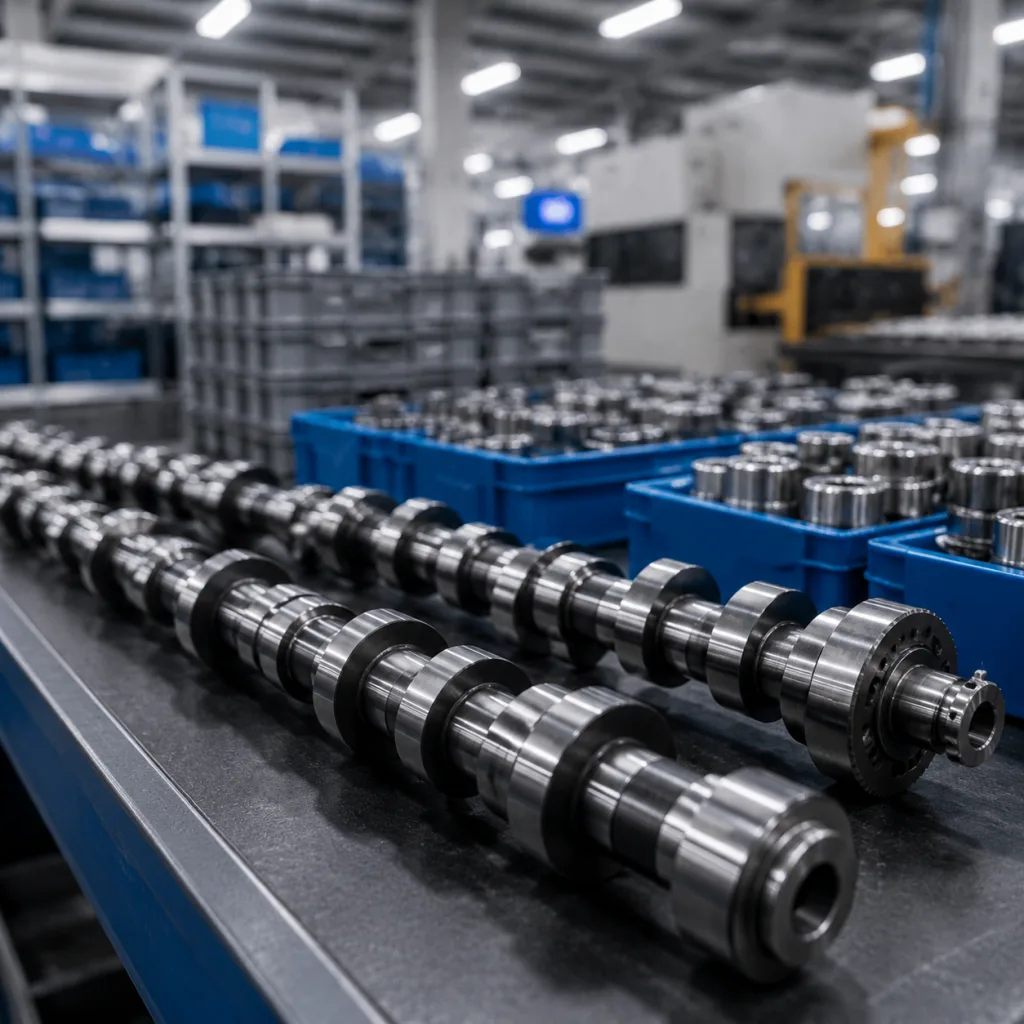
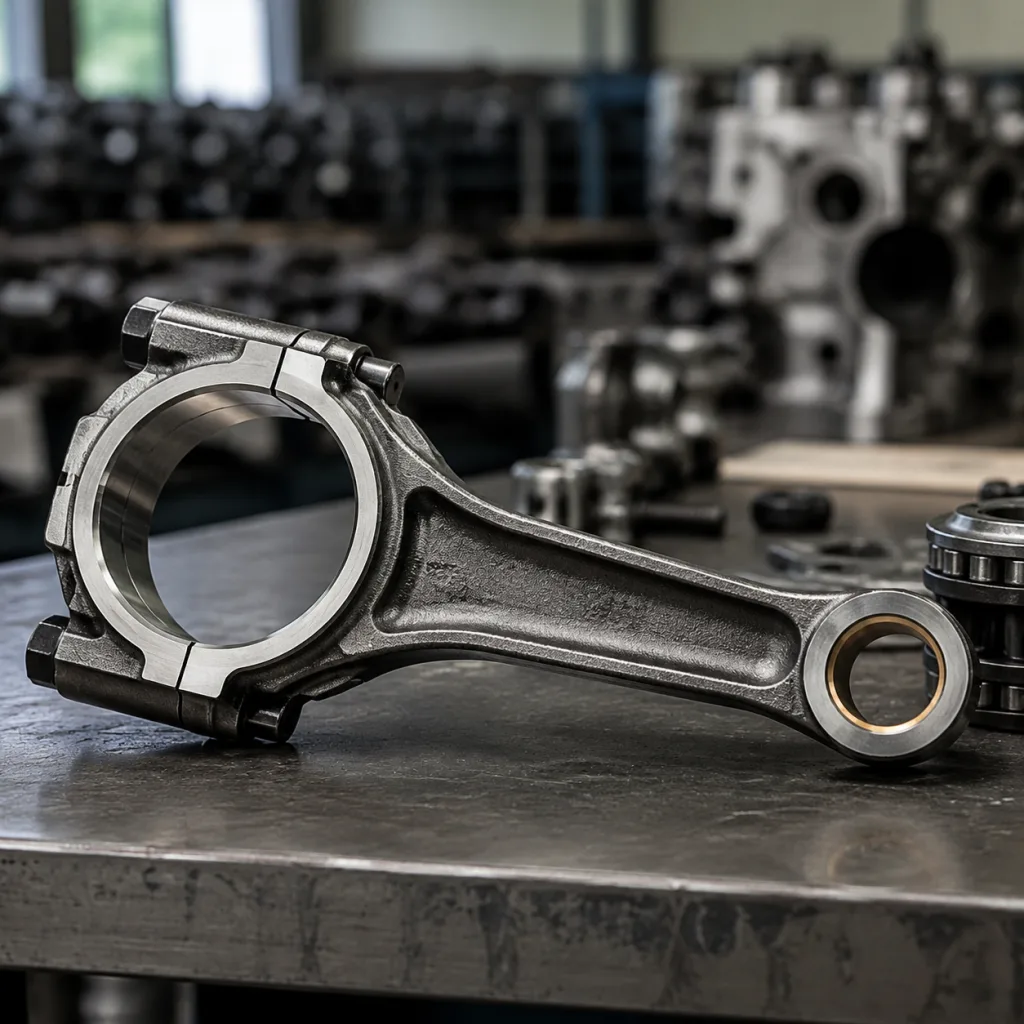
Buyers looking for a camshaft Fiat supplier usually need three things at once: fitment confidence, stable supply, and documentation that supports procurement review. For Fiat applications, a camshaft is not a generic turned shaft. Lobe profile, journal size, timing, surface hardness, and runout all affect engine performance, durability, and warranty exposure. Driventus supplies camshafts for aftermarket distribution, OEM and Tier-1 programmes, and multi-location repair networks. We manufacture under IATF 16949:2016 and ISO 9001:2015, and we support OE part-number cross-references when the application data is complete. Driventus is an independent aftermarket manufacturer; brand names are referenced for fitment only. This guide covers the points sourcing teams should verify before placing a sample order, including MOQ, lead time, inspection records, and when custom manufacturing is justified for low-volume or legacy Fiat engine families.
What buyers should confirm first
A dependable sourcing decision starts with application data, not a brand label. For camshaft programmes, confirm the engine code, cylinder count, valve count, emissions version, and whether the part is intake, exhaust, or a matched set.
Minimum data to request from the supplier:
Engine code and displacement
OE number or controlled cross-reference, for example `OE 552...` where applicable
Cam type: intake, exhaust, or complete set
Drive method: belt, chain, or gear-driven timing
Material and heat-treatment route
Journal diameter, overall length, and lobe lift target
Packaging requirement and label format
If the buying brief is incomplete, ask for dimensional photos, an old part sample, or VIN-based validation from the customer side. A supplier should not guess at fitment. For Fiat programmes, even small changes in emissions family or head casting can alter the cam profile and bearing layout.
How to evaluate supplier capability
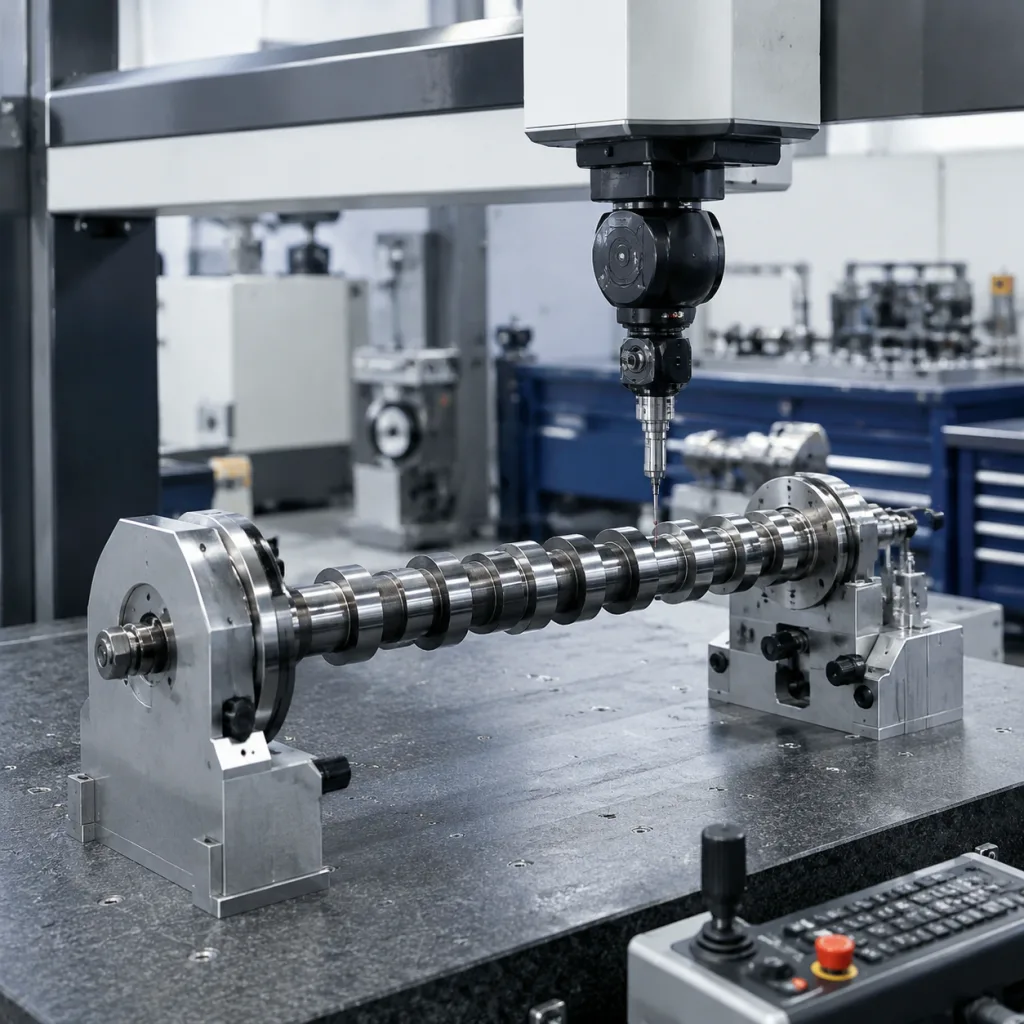
A camshaft buyer needs evidence of process control, not just a sales claim. For production supply, ask for the quality manual, inspection flow, and whether the plant controls grinding, hardening, and finish machining in-house.
Checkpoint
What good looks like
Why it matters
Certification
IATF 16949:2016 and ISO 9001:2015
Indicates controlled automotive processes
Material control
Traceable alloy bar or cast-core route
Reduces batch variation
Heat treatment
Documented hardness and case-depth checks
Protects lobe wear resistance
Geometry control
Runout, concentricity, and journal-size records
Prevents noise and oiling issues
Final inspection
100% visual plus lot sampling
Lowers escape risk
Packaging
Corrosion protection and part-level labelling
Supports warehouse handling
</tr></thead><tbody> </tbody></table>If you are onboarding a new Fiat line, compare the factory’s PPAP-style discipline, sample approval process, and audit access. Our quality system explains the controls we use for incoming material, in-process checks, and final release.
MOQ, lead time, and order planning
Procurement teams often treat camshafts as a price-only item, but MOQ and lead time depend on tooling status, raw material route, and whether the profile is already in steady production.
For a catalogue item, the usual advantage is lower setup cost and faster dispatch. For a low-volume Fiat application, MOQ may be tied to batch heat treatment and grinding capacity rather than finished-goods demand. Buyers should ask for three numbers: sample lead time, first-batch lead time, and repeat-order lead time.
Typical questions to resolve before award:
Is the profile already proven in serial production?
Can the supplier combine several Fiat references into one production run?
Is there a minimum order tied to packaging or corrosion-protection cost?
Are special label or barcode requirements included in the quotation?
If your demand is spread across several branches or export markets, ask for scheduled call-offs. That reduces stock-outs without forcing excessive inventory.
When custom manufacturing makes sense
Custom manufacturing is justified when the OE part is discontinued, the repair network needs a controlled substitute, or the buyer wants to consolidate several obsolete references into one validated design. It is also relevant when a specific Fiat engine family has regional differences that make catalogue supply unstable.
Use custom work when the business case includes one or more of the following:
Legacy vehicle parc with repeated demand
No stable OE stock in the market
Need for improved packaging, labelling, or traceability
Engine rebuild programme that requires controlled dimensional match
Fleet customer requiring private-label supply
Our custom manufacturing workflow is suitable when the buyer has a target drawing, a sample part, or a defined OE cross-reference and wants a production-ready version with documented inspections. Driventus can also support programme consolidation through our catalog and engine-component range at [/products/engine-components.html].
Technical checks before release
A camshaft should be released only after the buyer has confirmed fitment and production quality. For Fiat applications, pay attention to profile accuracy and finish quality, because small deviations can affect idle quality, emissions, and valvetrain noise.
Release checks to include in the PO or inspection plan:
Journal diameter within drawing tolerance
Lobe lift and base-circle dimensions verified against reference
Runout within approved limit
Surface finish and hardness documented
Oil passage alignment, where applicable
Corrosion protection adequate for transit time
Part marking matches the approved label format
Published standards may apply depending on the programme. REACH (EC) No 1907/2006 is relevant for material compliance in the EU. For emissions-related service parts, programmes may also reference ECE R-83 where fitment documentation is part of the product file. Where a customer asks for durability evidence, suppliers may present internal validation aligned to standard automotive methods such as SAE J2527 for corrosion exposure when relevant to the packaging or finish system.
Why Driventus is structured for B2B supply
Driventus is built for buyers who need repeatable supply, technical communication, and export-ready documentation. We manufacture in Taizhou, Zhejiang, and export to 60+ countries. That matters when a Fiat camshaft order must move through customs, warehouse intake, and branch distribution without rework.
What procurement teams typically receive from us:
OE cross-reference support when the application data is defined
Factory inspection records and lot traceability
Private-label and programme packaging options
Technical review for legacy or low-volume references
B2B export support for distributors and repair networks
If you are consolidating suppliers, use our request a quote page to share the engine code, target annual volume, sample photos, and any existing OE number. We can then confirm whether the requirement fits our catalogue stock or needs a controlled development run.
Frequently asked questions
Yes, when the application data is complete and the cross-reference is technically consistent. We verify the engine code, dimensions, and part function before confirming supply.
Engine code, displacement, cam type, annual volume, target market, and any OE reference or sample photos. These details reduce back-and-forth and improve fitment accuracy.
Yes. We support B2B packaging, barcode labels, and programme-specific documentation for distributors, wholesalers, and repair networks.
If you are sourcing a Fiat camshaft for catalogue stock, private label, or a controlled replacement programme, send the application details and volume target. Start here: /contact.html