Changing Control Arm Bushings: Buyer’s Guide
Changing control arm bushings may look like a routine service job, but for distributors, repair-chain buyers, and sourcing engineers it is also a quality and inventory decision. A bushing that fits the arm but uses the wrong rubber hardness, bond preparation, sleeve tolerance, or void orientation can lead to noise, steering instability, uneven tyre wear, premature cracking, and warranty returns. A strong purchase specification should therefore define vehicle coverage, dimensional controls, elastomer properties, corrosion protection, packaging, and batch traceability before bulk orders are approved. This guide explains what B2B buyers should verify when sourcing replacement control arm bushings or complete control arm assemblies for aftermarket programmes. It is written for trade procurement teams rather than retail installers. Driventus is an independent aftermarket manufacturer; brand names are referenced for fitment identification only.
Why Control Arm Bushing Specification Matters
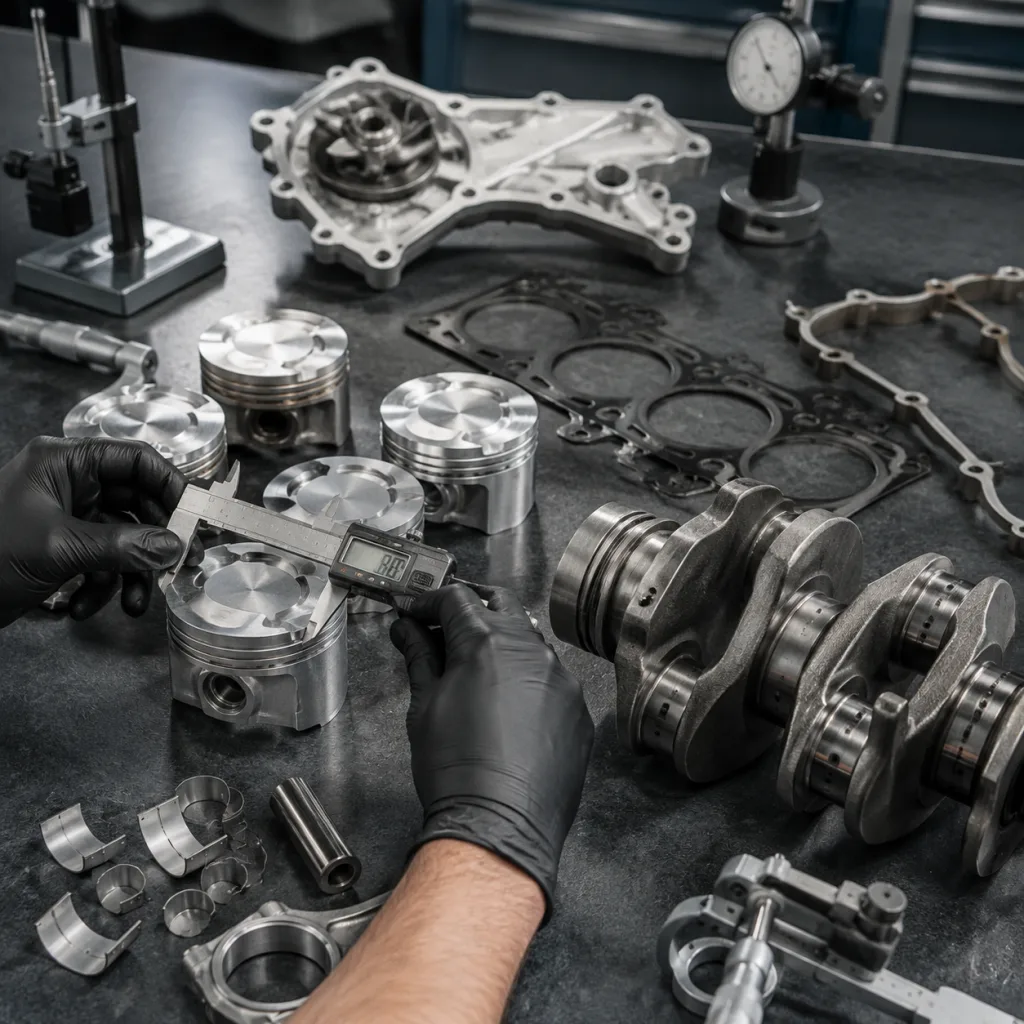
Control arm bushings isolate road vibration while allowing the suspension arm to move through its designed travel. They are engineered rubber-to-metal components, not generic rubber inserts. Final performance depends on the elastomer compound, Shore A hardness, bonding process, sleeve concentricity, shell finish, and installation orientation.
For importers and repair networks, the main commercial risk is wider than a single part failure. Poor specification control can create inconsistent fitment across applications, mixed packaging, weak cross-reference data, and field complaints that are difficult to diagnose. A bushing that is 0.20 mm oversize may need excessive press force. A sleeve that is undersize can allow bolt movement instead of proper clamp load. A weak rubber-to-metal bond may separate under braking, cornering, or repeated compression load.
When building an aftermarket range, decide whether the programme should include:
- Individual replacement bushings for workshops with press equipment
- Complete control arms with pre-installed bushings and ball joints
- Application-specific kits for both sides of the axle
- Fleet-oriented SKUs with stronger cartons, labels, and pallet protection
Changing control arm bushings can be economical when the arm is straight, corrosion is limited, and the ball joint remains serviceable. Complete arm replacement may be the better procurement route where labour cost is high, the ball joint is commonly worn, or arm geometry is difficult to protect during pressing.
Replacement Options and Buyer Trade-Offs
The right purchasing route depends on workshop capability, labour cost, vehicle age, and local repair habits. Buyers should compare total installed cost rather than unit price alone.
| Option | Procurement advantage | Workshop requirement | Main risk to control |
|---|---|---|---|
| Press-in bushing only | Lower unit cost and compact inventory | Hydraulic press, mandrels, correct alignment | Damage during installation or wrong orientation |
| Complete control arm | Faster job time and fewer installation variables | Standard suspension tools | Higher freight volume and more SKUs |
| Bushing kit per axle | Easier counter sales and chain-store ordering | Press tools and accurate vehicle data | Kit content errors if cataloguing is weak |
| Custom compound bushing | Tuned NVH, handling, or durability target | Validation plan agreed before launch | Longer sampling and tooling approval |
| Specification item | What to check | Typical procurement note |
|---|---|---|
| Outer diameter | Press-fit dimension and tolerance | Confirm measurement points and coating thickness |
| Inner sleeve diameter | Bolt fit and clamp load path | Check burrs, ovality, and plating build-up |
| Sleeve length | Bracket clearance and torque retention | Compare with OE sample or approved drawing |
| Rubber hardness | Shore A target and allowable range | Control within the agreed production window |
| Rubber-to-metal bond | Surface preparation and adhesion strength | Require destructive checks by batch or control plan |
| Corrosion protection | Sleeve and shell plating or coating | Specify salt-spray expectation where required |
| Orientation marks | Void alignment or asymmetric design | Required for correct installation on some applications |
| Traceability | Lot code and inspection record | Essential for warranty containment |