aftermarket replacement parts · 2026-06-15

Auto Zone Battery Replacement: B2B Sourcing Criteria

Battery replacement is a fast-moving aftermarket category, but procurement teams should manage it as a dimensional, electrical, regulatory and logistics-controlled product—not as a simple commodity. The search term “auto zone battery replacement” usually reflects retail intent from drivers looking for quick service. B2B buyers need a stronger operating framework: OE-equivalent fitment, cold-cranking performance, reserve capacity, terminal layout, charge retention, shelf-life control and warranty evidence across multiple vehicle applications. For distributors, wholesalers and repair chains, weak battery selection creates avoidable returns, installation delays, no-start complaints and roadside failures. This guide sets out practical sourcing criteria for aftermarket replacement battery programs, including validation checks, documentation, labelling, packaging and supplier audit points. Driventus manufactures engine and powertrain components; when supporting battery-adjacent sourcing or bundled aftermarket programs, we apply the same IATF 16949:2016 and ISO 9001:2015 discipline used for rotating, sealing and cooling-system parts. Driventus is an independent aftermarket manufacturer; brand names are referenced for fitment only.

Replacement Intent: Retail Keyword, Procurement Requirements

The phrase auto zone battery replacement is commonly searched by vehicle owners looking for a nearby replacement service. For procurement professionals, the useful signal is not the retailer name but the demand pattern behind it: which battery sizes move fastest, which chemistries are required, how equivalence is verified, and where fitment errors create returns.

A professional battery program should begin with an application matrix rather than a price list. Buyers should confirm Battery Council International (BCI) group size, DIN or EN case format, terminal orientation, hold-down position, venting requirements, cold cranking amps, reserve capacity and battery chemistry. Vehicles with start-stop systems may require AGM or EFB technology; installing a conventional flooded battery can lead to charging mismatch, warning lights, shortened service life and warranty exposure.

Battery selection also affects adjacent systems. For distributors that source engine and powertrain parts, a weak or incorrectly specified battery can be misdiagnosed as a starter motor, alternator, crankshaft position sensor, fuel pump, electronic control module or ground-circuit fault. Accurate application data is therefore a commercial control, not only a technical detail.

Relevant sourcing links for broader aftermarket programs include our catalog, the Driventus quality system, and custom manufacturing for engineered components supplied to distributor-specific specifications.

OE-Equivalent Fitment Checks Before Approval

Replacement batteries must match the vehicle envelope, electrical demand and installation hardware. Procurement teams should require each supplier to provide a fitment file covering vehicle make, model, engine, production year, fuel type, start-stop status and original battery specification. Brand names should be used only as fitment references, not as evidence of endorsement.

</tr></thead><tbody> </tbody></table>For OE part-number cross-references, use generic conventions only where available in the buyer’s data set, such as OE 06A… or OE 11251… formats for non-battery examples. Do not present an aftermarket item as vehicle-manufacturer approved unless a formal approval document exists. Driventus does not claim approval or endorsement by any vehicle manufacturer.

Dimensional inspection should include length, width, height, terminal height, base-rail geometry and mass. A typical incoming inspection plan may use AQL sampling for external dimensions, 100% barcode verification for carton labels, and periodic state-of-charge checks with calibrated battery testers. For high-volume repair chains, carton labelling should show application group, chemistry, voltage, CCA rating, production date, country of origin and handling symbols.

Validation Testing and Standards to Request

Replacement batteries are not validated in the same way as pistons, gaskets or water pumps, but procurement teams can still require documented and repeatable evidence. The minimum submission should cover capacity testing, cold-cranking performance, charge retention, vibration resistance, terminal torque resistance, leak inspection and packaging drop testing.

Published standards and regulatory references may apply depending on market, battery type and vehicle category. Buyers should check requirements for lead-acid battery transport, hazardous-material handling, waste battery collection, REACH (EC) No 1907/2006 chemical obligations in the EU, and local recycling or extended producer responsibility rules. For broader aftermarket product systems, Driventus operates under IATF 16949:2016 and ISO 9001:2015, with production control methods suited to traceability, corrective action and supplier development.

A useful supplier submission pack includes:

  • Product specification sheet with voltage, Ah, CCA, RC, chemistry and group size
  • Drawing or dimensional sheet with terminal orientation and hold-down details
  • Initial sample inspection report with measured dimensions
  • Test report for capacity, cold-crank output and charge retention
  • Safety data sheet and transport documentation where required
  • Carton label artwork, pallet pattern and container loading plan
  • Warranty analysis format with failure coding and return disposition

For distributors selling into the EU, UK, US, Canada, Australia and Brazil, documentation should be market-specific. Battery labelling, recycling obligations, dangerous-goods paperwork and import documentation can differ by destination. A supplier should not provide one generic file and assume it covers every import market.

Commercial Specification for Distributor Programs

The commercial value of a battery replacement program depends on fill rate, shelf-life management, safe logistics and return control. Search volume for auto zone battery replacement confirms strong retail interest, but wholesale buyers still need disciplined range planning. Stocking too many slow-moving references ties up capital and increases the risk of aged inventory. A practical launch plan uses vehicle parc data, installer demand, regional climate and seasonal peaks.

Checkpoint Procurement requirement Return risk if missed
Case sizeConfirm BCI, DIN or EN designation and tray dimensionsBattery cannot be secured
Terminal layoutConfirm positive/negative position and post typeCable strain or no installation
Hold-down designMatch base rail, top clamp or bracket interfaceMovement, vibration damage
Electrical ratingVerify CCA, Ah and reserve capacityNo-start complaints, short service life
ChemistryMatch flooded, AGM or EFB to the vehicle systemCharging mismatch, fault codes
VentingConfirm side vent or sealed design where requiredCabin or boot safety risk
Date codingTrace manufacturing and charge dateShelf-life disputes

</tr></thead><tbody> </tbody></table>For container programs, buyers should define mixed-SKU loading rules before purchase order release. Heavy batteries require careful pallet distribution to avoid carton compression, leaking units and unsafe manual handling. Import managers should confirm dangerous goods classification, terminal protection and required documentation before shipment.

Repair chains should add installation verification to the purchase specification. Technicians should record battery code, measured voltage, charging-system result and vehicle odometer at fitment. This evidence helps separate product defects from vehicle parasitic draw, alternator faults, poor ground connections or incorrect application selection.

How Driventus Supports Aftermarket Replacement Sourcing

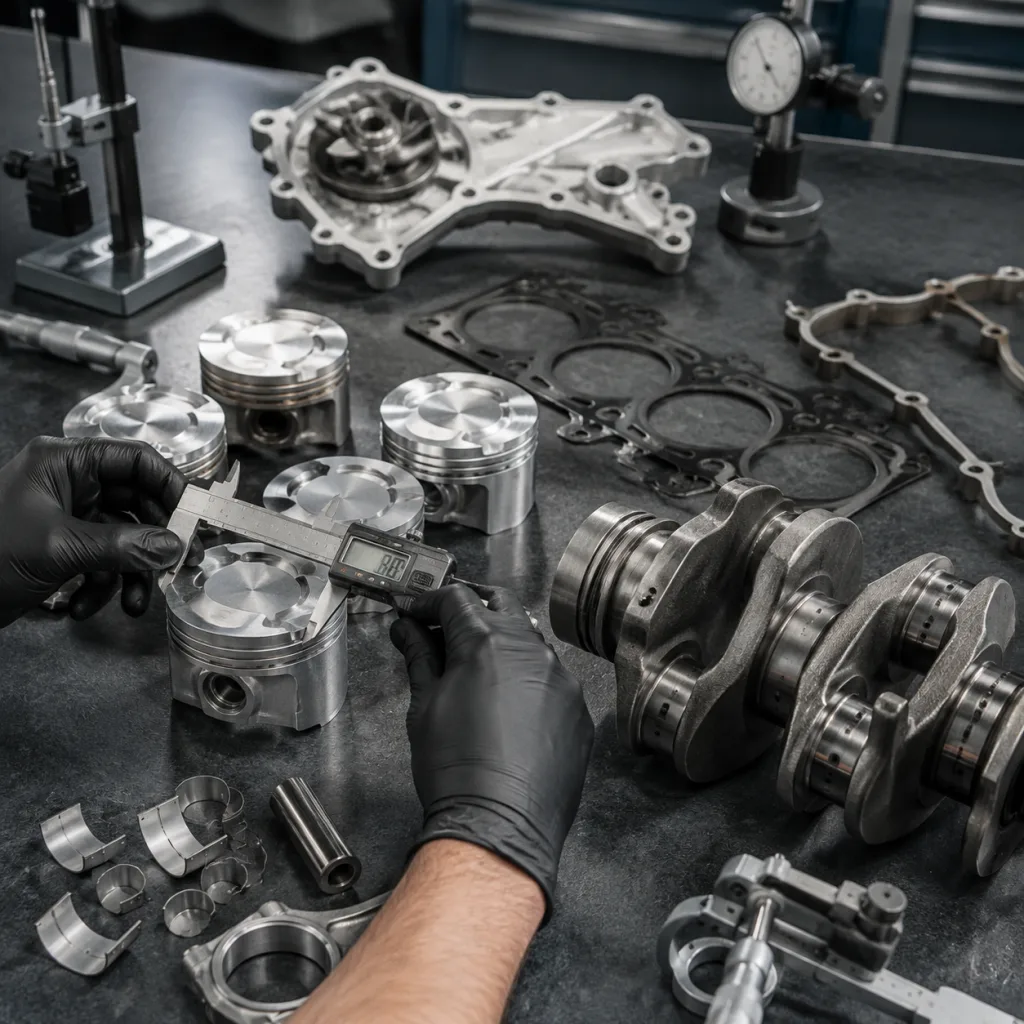
Driventus is based in Taizhou, Zhejiang and manufactures engine and powertrain components including pistons, crankshafts, gaskets, water pumps, turbochargers and related replacement parts. Battery replacement may sit outside a core engine-component bill of materials, but the procurement discipline is similar: controlled specifications, repeatable inspection, documented traceability and timely corrective action when field issues occur.

For aftermarket distributors building a multi-category program, Driventus can support sourcing discussions around adjacent engine and powertrain parts, including dimensional matching to OE-style references, private-label packaging, inspection reports and batch documentation. An engine repair bundle, for example, may include gaskets, water pumps, timing-related components and electrical accessories reviewed under one quality process.

Our approach for replacement parts includes:

  • Drawing-based dimensional control for mating surfaces and installation interfaces
  • Material verification for castings, forgings, elastomers and sealing products
  • Process control aligned with IATF 16949:2016 and ISO 9001:2015
  • Batch traceability for production date, inspection status and shipment lot
  • Packaging review for export cartons, pallet loading and barcode identification
  • Application-data review to reduce fitment errors before catalogue release

Where buyers require engineered changes, private-label packaging or market-specific documentation, Driventus can review feasibility through custom manufacturing. Existing replacement categories can be reviewed through our catalog, and the audit basis is described in our quality system.

Procurement Checklist Before Placing Orders

Before awarding a battery or adjacent aftermarket replacement contract, procurement teams should complete a structured approval checklist. This step is especially important when search-driven demand, such as auto zone battery replacement, is used to justify stocking decisions.

Supplier approval checklist:

  • Confirm factory legal name, production site and export experience
  • Review IATF 16949:2016, ISO 9001:2015 or other applicable certification scope
  • Confirm application data source and fitment update frequency
  • Approve drawings, specifications and packaging before mass production
  • Request pre-shipment inspection with photos, measured data and carton labels
  • Define warranty claim evidence, response time and credit procedure
  • Confirm REACH (EC) No 1907/2006 obligations where products enter the EU
  • Check transport, recycling and import documentation for the destination market

A good approval process also defines what happens when a field issue occurs. The supplier should provide containment within an agreed time, segregate affected batches, review production records and issue corrective action. For mechanical parts, evidence may include hardness checks, flatness measurement, surface roughness review or pressure testing. For batteries, it may include state-of-charge checks, capacity retesting, date-code review and inspection for handling damage.

The final decision should balance landed cost, warranty risk, documentation quality, range coverage and the supplier’s ability to maintain consistent specifications. Lowest unit price is rarely the lowest total cost when fitment data, packaging strength or shelf-life control is weak.

Frequently asked questions

It usually signals retail replacement demand, not a procurement specification. Buyers should translate that demand into group size, chemistry, CCA, reserve capacity, terminal layout, packaging, documentation and warranty requirements before sourcing.

Request a product specification sheet, dimensional drawing, test report, safety data sheet, transport documents, date-code format, carton label artwork and warranty procedure. Market-specific recycling, dangerous-goods or chemical compliance documents may also be required.

No. Driventus is an independent aftermarket manufacturer; brand names are referenced for fitment only. Replacement parts are supplied to agreed specifications and quality controls, without claiming approval or endorsement by any vehicle manufacturer.

For distributor programs, engineered replacement parts or documentation review, send drawings, target SKUs and annual volume assumptions to Driventus. You can [request a quote](/contact.html).

Request a Quote
Specification area Recommended control point Buyer note
SKU rangeFast-moving BCI/DIN/EN sizes firstExpand after 90-180 days of sales data
Minimum chargeDefine open-circuit voltage at shipmentReduces dead-on-arrival claims
Shelf lifeFIFO control and visible date codeImportant for regional warehouses
PackagingDouble-wall carton or tray pack by weightPrevents terminal and case damage
PalletisationExport pallet, corner protection, stretch wrapReduces transit loss
TraceabilityBatch, date and line identificationNeeded for containment actions
WarrantyClear pro-rata or fixed-term termsAvoids distributor margin disputes