Ignition coil and spark plug replacement is a routine service category, yet the procurement exposure is higher than the unit cost suggests. A wrong thread reach, heat range, boot length or coil connector can lead to misfire returns, catalyst-related claims and avoidable labour reimbursement. For distributors, repair chains and programme buyers, the sourcing decision is not only about price. The replacement set must match OE-style geometry, electrical performance, packaging identification and application data across multiple engine families. This guide outlines practical B2B checks for specifying aftermarket spark plugs and ignition coils in mixed vehicle parc coverage, with emphasis on fitment control, dimensional verification, validation testing and supplier documentation. Driventus is an independent aftermarket manufacturer; brand names are referenced for fitment only.
Replacement Intent: What Buyers Need to Control
Most warranty issues in this category begin with unclear fitment data. Spark plugs and ignition coils are usually ordered by application, but one application line can cover several engine codes, emission levels, ignition layouts and production breaks. A replacement programme should therefore be managed by verified part attributes as well as vehicle description.
For spark plugs, the controlled attributes should include thread diameter, thread reach, seat type, hex size, electrode projection, heat range, resistor specification, spark gap, electrode material and terminal configuration. For ignition coils, buyers should verify connector shape, pin count, latch design, mounting points, boot length, spring contact design, primary resistance, insulation performance and output stability under heat.
Procurement teams should request application tables that show engine code, production year range, OE part-number cross-references where available and any exclusions for engine variants. Generic references such as OE 06A… or OE 11251… should be used only when they are relevant to the buyer’s range and supported by the supplier’s fitment data. No aftermarket supplier should claim vehicle manufacturer approval unless a formal approval exists.
Relevant replacement items can be reviewed in our catalog, including spark plugs and related engine electrical components.
OE-Equivalent Fitment Criteria
OE-equivalent ignition parts are dimensionally and functionally interchangeable with the original installed component. The term does not imply endorsement by the vehicle manufacturer. Before confirming a private-label or bulk purchase order, buyers should define measurable acceptance criteria and link them to the inspection plan.
Check point
Spark plug requirement
Ignition coil requirement
Mechanical interface
Thread, reach, seat and hex match
Connector, pins, latch and mounting points match
Installed position
Correct projection into combustion chamber
Correct boot depth, seal position and coil seating
Electrical function
Specified resistance, gap and terminal contact
Stable primary/secondary values and high-voltage output
Heat and materials
Correct heat range, shell plating and electrode material
Heat-resistant housing, copper winding and silicone boot
Traceability
Batch code on product, pack or both
Batch code on product, pack or both
Packaging data
Cross-reference and application label
Cross-reference and application label
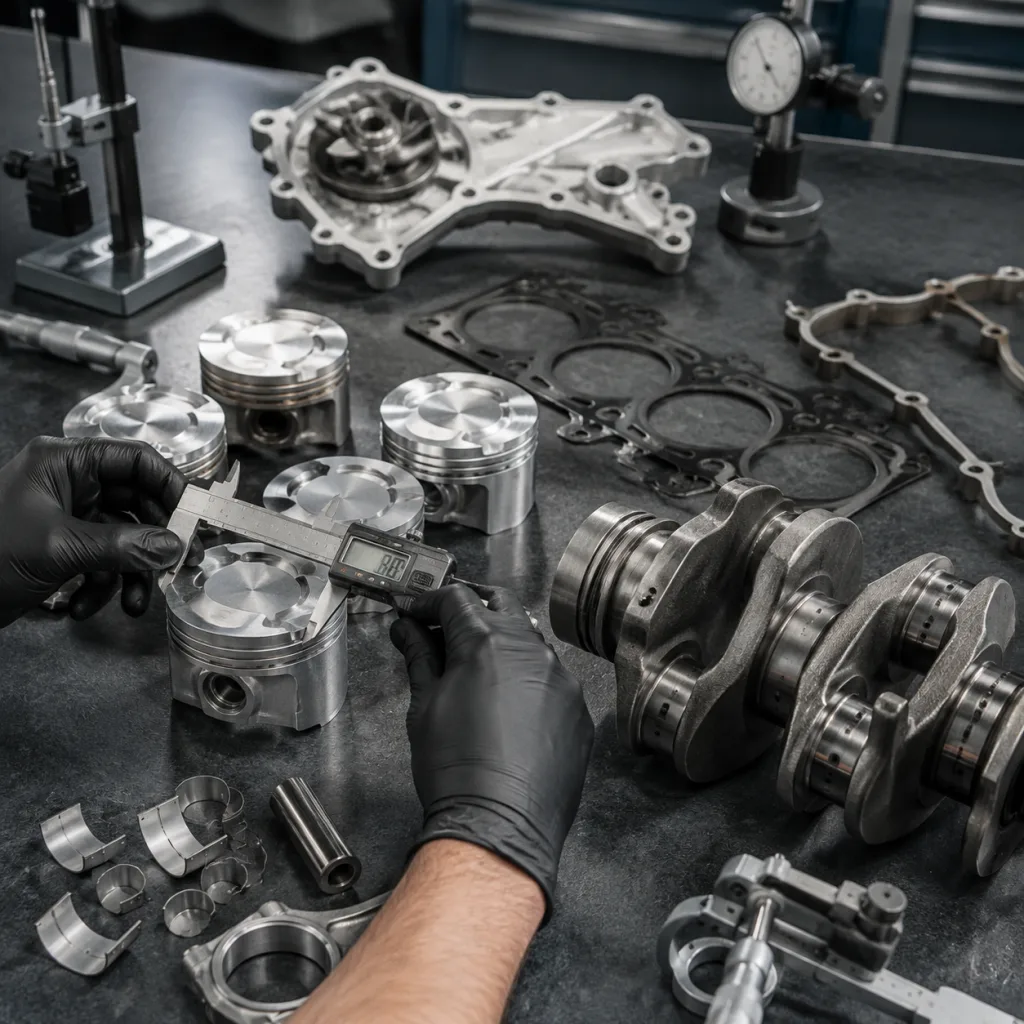
</tr></thead><tbody> </tbody></table>Dimensional checks should be made with calibrated gauges and recorded against approved drawings or golden samples. Typical controls include thread go/no-go inspection, ceramic concentricity checks, terminal nut torque verification, electrode gap measurement, boot insertion depth and connector lock engagement. Where buyers consolidate coils and plugs as a service kit, the set should be validated together so a correct plug is not paired with a boot or spring contact that fails to seat fully.
Validation Testing Before Bulk Release
A reliable ignition coil and spark plug replacement programme should include both component-level and application-level validation. For spark plugs, inspection normally covers shell plating adhesion, insulator integrity, gap consistency, terminal retention, resistor value and visual defects around the ceramic-to-shell interface. For coils, validation should include primary and secondary winding checks, insulation resistance, thermal cycling, heat soak exposure and high-voltage output consistency.
Useful quality and compliance references include ISO 9001:2015 for quality management, IATF 16949:2016 for automotive production quality systems and REACH (EC) No 1907/2006 for chemical compliance in the EU market. Vehicle emission regulations such as ECE R-83 are relevant because ignition performance affects misfire control and catalyst protection, although normal aftermarket ignition components are not certified under that regulation as standalone parts.
A practical release checklist for ignition coil and spark plug replacement programmes includes:
First-article inspection report with critical dimensions
Material declaration and REACH compliance statement when required
Electrical test data for plug resistance and coil winding values
Thermal cycling or heat soak test summary for ignition coils
Salt spray or plating corrosion evidence for metal shell components
Packaging label approval with application and cross-reference fields
Sample retention plan by batch, lot number or production date
Corrective action process for recurring misfire or fitment claims
Driventus maintains an IATF 16949:2016 and ISO 9001:2015 aligned quality system for process control, inspection records and corrective action handling.
Common Failure Modes After Incorrect Replacement
Fitment and installation errors are often reported as product defects. Buyers can reduce unnecessary claims by separating application mismatch, workshop practice and manufacturing faults during warranty review.
A spark plug with excessive thread reach may contact the piston, expose the electrode to abnormal heat or interfere with combustion chamber geometry. A short-reach plug may leave cylinder-head threads exposed and change flame kernel position. An incorrect heat range can cause fouling, overheating or pre-ignition under load. Excessive tightening may crack the insulator, distort the washer seat or damage threads, while under-tightening can reduce heat transfer and allow gas leakage.
Coil-related problems follow the same pattern. A boot that is too short may not seal the plug well, allowing moisture ingress and carbon tracking. A connector that looks similar but uses different keying or pin allocation can create intermittent contact or no-start complaints. Low-grade boot silicone may harden after heat exposure, causing tearing during removal at the next service interval. Oil contamination from a leaking valve cover can also be misread as coil failure if the returned part is not inspected carefully.
For high-volume distributors and repair chains, claim forms should record engine code, mileage at installation, diagnostic trouble codes, plug appearance and coil location by cylinder. Misfire codes alone are not enough to confirm component failure. Returned samples should be checked for carbon tracking, terminal corrosion, cracked ceramic, oil contamination, incorrect gap adjustment, heat discoloration and signs of cross-threading or over-torque.
Sourcing Requirements for Distributors and Repair Chains
Ignition parts are often sold in dense application ranges with many SKUs and small visual differences between references. Good sourcing control depends on clean data, stable production and disciplined packaging control. Buyers should request structured fitment files, barcode rules, carton labels, pallet configuration, minimum order quantities by SKU tier and a clear process for supersessions.
For private-label programmes, artwork approval must be tied to part-number control and application data. A packaging update without cross-reference control can create wrong-pick claims in multi-location warehouses. Repair chains should also specify whether coils and plugs are packed individually, by cylinder count or as complete service sets for a defined engine configuration.
Driventus supports aftermarket and programme supply through custom manufacturing, including dimensional sampling, cross-reference mapping, packaging configuration and batch traceability. Typical review items before quotation include annual volume, target market, plug electrode material, coil design type, application list, packing format, inspection documents and import documentation required by the destination market.
For Brazil, EU, UK, US, Canada and Australia supply, importers should confirm market documentation before order release. Requirements may include material declarations, country-of-origin marking, commercial invoice consistency, local language label fields, barcode format, restricted-substance statements and any market-specific importer records.
Procurement Checklist Before Order Confirmation
Before confirming an ignition coil and spark plug replacement order, procurement teams should close the technical file, commercial file and logistics file together. This reduces disputes after shipment and gives the supplier a clear basis for inspection, packing and claim response.
Recommended buyer checklist:
Confirm application range by engine code, production year and exclusions
Verify spark plug thread, reach, seat, hex, gap, terminal and heat range
Verify coil connector, pin count, boot length, seal position and mounting geometry
Approve first-article dimensions before mass production
Review electrical, insulation and thermal validation summaries
Confirm REACH (EC) No 1907/2006 documentation where required
Lock packaging label, barcode, carton quantity and pallet configuration
Define AQL level, retained samples and claim response process
Record agreed substitutions, supersessions or no-substitution rules
When comparing suppliers, avoid relying only on catalogue breadth or headline price. The stronger supplier is usually the one that can show controlled drawings, inspection capability, batch-level traceability, application-data discipline and clear corrective action procedures.
Frequently asked questions
Not always. Many repair chains replace them together when mileage, misfire history or access labour makes combined service practical. For procurement, the key requirement is that coil boot depth, spring contact and plug terminal geometry are validated as a working pair.
Request first-article inspection, application cross-reference data, material declarations, electrical test summaries, thermal validation evidence, packaging proofs and quality certification such as IATF 16949:2016 and ISO 9001:2015.
Only if a formal approval exists. Otherwise, suppliers should state OE-equivalent fitment or replacement compatibility. Driventus is an independent aftermarket manufacturer; brand names are referenced for fitment only.
For application review, samples or programme pricing, send your target part list and market requirements to Driventus. You can [request a quote](/contact.html).