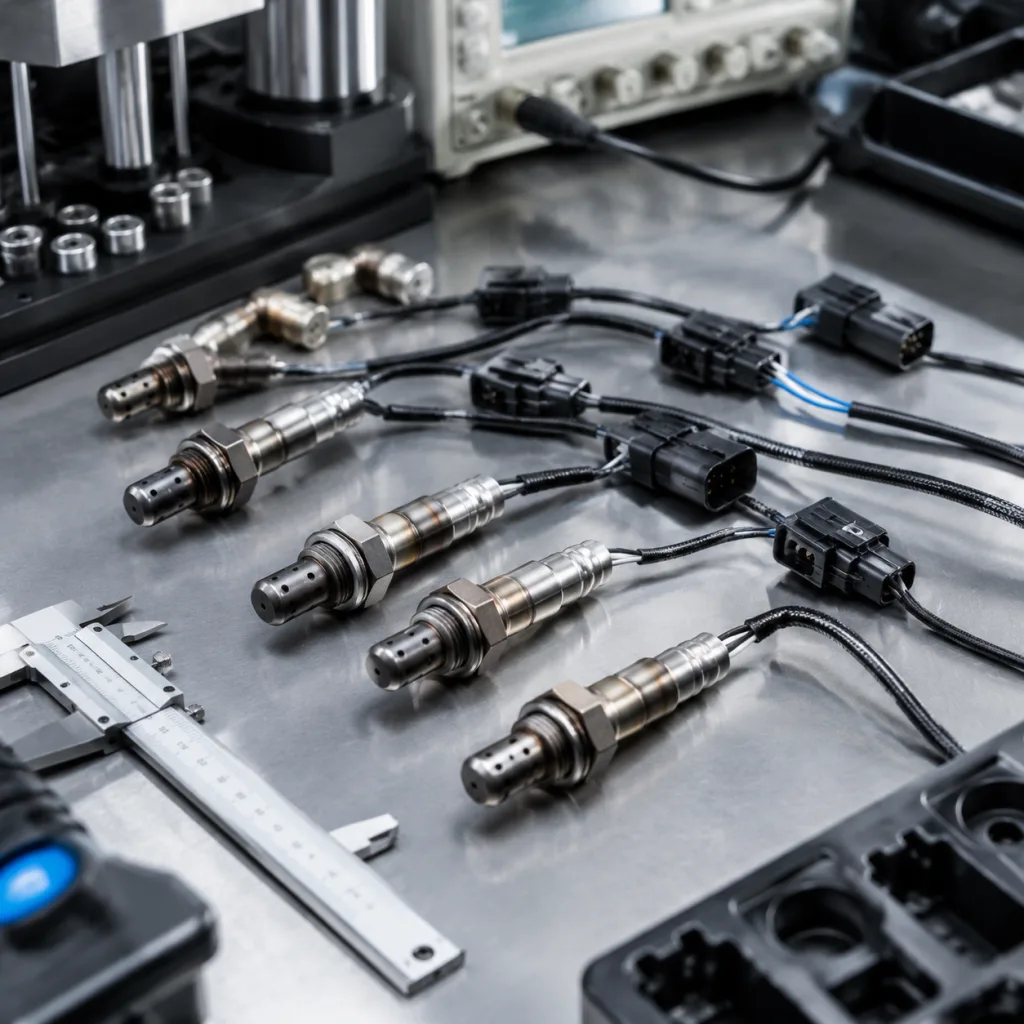
Oxygen sensor replacement is often treated as a straightforward repair, but B2B buyers need a more disciplined view of change oxygen sensor cost than a retail invoice provides. The real total includes sensor construction, connector type, lead length, diagnostic time, removal difficulty, stocking strategy, warranty handling, and local labour rates. For distributors and multi-location repair chains, the biggest avoidable expense is usually not the sensor itself; it is repeat diagnosis, wrong-fit returns, or early failure caused by weak heater performance, ceramic quality, or connector defects. This guide breaks down the typical change oxygen sensor cost structure for upstream and downstream sensors, narrowband and wideband units, and direct-fit versus universal options. It is written for category managers, sourcing engineers, and import teams comparing landed unit cost with field performance. Driventus is an independent aftermarket manufacturer; brand names are referenced for fitment only.
Cost ranges buyers should model
Retail-facing estimates vary by country and vehicle platform, but procurement teams can build a more reliable model by separating parts, labour, diagnostics, and exception handling. A four-cylinder petrol vehicle with one accessible upstream sensor is usually the lowest-cost case. A V-engine with multiple heated wideband sensors, seized threads, or restricted access can cost several times more.
Cost element
Typical low-complexity job
Higher-complexity job
B2B control point
Aftermarket sensor unit
USD 12–35 landed, programme dependent
USD 28–85+ for wideband/direct-fit
Validate ceramic element, heater resistance, connector, lead length
Workshop labour
0.4–0.8 hours
1.0–2.5 hours
Improve fitment accuracy and removal guidance
Diagnostic time
0.2–0.5 hours
0.5–1.5 hours
Train stores not to sell by fault code alone
Consumables
Low
Moderate if threads need repair
Include anti-seize guidance where applicable
Return/warranty handling
Often hidden
Significant across chains
Track failure codes and installation notes
</tr></thead><tbody> </tbody></table>For a distributor, the key question is not only “what is the sensor price?” A low-cost sensor that increases no-fault-found returns by 2–3% can erase the saving at chain level. For a repair network, the meaningful figure is bay time plus comeback probability. For an importer, landed cost should include packaging density, tariff classification review, local compliance paperwork, and slow-moving SKU exposure.
Search demand for the phrase change oxygen sensor cost is high because end users compare repair quotes. B2B suppliers can capture that demand with accurate fitment data, dependable lead times, and evidence-based quality controls rather than broad price claims.
Why sensor type changes the price
Oxygen sensors are not interchangeable commodity items. The sensing element, heater design, connector system, cable protection, and calibration behaviour all affect procurement cost and installation outcome.
Sensor type
Common position
Signal behaviour
Cost impact
Procurement note
Zirconia narrowband
Upstream or downstream
Switches around stoichiometric air-fuel ratio
Lower to mid range
High coverage, but connector variants multiply SKUs
Titania sensor
Older selected applications
Resistance changes with oxygen content
Lower volume, less common
Confirm ECU compatibility before substitution
Wideband air-fuel ratio sensor
Mainly upstream
Measures richer/leaner mixture over wider range
Higher
Requires tighter control of ceramic and pump-cell performance
Planar heated sensor
Upstream/downstream
Faster light-off than older thimble types
Mid to higher
Heater durability is important for emissions readiness
Universal splice-in sensor
Service replacement
Depends on base element
Lower part cost, higher fitting risk
Usually unsuitable for chain-standardised repair quality
</tr></thead><tbody> </tbody></table>Direct-fit heated oxygen sensors normally cost more than universal units because they include the correct connector shell, terminals, seals, clips, sleeve length, and heat-resistant cable routing. That higher unit price can be justified where repair chains want lower labour variance and fewer wiring mistakes.
For emissions-critical programmes, buyers should ask for validation data that reflects real operating conditions: thermal cycling, water splash resistance, heater resistance stability, vibration, connector retention, and response time. Vehicle emissions regulation frameworks such as ECE R-83 influence the functional requirements of oxygen sensing in many markets, even when the aftermarket replacement part itself is purchased through independent channels.
Labour, diagnostics, and regional cost differences
Labour can exceed the part price. Access to the sensor, corrosion, exhaust heat history, and workshop procedure are the major variables. Upstream sensors near the exhaust manifold may be easier to diagnose but harder to remove because of heat cycling. Downstream sensors after the catalytic converter may be physically accessible but can be mistaken for catalyst-efficiency faults if diagnosis is rushed.
Typical workshop factors include:
Access time: Shielding, underbody panels, turbocharger packaging, or transverse engine layout can add labour.
Thread condition: Seized sensors may require heat, penetrating oil, thread chasing, or bung repair.
Diagnostic workflow: Fault codes such as heater circuit, slow response, lean/rich condition, or catalyst efficiency require different checks.
Readiness monitors: Some markets require completed emissions monitors after replacement before inspection.
Multiple sensors: V-engine and dual-bank platforms may require bank and sensor position confirmation before ordering.
Regional variation also matters. US and Canadian shops often publish labour separately from parts. UK, EU, and Australian workshops may quote a combined installed price. Brazil can show wider variance because imported part cost, local distribution margin, and vehicle age mix differ by region.
For B2B budgeting, model a realistic installed range rather than a single figure. A low-complexity replacement may sit near USD 120–250 equivalent at retail level. A wideband or difficult-access replacement can move into USD 300–650 equivalent, especially if diagnostics and post-repair drive cycles are included. These figures are indicative only; fleet mix and local labour rates should be used for final commercial planning.
Specification checks that reduce hidden cost
Wrong-fit supply is one of the fastest ways to raise the true cost of an oxygen sensor programme. A sensor may look correct by thread size and connector shape but still fail commercially because cable length, sleeve material, heater wattage, or response profile is wrong.
Procurement teams should confirm the following before committing to volume orders:
Thread size and seat type, commonly M18 x 1.5 for many oxygen sensors, verified by application.
Hex size and body length for tool access and exhaust clearance.
Cable length tolerance, typically controlled by drawing and checked against sample parts.
Connector housing, terminal plating, seal geometry, and locking feature.
Heater resistance range at specified temperature, with batch test records.
Signal response time under controlled gas switching.
Heat sleeve material and routing clips for direct-fit assemblies.
Packaging that prevents connector damage and cable kinking in bulk cartons.
Driventus manufactures oxygen sensors and related engine components under a documented quality system aligned with IATF 16949:2016 and ISO 9001:2015. For regulated material management, buyers can request documentation relevant to REACH (EC) No 1907/2006 and applicable customer restricted-substance requirements.
When comparing suppliers, ask whether the quotation is for an existing catalogue item, a tooling-based direct-fit programme, or a private-label packaging project. Existing items from our catalog can usually move faster than new connector or harness variants. Where a buyer needs a specific lead length, connector, sleeve, or packaging configuration, custom manufacturing may be the better commercial route.
How to compare supplier quotations
A low ex-works price does not always deliver the lowest change oxygen sensor cost at network level. Quotes should be normalised before approval, especially when comparing factories, trading companies, and regional brands.
Quote item
Why it matters
What to request
Unit price basis
FOB, EXW, DDP, or local warehouse price changes comparison
</tr></thead><tbody> </tbody></table>A practical comparison method is to calculate cost per successful installed repair. Include purchase price, freight, duty, internal handling, return rate, claim processing time, and any labour reimbursement exposure. For repair chains, also include repeat visit cost and customer-retention impact. For distributors, include inventory breadth: oxygen sensors are application-specific, so coverage requires many SKUs with uneven demand.
Driventus supports B2B buyers with direct-fit oxygen sensor programmes, catalogue supply, private-label packaging, and engineering review of samples. The company exports to more than 60 countries from Taizhou, Zhejiang, and applies process controls across incoming materials, assembly, inspection, and packing. Driventus is an independent aftermarket manufacturer; brand names are referenced for fitment only.
Budgeting guidance for distributors and chains
For annual planning, group oxygen sensors by platform volume and complexity rather than treating every SKU equally. Fast-moving narrowband downstream sensors can be sourced differently from low-volume wideband upstream sensors. This helps purchasing teams reduce cash tied up in slow stock while maintaining service levels on common applications.
Recommended budgeting approach:
1. Segment demand into fast, medium, and slow movers by 12-month sales history or fleet parc data. 2. Separate wideband upstream sensors from narrowband and downstream sensors in margin analysis. 3. Track return reasons: wrong fitment, heater code after installation, damaged connector, no-fault-found, or diagnostic error. 4. Set minimum documentation requirements for any new supplier before price negotiation. 5. Review packaging tests if long ocean freight or high-humidity storage is expected. 6. Compare landed cost with claim rate every quarter, not only at annual tender.
For multi-location repair chains, service advisors should avoid quoting from a fault code alone. A heater circuit fault may indicate wiring, fuse, relay, ECU driver, or sensor failure. A lean-code diagnosis may involve intake leaks, fuel delivery, exhaust leaks, or mass airflow measurement. Replacing the sensor without inspection can make the published change oxygen sensor cost look low while increasing repeat labour.
For importers, the strongest commercial position is usually a controlled SKU range with verified fitment, stable packaging, and clear claim rules. Buyers can use sample approval, pilot orders, and batch inspection before scaling into container-level supply.
Frequently asked questions
Labour and diagnostic time often drive the installed cost more than the sensor unit price. Wideband sensors, difficult access, seized threads, and multiple-bank engines increase total cost. For B2B buyers, wrong-fit returns and comeback repairs are also material cost drivers.
They can have a lower part price, but they add wiring and installation risk. Direct-fit sensors usually reduce labour variance, connector errors, and warranty disputes. For standardised chain operations, direct-fit supply is often easier to control.
Request IATF 16949:2016 or ISO 9001:2015 certification evidence, application data, drawings or key dimensions, heater and response validation records, packaging specifications, and warranty terms. For EU supply, ask for material compliance information related to REACH (EC) No 1907/2006 where applicable.
If you are building an oxygen sensor programme for distribution or repair-chain supply, Driventus can review target SKUs, packaging, MOQ, and validation requirements. To discuss pricing and samples, [request a quote](/contact.html)