Average Brake Pad and Rotor Replacement Cost for Fleets
The average brake pad and rotor replacement cost is often framed as a retail repair bill, but procurement teams need a broader cost model. For distributors, fleet repair chains, and private-label brake programs, the more useful question is how friction formulation, rotor metallurgy, validation testing, packaging, logistics, and warranty exposure affect landed cost and margin. Retail prices in the EU, UK, US, Canada, Australia, and Brazil vary because labour rates, vehicle weight, road salt exposure, tax structures, and service models differ by market. This article provides practical benchmark ranges, explains the main cost drivers, and outlines what buyers should verify when sourcing brake pads and rotors from an independent manufacturer. Driventus manufactures brake pads for aftermarket and B2B supply programs in Taizhou, Zhejiang, with IATF 16949:2016 and ISO 9001:2015 controls across production and inspection.
Cost Benchmarks by Market and Vehicle Segment
Retail brake service pricing usually includes parts, labour, shop margin, tax, and sometimes diagnostic, disposal, or environmental fees. B2B buyers should separate these layers before using retail data to benchmark supplier quotations.
Market / segment
Typical front axle retail service range
Main cost factors
US / Canada compact passenger car
USD 300–650
Labour rate, coated rotor use, ceramic pad mix
US / Canada SUV or light truck
USD 450–900
Larger rotors, higher pad volume, caliper hardware
UK / EU passenger car
EUR/GBP 250–700
VAT, ECE R-90 expectations, corrosion protection
Australia passenger / SUV
AUD 400–950
Import cost, distance to workshop, towing use
Brazil passenger vehicle
BRL 900–2,500
Tax structure, exchange rate, local availability
</tr></thead><tbody> </tbody></table>These figures are directional rather than fixed price lists. A high-volume repair chain may purchase pads and rotors at a small fraction of the invoice value, while a low-volume importer may carry higher freight, finance, and inventory costs. When teams compare average brake pad and rotor replacement cost data, they should map it against their own landed cost, claim rate, fill rate, and gross margin targets.
What Drives Pad and Rotor Cost
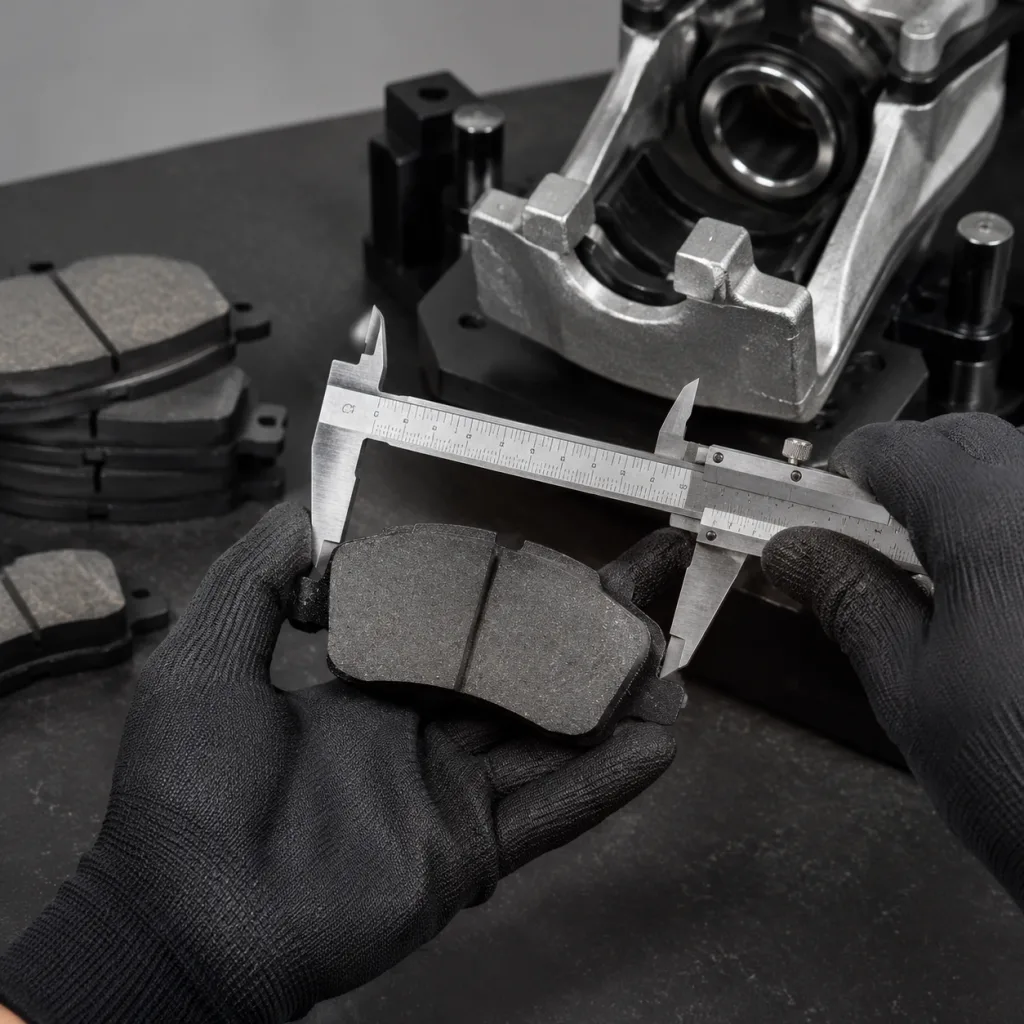
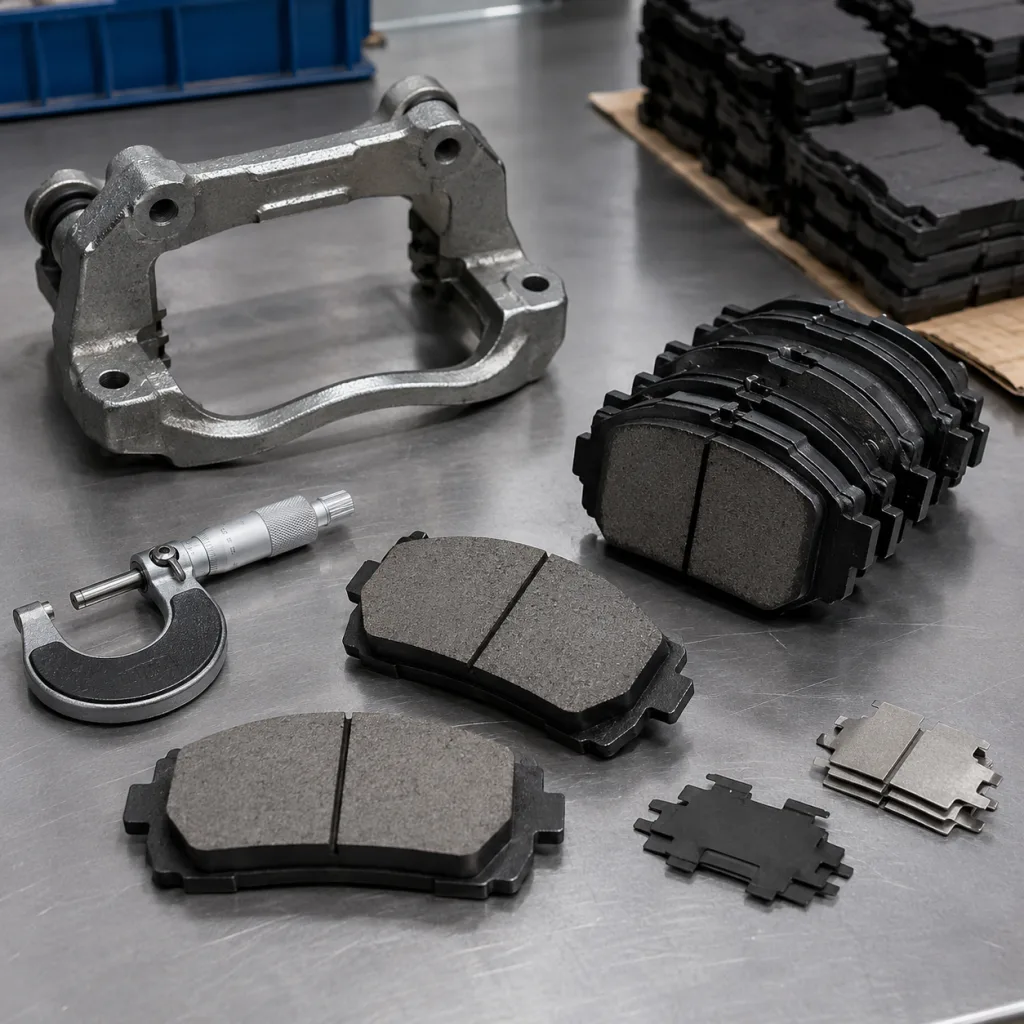
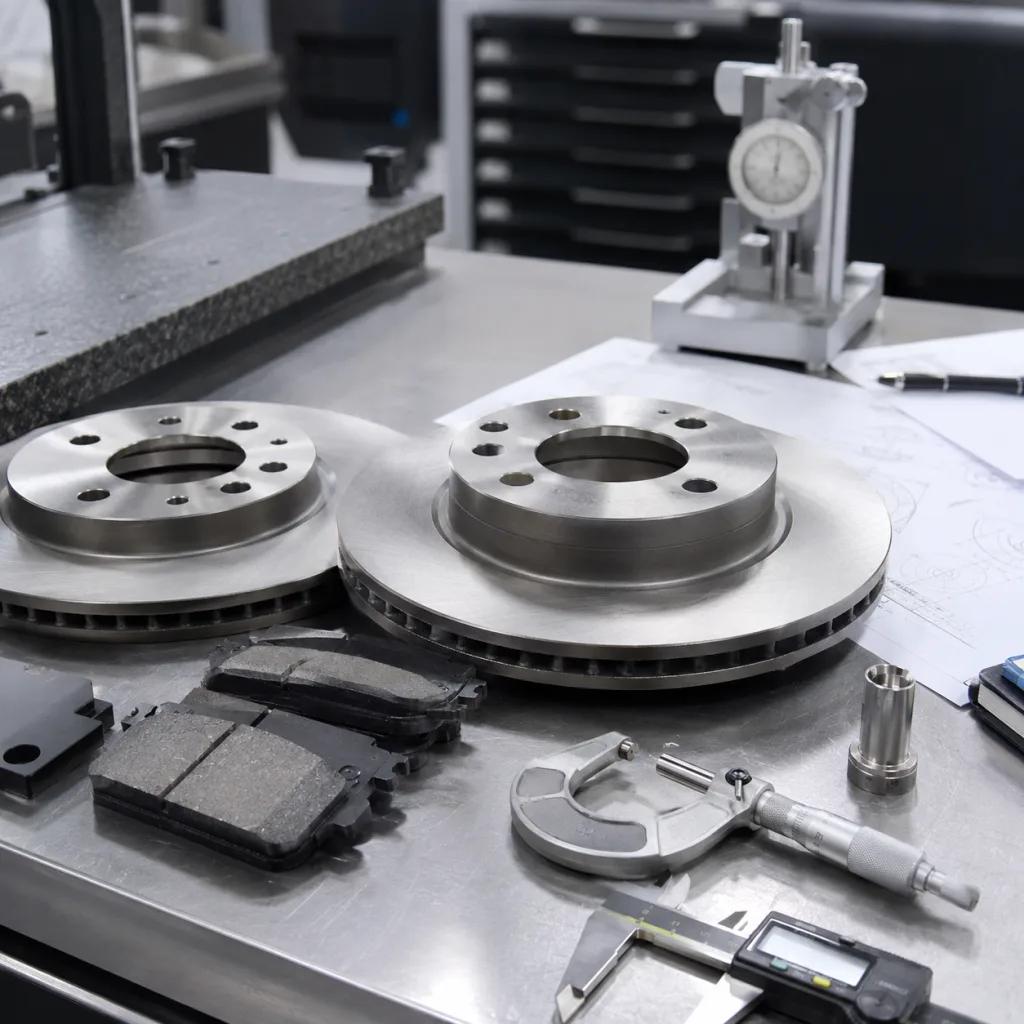
Brake pad cost is shaped by formulation, backing plate design, shim construction, slot and chamfer geometry, hardware kits, packaging, and validation scope. Rotor cost depends on casting quality, machining tolerance, balancing, coating, runout control, and metallurgy.
Key cost drivers include:
Friction material: NAO, low-metallic, and ceramic formulations differ in raw material cost, dust profile, noise behaviour, and temperature stability.
Backing plate accuracy: Poor stamping flatness can increase taper wear and noise claims. Buyers should define dimensional checks, not only visual inspection.
Rotor machining: Disc thickness variation and lateral runout control require stable tooling, fixturing, and inspection discipline.
Coating: Geomet-style or zinc-aluminium coatings add cost but reduce visible corrosion during warehousing and early service life.
Hardware: Clips, wear sensors, shims, bolts, and abutment kits can change the kit cost materially.
Packaging: E-commerce, retail shelf, and workshop bulk programs require different carton strength, label formats, and palletisation plans.
The lowest component price is not always the lowest program cost. A pad set without the correct shim or hardware may look competitive on paper, then create installation delays or customer complaints. Procurement teams can review brake pad families in our catalog and align quotation scope with the expected service channel.
Supplier Cost Versus Warranty Exposure
A low unit price can become expensive if it leads to noise returns, premature wear, vibration complaints, or fitment disputes. For multi-location repair chains, one comeback can exceed the saving from a cheaper pad set because labour must be repeated, bay time is lost, and customer trust is affected.
A practical sourcing calculation should include:
Unit price by pad set and rotor
Ocean or air freight, duty, and inland transport
Packaging and labelling cost
Inventory holding cost
Expected warranty rate by product line
Technical support and claim-handling cost
Scrap or rework risk from dimensional nonconformance
Driventus applies process controls under quality system certification to IATF 16949:2016 and ISO 9001:2015. For brake friction products, buyers should also consider market expectations linked to ECE R-90 where applicable, and material compliance obligations such as REACH (EC) No 1907/2006 for EU supply chains. SAE J2527 is commonly referenced for brake noise dynamometer evaluation, while SAE J2522 is used in many friction effectiveness test programs. Test scope should be agreed before tooling, pricing, and launch timing are finalised.
How Buyers Should Compare Quotes
Brake quotations are often difficult to compare because one supplier prices a bare pad set, while another includes shims, hardware, private-label packaging, and validation documentation. A clean RFQ reduces later cost changes and keeps commercial decisions tied to the same product scope.
Recommended RFQ fields:
Vehicle application list and model years
OE cross-reference format where available, for example OE 06A… only when supplied by the buyer
Pad dimensions, backing plate thickness, and friction thickness
Rotor outside diameter, height, centre bore, bolt pattern, nominal thickness, and minimum thickness
Required formulation type and target market
Noise, wear, and performance test requirements
Packaging type, barcode format, and carton drop-test expectation
Annual volume, release schedule, and destination port
Compliance requirements for REACH (EC) No 1907/2006 or other applicable market rules
Buyers should also clarify whether the quoted price includes first-article samples, PPAP-style documentation, carton artwork, pallet labels, spare hardware, or engineering changes after trial fitting. For private-label programs or application-specific changes, Driventus can support custom manufacturing, including drawing review, sample approval, packaging development, and production control plans. Driventus is an independent aftermarket manufacturer; brand names are referenced for fitment only.
Using Cost Data in a B2B Brake Program
The average brake pad and rotor replacement cost can help estimate end-user price tolerance, but it should not be the only procurement benchmark. A distributor may prefer a mid-cost pad with lower noise returns over a cheaper formulation with unstable performance. A repair chain may prioritise fast installation, included hardware, and consistent bedding behaviour. An importer may give more weight to compact packaging, predictable container loading, and slower-moving SKU coverage.
Useful B2B metrics include:
Metric
Why it matters
Landed cost per axle
Shows true cost after freight, duty, and local handling
Claims per 1,000 sets
Connects supplier quality with operational cost
First-fill rate
Measures availability across branch networks
Rotor runout and DTV control
Reduces vibration complaints after installation
Pad noise return rate
Indicates formulation and shim stability
Gross margin after warranty
Gives a more accurate program result than purchase price
</tr></thead><tbody> </tbody></table>For a category buyer, the target is not simply the lowest pad price. The target is a stable brake range with controlled cost, acceptable margin, documented quality, and predictable supply. Retail replacement-cost data is useful when it supports that decision, especially when combined with application coverage, service feedback, and supplier performance history.
Frequently asked questions
For a front axle retail service, typical ranges are about USD 300–900, EUR/GBP 250–700, AUD 400–950, or BRL 900–2,500 depending on vehicle size, labour rate, tax, and parts specification. B2B landed cost is much lower than the retail invoice but must include freight, duty, packaging, inventory, and warranty exposure.
Ceramic formulations often use higher-cost raw materials and are selected for low dust, stable noise behaviour, and passenger-car comfort. They are not always the correct choice for every market or vehicle. Buyers should match formulation to climate, driving cycle, rotor metallurgy, and target service channel.
A B2B supplier should provide drawings or controlled dimensions, material and formulation information where commercially available, inspection records, packaging specifications, and agreed validation reports. For EU supply chains, buyers should also check REACH (EC) No 1907/2006 obligations and ECE R-90 expectations where applicable.
If you are benchmarking brake pad and rotor programs for distribution, private label, or repair-chain supply, share your target applications and annual volume. Driventus can review fitment, packaging, and validation scope when you [request a quote](/contact.html).