Camshaft vs Mahle Alternative: B2B Sourcing Criteria
Camshaft vs Mahle alternative sourcing is rarely a straight unit-price exercise. For importers, distributors and private-label program managers, the real comparison is whether an independent aftermarket source can meet the same purchasing outcome: correct fitment, stable service life, reliable packaging, traceable lots and predictable supply. MAHLE is often used as a market reference in aftermarket range planning, but many B2B buyers also need qualified alternatives for dual sourcing, broader coverage, consolidated shipments or customer-specific branding.
This guide outlines practical sourcing criteria for comparing Driventus Auto Parts camshafts with established branded aftermarket references. It focuses on measurable evidence rather than brand claims: application data, drawings, dimensional tolerances, lobe and journal hardness, surface finish, inspection records, packaging validation and lot traceability. Driventus is an independent aftermarket manufacturer; brand names are referenced only for fitment identification and market comparison. No vehicle manufacturer approval, brand affiliation or endorsement is implied.
What Buyers Should Compare First
A camshaft is a precision timing component, not a cosmetic catalog item. The purchasing risk is not limited to premature wear. A weak sourcing decision can also create valve-train noise, unstable idle, poor emissions performance, installation disputes, warranty claims and mixed-fitment returns. For that reason, a camshaft vs Mahle alternative review should begin with the engineering and quality file before the buyer compares unit cost.
For each part number, request the following before placing a production order:
Application list with engine code, fuel type, displacement and production-year range.
Material route, such as chilled cast iron, ductile iron, forged steel or billet steel, according to engine design.
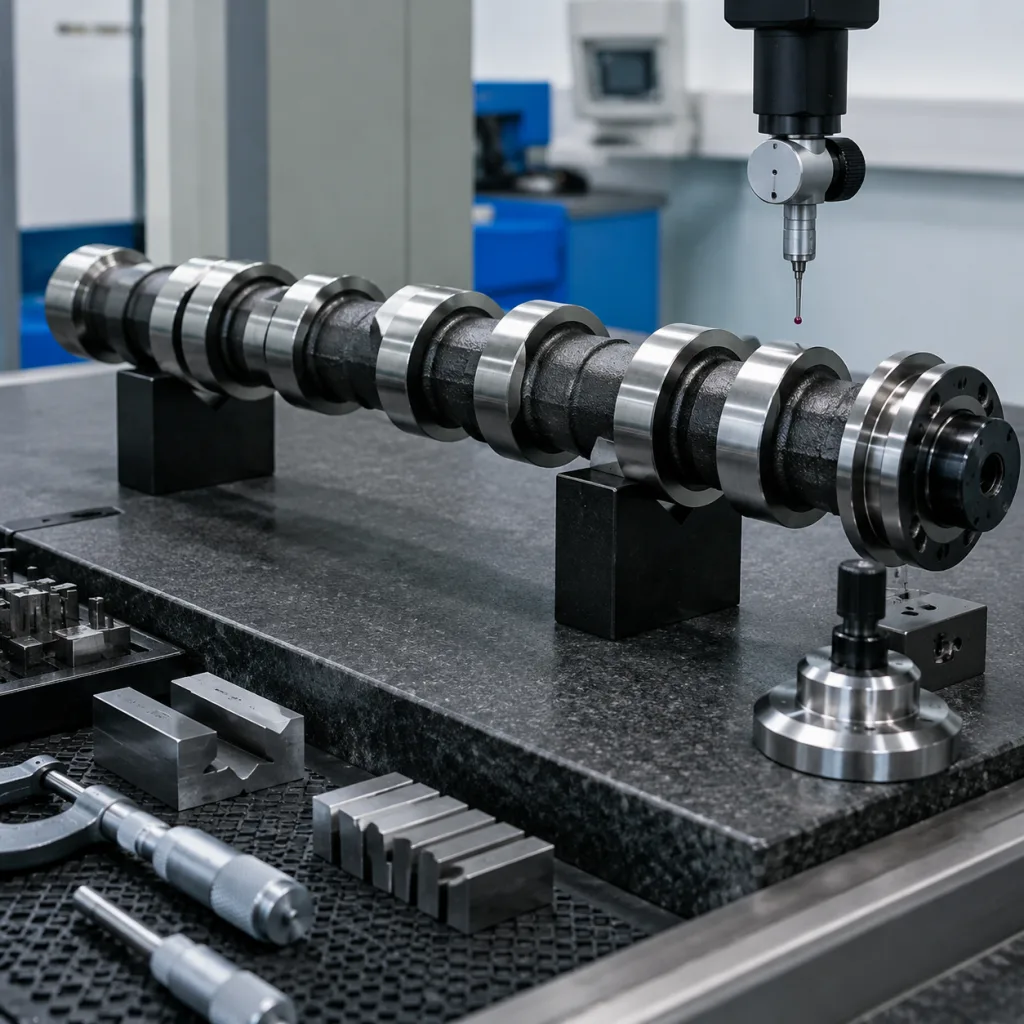
Lobe profile control method, including master sample, CNC measurement data or approved drawing reference.
Journal diameter tolerance, roundness target and runout inspection method.
Hardness specification for lobes and journals, verified using ISO 6508-1 or ISO 6507-1 where applicable.
Surface roughness target, grinding process controls and visual criteria for oil holes and machined edges.
Packaging specification for sea freight, parcel distribution, pallet handling and long warehouse storage.
The first comparison should answer three questions: does the supplier understand the application, can the production process hold the critical features, and can the packaging protect the part until installation? If any of these points are unclear, a low quotation may simply transfer cost into inspection, rework or claims handling.
The table below compares sourcing criteria that procurement and quality teams can verify. Exact specifications depend on the engine family, material route and drawing package, but the categories are consistent across most passenger-car and light-commercial camshaft programs.
Evaluation point
Branded aftermarket reference
Driventus camshaft alternative
Buyer verification method
Fitment coverage
Strong for selected high-volume applications
Range developed around distributor demand, engine codes and market coverage gaps
Compare application list and sample fitment
Dimensional control
Supplier-specific quality file
Drawing-based inspection with journal, lobe, end-feature and runout checks
Request ISIR or dimensional report
Material options
Usually fixed per catalog item
Cast, forged or machined route selected by application and buyer requirement
Review material certificate and process sheet
Surface hardening
Brand-controlled specification
Induction hardening, chilled casting or nitriding where required by design
Check hardness map and case-depth evidence
Traceability
Batch or supplier code varies by region
Lot traceability linked to production date, inspection records and carton labeling
Audit label, carton and inspection batch
Packaging
Retail or trade pack, market dependent
Neutral, private-label or distributor-specified export pack
Review drop, vibration, humidity and corrosion protection
Commercial model
Distributor price tier
B2B quotation based on MOQ, forecast, packaging format and consolidation plan
Compare landed cost, lead time and warranty terms
</tr></thead><tbody> </tbody></table>The main trade-off is control. A branded item may reduce initial qualification work for a distributor already selling that line. A qualified independent factory source can give the buyer more influence over labeling, MOQ, shipment consolidation, barcode rules, inspection reporting and drawing-based updates. That flexibility is valuable, but it only works when sample approval, retained samples and bulk-shipment criteria are defined before scale purchasing begins.
Technical Criteria That Affect Service Life
Camshaft service life is shaped by the interaction between design, material, heat treatment, lubrication, installation and mating components. Field failures are often grouped under lobe wear, journal scoring or profile deviation. Poor oil quality, incorrect break-in procedure or incompatible followers can contribute, but manufacturing variation should still be controlled through clear purchasing specifications.
Key technical points include:
Lobe geometry: Lift, opening ramp, flank radius and nose radius must remain within the design envelope. Small profile errors can change valve timing, hydraulic lifter behaviour and engine idle quality.
Journal accuracy: Diameter, roundness, cylindricity and alignment affect oil film stability. Excessive runout can lead to bearing contact, noise and accelerated wear.
Surface integrity: Grinding burn, soft spots, micro-cracks, burrs and contamination around oil holes are not acceptable for a production lot.
Heat treatment consistency: Hardness should be checked at defined points on lobes and journals, not only on one non-critical surface.
End features: Slots, keyways, pump drives, sensor targets, threaded holes and thrust faces must match the engine configuration and mating components.
Cleanliness and preservation: Residual abrasive, machining chips or weak rust prevention can damage the engine before the part has any meaningful operating time.
Driventus uses controlled inspection plans under an IATF 16949:2016 and ISO 9001:2015 aligned quality system. For buyers, the useful question is not whether a supplier can mention a certification. It is whether the control plan, inspection frequency, calibration records and nonconforming-material process can be reviewed during qualification.
Validation and Compliance Evidence
A camshaft alternative should be approved through evidence that procurement, engineering and warranty teams can all understand. The required package varies by buyer and market, but a practical B2B file normally includes dimensional inspection, material or process verification, hardness results, visual inspection criteria, packaging specification and shipment traceability.
Relevant standards and regulations may include IATF 16949:2016 for automotive quality-management requirements, ISO 9001:2015 for quality-management systems, REACH (EC) No 1907/2006 for chemical compliance in EU supply chains, ISO 6508-1 for Rockwell hardness testing and ISO 6507-1 for Vickers hardness testing. Where GD&T is used on customer drawings, ISO 1101 may apply. Material standards vary by route and drawing requirement; examples include EN 1561 for grey cast irons and EN 10083-3 for steels when specified by the purchasing file.
Do not treat generic catalogue claims as a substitute for validation data. For a first order, request samples from the actual production route rather than hand-finished demonstration pieces. Keep at least one retained sample from the approved lot, record the inspection criteria used for approval, and compare later shipments against the same baseline. This approach helps separate genuine product issues from installation damage, catalog selection errors or handling problems.
Cost, MOQ and Supply-Chain Trade-Offs
The commercial decision depends on the role of the part number in the buyer’s program. A slow-moving camshaft may not justify tooling, dedicated stock or custom packaging. A high-rotation SKU used across several markets may justify direct-factory sourcing, especially when the distributor wants unified cartons, barcodes, warranty terms and replenishment planning.
Typical sourcing variables include:
MOQ per camshaft reference, per packaging format and per shipment.
Inspection requirement: standard outgoing check, ISIR, customer-specific report or pre-shipment inspection.
Incoterms, consolidation plan, sailing schedule and port choice.
Spare coverage for warranty exchange stock and urgent replenishment.
Labeling rules for barcodes, country of origin, application data and customer part numbers.
The landed-cost comparison should include more than unit price. Add freight density, customs classification, packaging damage rate, incoming inspection cost, return-handling cost, slow-moving inventory risk and lead-time exposure. A lower purchase price is not useful if the product creates fitment disputes, fails incoming checks or requires repeated warehouse rework.
Driventus manufactures in Taizhou, Zhejiang and exports engine and powertrain components to more than 60 countries. For importers, this supports mixed-container planning across camshafts, pistons, gaskets, water pumps, turbochargers and other engine components, which can reduce administrative workload and improve shipment efficiency when the range is planned as a full program rather than isolated SKUs.
Recommended Qualification Workflow
A structured approval process helps buyers compare suppliers fairly and reduces disputes if field claims occur later. It also gives procurement a clear record of why a camshaft vs Mahle alternative was approved, conditionally approved or rejected.
Sample approval checklist
1. Confirm application list, engine-code coverage and any regional fitment notes. 2. Review drawing, critical dimensions, controlled features and material route. 3. Order production-route samples, not prototype-only or hand-finished samples. 4. Measure journal diameters, lobe lift, base circle, runout, thrust faces and end features. 5. Verify hardness, surface condition and cleanliness at agreed locations. 6. Trial-fit with the intended followers, bearings, seals, sprockets or sensor components where possible. 7. Approve packaging after checking carton strength, corrosion protection, labeling and pallet configuration. 8. Define AQL, claim procedure, retained-sample policy and documentation requirements before first bulk shipment. 9. Review first-batch inspection results against the approved sample and purchasing file. 10. Track early warranty feedback separately from catalog lookup or installer-related issues.
This workflow is especially useful for distributor stocking programs, where one sourcing error can affect several markets at once. The goal is not to copy a brand. The goal is to verify that the independent aftermarket part meets the buyer’s fitment, durability, documentation and supply requirements. Driventus is an independent aftermarket manufacturer; brand names are referenced for fitment only.
Frequently asked questions
Yes, subject to application review, sample approval and commercial feasibility. Driventus supplies independent aftermarket camshafts and related engine components for B2B customers. Brand names are used only to identify fitment references, not approval or endorsement.
Request an application list, dimensional inspection report, material or process confirmation, hardness results, packaging specification and traceability format. For larger programs, add a control plan, retained-sample agreement, AQL requirement and incoming inspection criteria.
Private-label supply is possible where MOQ, packaging artwork, barcode rules, carton structure and market compliance requirements are agreed. Custom drawing-based production can also be reviewed for OEM, Tier-1 and distributor projects.
For camshaft samples, application review or a distributor quotation, use [request a quote](/contact.html) or contact the Driventus team at /contact.html.