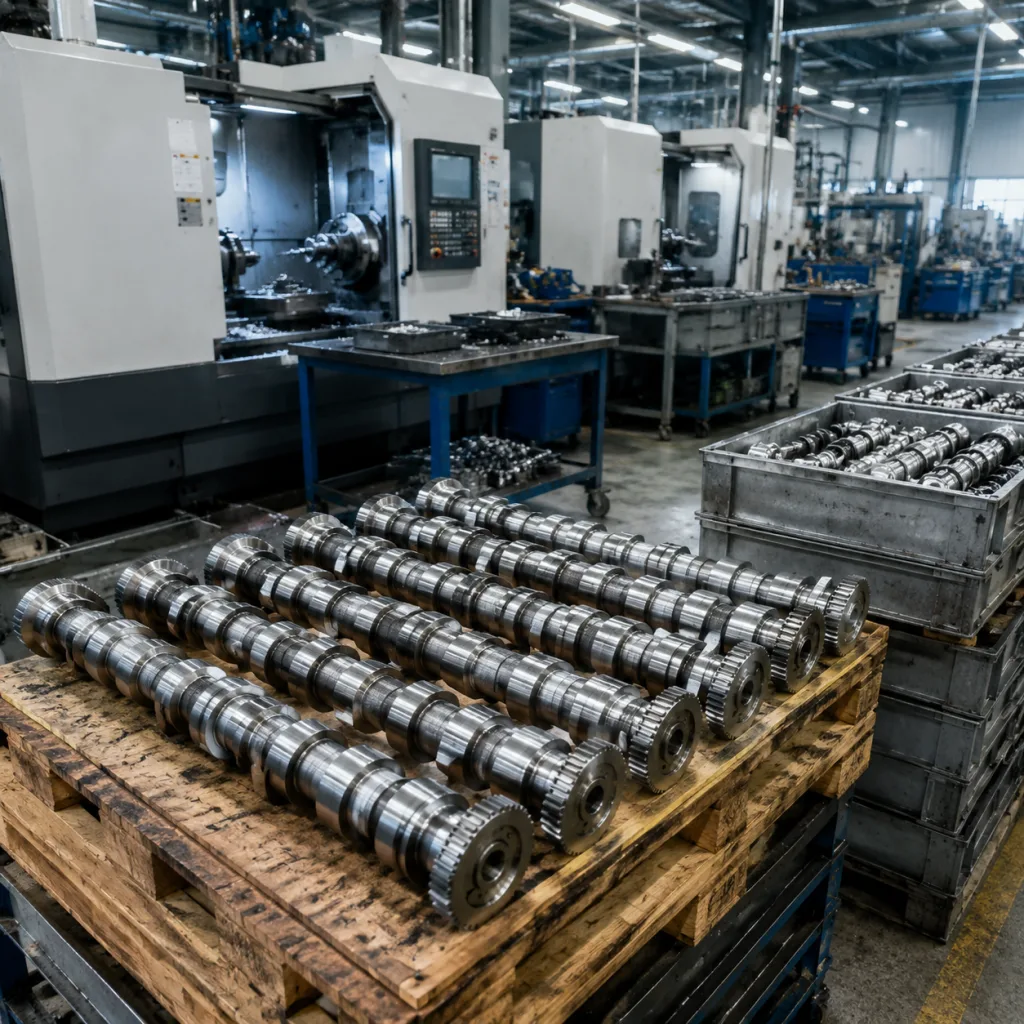
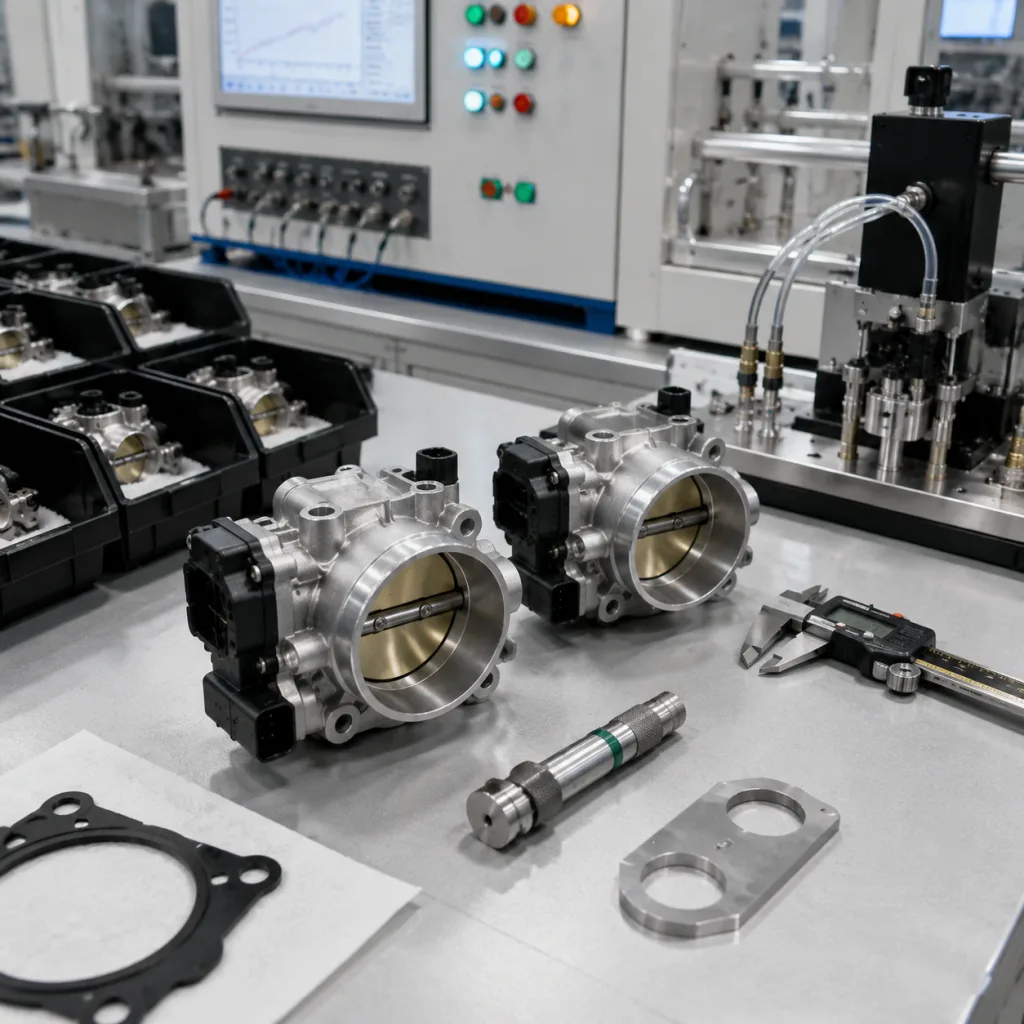
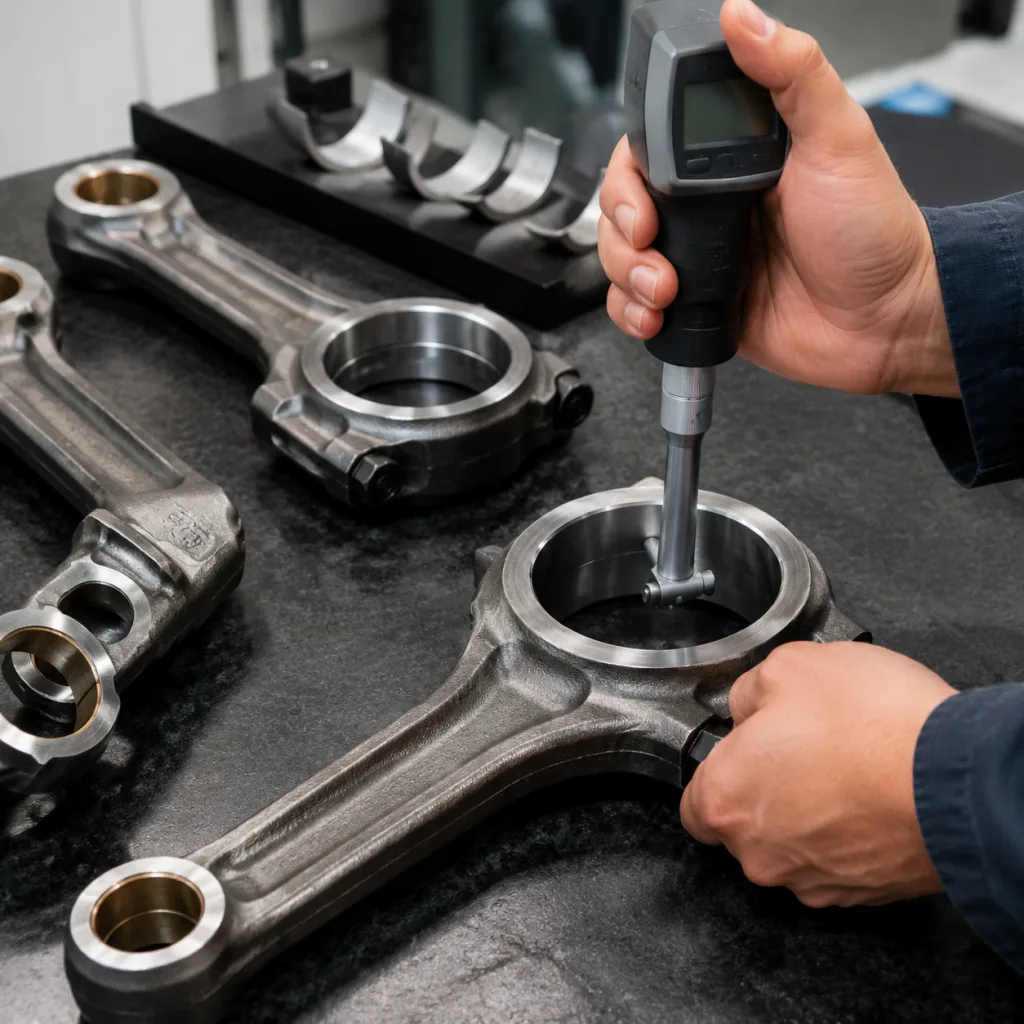
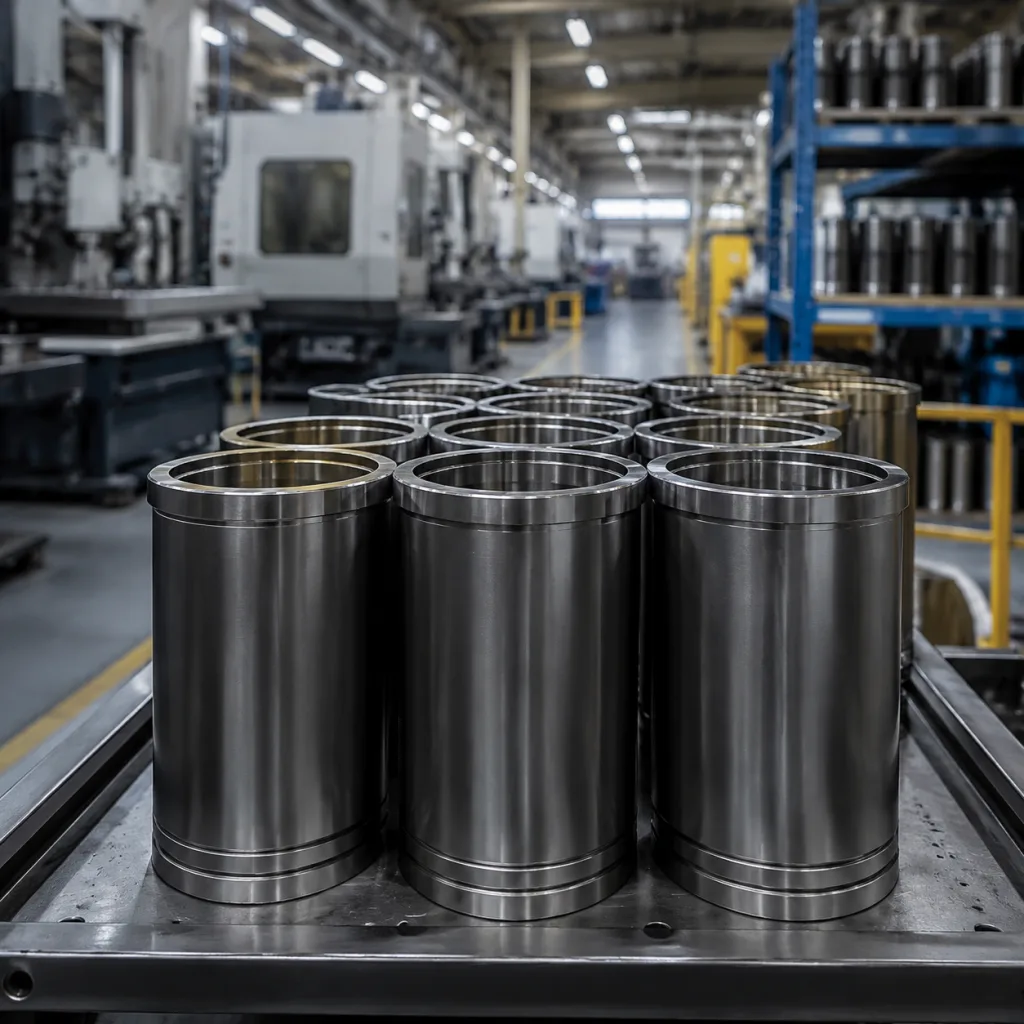
A camshaft Volvo supplier decision should start with risk, not unit price. For importers, aftermarket distributors and repair-chain buyers, one weak batch can create warranty claims across branches, lock up inventory and damage an engine programme that otherwise looked profitable. Volvo-fitment camshafts need controlled lobe geometry, journal diameter, straightness, surface finish, hardness, cleaning and corrosion protection. The buying file should therefore define journal diameter bands, total indicated runout, lobe lift variation, roughness limits, hardness range, batch traceability and packing life before commercial approval. Small timing or bearing-fit deviations can show up as valve-train noise, idle instability, accelerated wear or repeat returns. This article gives procurement teams a practical way to evaluate suppliers: what to ask for, what can fail, how MOQ and lead time really behave, which documents matter and how to choose a supply model. Driventus manufactures engine and powertrain components in Taizhou, Zhejiang, and supplies independent aftermarket channels, OEM and Tier-1 buyers, and multi-location repair groups. Driventus is an independent aftermarket manufacturer; brand names are referenced for fitment only.
Start With the Approval File, Not the Price List
A credible supplier should prove process control before annual volume or target price dominates the conversation. For Volvo passenger and light commercial applications, the approval file needs to clarify engine family, fuel type, model-year range, market region and installation position where intake and exhaust camshafts differ. The supplier should also explain how application data and OE-style cross-references are built, without implying vehicle manufacturer approval unless formal approval exists and can be verified.
For a camshaft Volvo supplier, the qualification file should include:
Business licence, export registration and production-site address matching the quotation entity
IATF 16949:2016 and ISO 9001:2015 certificates with valid scope, expiry date and issuing body
Process flow chart covering raw material receipt, rough machining, heat treatment, straightening, semi-finish machining, grinding, cleaning and packing
Control plan and inspection points for journals, lobes, base circle, keyways, slots, thrust faces and sensor features
Material specification and heat treatment record by batch, including grade, melt number where available and hardness target
Dimensional inspection report, surface hardness report and roughness record with stated gauges and acceptance limits
Gauge calibration evidence for micrometers, air gauges, profile measuring equipment, CMM fixtures and hardness testers
Packaging specification for sea freight, air freight and courier samples, including VCI bag, anti-rust oil, carton and pallet rules
Corrective action process for non-conforming batches and customer claims, including containment time and 8D or equivalent format
Do not review these documents as separate PDFs. Connect one production lot from raw material to packed cartons. Ask the supplier to show the heat-treatment batch number, machining work order, final inspection sheet, carton label and packing list for the same quantity. For a first order, require at least a 5-piece dimensional layout per SKU or the agreed AQL plan, plus 100% visual checks for rust, dents, burrs, mixed references and missing plugs or drive features. Driventus maintains a documented quality system for engine components and supports supplier questionnaires, document review and remote audit preparation for procurement teams. On-site audits can be arranged for volume programmes when confidentiality, production routing and commercial terms are agreed in advance.
Failure Modes Hidden in Camshaft Specifications
Camshafts are precision timing components. Treating them like commodity castings is how warranty risk enters the order. A small error in lobe lift, base circle, phasing or journal geometry can affect valve opening, emissions performance, idle quality, oil-film stability and long-term engine durability. The purchase specification should define both the dimension and the inspection method used to confirm it.
Key control areas include:
Feature
What can go wrong
Typical verification method
Lobe profile
Incorrect valve lift, timing error or uneven engine balance
Cam profile measuring instrument with lift curve printout
Journal diameter
Poor oil-film stability, bearing noise or assembly fit issues
Air gauge or calibrated micrometer, usually recorded to 0.001 mm
Straightness
Rotation instability, binding or difficult assembly
V-block and dial indicator check for total indicated runout
Surface hardness
Premature wear under follower load
Rockwell or Vickers hardness test on controlled test area or coupon
Surface roughness
Poor oil retention or follower contact wear
Contact profilometer, commonly Ra for journals and lobes
Sensor or drive feature
Timing signal fault or accessory drive mismatch
Fixture gauge and CMM where required
Cleaning level
Abrasive contamination entering the engine
Visual, magnetic particle, air blow and wash checks
</tr></thead><tbody> </tbody></table>Useful buyer-side tolerance language includes journal diameter to drawing or approved sample with a controlled band, journal roundness and cylindricity checks, lobe lift variation across all lobes, base-circle consistency, cam phasing angle to fixture master, and straightness by maximum runout over the full shaft. Where the buyer does not own drawings, the supplier should build the specification from measured OE-style samples, agreed reverse-engineering data and a signed reference report. Typical aftermarket control targets may include journal roughness around Ra 0.2–0.4 μm, lobe roughness around Ra 0.4–0.8 μm, runout controlled within a low hundredths-of-a-millimetre range, and hardness set by material and heat-treatment route rather than by a generic number.
The specification should also state the construction route: chilled cast iron, ductile iron, forged steel or assembled design. Each route changes cost, tooling, heat treatment and machining control. Chilled cast iron can be efficient for many replacement references. Forged or assembled designs may be necessary where the original engine design, follower load or drive structure requires it. Choose the route based on engine design, demand, price target, service environment and whether the part is for catalogue replacement, private-label distribution or a drawing-controlled programme.
How MOQ and Lead Time Actually Move
MOQ and lead time are not fixed catalogue facts. They change with tooling status, raw material batch size, heat-treatment loading, inspection burden, packaging choice and whether the reference is already running. Existing aftermarket camshafts can often be ordered in lower quantities because fixtures, gauges, machining routes and packing data are already available. New references move slower because the first order must carry tooling review, sample development, measurement confirmation, validation and first article inspection.
A clean sourcing sequence looks like this:
1. Catalogue enquiry: Buyer sends application list, engine codes, annual demand, target market, requested Incoterm and packaging format. 2. Cross-reference review: Supplier checks existing coverage in our catalog and engine-component range, then flags uncertain engine or year splits. 3. Sample confirmation: Drawings, physical samples, markings, drive-end photos, lobe count and OE-style reference data are checked where applicable. 4. Quotation: Price, MOQ, tooling cost, packaging, Incoterms, payment terms, sample cost and lead time are confirmed. 5. PPAP-style file or first article report: Documentation level is agreed according to customer type, annual value and programme risk. 6. Mass production: Batch records, inspection reports, anti-rust packing records and shipment documents are issued.
For existing items, MOQ is usually driven by finished-stock position, raw bar or casting batch size, heat-treatment load, set-up time and packing artwork. Open catalogue packing normally supports lower MOQ than private-label cartons. Private-label supply adds carton printing, label control and mixed-SKU packing rules, so the economic batch is larger. As a working range, catalogue replenishment may start from dozens of pieces per SKU when stock exists. Private-label or made-to-order references often need 100–300 pieces per SKU. New developments may require a first batch large enough to cover sampling, destructive checks and process loss.
Separate sample time, approval time and production time. Existing stock can ship after inspection and packing. Made-to-order catalogue items commonly need several weeks for material, machining, heat treatment, grinding and final inspection. New references add reverse measurement, fixture preparation, trial machining, first article reporting and buyer approval. The first sample lead time matters, but repeatable production lead time after approval matters more. For fast-moving SKUs, buffer stock or rolling forecasts reduce stockouts and emergency freight. Driventus can discuss catalogue supply, private-label packing and custom manufacturing for buyers with drawings, samples or stable annual demand forecasts.
Documentation That Prevents Import and Warranty Disputes
Import markets rarely accept a bare invoice-and-packing-list workflow for long. EU, UK, US, Canada, Australia, Brazil and other buyers may need evidence related to material, restricted substances, origin, packaging and anti-corrosion protection. IATF 16949:2016 and ISO 9001:2015 remain useful baselines because they show management-system discipline, corrective action structure and traceability expectations.
Compliance documentation may include:
Certificate of analysis or material declaration where requested, linked to material grade and supplier batch
Heat treatment batch record linked to the production lot, including furnace load or process reference where applicable
Final inspection report with sample size, measured values, acceptance criteria and inspector sign-off
Control plan and process flow chart for programme buyers, with special characteristics identified
REACH (EC) No 1907/2006 declaration when relevant to EU import requirements
RoHS, IMDS or customer substance reporting when the buyer’s market or internal system requires it
Packaging details for carton, pallet, VCI material, anti-corrosion oil, gross weight and storage recommendations
Country-of-origin documentation, HS code support and packing-list detail by SKU and carton quantity
Non-conformance and corrective action records when a claim, concession or deviation occurs
Define the document pack in the purchase order, not after production. A practical structure is: commercial documents for every shipment; dimensional and packing records for every production lot; material and heat-treatment records on request or for controlled programmes; and PPAP-style evidence for drawing-based or high-risk SKUs. The purchase order should also state record retention time, commonly 3–5 years for aftermarket supply and longer where the buyer’s quality system requires it.
Keep brand language clean. A supplier should not state or imply approval by a vehicle manufacturer unless formal approval exists and can be checked. For independent aftermarket programmes, the accurate claim is OE-equivalent fitment and performance target based on dimensional matching, material control, inspection records and agreed validation evidence. Driventus is an independent aftermarket manufacturer; brand names are referenced for fitment only.
A Shop-Floor Audit Route That Finds Real Risk
A useful factory audit follows the camshaft, not the conference-room slide deck. Start at raw material receipt and finish at packed goods. The purpose is to verify repeatability across batches, not to admire one acceptable sample. Auditors should compare the control plan with shop-floor practice and check whether inspection records can be traced to the parts waiting for shipment.
Ask these questions while standing near the process being audited:
Are raw material batches segregated and traceable to finished camshafts by heat number, batch card or ERP lot?
Are heat treatment parameters recorded and linked to production lots, including temperature, time and quench or cooling method where applicable?
Are grinding wheels, fixtures and gauges controlled under a maintenance plan with dressing, replacement and calibration intervals?
Are lobe profile, base circle, journal dimensions, phasing and straightness checked with calibrated equipment?
Is non-conforming material physically separated from approved stock with red-tag status and disposition approval?
Are inspection records retained by batch and available for review against the packing list quantity?
Is anti-rust oil or VCI packaging specified by transit time, destination climate and warehouse storage period?
Are corrective actions closed with root-cause analysis and effectiveness checks rather than shipment sorting only?
Use this route: raw material warehouse, cutting or casting receipt, rough machining, heat treatment, straightening, finish grinding, deburring, cleaning, inspection, oiling, inner packing, carton packing and finished-goods warehouse. At each point, select one live batch and ask operators to show the work instruction, gauge, last inspection record and reaction plan for an out-of-limit result. For higher-risk programmes, request machine capability evidence on journal grinding and lobe grinding. A short-term capability study on critical features is more useful than a generic quality certificate.
Do not leave packaging until the end as an afterthought. Camshafts are vulnerable to journal dents, impact marks and corrosion during distribution. Repair-chain buyers should confirm barcode format, label language, carton strength, pallet height, mixed-SKU packing rules and spare-label control before the first shipment. For sea freight, request VCI or anti-rust oil coverage, end protection, separation between camshafts and a pallet plan that avoids crushing lower cartons. These details reduce receiving disputes, branch-level returns and relabelling work after import.
Which Supply Model Fits Your Camshaft Programme?
There is no single best sourcing model. A distributor filling catalogue gaps has different needs from a private-label brand owner, a repair-chain buyer or a drawing-controlled technical programme. Choose the model by forecast stability, SKU depth, labelling needs, engineering support, documentation level and tolerance for development time. Then compare landed cost, defect risk, cash tied in MOQ, packaging cost, re-order lead time and the value of keeping slow-moving references available.
Supply model
Suitable buyer
Advantages
Points to confirm
Standard aftermarket catalogue
Regional distributor or wholesaler
Faster launch, lower development burden
Coverage, MOQ, packaging, stock plan and re-order lead time
Private-label supply
Brand owner or buying group
Consistent market identity
Label data, carton artwork, barcode rules, MOQ and warranty process
Sample-based development
Importer with unavailable references
Expands range for legacy or regional engines
Sample quality, measurement method, tooling cost and approval timing
Drawing-based programme
OEM, Tier-1 or technical buyer
Stronger dimensional control
Drawing revision, confidentiality, PPAP level and validation scope
</tr></thead><tbody> </tbody></table>For price comparison, request a quotation matrix instead of one headline number. Include EXW or FOB unit price, MOQ by SKU, tooling or fixture charge, sample charge, private-label packing cost, inspection-document cost if any, estimated carton quantity, pallet dimensions and production lead time after deposit or order release. A low unit price can become expensive if it requires an uneconomic MOQ, long cash cycle, special packing charge or repeated air-freight recovery. For fast movers, annual blanket orders with 2–3 month rolling forecasts can reduce stockout risk and improve production scheduling. For slow movers, mixed-SKU consolidation may matter more than the lowest piece price.
Driventus manufactures camshafts and related engine components, including pistons, crankshafts, gaskets, water pumps and turbocharger parts. This helps buyers consolidate engine programmes while keeping inspection criteria separate for each product group. For Volvo-fitment camshaft sourcing, provide the engine code, application list, annual forecast, target packaging format, documentation requirements, target landed-cost level and any available sample or drawing data. The commercial team can then confirm available references, MOQ, lead time and documentation level before quotation.
Frequently asked questions
Send the engine code, model year range, fuel type, target market, annual forecast, requested Incoterm, packaging requirement and any available sample, drawing, markings or OE-style reference data. Photos of the camshaft, sensor features, drive end, lobe layout and key dimensions help reduce cross-reference errors.
Yes. Driventus can support private-label cartons and labels for agreed MOQs. Buyers should confirm barcode format, country language needs, carton strength, pallet configuration, anti-corrosion requirements, mixed-SKU packing rules and repair-chain receiving rules before artwork approval.
No. Driventus is an independent aftermarket manufacturer; brand names are referenced for fitment only. Product claims are based on dimensional matching, material control, inspection records and agreed validation requirements, not vehicle manufacturer endorsement.
For current coverage, MOQ, lead-time and documentation options, send your application list, engine codes, forecast, packaging format and required inspection file to Driventus. You can [request a quote](/contact.html) or contact the sourcing team at /contact.html