Camshaft for Volkswagen Polo OE Equivalent: What to Verify
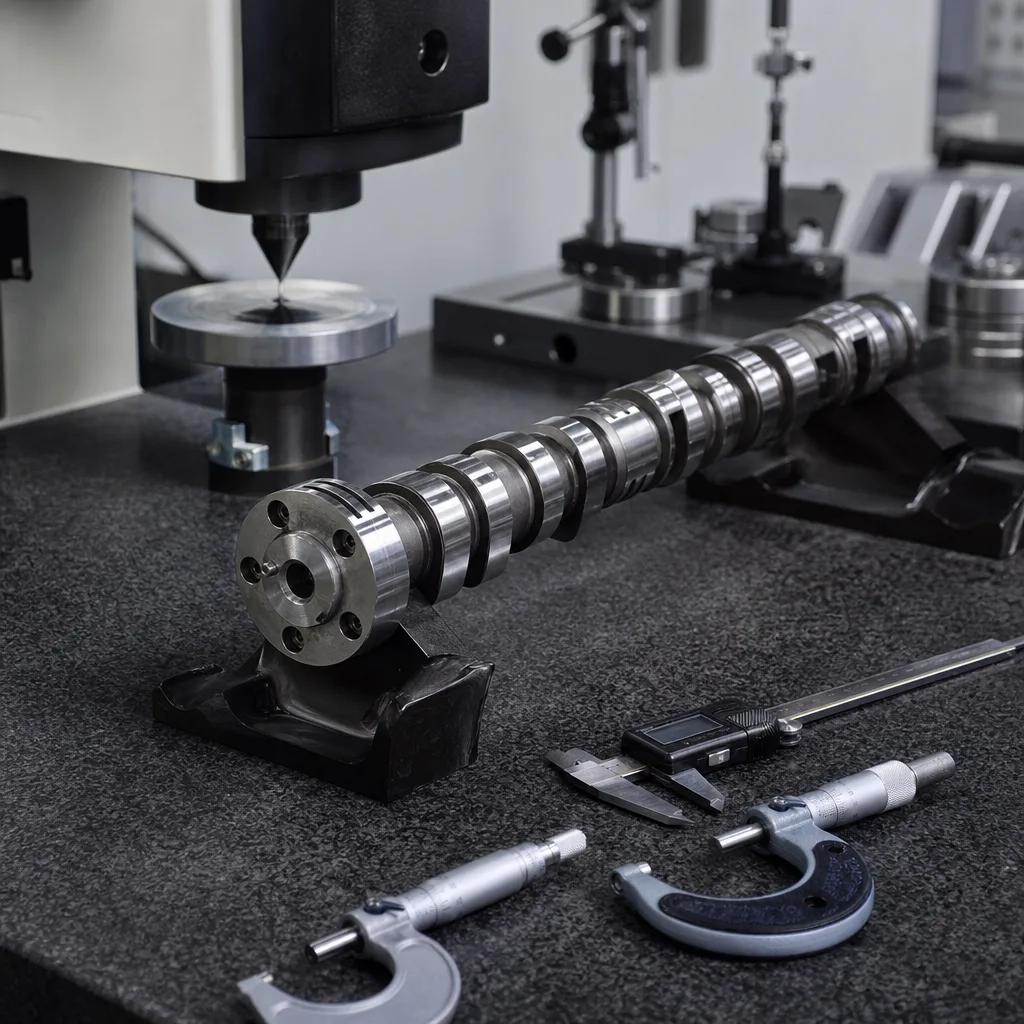
For buyers sourcing a camshaft for Volkswagen Polo OE equivalent replacement, the model name alone is not enough to define the part. Polo applications cover multiple engine codes, valve train layouts, and intake or exhaust variants, so the correct purchase decision depends on measured geometry and documented traceability. A camshaft can fit the head but still change valve timing, idle quality, emissions behaviour, or service life if the lobe profile, drive end, or sensor indexing is wrong. Driventus supplies aftermarket camshafts under IATF 16949:2016 and ISO 9001:2015 controls, with material compliance aligned to REACH (EC) No 1907/2006 where required. Driventus is an independent aftermarket manufacturer; brand names are referenced for fitment only. The sections below explain the checks procurement teams should request before release, what validation data matters, and how to compare suppliers on a technical basis.
What OE-equivalent means on a Polo camshaft
OE-equivalent is a functional claim, not a branding claim. The camshaft must match the Polo engine code, cam position, lobe lift, base circle, overall length, drive-end geometry, sensor indexing, and hardness profile. Volkswagen Polo model years share multiple petrol and diesel engine families, so the same vehicle badge can hide several different camshafts. Intake and exhaust parts are often not interchangeable, and some variants use variable valve timing while others do not.
If the supplier cannot state whether the part is for the intake side, exhaust side, or a matched pair, do not release the order.
Minimum fit data to collect:
- engine code
- side and bank
- timing drive type
- OE cross-reference from the removed part or drawing
- sample or measured dimensions
- any VVT, reluctor, or keyway detail
Fitment checks that prevent wrong supply
Use the vehicle record and the removed part, not the model name alone. A Polo programme can change camshaft specification with engine family, market, or production date, and that affects interchangeability.
| Check | Ask for | Why it matters |
|---|---|---|
| Engine code | VIN decode or engine sticker | Confirms the correct valve train family |
| Cam side | Intake, exhaust, or set | Prevents reversed ordering |
| Journal size | Measured diameter and width | Controls bearing fit and oil clearance |
| Lobe data | Lift, base circle, phase angle | Protects timing and combustion behaviour |
| Drive end | Keyway, dowel, sprocket interface | Prevents assembly mismatch |
| Sensor target | Tooth count or trigger pattern | Supports ECU signal integrity |
| Attribute | OE-equivalent replacement | Low-cost generic part |
|---|---|---|
| Dimensional control | Measured against drawing or reference sample | Often limited to visual check |
| Material and heat treatment | Documented and batch-traceable | Sometimes undisclosed |
| Surface finish | Controlled on journals and lobes | May vary by lot |
| Functional test | Fit and timing verification | May be absent |
| Procurement risk | Lower warranty exposure | Higher return and labour cost |