Camshaft for Iveco Eurocargo Aftermarket Replacement
If you are sourcing a camshaft for Iveco Eurocargo aftermarket replacement, the buying decision should be based on dimensional equivalence, material control, and test evidence rather than price alone. A camshaft that fits physically but misses lobe timing, base-circle diameter, or journal finish can raise valve train noise, reduce oil pressure stability, and shorten service life. Driventus is an independent aftermarket manufacturer; brand names are referenced for fitment only. We produce engine and powertrain components for B2B buyers who need predictable interchange, traceability, and export-ready documentation. For Eurocargo programmes, the practical question is not whether a part is marketed as compatible, but whether the part matches the engine family, maintains timing geometry, and comes with records that support incoming inspection and warranty control.
What an OE-equivalent replacement has to match
A correct replacement is defined by geometry first and marketing language second. For Eurocargo applications, buyers should confirm the engine code, bearing layout, drive-end design, and valve event timing before placing an order.
Match point
Why it matters
What to verify
Lobe profile
Controls valve lift, duration, and overlap
Compare drawing data or metrology report
Journal diameters
Affects oil film stability and wear
Measure against the shaft drawing
Overall length and thrust faces
Prevents end-play issues
Check assembly stack-up and thrust control
Drive-end interface
Must match gear, pulley, or sensor drive design
Confirm tooth count, keying, and offset
Bearing count and spacing
Determines block compatibility
Compare centre distances and support positions
Surface finish
Influences break-in and oil retention
Request roughness and polishing records
</tr></thead><tbody> </tbody></table>Do not source from the truck badge alone. The same Eurocargo nameplate can cover more than one engine family, and a camshaft that is close but not exact can create installation delay, contact wear, or timing drift. A replacement should be treated as a controlled engineering part, not a generic service item.
Material and process control matter more than appearance
Two camshafts can look identical and still perform very differently. The useful questions are about substrate, hardening depth, and consistency from batch to batch.
For this product class, buyers commonly evaluate chilled cast iron or alloy steel camshafts with controlled heat treatment, then verify lobe and journal hardness, concentricity, and wear resistance. The right process depends on the engine design, duty cycle, and lubrication strategy. What matters is that the supplier can prove process repeatability, not simply state that the part is "made to fit".
Key controls to request:
Material specification and mill or foundry traceability.
Heat-treatment record linked to the production batch.
Hardness data for lobes and journals.
Runout and concentricity results from final inspection.
Protective coating or rust-prevention details for export packing.
If a supplier cannot describe those controls clearly, the part is a procurement risk. That risk shows up later as variation in start-up noise, premature lobe wear, or returns that are difficult to diagnose. For fleet buyers, the cost of one failed installation usually exceeds the apparent savings from a lower-priced shaft.
Fitment checks before you place the order
Eurocargo sourcing works best when the buyer confirms the engine variant before quoting. The vehicle badge is useful for routing, but it is not a substitute for part identification.
Check these points before approval:
1. Engine code and build range. 2. Existing camshaft part number, if available. 3. Bearing count, journal spacing, and thrust arrangement. 4. Drive-end configuration, including gear location and timing interface. 5. Associated wear parts, especially followers, tappets, seals, and bearings. 6. Packaging state for storage or export if the part will sit in warehouse inventory.
This is also where the disclosure matters: Driventus is an independent aftermarket manufacturer; brand names are referenced for fitment only. That means the sourcing brief should specify the technical requirement, not an assumed OEM endorsement. If the application is for a mixed fleet or a remanufacturing line, ask for a part-cross check against your own internal catalogue so the receiving team can verify interchange before stock is released.
Validation data procurement teams should request
A purchasing file should contain enough evidence to support incoming inspection, traceability, and warranty review. For camshaft supply into the EU, UK, North America, or Australia, the minimum pack should include technical and compliance documents, not just a commercial invoice.
Ask for:
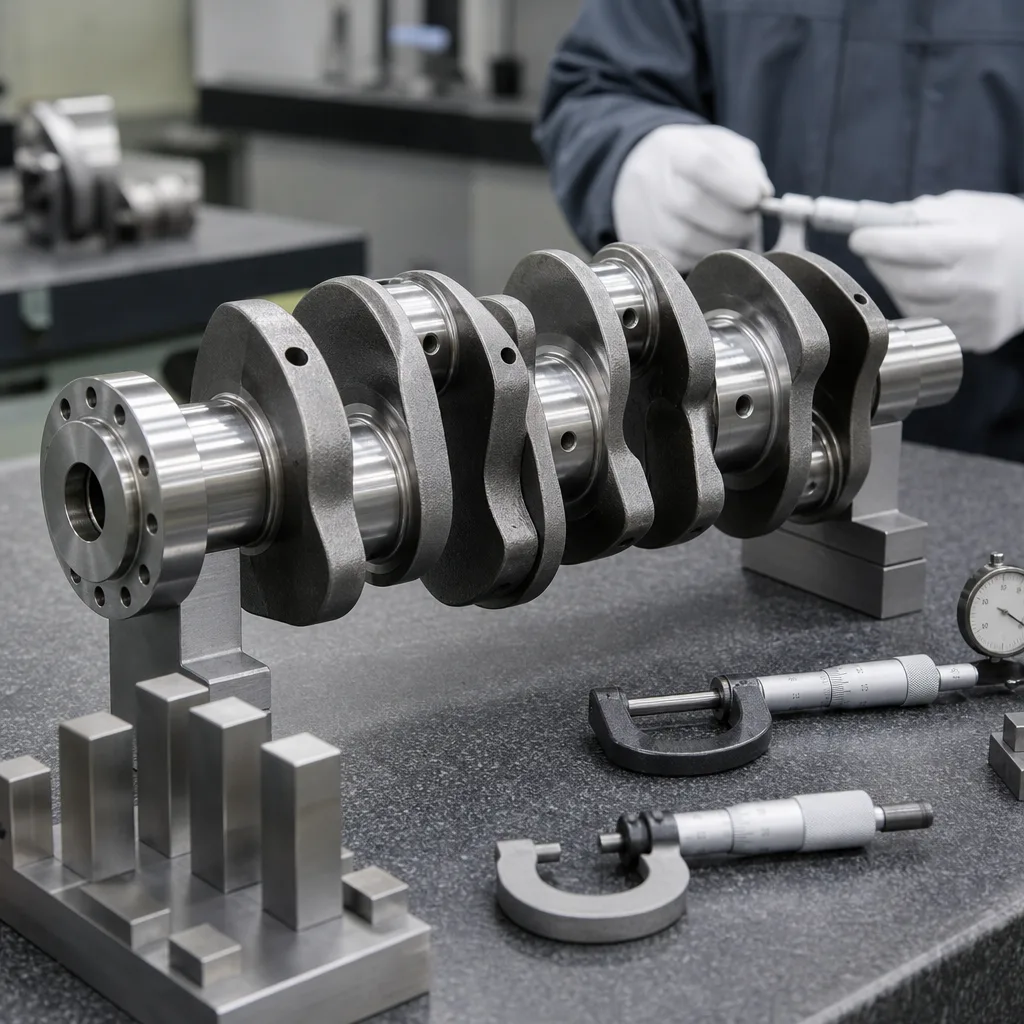
Dimensional inspection report for the finished shaft.
Batch-linked hardness and heat-treatment data.
Material declaration and traceability record.
REACH (EC) No 1907/2006 statement for regulated substances.
Quality certificate to IATF 16949:2016 or ISO 9001:2015, as applicable.
Corrosion-protection and packaging specification.
A strong supplier can also explain how parts are sampled, which gauges are used, and how non-conforming lots are quarantined. That is the practical difference between a claims-based vendor and a controlled manufacturing partner. If your receiving team needs a specific inspection gate, such as first-article approval or lot-by-lot report submission, that should be written into the purchase order before shipment.
How Driventus supports replacement sourcing
Driventus supplies engine and powertrain components for B2B buyers who need repeatable fitment and export-ready documentation. If you are comparing suppliers for a camshaft for Iveco Eurocargo aftermarket replacement, use a technical review rather than a brochure review.
You can start with our catalog or the broader engine components range to compare related parts. For quality documentation and process control, see our quality system. If your programme needs a non-standard lobe profile, packaging format, or private-label workflow, our custom manufacturing page explains how we handle OEM-style development.
A practical sourcing file usually includes the old part, the engine code, the annual consumption forecast, and any inspection rules that the receiving plant or distributor uses. That allows us to recommend a replacement path without forcing the buyer to accept an unverified substitute.
Frequently asked questions
No. Confirm engine code, bearing layout, drive-end design, and the original shaft dimensions. The same vehicle line can use more than one camshaft configuration.
Ask for dimensional inspection results, hardness data, material traceability, REACH (EC) No 1907/2006 declaration, and quality certification to IATF 16949:2016 or ISO 9001:2015.
It can, if geometry or heat treatment is inconsistent. An OE-equivalent replacement with verified dimensions, finish, and hardness should support normal service life when installed correctly.
If you are qualifying a Eurocargo camshaft for production, stocking, or fleet repair, send the engine code, sample part details, and target volume. Start the conversation at [request a quote](/contact.html).