Camshaft Vauxhall Replacement: OE Match and Validation
A camshaft replacement for a Vauxhall application is not a generic parts exercise. Buyers need the correct base circle, lobe lift, bearing journal size, drive end, sensor trigger features, and heat-treatment profile for the exact engine code. A small mismatch can change valve timing, idle quality, and assembly clearance, even when the part looks right on the shelf. Driventus supplies replacement camshafts for aftermarket and OEM-linked programs with dimensional control, material traceability, and batch-level inspection records. Driventus is an independent aftermarket manufacturer; brand names are referenced for fitment only. This article explains what to verify before ordering, how to compare an OE reference against a replacement part, and which standards and test records matter when you are sourcing across multiple markets.
What a true replacement must match
A credible replacement is not a "close fit" part. It must reproduce the geometry and functional interfaces of the original shaft so the engine builds and runs as intended.
Checkpoint
What to verify
Why it matters
Lobe profile
Lift, duration, and base circle
Controls valve timing and piston-to-valve clearance
Journal geometry
Diameter, spacing, and surface finish
Affects oil film, wear, and cylinder head fit
Drive end
Gear, chain, spline, or key detail
Prevents timing drive mismatch
Sensor features
Slots, windows, reluctor pattern, phasing mark
Required for cam position sensing
Material spec
Forged steel, billet steel, or cast iron
Determines wear resistance and heat response
</tr></thead><tbody> </tbody></table>For procurement teams, the make of the vehicle is not enough. The purchase decision should be tied to engine code, OE reference, and the exact shaft variant used in that application.
Dimensional checks that prevent fitment errors
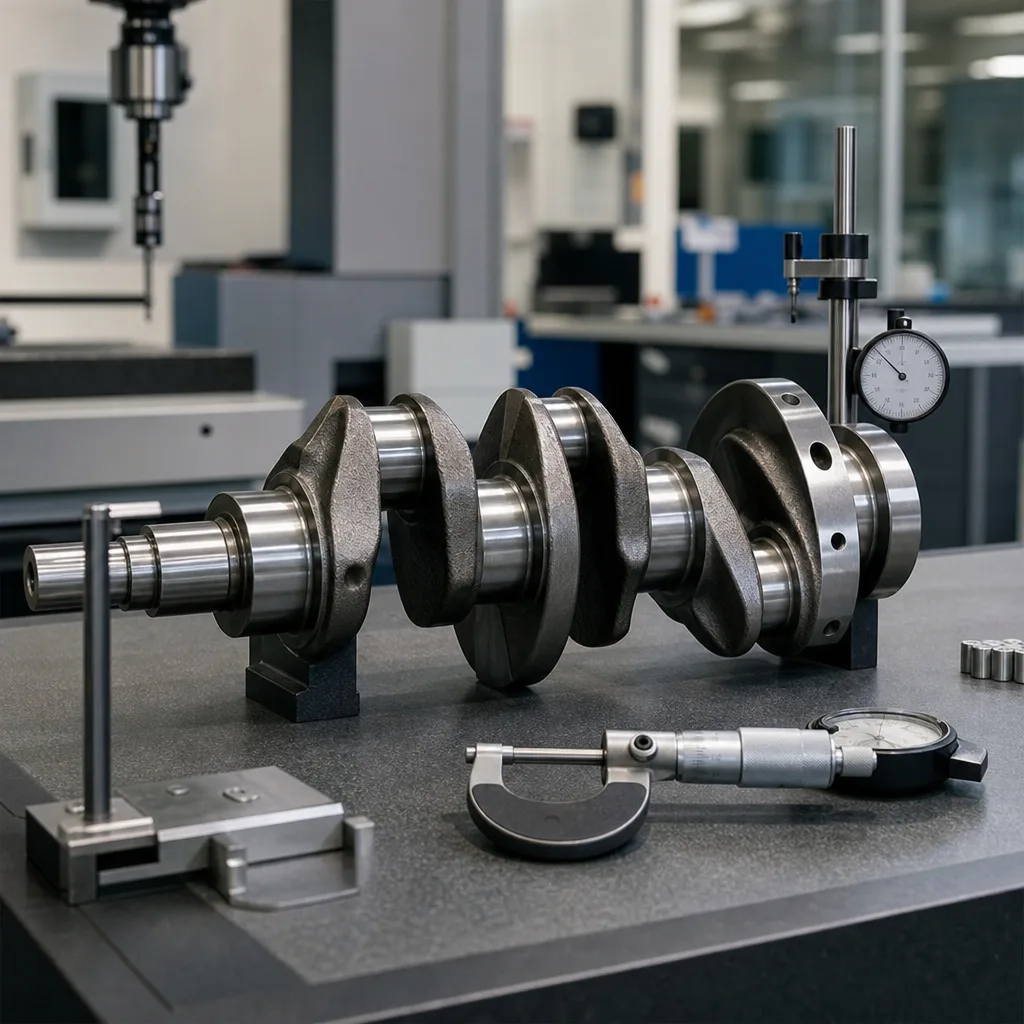
Dimensional control is the main difference between a usable replacement and a costly return. If the original part is worn, verify against the OE drawing, a master sample, or a known-good take-off, not a damaged core.
Typical release checks include:
Journal diameter held to drawing tolerance, often within 0.01-0.02 mm on critical programs.
Camshaft runout kept below 0.03 mm after finish grinding and balancing, where the design requires it.
Lobe-to-lobe repeatability checked against the master profile for intake and exhaust timing.
Surface finish recorded for journals and lobes, with special attention to oil-wetted areas.
Drive-end and sensor features verified with go/no-go gauges before packing.
If the engine uses hydraulic lifters, variable valve timing, or a sensor trigger wheel, those details need separate confirmation. A correct shaft diameter with the wrong trigger pattern still fails at assembly.
Materials, heat treatment, and validation
Replacement camshafts should be backed by process evidence, not only visual inspection. Buyers in the EU, UK, US, Canada, Australia, and Brazil commonly ask for documentation that shows the part is controlled from raw material to final pack.
Relevant documents and standards include:
IATF 16949:2016 process control records for automotive production.
ISO 9001:2015 quality management records for traceability and corrective action.
Mill certificates and heat numbers for the incoming steel or iron lot.
Hardness and microstructure reports after heat treatment or induction hardening.
REACH (EC) No 1907/2006 declarations for regulated substances.
SAE J2527 when accelerated surface durability or corrosion testing is specified by the programme.
Where the broader engine package has emissions sensitivity, system-level validation may also reference ECE R-83. That does not replace fitment control on the camshaft itself, but it helps buyers align the part with the customer’s wider compliance file.
How to source by engine code and OE reference
The cleanest sourcing path is engine code first, vehicle model second. Trim level, market, and model year can all change the camshaft variant on the same nameplate.
Use this order of checks:
1. Confirm the engine code from the vehicle plate, service record, or existing part label. 2. Capture the OE number if it is still readable on the removed shaft or on the packaging. 3. Compare intake and exhaust profiles separately, including any variable timing hardware. 4. Confirm sensor features, drive type, and bearing journal count. 5. Request photos of the old part, timing end, and any etched markings before release.
For cross-reference work, review our catalog and the wider engine components range. If you need a controlled drawing-based programme, our quality system page shows the documentation structure. For a private-label or drawing-led project, custom manufacturing is the right starting point.
Buyer release checklist before stock is accepted
Before a camshaft is received into inventory, the buyer or receiving team should confirm the following:
The part number, engine code, and OE reference match the approved application list.
The inspection report includes dimensions, runout, hardness, and surface condition.
Protective oil, caps, and packaging keep the journals clean and free from corrosion.
The batch label shows traceability to the production lot and inspection date.
The part passes a dry-fit check against the timing drive and head layout, where practical.
Any deviation from the sample or drawing is documented before the shipment is booked in.
This is especially important for repair-chain buyers and distributors who need repeatable fitment across multiple warehouses. The cost of one incorrect line item is usually higher than the cost of a stricter incoming check.
Frequently asked questions
It helps, but it is not the only route. Engine code, sensor pattern, drive type, and a clear photo of the removed shaft can be enough to identify the correct variant. If the OE number is available, it should be used as the primary cross-reference.
Ask for a dimensional report, hardness or heat-treatment record, material certificate, traceability details, and any REACH or programme-specific declarations. For repeat orders, a first-article sample approval record is also useful.
Yes, when the programme is defined by drawing, sample, or confirmed OE reference. The usual starting point is dimensional data, target material, and annual volume, followed by validation against the approved specification.
If you need an OE-equivalent camshaft for a Vauxhall engine code, compare the relevant part family in [our catalog](/products.html) or start a sourcing request through [request a quote](/contact.html)